Compressed air supports many functions in chemical and petrochemical facilities, including pneumatic valve operation, instrumentation, conveying, packaging, and automated production equipment. When compressed air contains excessive moisture, however, it can contribute to corrosion, unstable pneumatic operation, and moisture-related process problems.
A chemical dryer is best understood as a compressed-air dryer selected for chemical-processing applications. Rather than representing a separate drying technology, the term generally refers to refrigerated, desiccant, or combined drying systems selected according to the plant’s pressure dew point, air-quality, and operating requirements.
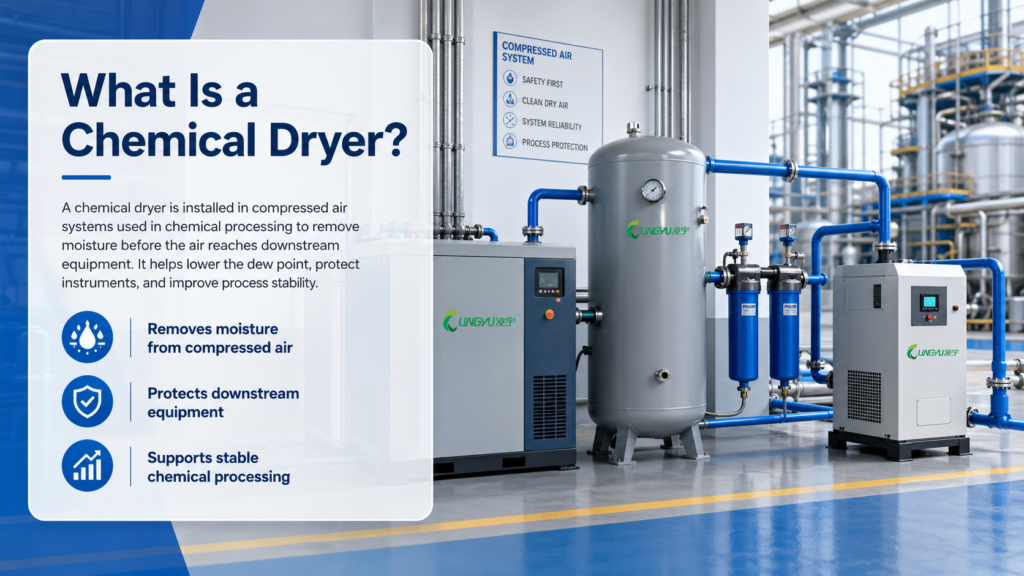
What Is a Chemical Dryer?
In compressed-air applications, a chemical dryer removes water vapor from the air before it reaches downstream equipment and processes.
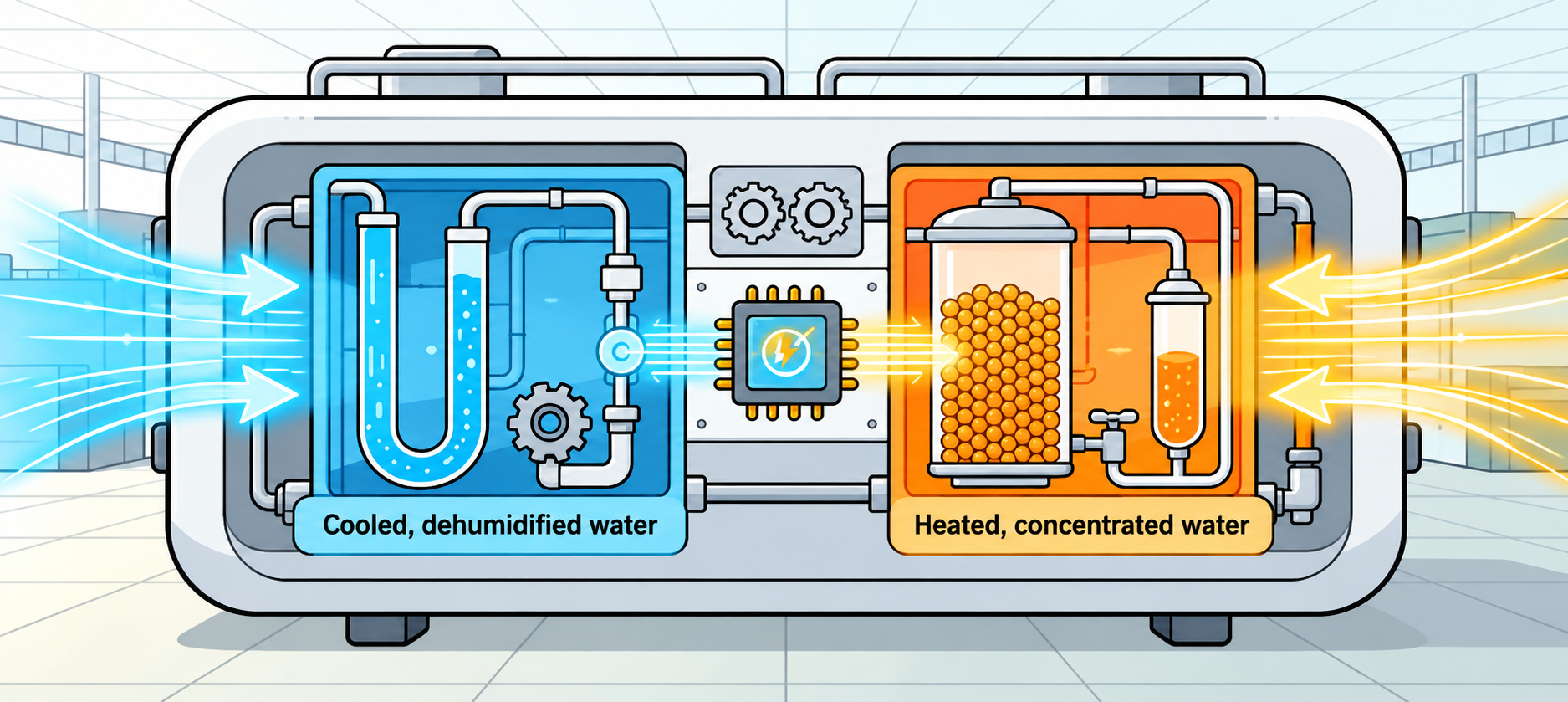
Atmospheric air naturally contains moisture. After compression and subsequent cooling, part of that moisture can condense into liquid water. Mechanical separation can remove condensed water, but additional water vapor may remain in the compressed air.
The dryer reduces this remaining moisture by lowering the pressure dew point, helping prevent condensation as compressed air travels through the plant.
Lingyu dryer systems covered here are designed for compressed air / non-corrosive air. Applications involving corrosive gases or special chemical media require separate technical evaluation to determine suitable equipment, materials, and operating conditions.
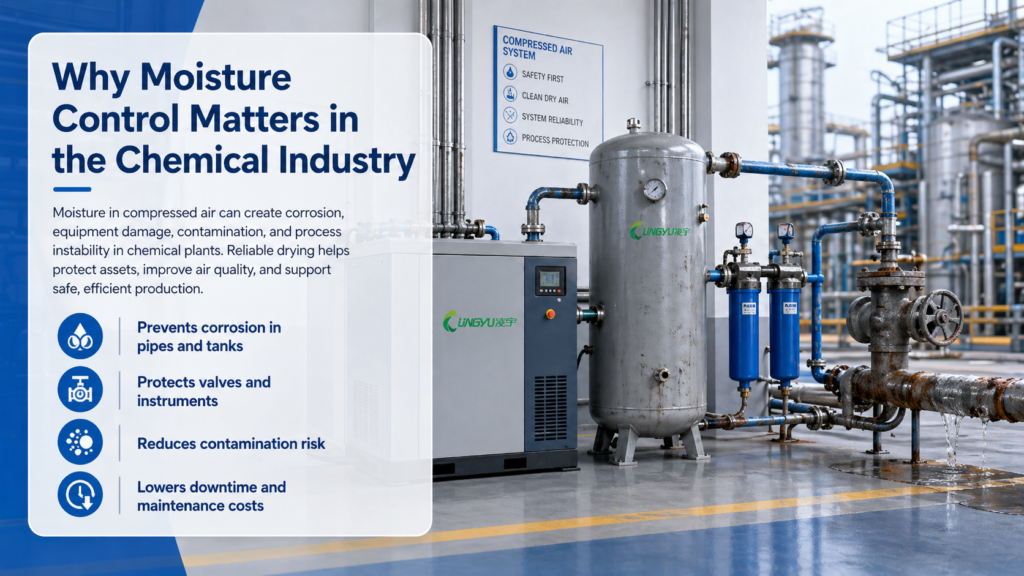
Why Moisture Control Matters in Chemical Processing
Compressed air used for instrumentation, valves, pneumatic equipment, and production support needs to remain sufficiently dry for the actual operating conditions.
Excess moisture can contribute to corrosion in compressed-air piping, interfere with pneumatic valves and actuators, affect instrument reliability, and create condensation in parts of the system exposed to lower temperatures.
For chemical manufacturing, the required dryness should therefore be based on the specific process rather than assuming that every application needs the lowest possible dew point.
For industry-specific air-treatment considerations, see Lingyu’s petrochemical and chemical processing solutions.
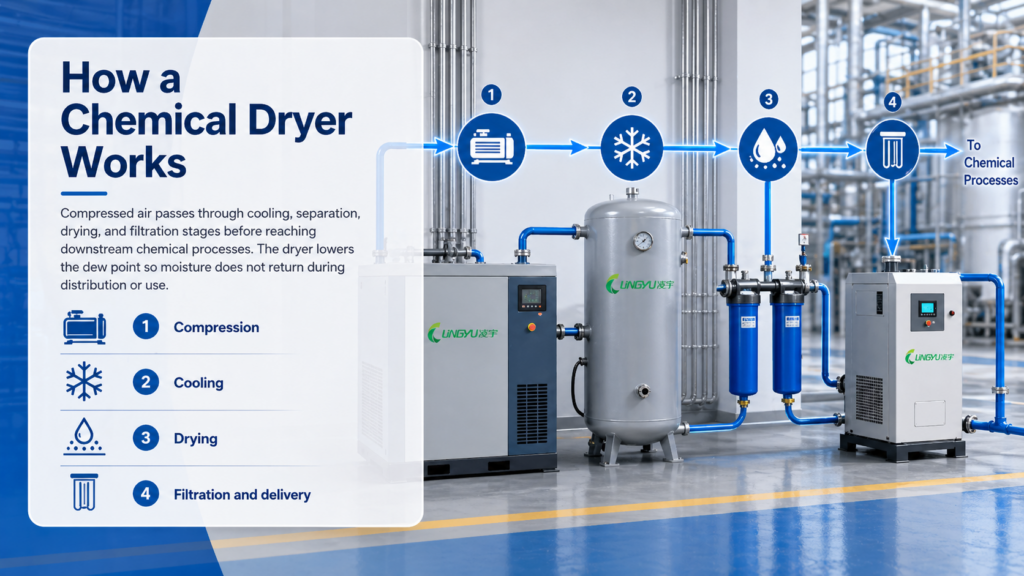
How a Chemical Air Dryer Works
The drying principle depends on the selected technology.
In a typical compressed-air treatment system, compressed air is cooled after compression so that part of the condensed liquid water can be separated. The remaining air then passes through the dryer, where additional water vapor is removed to reach the required pressure dew point.
Filters and separators may also be installed before or after the dryer to control liquid water, oil aerosols, and particles.
The dryer itself should primarily be considered a moisture-control device rather than a complete solution for every compressed-air contaminant.
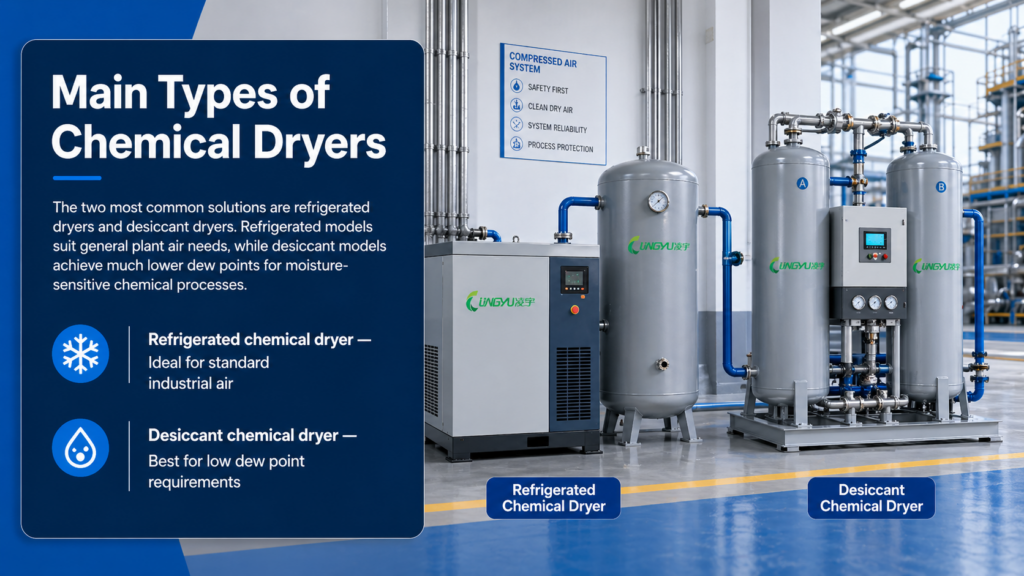
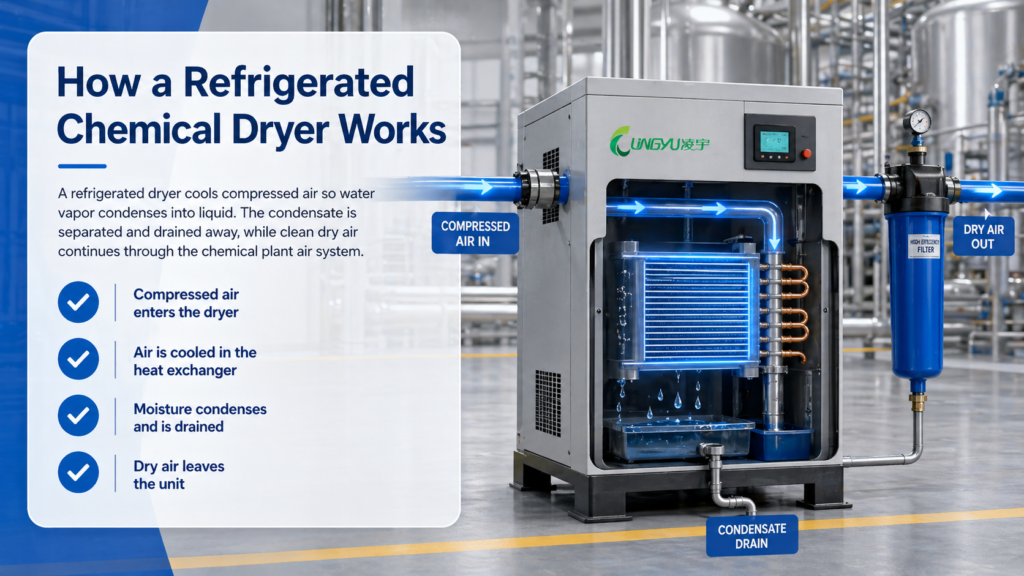
Refrigerated Dryers for General Chemical Plant Air
A refrigerated dryer removes moisture by cooling compressed air until water vapor condenses.
The condensate is separated and drained, after which the dried compressed air is delivered downstream.
Lingyu refrigerated drying systems can provide a pressure dew point of approximately 2–10°C under the applicable operating conditions.
This level of drying may be suitable for general plant-air applications when the downstream temperature and process requirements do not require a substantially lower pressure dew point.
Refrigerated dryers are widely applicable where moderate drying is sufficient and the compressed-air system operates within suitable temperature and pressure conditions.
Desiccant Dryers for Lower Dew Point Requirements
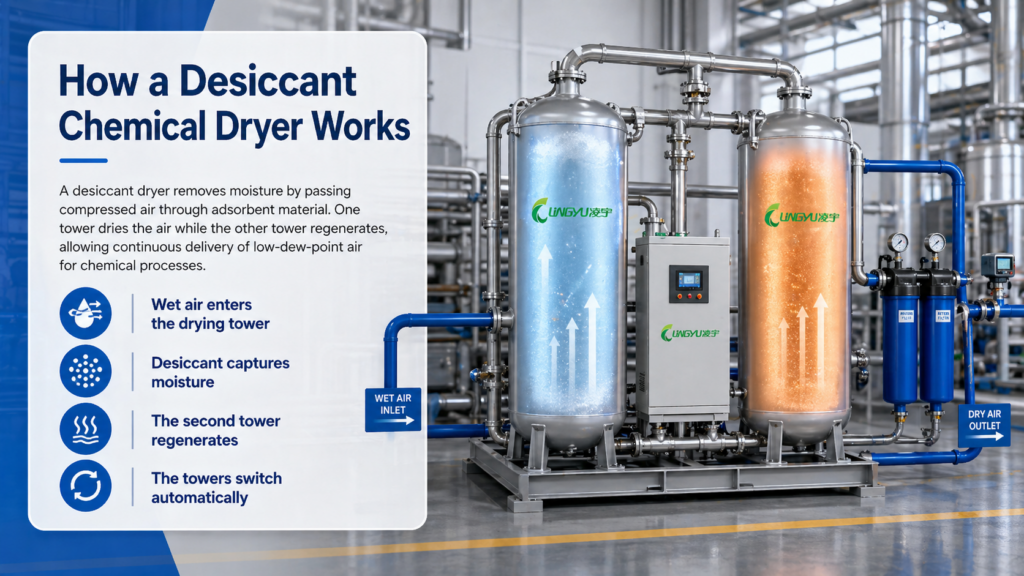
When chemical-process instrumentation or other moisture-sensitive applications require substantially drier air, an adsorption dryer may be more appropriate.
Desiccant dryers use adsorbent materials to capture water vapor instead of condensing it through refrigeration.
Lingyu’s HH heated-purge configuration uses Activated Alumina + High-Performance Molecular Sieve and provides an outlet pressure dew point of ≤−40°C.
Different adsorption dryer configurations can provide different dew-point ranges. The CH heated-purge series, for example, operates within a pressure dew-point range of −50°C to −20°C. Dryer selection should therefore be based on the performance of the specific series and configuration rather than applying one dew-point value to every desiccant dryer.
Heatless, Heated, and Blower-Heated Regeneration
The regeneration method affects both dryer operation and energy consumption.
Heatless Regeneration
Heatless regenerative dryers use part of the dry product air to regenerate the desiccant.
During regeneration, dry compressed air passes through the regeneration tower at reduced water-vapor partial pressure, allowing previously adsorbed moisture to desorb and leave the system with the purge air.
This configuration has a relatively straightforward regeneration process but consumes part of the treated compressed air.
Heated-Purge Regeneration
Heated-purge systems introduce an external heat source to provide the thermal energy required for desorption while using dry product air as the regeneration carrier gas.
Lingyu’s HH heated-purge design has an average purge-air consumption of 4–8% and an outlet pressure dew point of ≤−40°C.
Heating reduces the amount of dry compressed air required for regeneration compared with a heatless configuration.
Blower-Heated Regeneration
Blower-heated systems use heated ambient air as part of the regeneration process, reducing the amount of compressed air required for regeneration.
Low-purge configurations can use heated ambient air for desorption while retaining a limited amount of dry compressed air for cooling. Zero-purge configurations take this approach further by eliminating compressed-air consumption during the regeneration process.
For the HRB-Z zero-purge blower-heated configuration, regeneration air consumption is approximately 0%. Depending on the configuration, the outlet pressure dew point can be −20°C or −40°C.
For users comparing the main dryer technologies, see the refrigerated and desiccant dryer comparison.
Where Dry Compressed Air Is Used in Chemical Plants
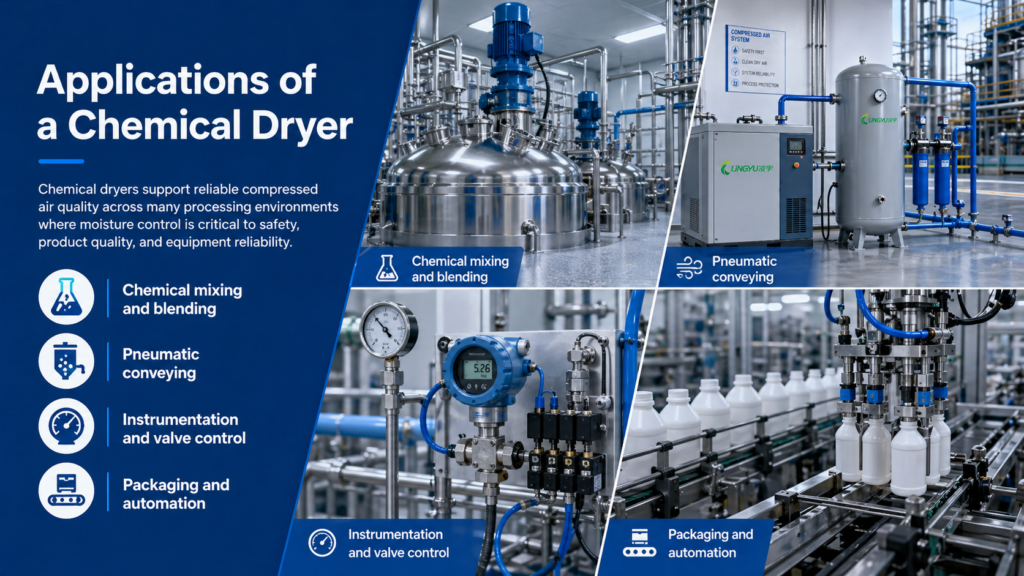
Within chemical and petrochemical facilities, dry compressed air can support:
- Pneumatic control valves
- Actuators
- Instrumentation
- Automation equipment
- Packaging systems
- Pneumatic conveying where compressed air is appropriate for the process
The required dew point and contamination level can differ considerably between these uses.
Instrument air exposed to low temperatures, for example, may require a lower pressure dew point than general indoor plant air.
The dryer should therefore be selected according to the individual compressed-air requirement rather than simply because the facility belongs to the chemical industry.
Benefits of Proper Compressed-Air Drying
Correct moisture control can help protect piping and pneumatic equipment, maintain stable instrumentation, reduce condensation-related maintenance, and support more consistent process conditions.
However, a dryer primarily controls moisture. Oil aerosols and particulate contamination require appropriate filtration and separation.
Achieving a defined compressed-air quality level therefore depends on the complete treatment system rather than the dryer alone.
How to Choose the Right Chemical Dryer
Selection should start with actual process conditions rather than dryer type alone.
Important factors include:
- Required pressure dew point
- Actual airflow
- Inlet pressure and temperature
- Lowest downstream temperature
- Ambient conditions
- Pressure drop
- Required oil and particle control
- Regeneration or electrical energy consumption
- Maintenance requirements
- Compatibility of the compressed-air medium and installation environment
A refrigerated dryer may be sufficient where a 2–10°C pressure dew point meets the process requirement.
Where substantially lower pressure dew points are necessary, a desiccant dryer should be considered.
The lowest temperature that compressed air will encounter downstream is also important. The selected pressure dew point should provide suitable protection against condensation under the actual operating conditions.
For a broader engineering selection process, see the compressed air dryer selection guide.
When a Combined Dryer May Be Useful
Some chemical and petrochemical compressed-air systems may benefit from combining refrigerated and adsorption drying.
In Lingyu’s combined drying process, the refrigerated stage removes a significant portion of the moisture first. The partially dried compressed air then passes through an oil-removal filter before entering the adsorption stage for deeper drying.
Reducing the moisture load before adsorption can lower the regeneration demand on the adsorption system and support efficient low-dew-point operation.
The DH combined dryer provides an outlet pressure dew point of ≤−40°C and can use heatless or heated-purge regeneration.
This type of configuration can be considered when low pressure dew point is required together with efficient moisture pre-removal.
Filtration Is Part of the Air-Treatment System
A dryer should operate as part of a properly designed compressed-air treatment train.
Oil aerosols, liquid water, and particles can affect dryer performance and downstream air quality. Filtration should therefore be selected according to compressor type, dryer technology, and process requirements.
In a combined drying system, an oil-removal filter can be installed before the adsorption stage to protect the desiccant from oil contamination.
After adsorption, a high-efficiency particulate filter can remove residual dust and desiccant particles before the treated compressed air reaches downstream equipment.
The complete treatment sequence should therefore be designed around the required moisture, oil, and particulate levels rather than relying on the dryer alone.
Maintenance for Reliable Operation
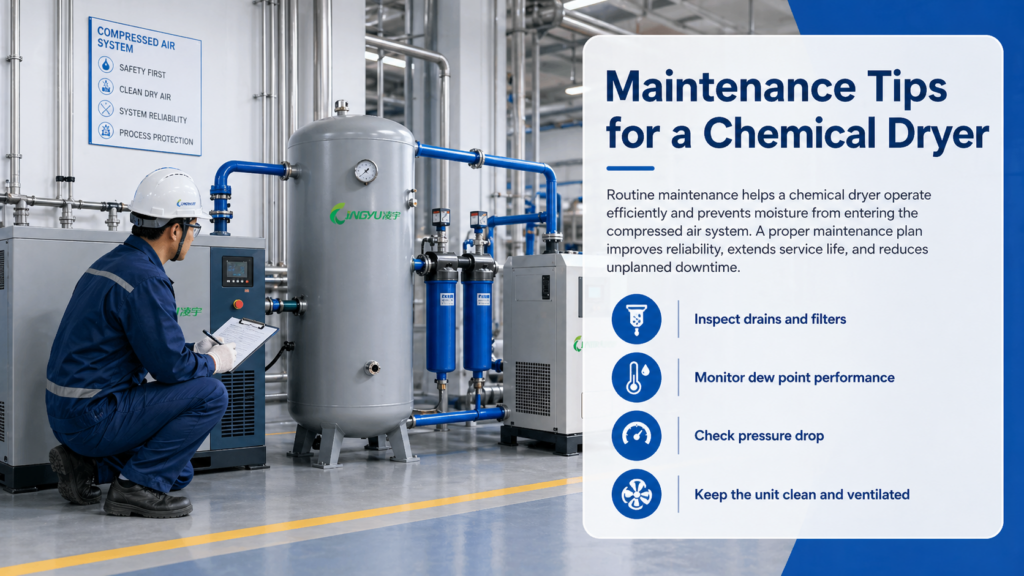
Maintenance requirements depend on dryer technology.
Refrigerated Dryer Maintenance
Refrigerated dryers require attention to:
- Condensate drainage
- Condenser condition
- Evaporator condition
- Refrigeration components
- Fans and cooling systems
- Operating temperatures
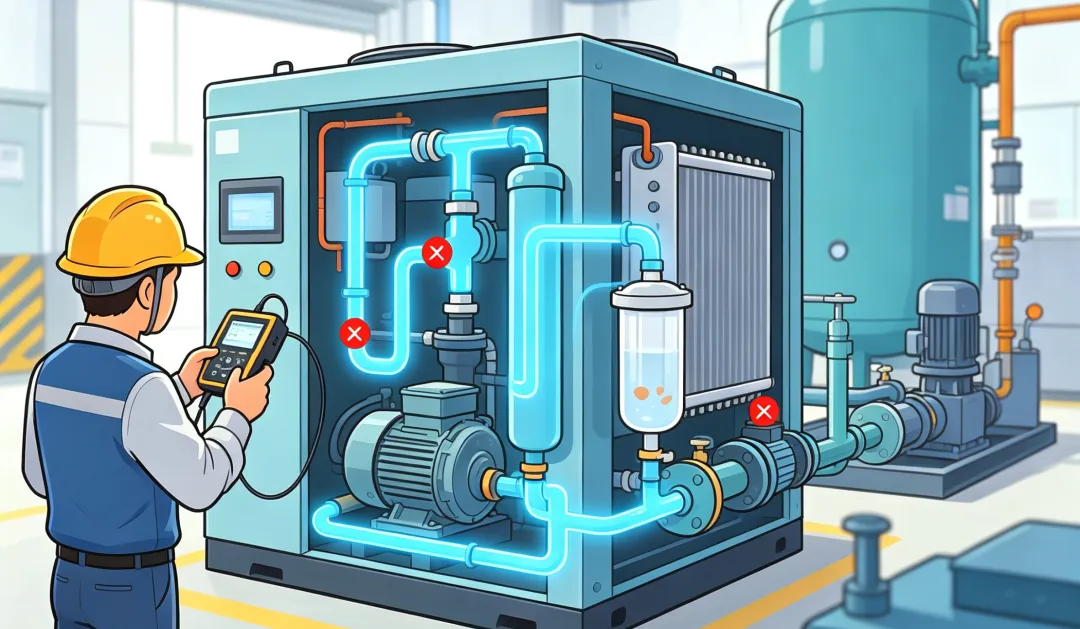
Effective condensate removal and stable heat-transfer performance are essential to maintaining the required drying performance.
Adsorption Dryer Maintenance
Adsorption dryers additionally require attention to:
- Desiccant condition
- Switching valves
- Regeneration systems
- Purge-air or blower operation
- Tower sequencing
- Filters
- Control systems
Desiccant replacement should be based on contamination, degradation, performance loss, and applicable service requirements rather than simply because the desiccant becomes saturated during a normal adsorption cycle.
Conclusion
A chemical dryer is not a separate drying technology. In most compressed-air applications, it refers to a refrigerated, desiccant, or combined dryer selected to meet the moisture-control requirements of a chemical or petrochemical facility.
Refrigerated drying can provide approximately 2–10°C pressure dew point for many general applications, while adsorption technologies are available when substantially lower pressure dew points are required.
The HH heated-purge configuration, for example, can provide an outlet pressure dew point of ≤−40°C with 4–8% average purge-air consumption. Blower-heated configurations provide another approach when reducing compressed-air consumption during regeneration is an important consideration.
Combined drying systems can further reduce the moisture load before adsorption while providing low-dew-point compressed air.
The right solution depends on required pressure dew point, airflow, inlet temperature and pressure, filtration requirements, operating cost, installation conditions, and compatibility with the actual compressed-air medium.
For chemical and petrochemical compressed-air applications, users can review Lingyu’s petrochemical and chemical processing solutions or discuss the specific operating conditions with the technical team.