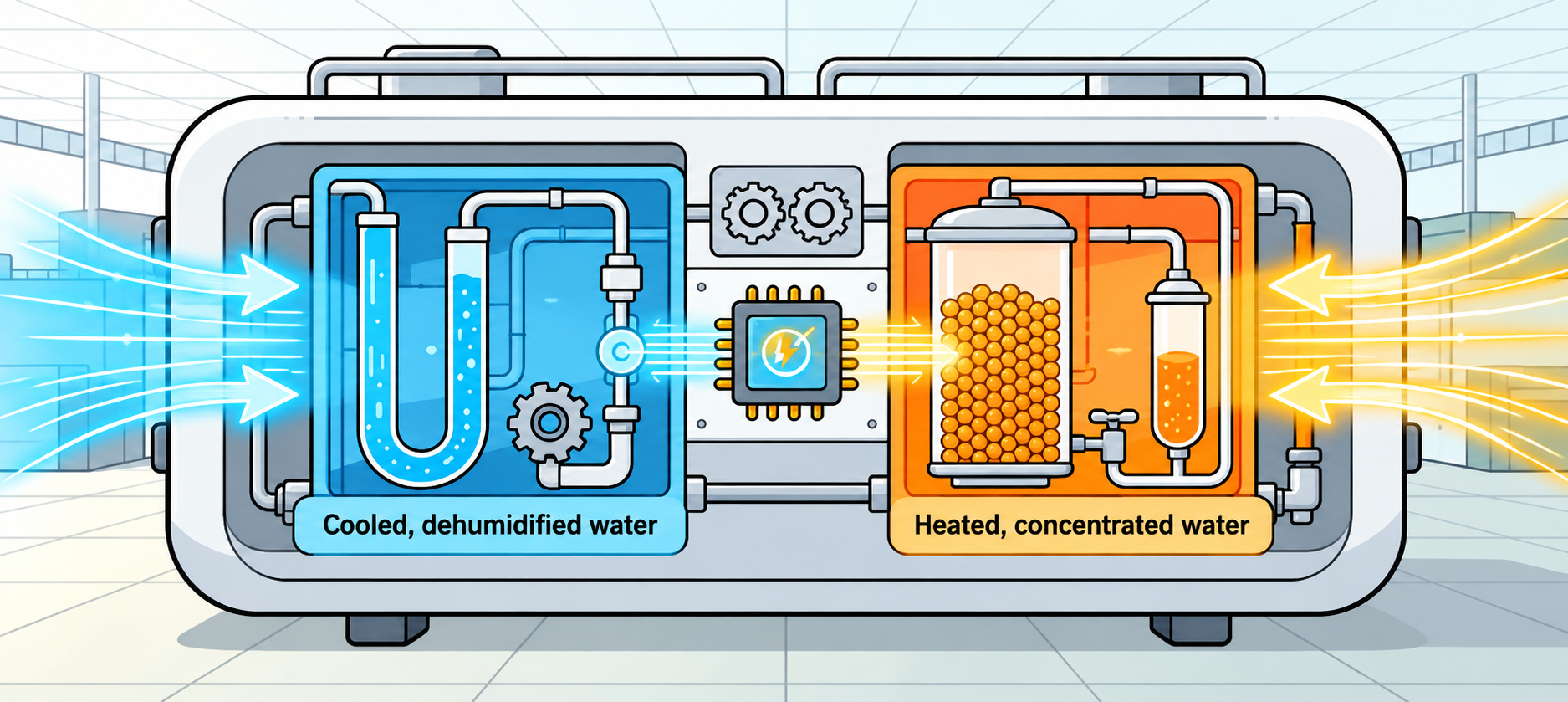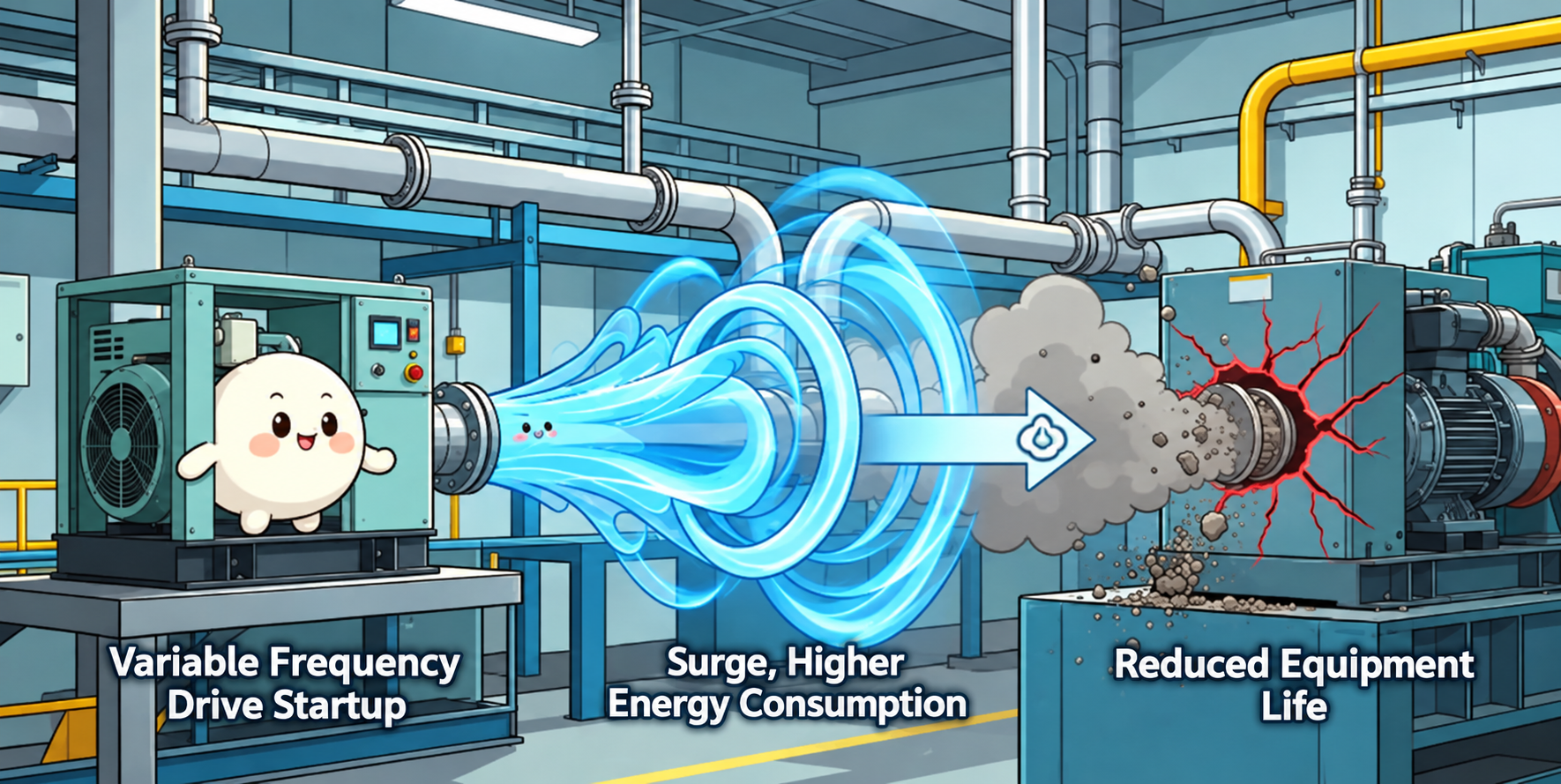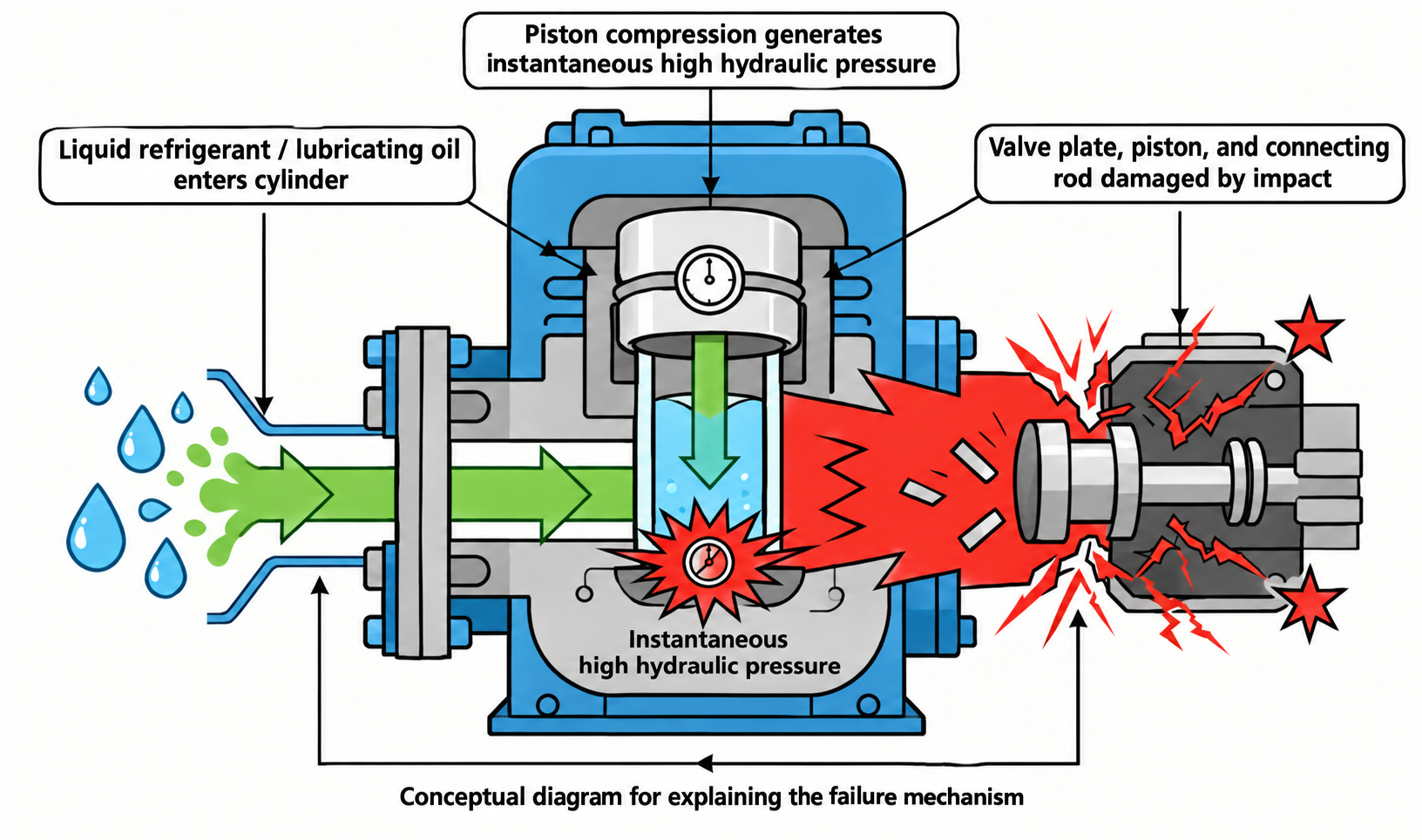
An air dryer for compressed air is an important part of an industrial compressed air treatment system. Its main purpose is to reduce water vapor in compressed air so that moisture does not condense inside piping, pneumatic equipment, instruments, or production processes.
Choosing the right dryer, however, requires more than matching a CFM number. The required pressure dew point, airflow, inlet temperature, operating pressure, ambient conditions, pressure drop, and final air-quality requirements all influence the correct solution.
For facilities evaluating different drying technologies, Lingyu’s compressed air dryer products cover refrigerated, adsorption, and combined drying solutions for different operating requirements.
Why Does Compressed Air Need to Be Dried?
Atmospheric air naturally contains water vapor. When a compressor draws in and compresses this air, the moisture becomes concentrated along with other contaminants.
As the compressed air subsequently cools, some of the water vapor condenses into liquid.
Without adequate moisture separation and drying, this water can contribute to:
- Corrosion inside piping and components
- Pneumatic valve and cylinder problems
- Instrument malfunction
- Product or process contamination
- Increased maintenance requirements
- Unplanned production interruptions
A properly selected dryer reduces the moisture content to a level appropriate for the downstream application.
Drying should therefore be viewed as part of a complete compressed air purification system rather than as an isolated treatment step.
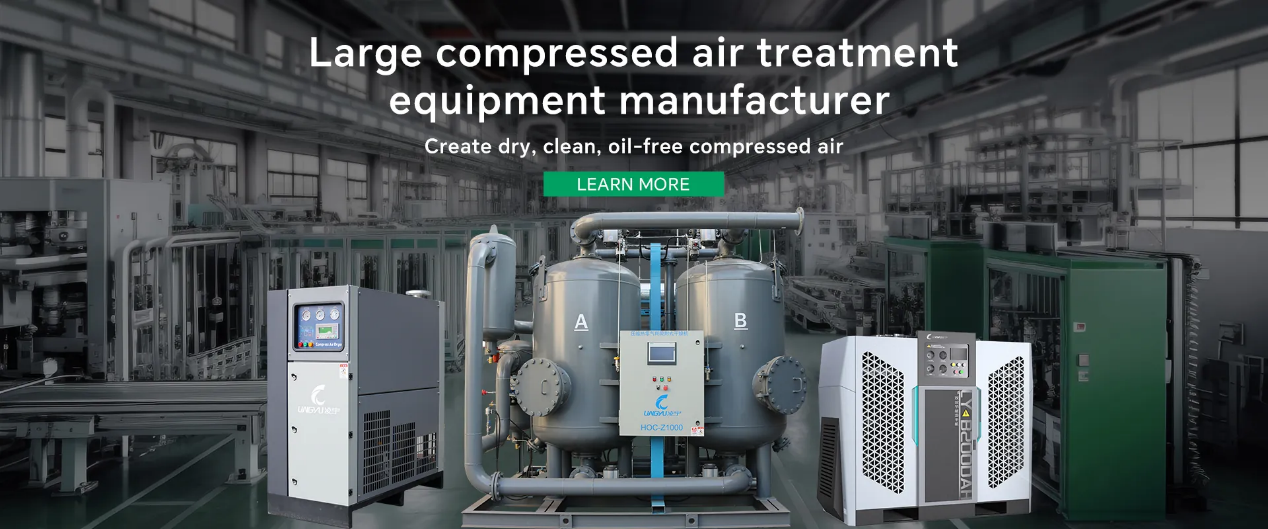
What Is Pressure Dew Point?
One of the most important specifications when comparing compressed air dryers is pressure dew point (PDP).
Pressure dew point indicates the temperature at which water vapor in compressed air begins to condense at the system pressure.
A lower pressure dew point means drier compressed air.
The goal is not necessarily to achieve the lowest possible dew point. Instead, the dryer should provide a pressure dew point appropriate for the process and the lowest temperature that downstream piping may encounter.
This distinction is important because different drying technologies are designed for very different moisture-removal requirements.
Main Types of Air Dryers for Compressed Air
Industrial compressed air systems commonly use refrigerated and adsorption drying technologies. Each has a different working principle and operating range.
1. Refrigerated Air Dryers
A refrigerated air dryer removes moisture by cooling compressed air.
The basic process is:
- Hot compressed air enters the dryer and is pre-cooled.
- The air passes through an evaporator and is cooled further.
- Water vapor condenses into liquid.
- A gas-liquid separator removes the condensate.
- An automatic drain discharges the separated liquid.
- The dried compressed air is reheated before leaving the dryer.
Lingyu’s conventional AH and WH refrigerated dryer technologies are designed for a pressure dew point of 2–10°C under specified operating conditions.
This makes refrigerated drying suitable for many general industrial applications where extremely low pressure dew points are not required.
Air-Cooled Refrigerated Dryers
An air-cooled dryer uses ambient air to reject refrigeration heat through its condenser.
This configuration avoids the need for a cooling-water circuit and can simplify installation where sufficient ventilation is available.
Air-cooled dryers require adequate space around the condenser and good ventilation to prevent hot exhaust air from recirculating.
Water-Cooled Refrigerated Dryers
A water-cooled dryer transfers refrigeration heat through a cooling-water circuit.
This configuration can be useful in high-capacity installations or facilities that already have suitable cooling-water infrastructure.
Lingyu’s water-cooled refrigerated dryer category provides options for installations where water cooling is preferred.
Cooling-water temperature, pressure, flow, and quality must be considered during system design.
2. Desiccant Air Dryers
A desiccant air dryer is used when the required pressure dew point is significantly lower than a refrigerated dryer can normally provide.
Instead of condensing moisture by refrigeration, these dryers use desiccant to adsorb water vapor from compressed air.
A typical twin-tower system works as follows:
- Compressed air enters one adsorption tower.
- Moisture is adsorbed by the desiccant.
- Dry compressed air exits the tower.
- The second tower undergoes regeneration.
- The towers periodically switch functions.
Different regeneration methods affect purge-air consumption, energy use, system complexity, and suitability for different capacities.
Heatless Desiccant Dryers
A heatless regeneration adsorption air dryer uses a portion of dry product air to regenerate the offline desiccant tower.
This approach has a relatively straightforward operating principle but requires purge compressed air for regeneration.
For example, Lingyu’s CH Series heatless technology operates with:
- Rated inlet pressure: 0.7 MPa
- Operating pressure range: 0.6–1.0 MPa
- Maximum inlet temperature: ≤40°C
- Regeneration air consumption: 8–14%
- Outlet pressure dew point: −50°C to −20°C
Heatless dryers can therefore provide substantially lower pressure dew points than conventional refrigerated dryers.
Heated Regeneration Desiccant Dryers
A heated dryer adds an external heat source during regeneration.
Lingyu’s heated regeneration adsorption air dryer uses thermal swing adsorption, with heating for desorption followed by cooling before the regenerated tower returns to adsorption.
For the CH Series heated regeneration design, average regeneration air consumption is approximately 4–8%, with an outlet pressure dew point range of −50°C to −20°C under specified conditions.
This configuration can reduce purge-air demand compared with a conventional heatless design, although it adds heating equipment and associated controls.
Blower and Heat-of-Compression Drying
Larger or energy-sensitive installations may benefit from other regeneration methods.
Blower-heated systems use a blower and heater as part of the regeneration process, while heat-of-compression dryers utilize thermal energy available from the compressor system.
These technologies can reduce dependence on valuable dry compressed air for regeneration in suitable applications.
Dryer selection at this level should consider the entire compressor station, load profile, required dew point, operating hours, available heat, and total lifecycle cost.
Combined Compressed Air Dryers
Some applications benefit from combining refrigeration and adsorption drying.
In a combined system, refrigerated drying removes a large portion of the initial moisture load before the air reaches the adsorption stage.
The adsorption dryer then performs deeper moisture removal to achieve the required low pressure dew point.
This arrangement can reduce the moisture load imposed on the desiccant system and may improve overall operating economy in suitable applications.
What About Membrane Air Dryers?
Membrane dryers use selective permeation through specialized membrane materials to reduce water vapor in compressed air.
They can be useful for certain low-flow or point-of-use applications because they are compact and have no refrigeration compressor.
However, membrane drying should not automatically be described as having no energy cost. Many membrane designs consume part of the compressed air as sweep or purge air, and producing that compressed air requires energy.
For industrial systems, the appropriate choice should be based on required airflow, dew point, installation constraints, and lifecycle operating cost.
Refrigerated vs. Desiccant Air Dryer
The required pressure dew point is one of the clearest distinctions between the two technologies.
| Factor | Refrigerated Dryer | Desiccant Dryer |
|---|---|---|
| Drying method | Cooling and condensation | Moisture adsorption |
| Typical Lingyu PDP range | 2–10°C | Down to −40°C or lower depending on series/configuration |
| General industrial use | Very suitable | Suitable when deeper drying is required |
| Below-freezing piping | Usually insufficient | Often more appropriate |
| Regeneration system | Not required | Required |
| Purge air | No desiccant purge | Depends on regeneration technology |
| System complexity | Generally lower | Generally higher |
Neither technology is universally better.
The correct choice depends on how dry the compressed air actually needs to be.
How to Choose an Air Dryer for Compressed Air
1. Determine Maximum Airflow
Start with the maximum compressed air flow that will actually pass through the dryer.
Do not size only around average consumption.
Peak demand, simultaneous equipment operation, compressor control behavior, and future production requirements should all be considered.
2. Apply Operating Correction Factors
A dryer rated for a certain CFM or m³/min capacity at standard conditions may not provide the same effective capacity under different site conditions.
Important variables include:
- Operating pressure
- Inlet temperature
- Ambient temperature
- Cooling-water conditions for water-cooled models
For refrigerated dryers, high inlet and ambient temperatures can substantially increase refrigeration load.
Always evaluate rated capacity against actual operating conditions.
3. Define the Required Pressure Dew Point
Do not select a dryer before defining how dry the compressed air must be.
A refrigerated pressure dew point of 2–10°C can be suitable for many indoor industrial applications.
A much lower pressure dew point may be required when:
- Piping is exposed to freezing conditions
- The process is highly moisture-sensitive
- Instrument air has stringent specifications
- The application requires very dry compressed air
Using an adsorption dryer when refrigerated drying already meets the process requirement can add unnecessary capital and operating cost.
Conversely, choosing refrigerated drying for a process requiring a very low PDP can leave the system inadequately protected.
4. Check Inlet Temperature
Inlet temperature has a major influence on dryer loading.
For Lingyu’s conventional AH and WH high-inlet-temperature refrigerated dryers, the rated inlet temperature is 50°C, with a maximum inlet temperature of ≤80°C.
An effective compressor aftercooler can reduce the thermal load reaching the dryer and remove a significant quantity of liquid condensate upstream.
5. Check Operating Pressure
Pressure affects both dryer capacity and overall compressed air system performance.
For many Lingyu refrigerated and adsorption dryer series, the standard rated inlet pressure is 0.7 MPa, although the exact operating range depends on the product.
Select equipment according to actual working pressure rather than assuming every dryer is designed for the same conditions.
6. Evaluate Ambient Conditions
Air-cooled refrigerated dryers need adequate ventilation for condenser heat rejection.
High ambient temperature, restricted airflow, dust accumulation, and hot-air recirculation can reduce cooling performance.
Water-cooled dryers introduce a different set of considerations, including cooling-water temperature, pressure, flow, and water quality.
7. Consider Pressure Drop
Pressure drop is sometimes overlooked during dryer selection.
Every restriction between the compressor and point of use contributes to total system pressure loss.
The complete system can include:
- Dryer
- Filters
- Separators
- Valves
- Piping
- Fittings
Excessive pressure drop may force the compressor to operate at a higher discharge pressure to maintain the required pressure downstream, increasing energy consumption.
Air Drying and Filtration Are Different
An air dryer should not be expected to solve every compressed air contamination problem.
Moisture is only one contaminant.
Compressed air can also contain:
- Solid particles
- Rust
- Oil aerosols
- Oil vapor
- Other process-specific contaminants
Appropriate precision compressed air filters can be used before or after the dryer depending on the compressor type, dryer technology, and final air-quality requirement.
The dryer and filters should therefore be selected as complementary components.
Selecting a Dryer for Different Industries
Electronics and Precision Manufacturing
In electronics and precision manufacturing, moisture and contamination can affect sensitive pneumatic and production equipment.
The required drying and filtration level should be defined according to the specific process.
Food and Beverage
For food and beverage production, compressed air may be used for packaging, conveying, pneumatic equipment, and other operations.
Air treatment should be selected according to whether compressed air has direct or indirect product contact and the required final air quality.
Pharmaceutical and Biopharmaceutical Production
Pharmaceutical and biopharmaceutical applications may impose stricter compressed air requirements.
Dryer selection should be based on validated process requirements rather than assuming that refrigerated or adsorption drying alone guarantees suitable air quality.
General Manufacturing
Manufacturing plants commonly use compressed air for pneumatic cylinders, valves, tools, controls, and automated equipment.
Moisture control helps reduce corrosion and condensate-related problems throughout these systems.
Maintenance Requirements Depend on Dryer Type
There is no universal rule that every air dryer should be serviced every six or twelve months.
Maintenance intervals depend on equipment design, operating hours, environmental conditions, contamination, and actual component condition.
For refrigerated dryers, common inspection points include:
- Condenser
- Automatic drains
- Heat exchangers
- Refrigeration system
- Electrical components
- Upstream and downstream filters
For adsorption dryers, maintenance may additionally involve:
- Desiccant condition
- Switching valves
- Silencers
- Purge system
- Heaters or blowers where applicable
- Control system
- Dew point performance
A maintenance log that records operating conditions and performance trends can help identify deterioration before a serious failure occurs.
Frequently Asked Questions
What is the main difference between refrigerated and desiccant air dryers?
A refrigerated dryer removes moisture primarily by cooling the compressed air and separating the resulting condensate.
A desiccant dryer adsorbs water vapor and can achieve much lower pressure dew points.
The choice depends primarily on the required dryness and operating conditions.
How do I determine the correct dryer size?
Start with peak airflow, then account for inlet temperature, operating pressure, ambient conditions, and other applicable correction factors.
Selecting a dryer only by matching its nominal CFM rating to the compressor nameplate can result in undersizing under demanding conditions.
Can an air dryer remove all contaminants?
No.
A dryer primarily addresses moisture. Particle and oil control normally require appropriate filtration, and some applications require additional treatment.
Does a lower dew point always mean a better system?
No.
A lower pressure dew point is beneficial only when the application requires it. Producing unnecessarily dry compressed air can increase equipment complexity and operating cost.
How often should an air dryer be serviced?
There is no single interval suitable for every dryer.
Follow the equipment’s maintenance requirements and adjust inspection frequency according to operating hours, environment, contamination, pressure drop, drain performance, and other condition indicators.
Choosing the Right Drying Technology
An air dryer for compressed air protects piping, pneumatic equipment, and production processes by controlling moisture before it becomes a downstream problem.
Refrigerated dryers provide a practical solution for many general industrial systems, while adsorption dryers are better suited to applications requiring substantially lower pressure dew points. Combined systems can provide another option for demanding installations where both moisture-load reduction and deep drying are important.
The best system is therefore not simply the dryer with the lowest dew point or largest rated capacity. It is the one correctly matched to airflow, pressure, temperature, environment, required air quality, and lifecycle operating requirements.
For help selecting a drying system, contact Lingyu with your airflow, operating pressure, inlet temperature, ambient conditions, and required pressure dew point.