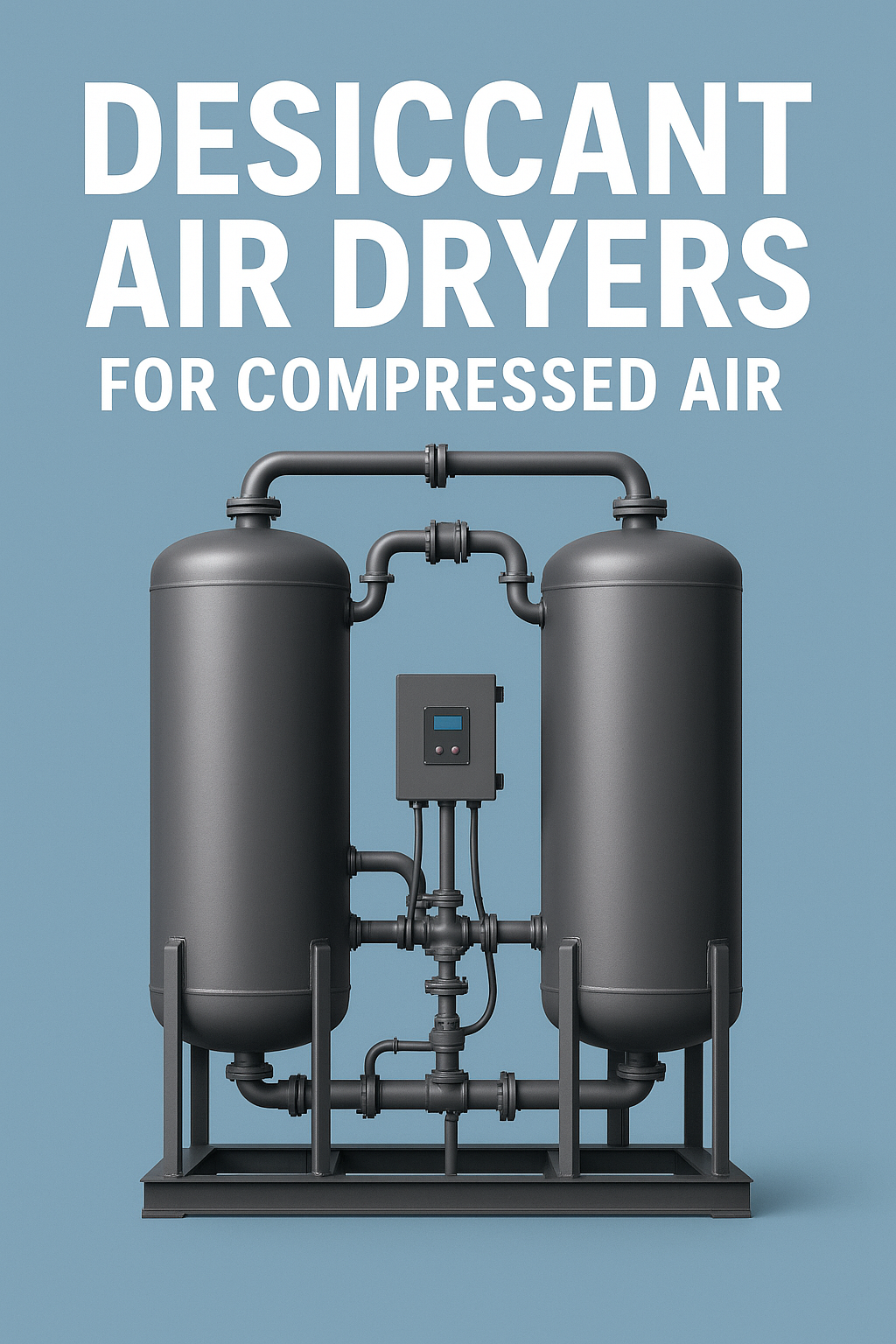
The Essential Guide to Desiccant Air Dryers for Compressed Air
Moisture is one of the most persistent problems in industrial compressed-air systems. Even after liquid condensate is removed, compressed air can still contain water vapor
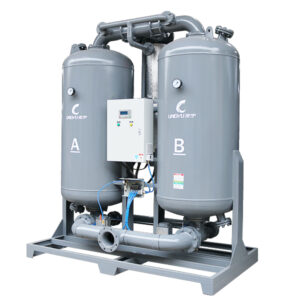
High-Performance Pneumatic Valves:Reliable and highly responsive pneumatic valves ensure fast and stable switching with a long service life.
High-Efficiency Desiccant:High-performance desiccant provides excellent adsorption capacity and abrasion resistance, ensuring a stable pressure dew point during long-term operation with minimal dusting.
Intelligent Programmable Control:Equipped with a fully electronic programmable controller featuring an intuitive interface for easy operation and maintenance.
Low-Noise Operation:Low-noise check valves and high-performance silencers minimize noise throughout operation and during exhaust.
Automatic Repressurization:Before valve switching, the system automatically repressurizes and equalizes the pressure between the vessels. This ensures stable vessel pressure, minimizes pressure fluctuations and their impact on the desiccant, and helps extend desiccant service life.
Heater Pressure Protection:The heater is equipped with pressure protection to prevent dry heating, enhancing operational reliability and extending heater service life.
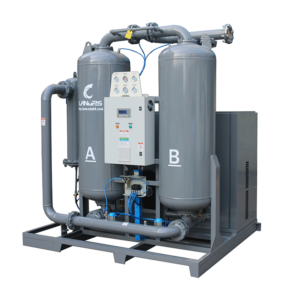
Energy Saving: Pre-drying reduces the moisture load on the adsorption system, lowering regeneration air consumption and extending desiccant life while maintaining a consistently low pressure dew point.
Efficient Dual Drying System: Optimized refrigeration and adsorption technologies provide efficient moisture removal, lower compressor power consumption, and ultra-low pressure dew point performance.
Integrated Design: Compact, easy to install, and manufactured under strict quality control. Each unit is thoroughly tested before shipment for reliable and consistent operation.
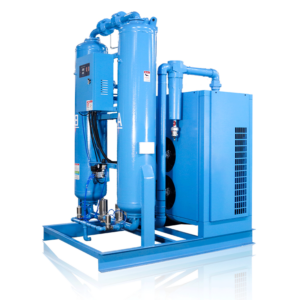
Advanced Refrigerated & Adsorption Drying Systems
The refrigerated drying system features an optimized heat-exchange design, high-precision refrigeration components, and automatic temperature-based capacity control to improve cooling efficiency while reducing compressor power consumption.
The adsorption drying system uses high-performance desiccant and an optimized adsorption cycle to enhance moisture removal, improve adsorption efficiency, and achieve an ultra-low pressure dew point.
Integrated Design
The compact integrated design saves installation space and simplifies setup. Each unit is manufactured under strict quality control and thoroughly tested before shipment to ensure reliable operation and consistent performance.
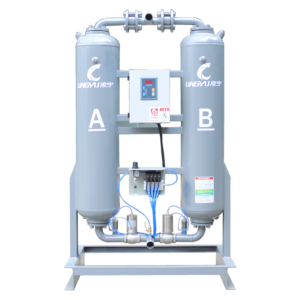
High-Performance Pneumatic Valves:Reliable and responsive pneumatic valves ensure fast switching, stable operation, and long service life.
High-Torque Pneumatic Actuators:High-torque aluminum alloy pneumatic actuators provide smooth, reliable operation.
High-Performance Desiccant:Premium desiccant offers excellent adsorption capacity and abrasion resistance, ensuring a stable dew point over long-term operation with minimal dusting.
Intelligent Programmable Control:Equipped with a fully electronic programmable controller featuring an intuitive interface for easy operation and maintenance.
Low-Noise Operation:Low-noise check valves and high-performance silencers minimize operating and exhaust noise.
Automatic Repressurization:Before valve switching, the system automatically repressurizes and equalizes the pressure between the vessels. This ensures stable vessel pressure, minimizes pressure fluctuations and impact on the desiccant, and helps extend desiccant service life.
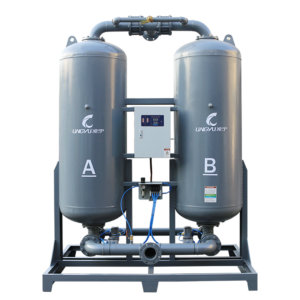
High-Performance Pneumatic Valves:Reliable and highly responsive pneumatic valves provide fast and stable switching with a long service life.
High-Torque Pneumatic Actuators:High-torque aluminum alloy pneumatic actuators ensure smooth, stable, and reliable operation.
High-Performance Desiccant:Premium desiccant provides excellent adsorption capacity and abrasion resistance, ensuring a stable pressure dew point over long-term operation with minimal dusting.
Intelligent Programmable Control:Equipped with a fully electronic programmable controller featuring an intuitive interface for easy operation and maintenance.
Low-Noise Operation:Low-noise check valves and high-performance silencers minimize noise during both normal operation and exhaust.
Automatic Repressurization:Before valve switching, the system automatically repressurizes and equalizes the pressure between the vessels. This ensures stable vessel pressure, minimizes pressure fluctuations and impact on the desiccant, and helps extend desiccant service life.
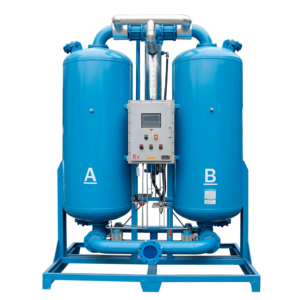
Ensure safe use in flammable and explosive environments
Resists chemical corrosion and extends service life
Special sealing technology prevents flammable gases or dust from entering the interior of the machine
Regeneration gas consumption can be adjusted, with energy saving and dew point adjustment function
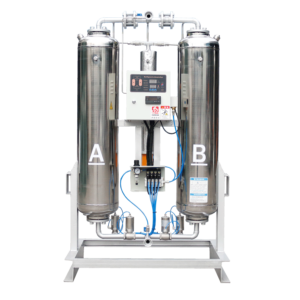
High corrosion resistance
High recycling rate
Easy to clean and maintain
Stable performance
Easy to maintain
Highly efficient pneumatic controller
Intelligent and user-friendly design
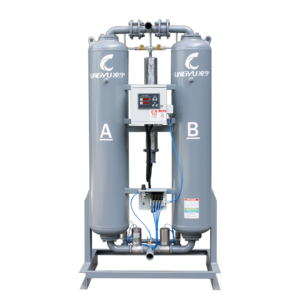
High-Performance Pneumatic Valves:Reliable and highly responsive pneumatic valves ensure fast and stable switching with a long service life.
High-Efficiency Desiccant:High-performance desiccant provides excellent adsorption capacity and abrasion resistance, ensuring a stable pressure dew point during long-term operation with minimal dusting.
Intelligent Programmable Control:Equipped with a fully electronic programmable controller featuring an intuitive interface for easy operation and maintenance.
Low-Noise Operation:Low-noise check valves and high-performance silencers minimize noise during both normal operation and exhaust.
Automatic Repressurization:Before valve switching, the system automatically repressurizes and equalizes the pressure between the vessels. This ensures stable vessel pressure, minimizes pressure fluctuations and impact on the desiccant, and helps extend desiccant service life.
Heater Pressure Protection:The heater is equipped with pressure protection to prevent dry heating, improving operational safety and extending heater service life.
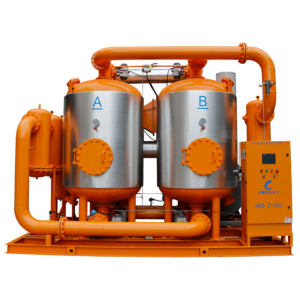
Flexible Communication:RS-485 standard, with optional IoT connectivity.
Energy-Saving Control:EBZ200-2 reduces energy consumption by over 10%.
Dew-Point Control (Optional):Load-based control saves over 30% energy.
High-Performance Desiccant:20% extra filling ensures stable, efficient adsorption.
Premium Core Components:High-pressure blower, pneumatic valves, and efficient cooler ensure reliable performance.
Optimized Airflow Design:304 stainless steel piping and optimized airflow reduce pressure drop.
Smart Touchscreen Control:7-inch MCGS touchscreen enables real-time operating monitoring.
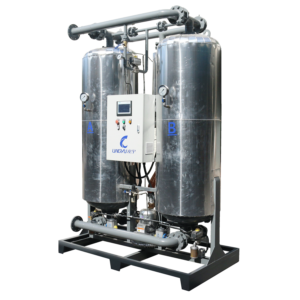
The independently developed EBZ200-2 multi-core driver can save more than 10% of the comprehensive energy consumption compared with the fixed cycle mode;
The communication can meet the user's requirements such as RS-485 (standard), IoT connection, etc.
The optional dew point energy-saving control can extend the adsorption time and reduce the comprehensive energy consumption by more than 30% under load fluctuation conditions;
Customized high-performance adsorbent, 20% filling margin;
304 stainless steel control gas pipeline, specially designed diverter, high adsorbent utilization rate, small gas pressure loss;
7-inch Siemens touch screen programmable controller, dynamic monitoring of operation process;
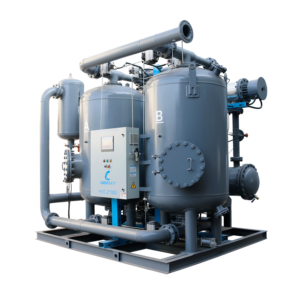
Dew Point Monitoring:Real-time dew point monitoring ensures stable drying performance.
Siemens Touchscreen Control:Siemens touchscreen with RS-485 for monitoring and system integration.
Reliable Pneumatic Valves:High-performance valves with feedback control improve system reliability.
Automatic Flow Control:Automatically adapts to 30–110% load variations.
Intelligent Drainage:Automatic condensate monitoring and drainage ensure reliable operation.
Partial-/Full-Flow Operation:Seamless mode switching improves safety and reduces energy consumption.
Differential Pressure Protection:Automatic monitoring and protection help maintain continuous air supply.
Galvanized Piping:Hot-dip galvanized piping improves corrosion resistance and service life.
Skid-Mounted Design:DN150+ piping and pressure vessels are integrated into a certified skid-mounted assembly.
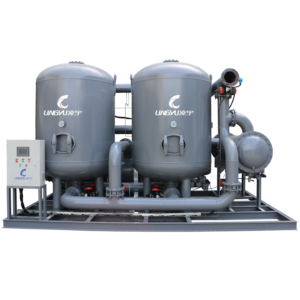
Flexible Communication:RS-485 standard, optional IoT connectivity.
Energy-Saving Control:EBZ200-2 control reduces energy use by over 10%.
Dew-Point Control (Optional):Load-based control saves over 30% energy.
High-Performance Desiccant:20% extra filling for stable, efficient adsorption.
Reliable Components:Premium valves and high-efficiency cooler ensure durability.
Metal Control-Air Piping:Strong, durable, and reliable.
Optimized Airflow:Improves desiccant utilization with lower pressure drop.
Smart Touchscreen Control:Siemens touchscreen for real-time operating monitoring.
Moisture is one of the most persistent problems in industrial compressed-air systems. Even after liquid condensate is removed, compressed air can still contain water vapor
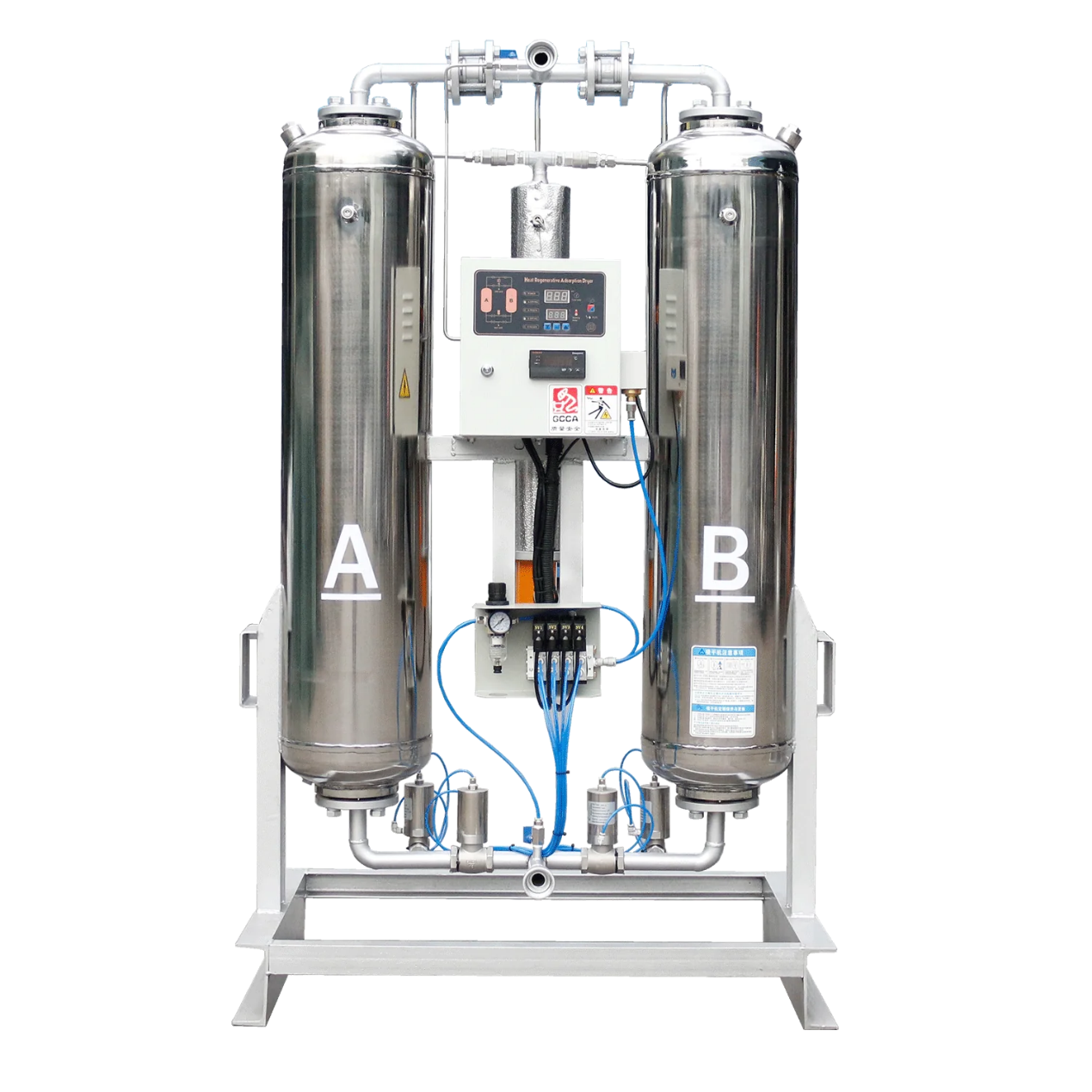
A desiccant air dryer, also known as an adsorption air dryer, removes water vapor from compressed air through adsorption. It is used when compressed air
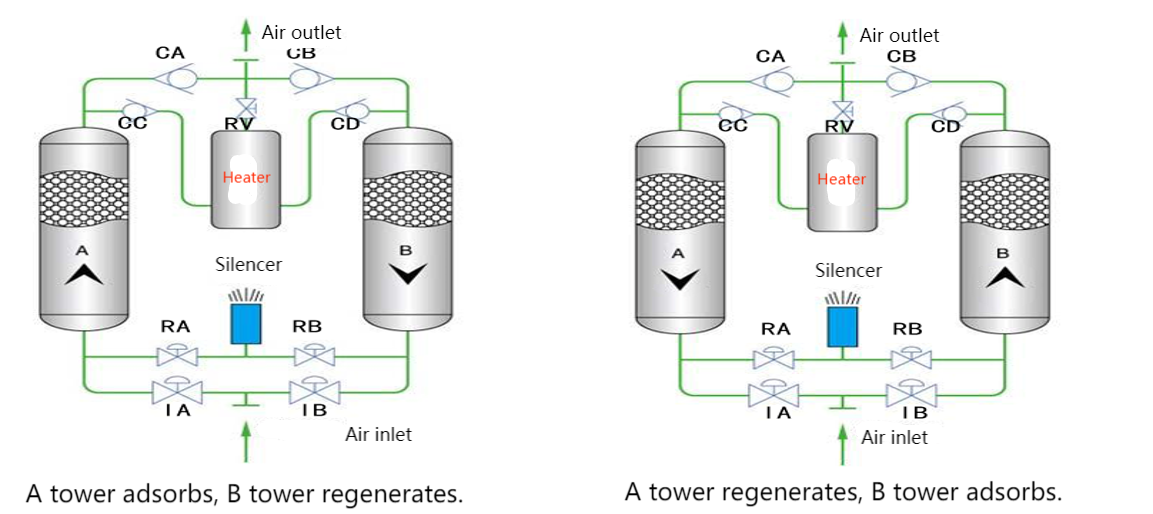
Understanding the Desiccant Air Dryer Working Principle Why Dry Compressed Air Matters Compressed air is a vital utility in manufacturing, healthcare, electronics, food processing, and
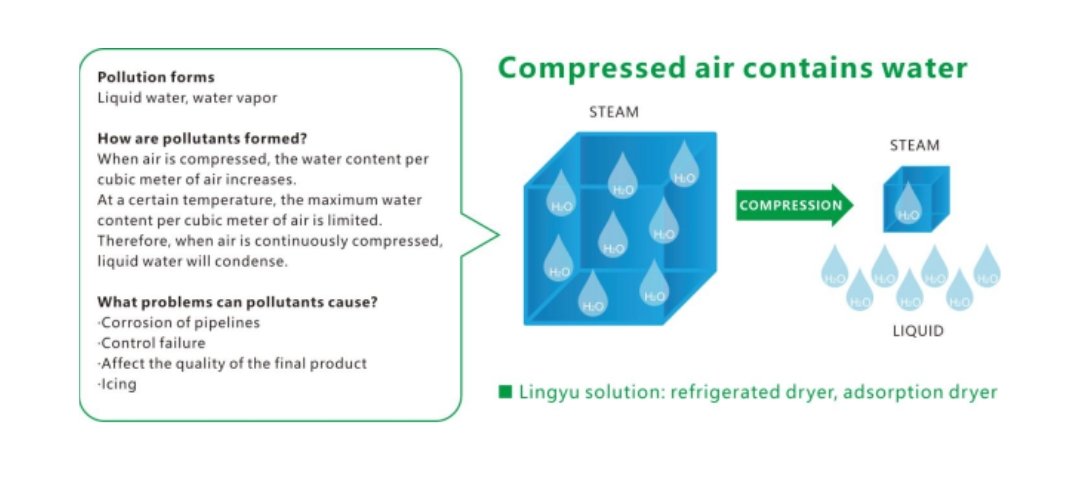
Atmospheric air in any residential or industrial setting contains water vapors. Now, consider these settings as sponges that retain moisture. When we squeeze the sponge,