When selecting an adsorption dryer for demanding industrial environments, airflow and dew point are only part of the decision. Material durability, compressed air cleanliness, corrosion resistance, maintenance requirements, and long-term operating stability can be equally important.
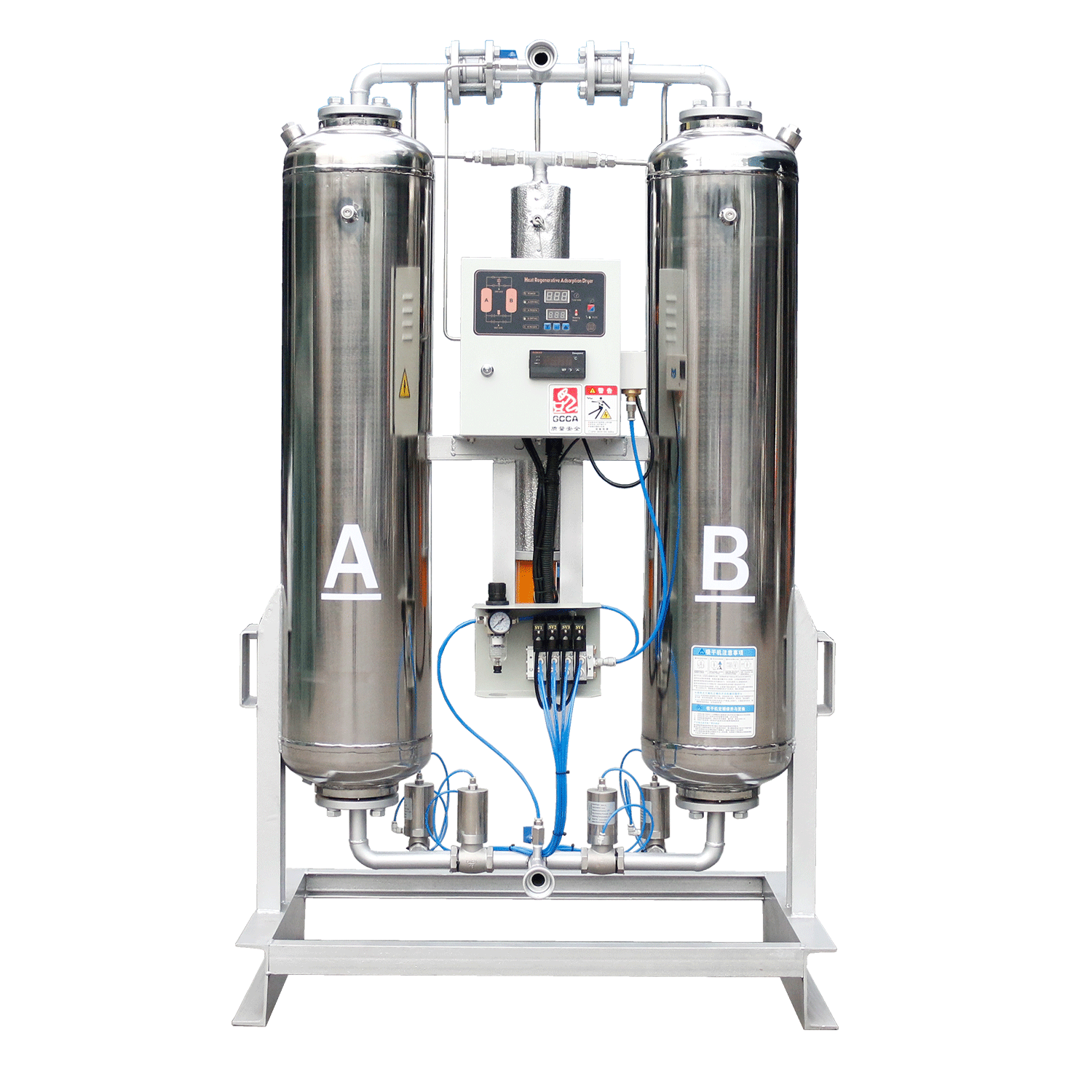
The 100HXS Stainless Steel Adsorption Dryer is designed for applications where reliable moisture removal must be combined with a clean, corrosion-resistant equipment structure. Its stainless steel construction makes it particularly suitable for production environments with high requirements for cleanliness, durability, and compressed air quality.
For users seeking this specific configuration, the 100HXS Stainless Steel Adsorption Dryer provides a dedicated solution for demanding compressed air treatment applications.
Why Choose a Stainless Steel Adsorption Dryer?
Conventional adsorption dryers are often manufactured from carbon steel with protective surface coatings. These designs can perform reliably in many general industrial applications, but stainless steel provides additional advantages where corrosion resistance and cleanliness are priorities.
A stainless steel structure helps resist oxidation and corrosion in demanding operating environments. Its clean, durable surface also makes maintenance easier where contamination control is important.
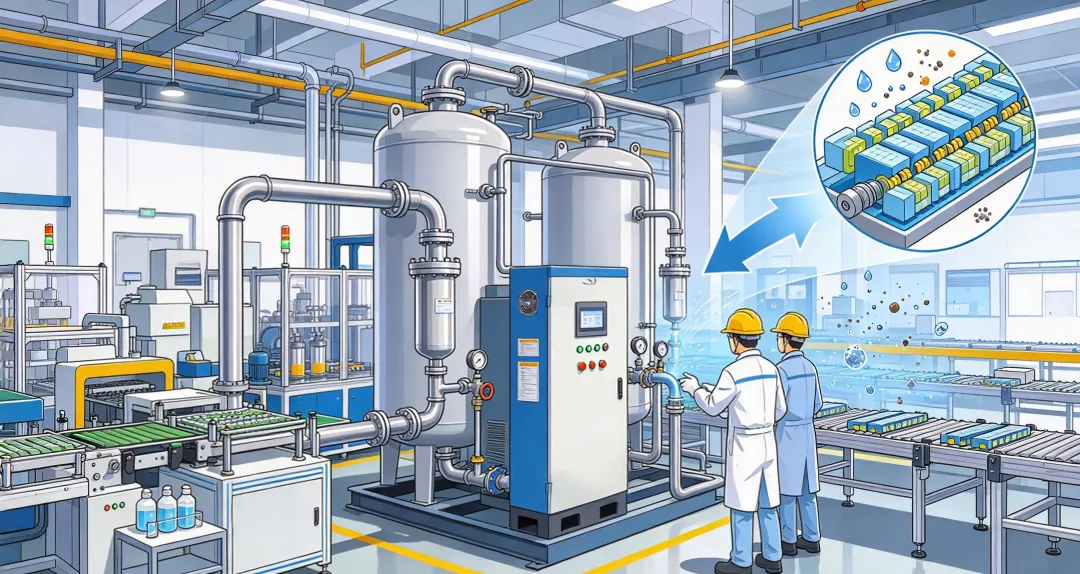
These characteristics make stainless steel adsorption dryers well suited to industries such as:
- Pharmaceutical production
- Food and beverage processing
- Electronics and semiconductor manufacturing
- Chemical and petrochemical processing
- New energy manufacturing
- Other applications requiring clean, dry compressed air
For pharmaceutical and biopharmaceutical production, controlling moisture and contamination in compressed air systems can help support stable and hygienic manufacturing processes.
In food and beverage applications, corrosion-resistant equipment can be especially valuable where cleanliness and production hygiene are important.
For semiconductor and PCB manufacturing, reliable dry compressed air helps protect sensitive pneumatic equipment and supports consistent production conditions.
Stainless steel construction is also useful in petrochemical and chemical processing, where equipment may operate in more demanding industrial environments.
How Does the 100HXS Adsorption Dryer Work?
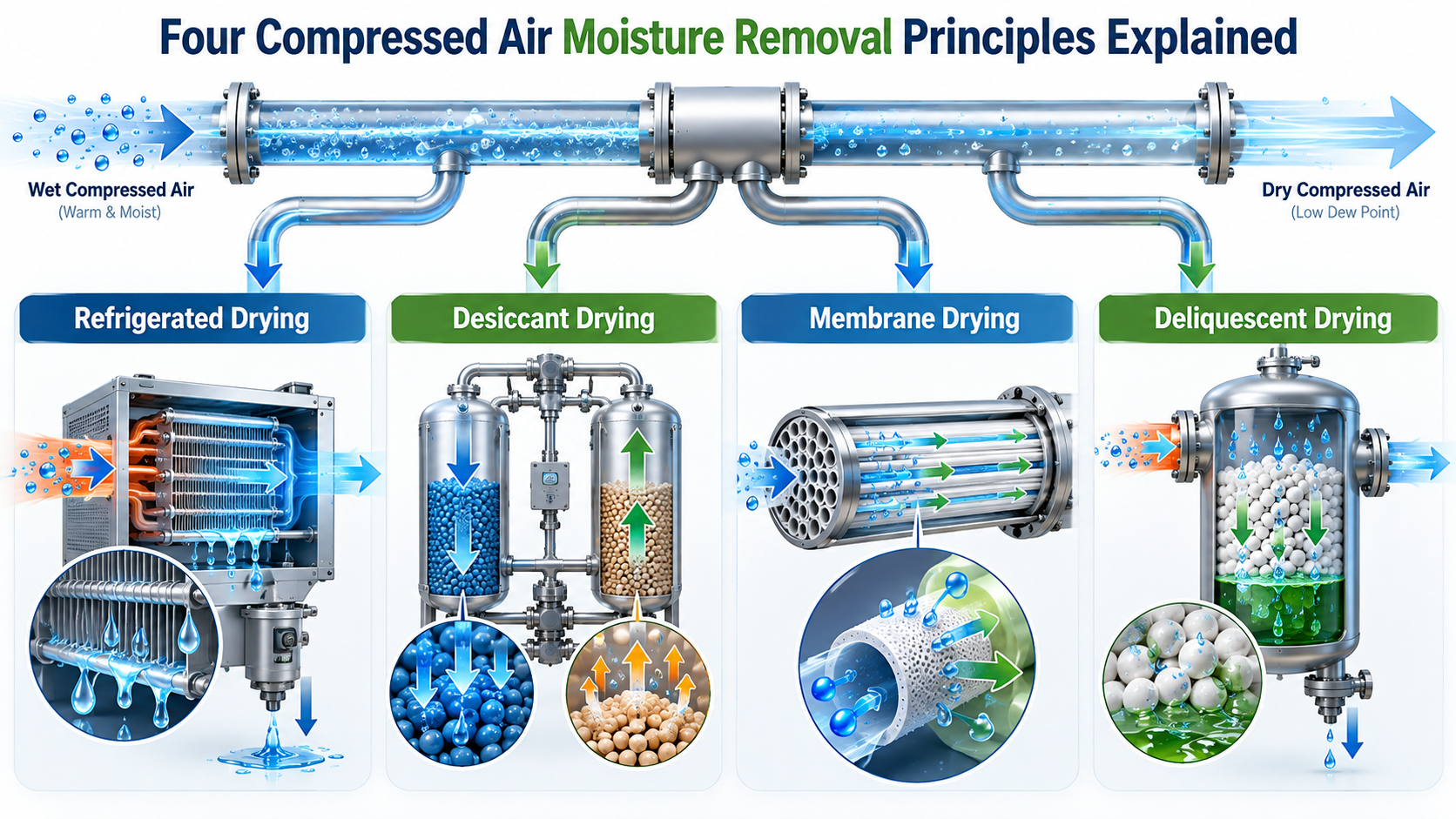
The drying process is based on adsorption. Moist compressed air passes through a vessel filled with desiccant, where water vapor is captured before the treated air is delivered downstream.
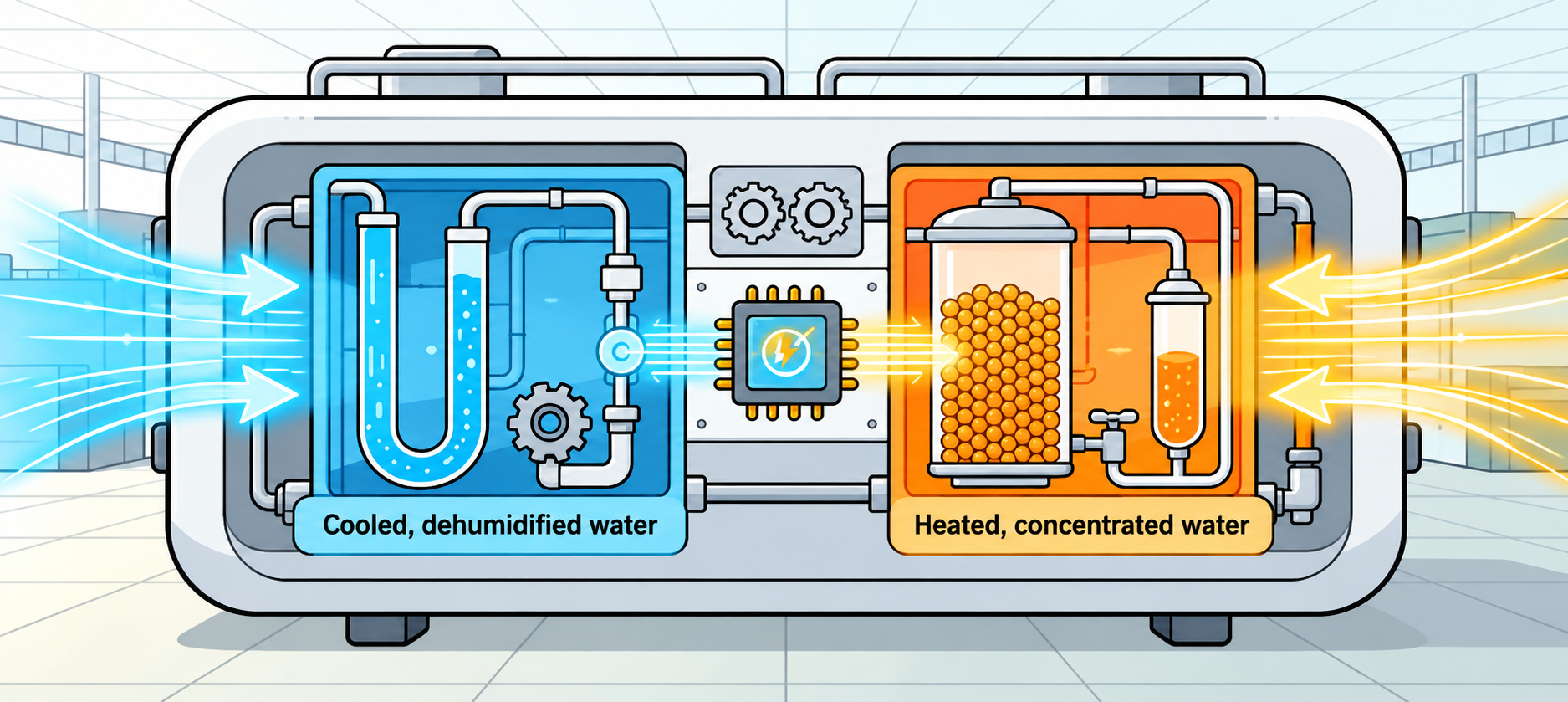
The system operates through alternating drying and regeneration cycles. While one vessel removes moisture from the compressed air, the other is regenerated so that its adsorption capacity can be restored for the next cycle.
This alternating process allows the dryer to provide a continuous supply of dry compressed air rather than interrupting production whenever the desiccant requires regeneration.
For plants comparing different drying technologies and regeneration methods, Lingyu’s range of desiccant air dryers provides additional configurations for different dew-point, airflow, and energy requirements.
Key Advantages of the 100HXS Stainless Steel Adsorption Dryer
High Corrosion Resistance
Stainless steel construction provides greater resistance to rust, oxidation, and corrosion than conventional untreated carbon steel surfaces.
This is particularly useful where equipment cleanliness, environmental humidity, or long service life are important considerations.
Clean and Easy-to-Maintain Structure
The stainless steel surface is durable and relatively easy to clean, making routine equipment maintenance more convenient.
Reducing corrosion and surface deterioration can also help keep the compressed air treatment installation cleaner over long-term operation.
Stable Drying Performance
Reliable adsorption depends on more than the adsorbent itself. Airflow distribution, valve switching, regeneration control, pressure stability, and system configuration all influence dryer performance.
The 100HXS is designed to provide stable operation for industrial applications requiring consistently dry compressed air.
Efficient Pneumatic Control
A high-efficiency pneumatic control system manages the switching process between adsorption and regeneration stages.
Stable valve operation is important because irregular switching can cause pressure fluctuations, inefficient regeneration, and unstable dew-point performance.
Intelligent Operation
An intelligent control design simplifies system operation and allows operators to manage the dryer more conveniently during normal production.
For facilities operating continuously, easier monitoring and control can also reduce the workload associated with routine equipment supervision.
Convenient Maintenance
Equipment accessibility and a clean structural design help simplify routine inspection and maintenance.
The objective is not only to remove moisture effectively, but also to keep the dryer practical to operate throughout its service life.
Why Filtration Is Important for Adsorption Dryer Performance
An adsorption dryer should not normally be considered as an isolated piece of equipment.
Compressed air entering the dryer may contain oil aerosols, particles, rust, condensed moisture, and other contaminants. If these contaminants reach the adsorption bed, they can reduce adsorption performance and shorten desiccant life.
Installing appropriate upstream filtration therefore helps protect the dryer and maintain reliable operation.
Downstream filtration may also be required to capture fine desiccant particles before compressed air reaches sensitive production equipment.
A suitable precision compressed air filter can therefore form an important part of the complete air treatment system.
Installation Considerations
Correct installation has a direct impact on dryer stability and maintenance requirements.
The inlet air should be properly treated before entering the adsorption dryer, especially where oil-lubricated compressors are used. Excessive oil contamination can affect the desiccant and reduce moisture-removal performance.
Operators should also pay attention to:
- Inlet pressure and temperature
- Actual compressed air flow
- Ambient temperature
- Required outlet pressure dew point
- Upstream condensate removal
- Pre-filter condition
- After-filter condition
- Valve operation
- Desiccant condition
- Drain performance
- Available maintenance space
Adequate ventilation and sufficient access around the dryer should be considered during installation so that routine inspection and servicing can be performed safely and conveniently.
Maintenance Tips for Stable Long-Term Performance
Preventive maintenance is more effective than waiting for dew-point deterioration or switching problems to appear.
Filters should be inspected and replaced according to operating conditions because excessive filter contamination can increase pressure drop and allow contaminants to reach the dryer.
Valve operation should also be checked regularly. Adsorption dryers depend on repeated switching between vessels, so worn or slow-acting valves can affect regeneration and system stability.
Desiccant condition should be evaluated periodically for signs of contamination, dusting, or reduced adsorption performance. Rather than replacing desiccant solely according to a fixed calendar interval, actual operating conditions and dryer performance should also be considered.
Routine maintenance should therefore focus on maintaining clean inlet air, proper airflow, reliable switching, effective regeneration, and stable outlet air quality.
The Value of Stainless Steel in Modern Production
The benefit of a stainless steel adsorption dryer is not simply its appearance.
In processes where compressed air quality directly affects production, corrosion resistance can contribute to cleaner operation and lower contamination risk. Durable construction can also be valuable in plants where compressed air equipment is expected to operate continuously for many years.
For industrial users, the practical benefits can include:
- Reduced risk of corrosion-related contamination
- Easier cleaning and maintenance
- Reliable moisture control
- Improved equipment durability
- Stable operation in demanding environments
- Better protection for downstream pneumatic equipment
- Greater suitability for cleanliness-sensitive processes
The exact economic benefit will depend on operating conditions, air quality requirements, maintenance practices, and the complete compressed air system configuration.
Choosing the Right Adsorption Dryer Configuration
The 100HXS is most appropriate when stainless steel construction provides a meaningful advantage for the application.
Before selecting a dryer, consider the required airflow, operating pressure, inlet temperature, target pressure dew point, compressor type, expected contamination level, installation environment, and required materials of construction.
A technically oversized dryer can increase equipment cost unnecessarily, while an undersized unit may struggle to maintain the required dew point during peak production.
Selection should therefore be based on actual operating conditions rather than airflow alone.
A Reliable Solution for Clean, Dry Compressed Air
The 100HXS Stainless Steel Adsorption Dryer combines corrosion-resistant construction, convenient maintenance, stable operation, efficient pneumatic control, and an intelligent operating design for demanding compressed air applications.
For pharmaceutical, food and beverage, electronics, chemical, and other industries where both moisture control and equipment cleanliness matter, stainless steel construction can provide important long-term advantages.
If you need help determining whether the 100HXS is suitable for your operating conditions or require a customized compressed air treatment configuration, contact Lingyu with your airflow, pressure, inlet temperature, required dew point, and air-quality requirements.