Compressed air is an essential utility in modern industrial facilities. It powers pneumatic equipment, automation systems, instruments, production machinery, and process equipment across manufacturing, electronics, chemical processing, metal fabrication, and many other industries.
But compressed air is also stored and distributed under pressure.
A poorly maintained or incorrectly operated system can expose personnel and equipment to hazards associated with stored energy, high-pressure air release, hot surfaces, rotating machinery, electrical faults, condensate, equipment failure, and unexpected startup.
For this reason, compressed air system safety should not be treated as a single inspection performed occasionally. Effective risk management covers the entire operating cycle:
Pre-start inspection → Operating monitoring → Controlled shutdown → Maintenance and corrective action → Verification before restart
This guide explains how industrial facilities can establish a more systematic approach to compressed air safety while recognizing an important principle: equipment manufacturer instructions, site-specific risk assessments, and applicable local safety regulations always take priority over generalized guidance.
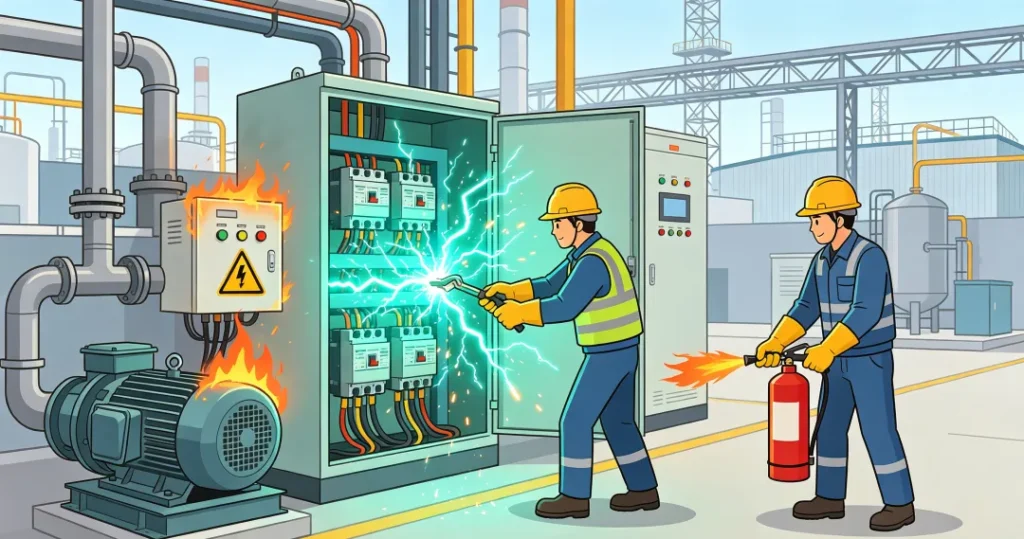
What Are the Main Safety Risks in a Compressed Air System?
A compressed air installation typically includes the compressor, air receiver, filters, dryers, drains, valves, piping, electrical equipment, controls, and downstream points of use.
Each part can introduce different hazards.
Common compressed air system risks include:
- sudden release of stored pneumatic energy;
- hose, fitting, valve, or piping failure;
- high-pressure air or debris injection;
- pressure vessel hazards;
- excessive pressure or temperature;
- contact with hot compressor or discharge piping surfaces;
- rotating or moving machinery;
- electrical shock, short circuits, or electrical fires;
- unexpected equipment startup during maintenance;
- condensate accumulation and internal corrosion;
- compressed air leaks;
- oil or other contamination;
- unsafe modification or bypassing of protective devices.
The objective of a compressed air safety program is therefore not simply to prevent one type of failure. It is to identify hazards throughout the system and establish appropriate engineering controls, operating procedures, inspection practices, and emergency responses.
Step 1: Perform a Thorough Pre-Start Safety Inspection
A pre-start inspection provides an opportunity to identify visible defects before the system becomes pressurized and energized.
The exact checklist should follow the equipment manufacturer’s documentation and the facility’s approved operating procedure.
1. Inspect the Air Compressor and Mechanical Components
Check accessible compressor components for signs of abnormal condition or damage.
Depending on the compressor design, inspection points may include:
- visible cracks, deformation, or physical damage;
- loose fasteners or mounting points;
- belt condition and tension where belt drives are used;
- coupling condition and alignment where applicable;
- guards and protective covers;
- unusual signs of vibration or previous mechanical contact.
Do not operate equipment with missing guards, visibly damaged rotating components, or unresolved mechanical defects.
Different compressor technologies have different inspection requirements, so maintenance procedures should always be matched to the actual equipment design.
2. Verify Pressure Protection and Instrumentation
Air receivers and other pressure-containing equipment require particular attention because they store significant energy.
Depending on system design and applicable regulations, relevant devices may include:
- pressure relief valves;
- pressure gauges;
- pressure switches or transmitters;
- automatic shutdown controls;
- alarms and interlocks.
Verify that these devices are installed, accessible, and within any required inspection or certification period.
Never adjust, block, isolate, or bypass a pressure relief device simply to keep equipment running.
Setpoints should be based on the manufacturer’s design and the allowable working pressure of the applicable equipment—not on a generic pressure value.
3. Inspect Piping, Hoses, Valves, and Connections
Inspect the compressed air distribution system for visible deterioration.
Look for:
- corrosion;
- cracked or damaged hoses;
- loose fittings;
- damaged flanges;
- deteriorated seals;
- unsupported piping;
- abnormal movement or vibration;
- previous leak locations;
- mechanical impact damage.
Compressed air leaks are often discussed primarily as an energy-efficiency issue, but significant leakage or a failed connection can also create safety hazards.
A damaged hose or fitting should not simply be ignored because the system can still maintain pressure.
For a detailed discussion of leakage control, see our guide to compressed air leak prevention.
4. Check Electrical Safety
Inspect accessible electrical components for visible signs of damage.
This can include:
- damaged cable insulation;
- loose or exposed connections;
- signs of overheating;
- damaged electrical enclosures;
- abnormal odors or discoloration;
- grounding or protective conductor issues;
- alarms or faults reported by the controller.
Electrical inspection and repair should be performed only by appropriately qualified personnel in accordance with applicable electrical safety requirements.
Protective devices should never be bypassed to force a compressor or dryer to start.
5. Check Lubrication, Cooling, and Condensate Management
For equipment requiring lubrication, verify the lubricant condition and level according to the manufacturer’s instructions.
Also inspect the relevant cooling system.
Depending on the equipment, this may involve:
- cooling air passages;
- heat exchangers;
- cooling fans;
- water supply and return lines;
- coolant or cooling-water flow;
- clogged surfaces or filters.
A blocked or ineffective cooling system can contribute to excessive operating temperature and unexpected shutdown.
Condensate drains should also be checked because ineffective drainage can allow water to accumulate in receivers, filters, dryers, and distribution piping.
Step 2: Monitor the System During Operation
Once the system starts, safety management moves from static inspection to dynamic monitoring.
A useful monitoring sequence is:
Air Compressor → Air Receiver → Air Treatment Equipment → Distribution Piping → Point of Use
Operators should understand what constitutes normal behavior for their specific equipment so that abnormal changes can be identified early.
Monitor Pressure and Temperature
Operating pressure and temperature should remain within the limits specified for the compressor and connected equipment.
A fixed discharge temperature such as 75–95°C (167–203°F) should not be treated as a universal safe operating range. Normal temperatures vary significantly with compressor technology, cooling method, ambient conditions, load, and equipment design.
Instead, monitor:
- discharge temperature;
- discharge pressure;
- pressure differential;
- cooling conditions;
- controller warnings and alarms;
- abnormal trends compared with established baseline data.
If a parameter exceeds the manufacturer’s allowable limit, follow the approved shutdown and troubleshooting procedure.
Do not repeatedly reset an overtemperature, overpressure, or other protective trip without identifying its cause.
Listen for Abnormal Noise and Vibration
Operators familiar with the system can often recognize developing mechanical problems through changes in sound or vibration.
Warning signs can include:
- grinding;
- knocking;
- repeated impact sounds;
- excessive vibration;
- abnormal valve noise;
- unexpected cycling.
If the equipment exhibits a significant abnormal condition, follow the site’s safe shutdown procedure and investigate the cause before returning it to service.
Watch for Compressed Air Leaks
Leakage should be investigated rather than accepted as normal operation.
Potential leak locations include:
- threaded connections;
- flanges;
- hoses;
- quick couplings;
- valve stems;
- filter housings;
- drain assemblies;
- pneumatic equipment.
Leaks increase compressor demand and can contribute to unnecessary system pressure losses.
For facilities working on energy and system performance, see compressed air leak detection and our explanation of compressed air pressure drop.
Never use bare hands to search for high-pressure leaks.
Monitor Condensate Removal
Compressed air naturally produces condensate as moisture cools within the system.
Check that automatic drains and condensate-management devices operate correctly.
Poor condensate removal can contribute to:
- internal corrosion;
- water accumulation;
- contamination of downstream equipment;
- reduced air quality;
- malfunction of pneumatic components;
- increased load on downstream air-treatment equipment.
Air dryers and filters are therefore important not only for air quality but also for overall compressed air system reliability.
For an overview of the relationship between the compressor and dryer, see how the compressor and dryer work together in a compressed air system.
Avoid Contact With Hot or Moving Components
Compressor discharge piping, compressor elements, motors, refrigeration components, and other equipment surfaces may become hot during operation.
Guards and covers should remain in place while equipment is operating unless a manufacturer-approved service procedure specifically requires otherwise.
Operators should never make unauthorized adjustments to:
- pressure relief valves;
- pressure switches;
- protective interlocks;
- controller safety parameters;
- electrical protection devices.
Modifying safety controls without appropriate engineering review can introduce hazards that are not immediately visible.
Step 3: Use a Controlled Shutdown and Isolation Procedure
Shutdown procedures vary by compressor and air-treatment system.
For that reason, a universal instruction such as “always depressurize first and then disconnect power” should not replace the manufacturer’s specified shutdown sequence.
Under normal operating conditions, use the manufacturer’s standard stop procedure.
For inspection or maintenance, additional isolation may be required.
Isolate Hazardous Energy Before Maintenance
Before opening, removing, or servicing pressurized components, qualified personnel should follow the facility’s energy-isolation procedure.
Depending on the equipment and task, this can include:
- stopping the equipment according to the approved procedure;
- isolating the electrical energy source;
- isolating the equipment from compressed air sources;
- releasing trapped pressure through an approved method;
- controlling other stored mechanical, thermal, hydraulic, or pneumatic energy;
- verifying a zero-energy state before work begins.
Where applicable, use the facility’s established lockout/tagout (LOTO) or equivalent hazardous-energy-control procedure.
Never assume that a pressure gauge showing zero guarantees that every isolated section of equipment is depressurized.
Drain Condensate Safely
After isolation, condensate may need to be removed from receivers, filters, dryers, and low points in the piping system.
Use the designated drain system.
Do not loosen a fitting or remove a component as an improvised method of depressurization.
Condensate may contain oil and other contaminants, so its handling and disposal should comply with applicable environmental and site requirements.
Inspect and Clean Equipment After Cooling
Where cleaning is required, allow hot components to cool to a safe condition first.
Maintenance tasks can include removing dust and debris from:
- cooling fins;
- air passages;
- heat exchangers;
- external surfaces;
- ventilation areas.
Keeping heat-transfer surfaces clean helps maintain the cooling performance for which the equipment was designed.
Close the Corrective-Action Loop
A safety inspection has limited value if identified problems are recorded but never corrected.
A practical process is:
Identify → Record → Assess → Correct → Verify → Close
Operating logs can help identify recurring changes in pressure, temperature, leakage, vibration, drain performance, or alarms.
Serious unresolved defects should be addressed before the affected equipment is returned to service.
Step 4: Build Preventive Maintenance Into Safety Management
Safety management continues beyond daily startup and shutdown.
Facilities should establish preventive maintenance programs based on:
- manufacturer recommendations;
- operating hours;
- duty cycle;
- environmental conditions;
- equipment condition;
- historical failure data;
- risk assessment;
- applicable statutory inspection requirements.
Avoid applying a universal schedule such as “test every month, inspect every quarter, certify every year” to every compressed air installation.
Pressure-vessel inspection and safety-device testing requirements can vary significantly by jurisdiction and equipment type.
Maintain the Air Treatment System
Filters, dryers, drains, and separators should be included in the maintenance plan.
A poorly maintained air-treatment system can introduce:
- excessive pressure drop;
- condensate carryover;
- poor compressed air quality;
- unnecessary compressor loading;
- unstable downstream operation.
For refrigerated dryer-specific maintenance information, see the refrigerated compressed air dryer maintenance guide.
Manage Excessive Oil Contamination
Oil contamination can affect downstream filters, dryers, piping, pneumatic components, and processes.
If abnormal oil carryover is detected, investigate the cause instead of relying solely on downstream filtration.
See our guide to excessive oil content in compressed air systems for additional troubleshooting considerations.
Step 5: Prepare for Compressed Air Emergencies
Even a well-maintained system requires an emergency response plan.
Facilities should consider credible scenarios such as:
- major compressed air release;
- hose or piping failure;
- overpressure event;
- compressor overheating;
- electrical fault or fire;
- abnormal vibration or mechanical failure;
- pressure vessel or safety-device malfunction.
The emergency plan should define who is authorized to shut down equipment, how energy sources are isolated, when an area must be evacuated, and how the incident is reported.
Fire Response Must Match the Hazard
Do not establish a universal rule that one type of extinguisher is suitable for every compressor-room fire.
The appropriate fire-extinguishing equipment depends on the materials and energized equipment involved, applicable fire classifications, and local fire-safety requirements.
Facilities should provide appropriate fire protection based on a documented risk assessment and applicable codes.
Personnel should not attempt firefighting beyond their training or where evacuation is the safer response.
Step 6: Train Personnel and Define Responsibilities
Technical safeguards alone cannot manage every compressed air hazard.
Personnel responsible for operating or maintaining the system should understand:
- normal operating conditions;
- alarm meanings;
- emergency stop procedures;
- stored-energy hazards;
- hot-surface and rotating-equipment hazards;
- pressure isolation;
- electrical isolation;
- leak reporting;
- maintenance authorization;
- emergency communication.
Any licensing, certification, or competency requirements should follow applicable local regulations and company policy rather than being assumed to be identical in every country.
Emergency drills can also help personnel understand what actions to take when an abnormal condition occurs.
A Practical Compressed Air System Safety Checklist
The following checklist can be used as a starting point and adapted to the facility’s actual equipment and risk assessment.
Before Startup
- Inspect the compressor and accessible mechanical components.
- Verify guards and covers are correctly installed.
- Check piping, hoses, valves, and fittings for visible damage.
- Confirm pressure protection and instrumentation are in service.
- Check lubricant and cooling conditions where applicable.
- Verify condensate drains are operational.
- Inspect accessible electrical components for visible abnormalities.
- Review unresolved alarms or maintenance issues before startup.
During Operation
- Monitor pressure and temperature trends.
- Watch for alarms and unexpected cycling.
- Listen for abnormal noise.
- Observe vibration.
- Check for air leaks.
- Confirm condensate drainage.
- Keep personnel away from hot and moving components.
- Never bypass protective devices to maintain production.
Before Maintenance
- Follow the approved shutdown procedure.
- Isolate electrical and pneumatic energy.
- Control other stored energy.
- Depressurize through the designated method.
- Apply LOTO or the site’s equivalent procedure where required.
- Verify isolation before opening equipment.
Before Restart
- Confirm maintenance work is complete.
- Verify tools and temporary equipment have been removed.
- Restore guards and protective covers.
- Verify valves and controls are in the correct position.
- Close corrective actions or document any approved outstanding items.
- Restart according to the manufacturer’s procedure.
- Monitor the system closely after return to service.
FAQ: Compressed Air System Safety
What is the biggest safety risk in a compressed air system?
There is no single risk that applies equally to every installation. Stored pressure energy, uncontrolled air release, pressure vessel failure, electrical hazards, hot surfaces, rotating machinery, and unexpected startup can all be significant depending on the system and task.
A site-specific risk assessment is the best way to determine which hazards require the highest priority.
Is compressed air itself dangerous?
Compressed air is extremely useful, but improper use can be dangerous.
High-pressure air can propel particles, damage equipment, cause hose or component movement, and injure personnel. Compressed air should therefore never be treated as harmless simply because the working medium is air.
Can I use compressed air to clean clothing or skin?
Compressed air should not be directed at a person’s body or clothing.
Facilities should use approved cleaning methods and comply with applicable workplace-safety requirements.
How often should a compressed air system be inspected?
There is no universal interval for every component.
Inspection frequency should reflect manufacturer requirements, equipment condition, operating hours, service environment, risk level, and applicable regulatory requirements. Pressure vessels and protective devices may also be subject to jurisdiction-specific inspection rules.
Why are compressed air leaks a safety issue?
Many leaks are primarily an energy and reliability problem, but damaged hoses, fittings, valves, or piping can also create hazards from high-pressure release or unexpected component movement.
The severity depends on the location, pressure, component condition, and type of failure.
Should an air compressor be restarted immediately after a safety trip?
Not automatically.
A protective trip indicates that the controller or protective device detected a condition requiring attention. The cause should be identified and corrected according to the manufacturer’s troubleshooting procedure before normal operation resumes.
Repeatedly resetting a protective device without diagnosing the underlying condition can expose equipment and personnel to additional risk.
Conclusion: Compressed Air Safety Requires Full-Lifecycle Risk Management
A reliable compressed air safety program is not built around one inspection or one maintenance task.
It requires continuous risk control throughout the equipment lifecycle:
Inspect before startup. Monitor during operation. Shut down and isolate safely. Correct identified defects. Maintain equipment according to its actual requirements. Prepare personnel for emergencies.
Most importantly, safety decisions should be based on the actual equipment, operating conditions, manufacturer instructions, site risk assessment, and applicable local regulations rather than generic temperature, pressure, or inspection intervals.
Compressed air systems combine pressure, electrical energy, heat, rotating equipment, and stored energy. Managing those hazards systematically helps protect personnel while supporting reliable industrial operation.
For facilities reviewing the broader design of their air-treatment system, explore Lingyu’s compressed air treatment products, including refrigerated air dryers and desiccant air dryers.
For equipment selection or compressed air treatment requirements based on your operating conditions, contact Lingyu.