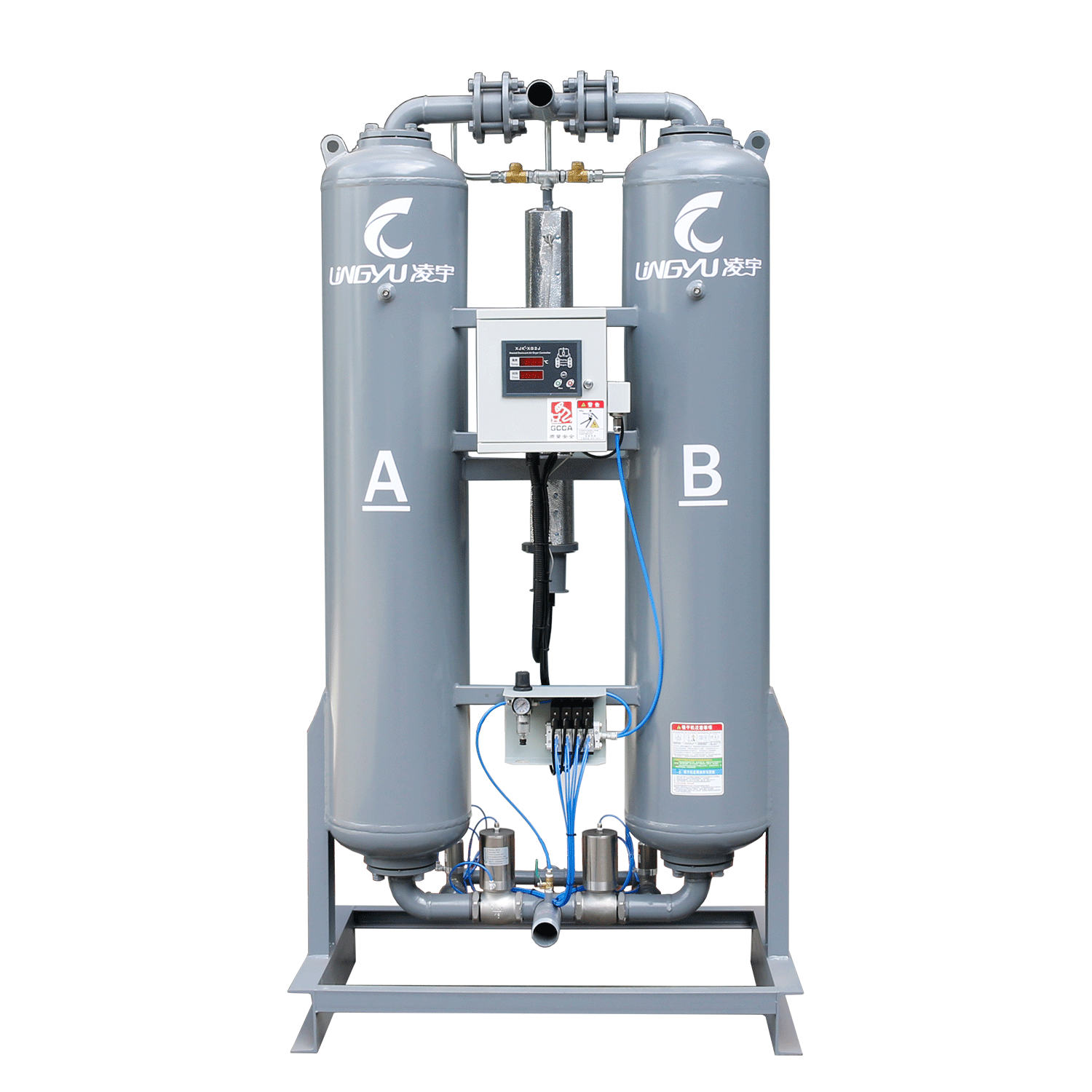
The CH Series Heated Regeneration Adsorption Air Dryer is designed for industrial compressed air systems that require stable low pressure dew points while reducing purge-air consumption compared with conventional heatless regeneration systems.
With processing capacities from 1.5 m³/min to 150 m³/min, the CH Series Heated Regeneration Adsorption Air Dryer can be used with compressed air and other non-corrosive gases across a wide range of industrial applications.
By using an external heat source during regeneration, the dryer reduces the amount of dry compressed air required to regenerate the desiccant while maintaining reliable moisture-removal performance.
Operating Conditions & Technical Requirements
The CH Series is designed for common industrial compressed air operating conditions:
- Applicable Medium: Compressed air / non-corrosive air
- Rated Inlet Pressure: 0.7 MPa
- Operating Pressure Range: 0.6–1.0 MPa; other pressure ratings available upon request
- Rated Inlet Temperature: 10–30°C
- Maximum Inlet Temperature: ≤40°C
- Average Purge Air Consumption: 4%–8%
- Outlet Pressure Dew Point: −50°C to −20°C
- Desiccant: Activated alumina
- Rated Ambient Temperature: 35°C
- Ambient Operating Range: 2–45°C
For applications requiring different dew points, regeneration methods, capacities, or system configurations, Lingyu also provides a wider range of desiccant air dryers.
How Does a Heated Regeneration Air Dryer Work?
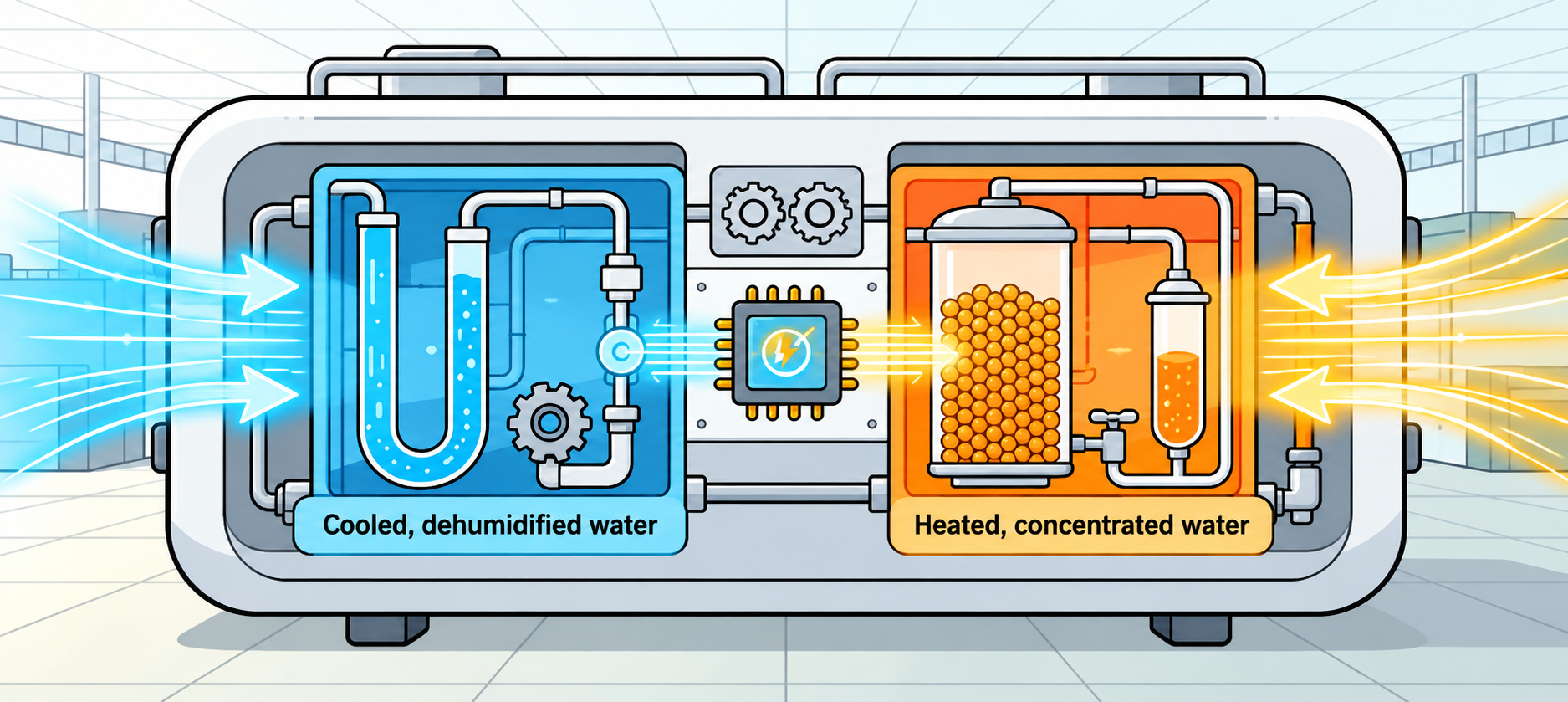
The CH Series operates using a temperature swing adsorption process.
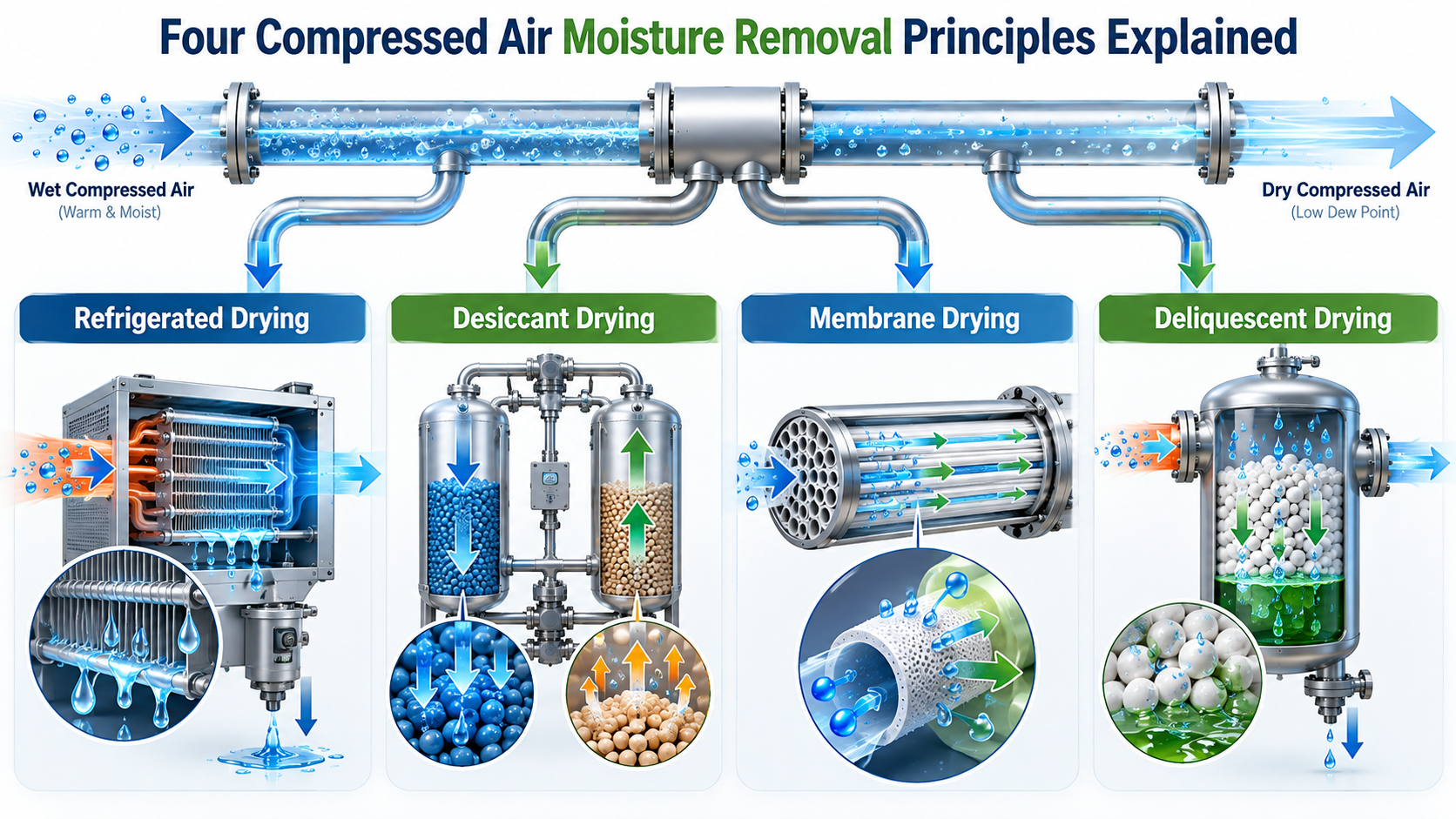
During the drying stage, compressed air passes through a desiccant bed that adsorbs water vapor. While one adsorption tower is drying the compressed air, the second tower undergoes regeneration.
During regeneration, an external heater raises the temperature of the regeneration air. The added thermal energy allows moisture retained by the desiccant to be released more efficiently. A portion of the dry product air then carries the released moisture out of the dryer.
The regeneration cycle includes two important stages: heated desorption and cooling. After moisture has been removed, the desiccant must cool before returning to the adsorption stage. This allows its moisture-removal capacity to recover before the next drying cycle begins.
Because heat assists the regeneration process, average purge-air consumption can be reduced to approximately 4%–8%.
Key Design Features
The CH Series is designed for reliable operation in continuous industrial compressed air systems.
High-performance pneumatic valves provide fast and stable switching between adsorption and regeneration cycles, helping maintain consistent system operation.
High-efficiency desiccant provides strong adsorption capacity and good abrasion resistance, helping maintain stable dew-point performance while reducing dust generation during long-term operation.
Intelligent programmable control simplifies operation and maintenance by automatically managing the drying, regeneration, cooling, and switching processes.
Automatic repressurization equalizes pressure between the vessels before switching. This helps reduce sudden pressure fluctuations and mechanical impact on the desiccant.
Heater pressure protection helps prevent dry heating and improves heater reliability and service life.
Low-noise check valves and silencers also help reduce exhaust noise during regeneration and switching.
CH Series Technical Parameters
| Model | Capacity (m³/min) | Power Supply (V/Hz) | Total Power (kW) | Air Inlet / Outlet | Weight (kg) | Dimensions L×W×H (mm) |
|---|---|---|---|---|---|---|
| LY-CH10HX | 1.5 | 380/50 | 0.9 | G1″ | 95 | 666×520×1692 |
| LY-CH20HX | 2.5 | 380/50 | 1.7 | G1″ | 125 | 726×520×1802 |
| LY-CH30HX | 3.8 | 380/50 | 1.7 | G1½” | 180 | 840×500×1691 |
| LY-CH50HX | 6.5 | 380/50 | 2.5 | G1½” | 315 | 1010×500×1713 |
| LY-CH75HX | 10.5 | 380/50 | 3.7 | G2″ | 448 | 1090×600×1912 |
| LY-CH100HX | 13.5 | 380/50 | 3.7 | G2″ | 540 | 1164×600×2192 |
| LY-CH120HX | 17.0 | 380/50 | 3.7 | DN65 | 610 | 1195×780×2251 |
| LY-CH150HX | 21.5 | 380/50 | 6.1 | DN80 | 740 | 1265×900×2282 |
| LY-CH200HX | 28.5 | 380/50 | 10.0 | DN80 | 1040 | 1460×1060×2320 |
| LY-CH300HX | 37.0 | 380/50 | 10.0 | DN100 | 1280 | 1580×1080×2460 |
| LY-CH600HX | 65.0 | 380/50 | 20.1 | DN125 | 2050 | 2040×1240×2820 |
| LY-CH900HX | 95.0 | 380/50 | 27.1 | DN150 | 2950 | 2330×1430×3250 |
| LY-CH1100HX | 110.0 | 380/50 | 34.1 | DN150 | 3200 | 2450×1430×2980 |
| LY-CH1300HX | 130.0 | 380/50 | 42.1 | DN150 | 4700 | 2610×1580×3060 |
| LY-CH1500HX | 150.0 | 380/50 | 50.1 | DN200 | 5300 | 2900×1400×3211 |
For airflow capacities above 150 m³/min or applications involving special pressures, materials, temperatures, or installation requirements, customized configurations are available.
Where Are CH Series Heated Regeneration Air Dryers Used?
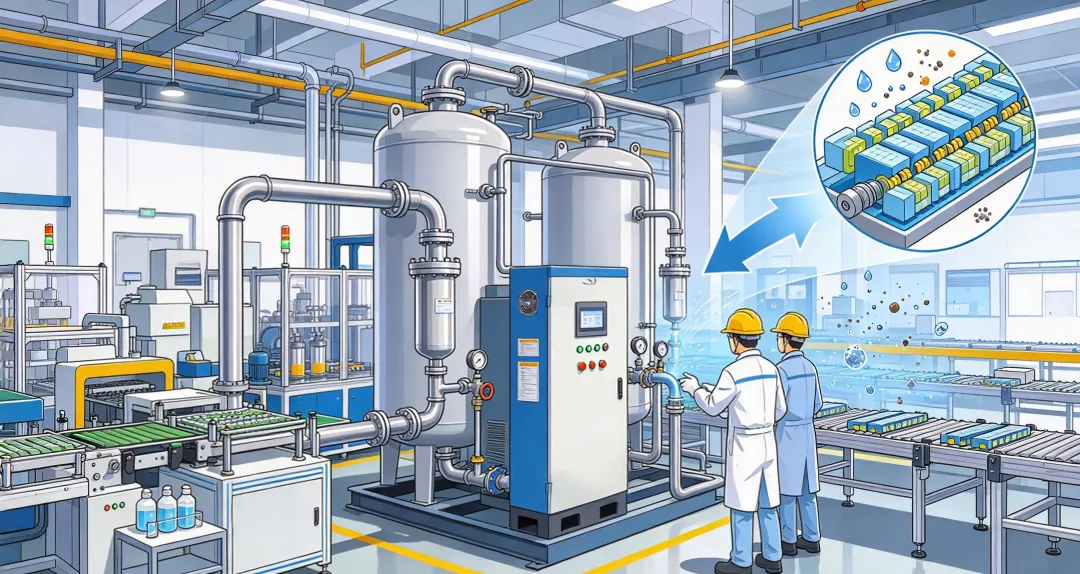
Heated regeneration dryers are particularly useful where moisture control is important for production stability, equipment reliability, or product quality.
In laboratory and analytical equipment applications, dry compressed air can support pneumatic instruments, analyzers, and other equipment that may be sensitive to moisture.
In electronics and precision manufacturing, controlled compressed air quality helps protect pneumatic components and supports stable operation of automated and precision production equipment.
Dry compressed air is also important in many medical and dental applications, where the complete air treatment system must be configured according to the required air-quality level.
For automotive and general manufacturing, heated regeneration dryers can support pneumatic automation, production machinery, control systems, and other processes that depend on reliable dry compressed air.
Other typical applications include:
- Pneumatic automation systems
- Environmental test chambers
- Air bearings
- Turbines
- Instrument and control air
- Robotic equipment
- Dry sprinkler systems
- Gas analysis equipment
- Industrial process air systems
The appropriate dryer should always be selected according to the actual airflow, pressure, temperature, dew-point requirement, and operating environment.
Why Compressed Air Filtration Matters
Removing moisture is only one part of compressed air purification.
Compressed air may also contain oil aerosols, solid particles, pipe contaminants, and other impurities. Depending on the required air quality, suitable filtration should therefore be installed before or after the dryer.
A precision compressed air filter can be integrated with the drying system to help control particles and residual oil before compressed air reaches sensitive downstream equipment.
Correct filter selection also helps protect the desiccant against contamination, which can contribute to more stable dryer performance and longer service life.
Integration With Nitrogen Generation Systems
Dry compressed air is also an important part of many on-site nitrogen generation systems.
PSA nitrogen generators require properly treated compressed air to help protect the adsorption material and maintain stable operating performance. Where both compressed air drying and nitrogen production are required, the air treatment system can therefore be designed together with a suitable nitrogen generator.
System configuration should be based on nitrogen purity, nitrogen flow, feed-air conditions, operating pressure, and the specific production process.
How to Select the Right CH Series Model
Selecting a heated regeneration air dryer based only on the compressor’s nominal airflow can lead to improper sizing.
Several operating conditions should be considered together:
- Actual compressed air flow
- Inlet pressure
- Inlet temperature
- Required pressure dew point
- Ambient temperature
- Operating hours
- Compressor loading conditions
- Required air quality
- Available installation space
- Future capacity requirements
For example, the standard rated inlet pressure is 0.7 MPa, but the normal operating range is 0.6–1.0 MPa. Rated inlet temperature is 10–30°C, while the maximum inlet temperature is 40°C.
Changes in inlet temperature, operating pressure, or flow demand can affect the actual drying load. Dryer capacity should therefore be evaluated using real operating conditions rather than compressor capacity alone.
Complete Compressed Air Treatment Solutions
Lingyu provides compressed air purification and gas separation equipment for a variety of industrial processes, including refrigerated air dryers, adsorption air dryers, combined dryers, precision filters, and nitrogen generation systems.
A complete compressed air treatment system can be configured around required airflow, pressure dew point, oil content, particle level, operating pressure, temperature, and downstream process requirements.
If you need help selecting a CH Series heated regeneration air dryer or configuring a complete compressed air treatment system, contact Lingyu with your operating conditions and air-quality requirements.