What Are Industrial Air Dryer Systems?
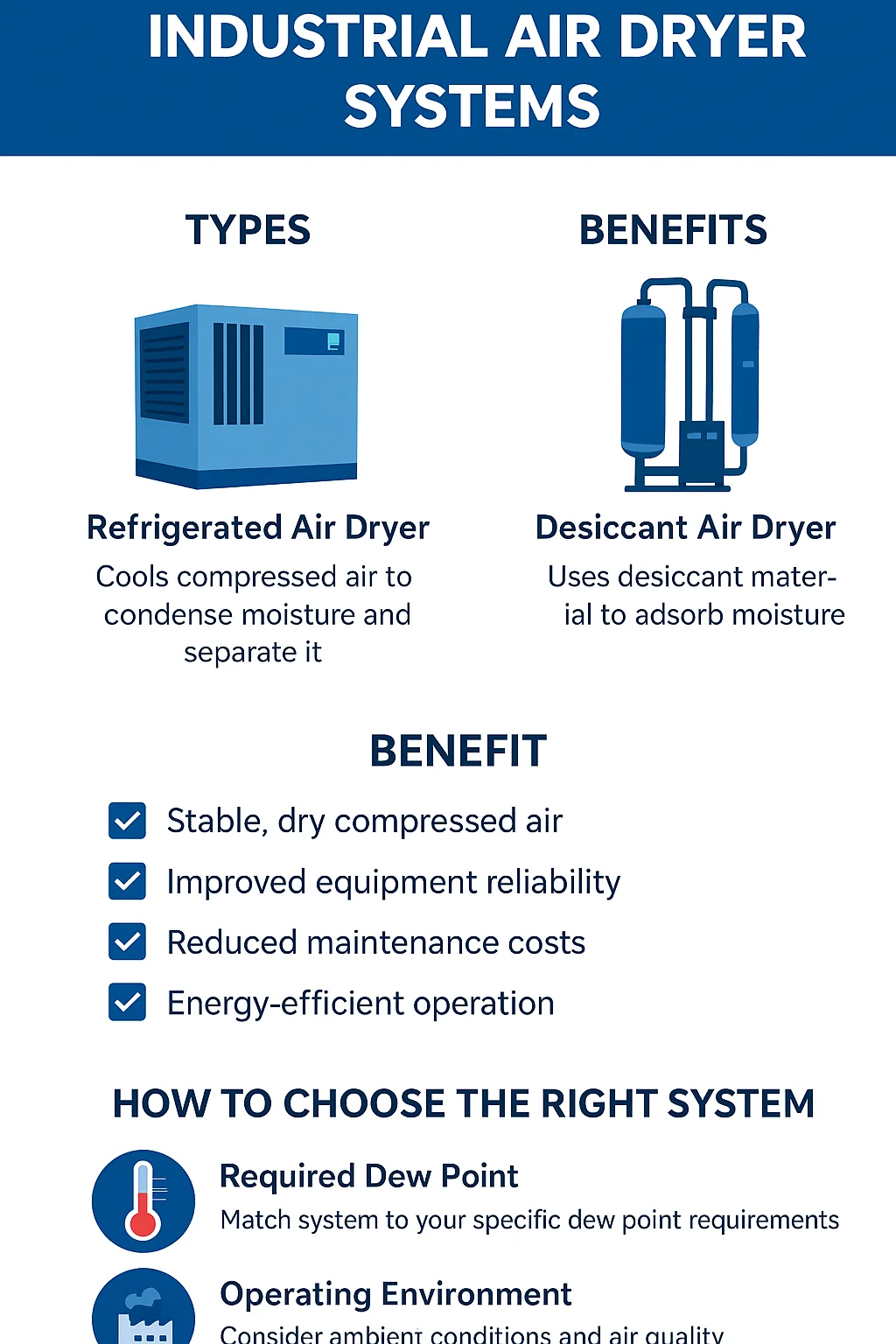
Industrial air dryer systems are essential components of compressed air systems, designed to remove moisture from compressed air before it reaches downstream equipment and processes.
Moisture in compressed air can cause corrosion, equipment failure, product contamination, and production downtime. By controlling humidity and dew point, air dryer systems help ensure stable performance, long equipment life, and consistent product quality.
Industrial air dryer systems are widely used in manufacturing, automotive, food & beverage, electronics, pharmaceuticals, chemical processing, and energy industries.
Why Moisture Control Is Critical in Compressed Air
Compressed air naturally contains water vapor. As air is compressed and cooled, moisture condenses and creates serious risks:
Corrosion in pipelines and valves
Damage to pneumatic tools and instruments
Unstable pressure and flow
Product defects and contamination
Increased maintenance and energy costs
An industrial air dryer system removes this moisture and delivers dry, clean air suitable for specific application requirements.
Main Types of Industrial Air Dryer Systems
Refrigerated Air Dryer Systems
Refrigerated air dryers remove moisture by cooling compressed air, causing water vapor to condense and drain away.
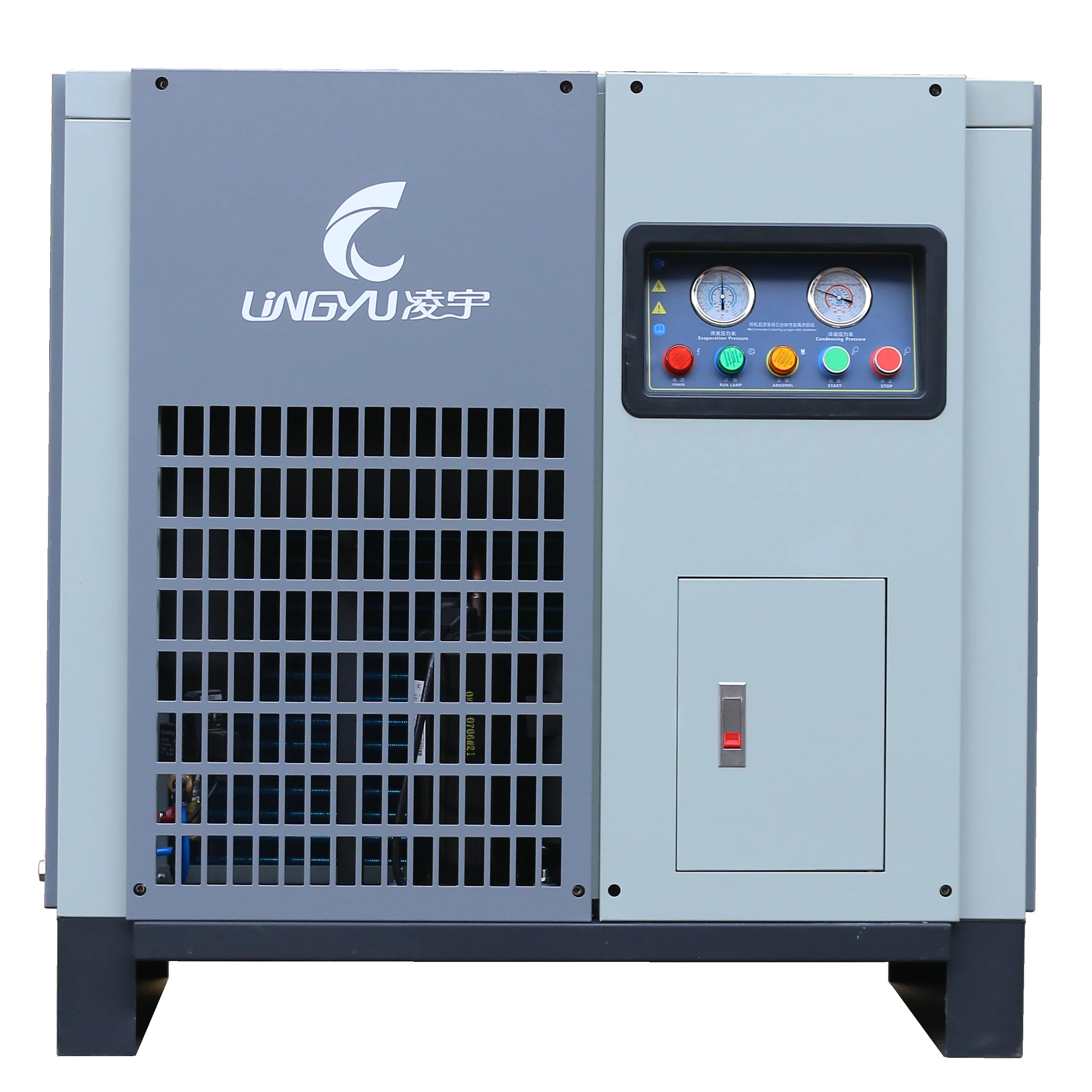
Key characteristics:
Stable and energy-efficient
Ideal for general industrial use
Lower initial and operating cost
Typical pressure dew point: +2°C to +10°C
Common applications:
General manufacturing
Automotive assembly
Pneumatic tools
Packaging lines
Desiccant Air Dryer Systems
Desiccant air dryers use adsorption materials to achieve very low pressure dew points by physically capturing moisture.
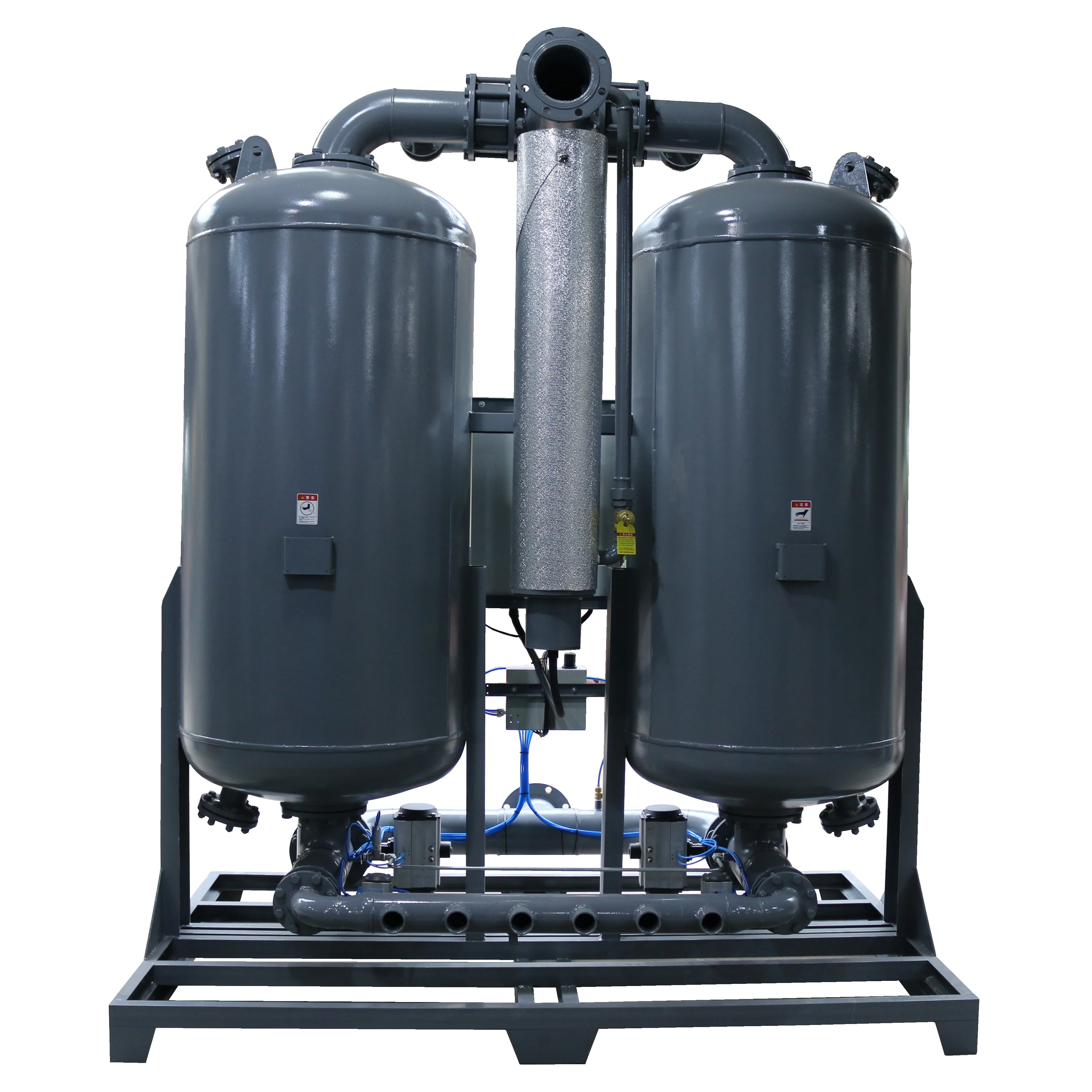
Key characteristics:
Ultra-dry compressed air
Suitable for critical and precision processes
Higher performance in harsh environments
Typical pressure dew point: −20°C to −70°C
Common applications:
Electronics manufacturing
Pharmaceutical production
Instrument air systems
Chemical and petrochemical plants
Required Dew Point Comparison Table
Choosing the correct industrial air dryer system depends heavily on the required pressure dew point. The table below provides a clear comparison:
| Application Requirement | Typical Dew Point | Recommended Air Dryer System |
|---|---|---|
| General factory air | +5°C to +10°C | Refrigerated Air Dryer |
| Automotive & assembly | +2°C to +5°C | Refrigerated Air Dryer |
| Outdoor pipelines | −20°C | Desiccant Air Dryer |
| Instrument air | −40°C | Desiccant Air Dryer |
| Electronics manufacturing | −40°C to −70°C | Desiccant Air Dryer |
| Pharmaceutical processes | −40°C | Desiccant Air Dryer |
How to Choose the Right Industrial Air Dryer System
When selecting an industrial air dryer system, consider the following factors:
1. Required Dew Point
Moderate dew point → Refrigerated air dryer
Very low dew point → Desiccant air dryer
2. Operating Environment
Stable indoor conditions
High humidity or harsh outdoor environments
3. Energy Efficiency
Intelligent control and proper sizing reduce long-term operating costs
Avoid over-drying beyond actual process needs
4. System Size and Air Demand
Large systems benefit significantly from optimized dryer selection
Continuous vs intermittent operation matters
Integrating Air Dryers into Complete Industrial Air Dryer Systems
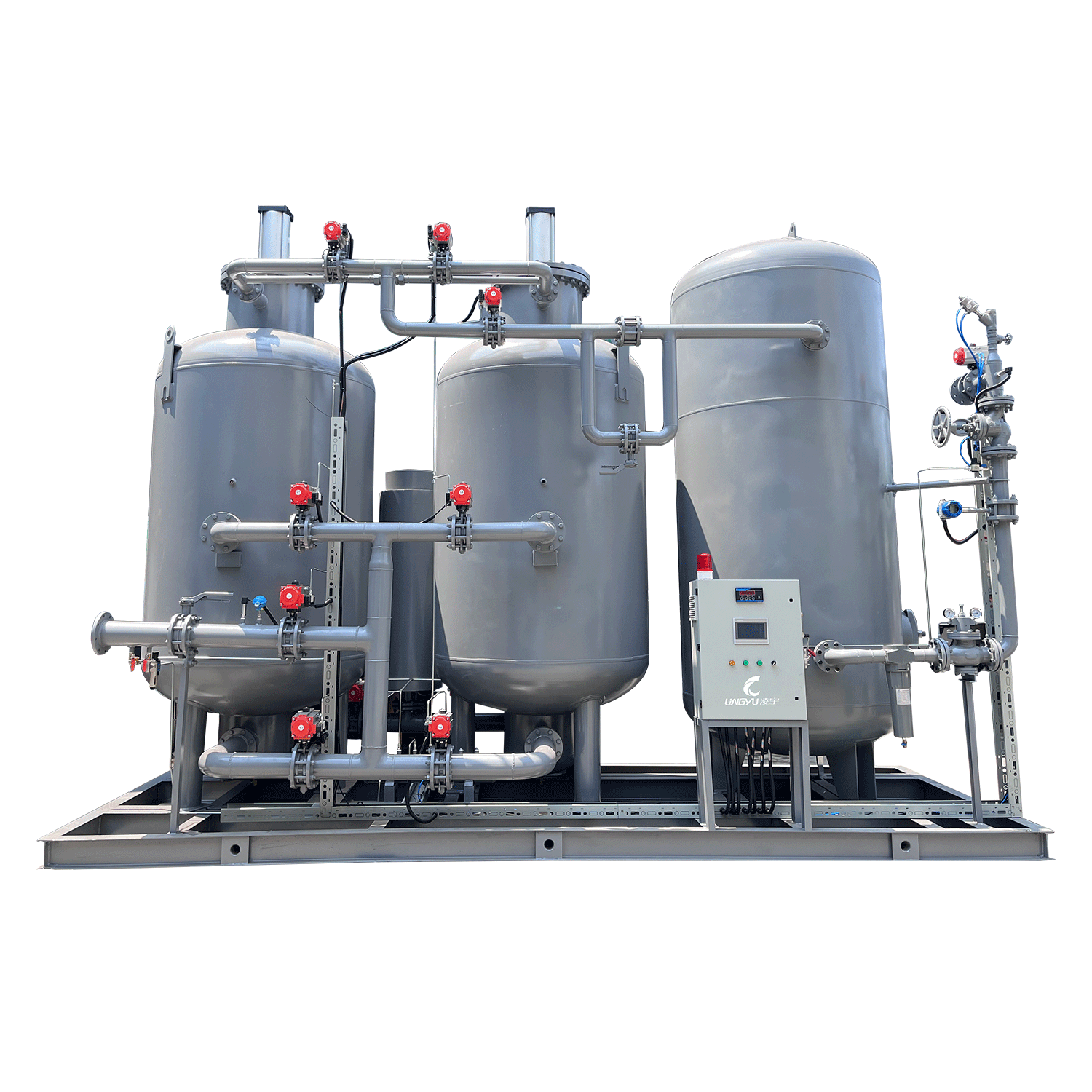
A complete industrial air dryer system typically includes:
Air compressor
Air dryer (refrigerated or desiccant)
Air filters
Drain systems
Control and monitoring components
Proper system design ensures stable dew point control, energy efficiency, and long-term reliability.
Conclusion
Industrial air dryer systems play a critical role in maintaining compressed air quality across a wide range of industries.
By understanding dew point requirements and the differences between refrigerated and desiccant air dryers, manufacturers can select the right solution to protect equipment, improve efficiency, and ensure consistent production quality.
Whether for general manufacturing or high-precision applications, choosing the correct industrial air dryer system is essential for reliable and cost-effective compressed air operation.