Mining operations often face challenging supply conditions. Remote locations, long transport routes, heavy-duty production schedules, and difficult site environments can make externally delivered industrial gases less convenient to manage.
For mines with regular nitrogen demand, an on-site nitrogen generator for mining can provide a locally produced gas supply for selected inerting, purging, maintenance, process-support, and equipment applications.
The main advantage is not simply “making nitrogen on site.” A well-engineered system can reduce dependence on external deliveries while giving the mine more direct control over nitrogen purity, flow, storage, and availability.
For a broader overview of the sector, see Lingyu’s mining and heavy industry solutions.
Why Nitrogen Can Be Useful in Mining Operations
Nitrogen does not support combustion and is relatively unreactive under many normal industrial conditions.
This makes it useful where a mining operation needs to reduce oxygen exposure, purge equipment, maintain a controlled gas environment, or provide a clean gas source for a defined process.
However, nitrogen should not be treated as a universal fire-prevention or safety solution. The required oxygen concentration, gas flow, monitoring method, ventilation, and operating procedure depend on the specific application and mine safety design.
Nitrogen can also displace breathable oxygen, so enclosed-space use requires appropriate engineering controls and site procedures.
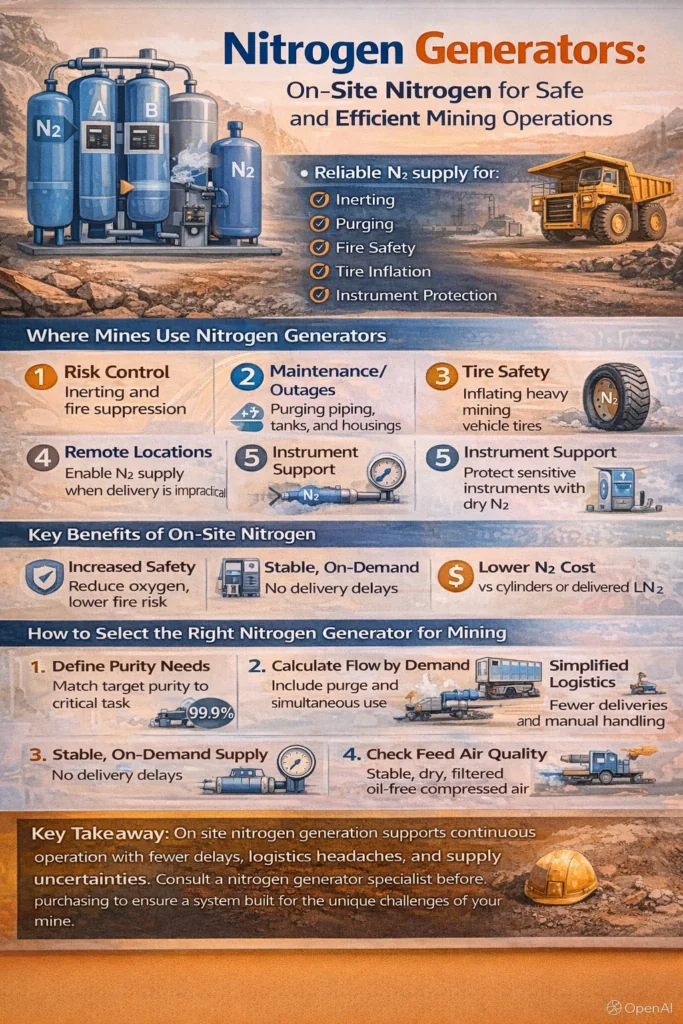
Common Nitrogen Applications at Mining Sites
Inerting and Oxygen Control
Nitrogen may be used in selected enclosed systems, tanks, process equipment, or controlled spaces where reducing oxygen concentration is required.
The necessary nitrogen purity and total gas volume depend on factors such as the starting oxygen concentration, target condition, equipment volume, gas-distribution method, and allowable inerting time.
Purging Equipment and Lines
Purging can be one of the more demanding nitrogen duties because it often creates short-term peaks.
Nitrogen may be used to displace air or residual process gases from:
- Pipelines
- Tanks
- Vessels
- Housings
- Process equipment
before startup, after shutdown, or during maintenance.
Sizing should therefore account for purge volume and required completion time rather than relying only on average daily nitrogen consumption.
Equipment and Instrument Support
Some mining processes or instruments may require gas with controlled oxygen or moisture content.
The exact specification should come from the equipment manufacturer or process requirement rather than from a general “mining-grade nitrogen” number.
Tire Inflation
Nitrogen is also sometimes used for heavy-vehicle tire programs.
If tire inflation is an important part of the project, its flow, pressure, servicing frequency, and storage requirements should be included separately in the sizing calculation.
Fire-Risk Management
Some mining operations may use nitrogen as part of an engineered oxygen-control or fire-risk strategy.
This application is highly site-specific.
A nitrogen generator should not be described as automatically “preventing mine fires.” The complete strategy may involve gas monitoring, ventilation, isolation, process controls, emergency procedures, and other safeguards established by qualified mine-safety engineering.
How a PSA Nitrogen Generator Works
Lingyu’s nitrogen generators use Pressure Swing Adsorption, or PSA, technology.
The generator contains two adsorption towers filled with Carbon Molecular Sieve. Oxygen is preferentially adsorbed from compressed air while nitrogen passes through the adsorption bed as product gas.
While one tower is producing nitrogen, the other is depressurized and regenerated. The two towers then switch automatically under PLC control, allowing continuous nitrogen production.
For a deeper technical explanation, see how PSA nitrogen generation works.
Available configurations can be reviewed through Lingyu’s industrial nitrogen generator range.
How Much Nitrogen Purity Does a Mine Need?
There is no universal mining nitrogen purity.
Lingyu’s PSA nitrogen generators support approximately 95%–99.999% nitrogen purity, with multiple purity configurations available rather than one fixed specification.
The right purity depends on the process.
An equipment purge may have different residual-oxygen requirements from a sensitive process environment or another oxygen-control application.
This means a buyer should define:
Maximum allowable oxygen content first, nitrogen purity second.
Choosing unnecessarily high purity can affect nitrogen capacity and compressed-air consumption.
For a more complete sizing framework, see the nitrogen generator specification guide.
Size for Peak Demand, Not Just Average Consumption
Mining demand can be intermittent.
A site may have relatively low continuous consumption but require large amounts of nitrogen during maintenance, purging, or simultaneous servicing operations.
The system should therefore consider:
- Normal continuous demand
- Maximum simultaneous demand
- Peak duration
- Purge volumes
- Shift-based operating patterns
- Future expansion
A nitrogen buffer tank can help cover short-term demand above the generator’s instantaneous output.
But a buffer tank does not automatically solve undersizing. Generator output, storage pressure, usable tank volume, peak flow, and peak duration need to be calculated together.
Delivery Pressure Matters Across Large Sites
Large mining operations can have long distribution distances and multiple use points.
The required nitrogen pressure should therefore be specified at the final user, not only at the generator.
Pressure calculations may need to consider:
- Pipeline length
- Pipe diameter
- Elevation
- Regulators
- Valves and filters
- Simultaneous consumption
- Individual high-pressure users
Lingyu’s standard PSA operating data specify an inlet compressed-air pressure of 0.5–0.8 MPa. This is a feed condition for the generator and should not be confused with the required nitrogen pressure at a downstream mining application.
If one user requires substantially higher pressure than the rest of the system, downstream boosting or local storage may be evaluated rather than raising the entire nitrogen network pressure.
Feed-Air Quality Is Especially Important
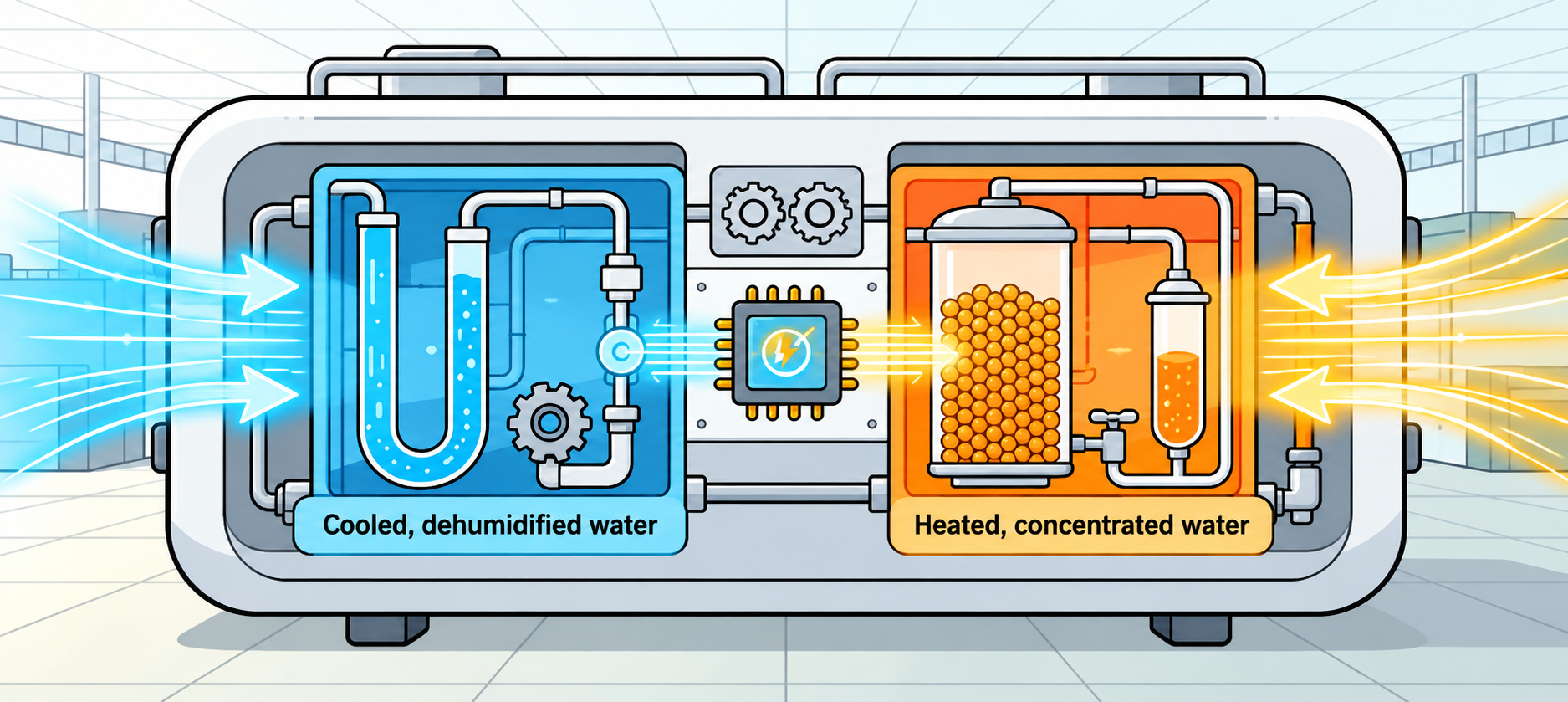
A PSA nitrogen generator depends on suitable compressed air.
Water, oil, dust, and particles can affect filtration, valves, instrumentation, and Carbon Molecular Sieve.
This is particularly relevant at mining sites, where airborne dust and demanding compressor conditions may make pretreatment an important part of the project design.
Lingyu’s PSA system arrangement includes filtration and compressed-air treatment before nitrogen production, with several precision filter grades available for particulate and oil removal.
A precision compressed air filter can therefore be considered as part of an appropriate pretreatment package.
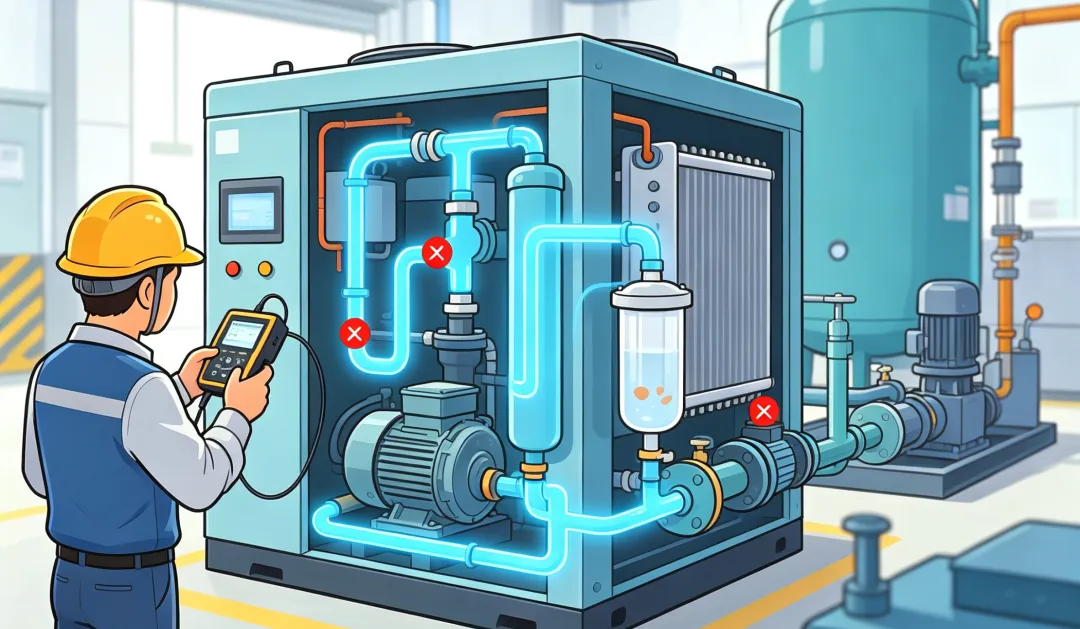
Before selecting the generator, check the existing compressor system for water separation, oil carryover, particulate contamination, dryer performance, drain reliability, inlet-air temperature, and pressure stability.
Feed-air quality should therefore be treated as a major design and maintenance consideration when engineering a mining nitrogen system.
Standard Operating Conditions vs. Mining Site Conditions
Mining sites can operate in hot, cold, dusty, high-altitude, or remote environments.
These conditions should be checked carefully against the selected equipment.
Standard operating conditions for Lingyu’s PSA nitrogen generators include:
- Inlet air temperature: ≤40°C
- Inlet air pressure: 0.5–0.8 MPa
- Ambient temperature: ≤40°C
- Nitrogen dew point: ≤−40°C
- Switching cycle: 45–60 seconds
These standard conditions should be compared with the actual mining environment during equipment selection.
For sites with extreme temperature, altitude, dust, vibration, weather exposure, or outdoor installation, the supplier should confirm the appropriate derating and equipment configuration.
Define the Required Mining Installation Package
Mining projects may require skid-mounted or containerized construction, wider ambient capability, corrosion protection, remote monitoring, or other site-specific features.
A mining RFQ should therefore explicitly define requirements such as:
- Indoor or outdoor installation
- Skid or container requirement
- Ambient temperature range
- Altitude
- Dust exposure
- Corrosion environment
- IP/enclosure requirements
- Service-access space
- Remote communication
- Electrical supply
- Transport limitations
- Lifting and installation constraints
The supplier can then confirm the appropriate equipment configuration for the actual site conditions and installation requirements.
Monitoring and Off-Spec Nitrogen Protection
Lingyu’s PSA nitrogen generators provide real-time monitoring of nitrogen purity and flow.
The touchscreen displays pressure, purity, flow, and system operating status.
The system also provides an off-specification purity alarm. If the low-purity condition continues for a preset period, the system can automatically shut down for protection.
These functions are useful for remote or operationally important sites, although any connection to a mine-wide remote control or telemetry system should be confirmed for the actual project.
Maintenance and CMS Reliability
Remote mines should also consider how easily the equipment can be maintained.
Lingyu’s PSA design includes an automatic CMS compaction system intended to maintain packing density and help reduce pulverization caused by adsorption-bed movement.
Routine planning should also consider:
- Filter replacement
- Dryer maintenance
- Drain inspection
- Valve maintenance
- Analyzer calibration
- CMS condition
- Spare parts
- Local service capability
For a remote site, spare-parts strategy may be nearly as important as nominal generator efficiency.
Reliability and Backup Strategy
If nitrogen loss would stop production or affect an important safety-related procedure, the project should define a backup strategy.
Depending on criticality, this could involve nitrogen storage, standby generator capacity, a temporary backup source, redundant critical components, or a planned maintenance window.
The appropriate design is site-specific.
Not every mine needs a fully redundant nitrogen plant, but a critical user should not be left without a defined response to compressor, dryer, power, or generator failure.
Energy and Total Operating Cost
On-site nitrogen can reduce delivery dependence, particularly at remote sites, but it should not automatically be described as cheaper in every case.
The true operating cost depends on:
- Nitrogen consumption
- Required purity
- Compressed-air consumption
- Compressor efficiency
- Electricity or fuel cost
- Dryer and filtration requirements
- Maintenance
- Spare parts
- Storage
- Site logistics
Lingyu’s optimized unequal-pressure equalization process improves nitrogen recovery efficiency and can indirectly reduce overall energy consumption by approximately 5% under the stated design conditions.
For a broader economic comparison, see the nitrogen generator cost and ROI guide.
What to Provide When Requesting a Mining Nitrogen System
A useful project specification should include:
- Nitrogen applications
- Required purity or maximum oxygen content
- Average and peak flow
- Peak duration
- Required point-of-use pressure
- Dew point
- Existing compressor capacity and air quality
- Operating hours
- Altitude
- Ambient temperature range
- Dust and weather exposure
- Installation location
- Electrical supply
- Storage requirements
- Redundancy expectations
- Remote-monitoring requirements
- Future expansion
Providing these conditions makes it possible to evaluate the compressor, air treatment, PSA generator, storage, monitoring, and nitrogen distribution system as one integrated utility.
Conclusion
A nitrogen generator for mining can provide a locally produced nitrogen source for selected purging, inerting, process-support, maintenance, and equipment applications.
For remote or logistically difficult sites, on-site generation may also reduce dependence on scheduled gas deliveries.
The correct system, however, is not defined by purity alone.
A mining nitrogen project should consider:
Application → purity → average and peak flow → delivery pressure → compressed-air quality → storage → environmental conditions → monitoring → maintenance → backup strategy.
When those requirements are clearly defined, the nitrogen system can be engineered around the actual operating conditions of the mine rather than selected from a nominal flow or purity figure alone.
For a project-specific system recommendation, contact Lingyu with the mining-site operating requirements above.