The 1130 SCFM Air-Cooled Refrigerated Air Dryer is designed for high-flow industrial compressed air systems that require reliable moisture removal without a cooling-water circuit.
For a dryer at this capacity, long-term performance depends on more than nominal airflow. Installation clearance, inlet temperature, operating pressure, condenser ventilation, condensate drainage, filtration, and maintenance all affect the actual pressure dew point and operating reliability.
The 1130 SCFM Air-Cooled Refrigerated Air Dryer can be integrated into larger industrial compressed air treatment systems where stable refrigerated drying is required.
How an Air-Cooled Refrigerated Air Dryer Works
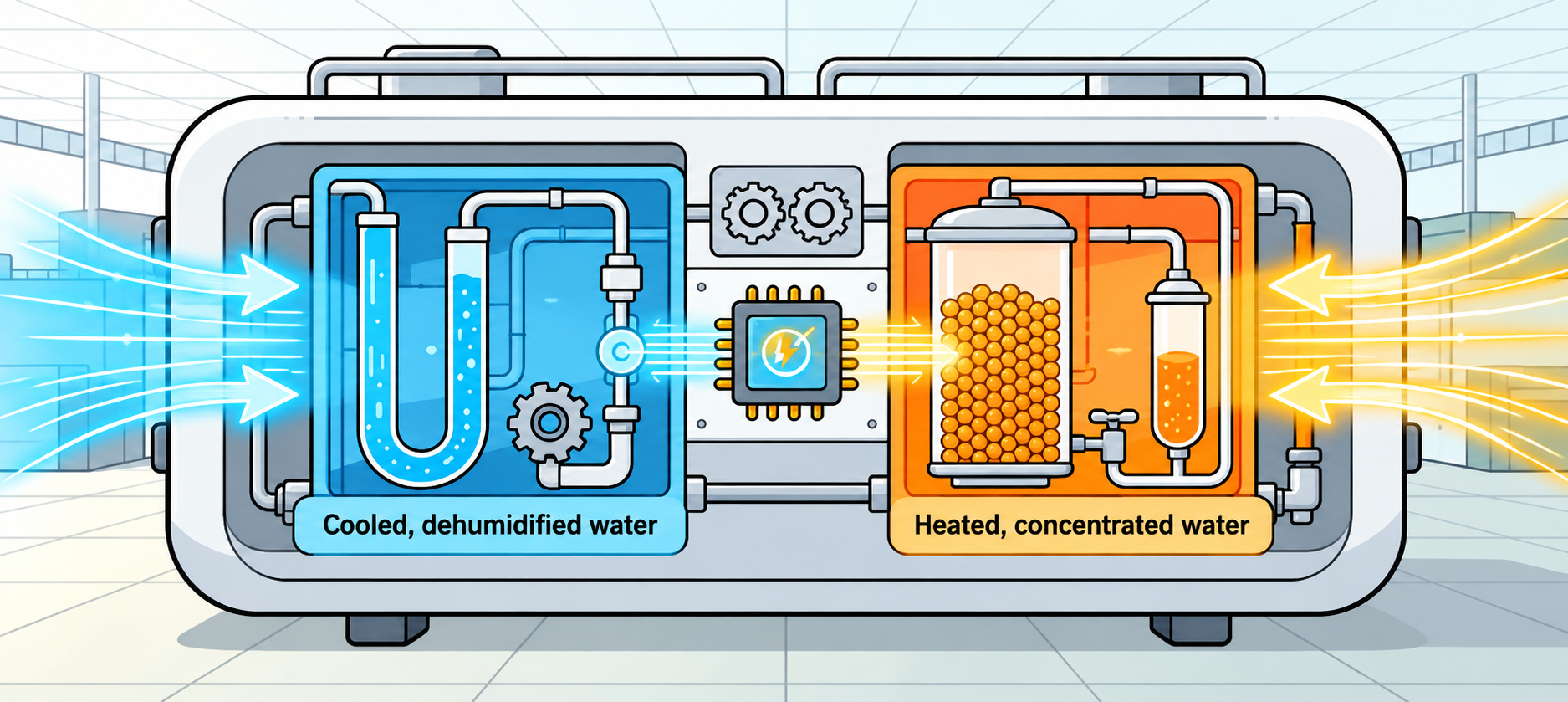
A refrigerated dryer removes water vapor by cooling compressed air until moisture condenses.
High-temperature compressed air first passes through a pre-cooling section and air-to-air heat exchanger. It then enters the evaporator, where the refrigeration circuit lowers the compressed air temperature.
As the air cools, moisture, oil, and some impurities condense. The air-water separator removes the liquid condensate, which is discharged through an automatic drain.
The dried compressed air then passes back through the air-to-air heat exchanger and is reheated closer to ambient temperature before entering the downstream piping system.
This process allows an air-cooled refrigerated dryer to maintain a pressure dew point of 2–10°C under specified operating conditions.
Typical Operating Conditions
For Lingyu’s AH Series air-cooled refrigerated drying technology, the main operating conditions include:
- Rated inlet pressure: 0.7 MPa
- Operating pressure range: 0.6–1.0 MPa
- Rated inlet temperature: 50°C
- Maximum inlet temperature: ≤80°C
- Pressure dew point: 2–10°C
- Rated ambient temperature: 32°C
- Ambient operating range: 2–45°C
- Pressure drop: ≤0.025 MPa
- Cooling method: Air-cooled
- Installation: Indoor installation on a level concrete floor
- Recommended clearance: At least 1.5 m around the dryer
Actual model configuration and performance should always be confirmed against the operating conditions of the installation.
Installation Best Practices
Correct installation is particularly important for a high-capacity air-cooled dryer because the condenser must reject a substantial amount of heat into the surrounding environment.
Choose a Well-Ventilated Indoor Location
Install the dryer indoors in a clean area with adequate ventilation.
Avoid locations where hot exhaust air from compressors or other machinery can be drawn directly into the dryer’s condenser.
The ambient operating range is 2–45°C, but keeping the compressor room well ventilated helps the refrigeration system reject heat more effectively.
Maintain Adequate Clearance
Maintain at least 1.5 m of clearance around the unit unless project-specific installation drawings specify otherwise.
Sufficient space helps:
- Maintain condenser airflow
- Prevent hot-air recirculation
- Provide access for inspection
- Simplify condenser cleaning
- Allow maintenance of refrigeration components
Restricting airflow around an air-cooled dryer can contribute to elevated condensing pressure and reduced cooling performance.
Install on a Level Surface
The dryer should be installed on a level concrete floor.
A stable installation helps maintain correct drainage and reduces unnecessary vibration or mechanical stress.
Size the Compressed Air Piping Correctly
The inlet and outlet piping should be sized for the actual airflow and allowable pressure drop.
Undersized piping can increase air velocity and pressure loss. Excessive elbows, restrictions, valves, and poorly selected fittings can also add unnecessary system resistance.
For a high-flow dryer, piping design should be evaluated as part of the complete compressed air distribution system.
Provide a Suitable Bypass Arrangement
Where production continuity is important, a properly designed isolation and bypass arrangement can simplify servicing.
The bypass should remain closed during normal operation so untreated wet compressed air does not unintentionally enter the downstream system.
Condensate Drainage Is Critical
Refrigerated dryers continuously separate liquid water from compressed air.
The automatic drain therefore performs an essential function.
Drain piping should:
- Allow unrestricted condensate discharge
- Avoid unnecessary backpressure
- Be routed to an appropriate condensate treatment or collection system
- Remain accessible for inspection
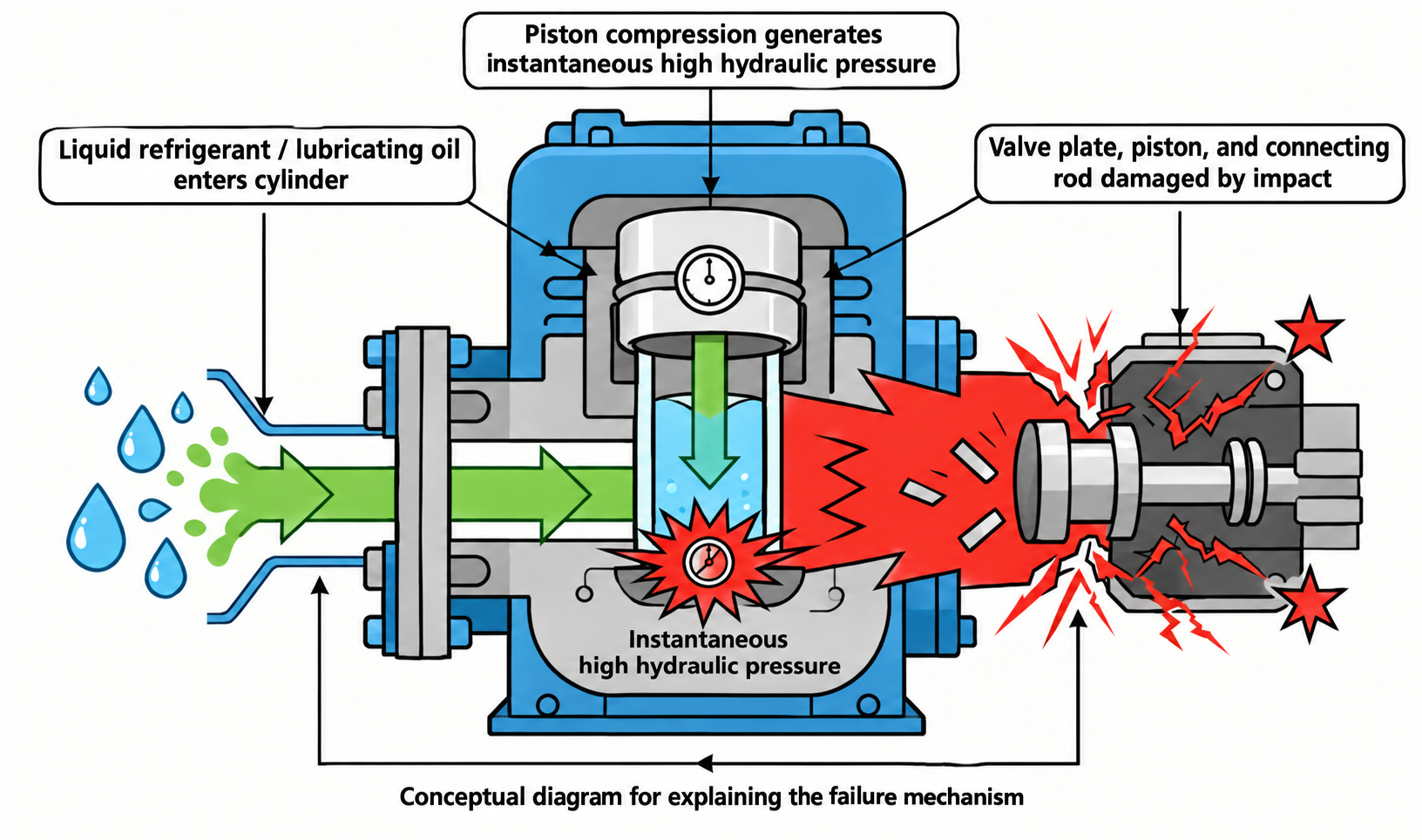
Do not assume that an automatic drain is maintenance-free. A blocked or malfunctioning drain can allow separated liquid to accumulate and eventually carry downstream.
Filtration Before and After the Dryer
A refrigerated dryer controls moisture, but it does not replace compressed air filtration.
Upstream filtration can reduce oil aerosols and particles entering the dryer, helping protect heat exchangers, drains, and downstream components.
Lingyu’s precision compressed air filters include different filtration grades that can be selected according to the required particle and oil-removal performance.
Downstream filtration may also be required where the final application has stricter air-quality requirements.
Filter configuration should be based on actual air-quality targets rather than assuming that one standard filter sequence is suitable for every installation.
Energy Efficiency: Focus on the Whole Compressed Air System
The air-cooled configuration eliminates the need for a cooling-water circuit, but energy efficiency still depends heavily on operating conditions.
Keep the Condenser Clean
Dust and debris reduce airflow through the condenser and interfere with heat transfer.
Inspect the condenser regularly and clean it according to actual environmental conditions.
A dusty manufacturing plant may require much more frequent cleaning than a clean compressor room.
Rather than assuming a fixed percentage of energy savings from cleaning, monitor condenser condition, refrigeration performance, and operating temperatures to determine an appropriate maintenance interval.
Avoid Hot-Air Recirculation
One of the simplest ways to improve air-cooled dryer performance is to prevent hot condenser exhaust from returning to the condenser inlet.
Good equipment spacing and compressor-room ventilation help remove rejected heat.
Keep Inlet Temperature Under Control
The dryer is rated at an inlet temperature of 50°C, with a maximum of 80°C.
As inlet temperature rises, the dryer must handle a greater thermal and moisture load.
A properly functioning compressor aftercooler and upstream condensate separation can therefore reduce the load reaching the dryer.
Minimize Pressure Drop
The AH Series design specifies pressure drop of ≤0.025 MPa under its rated conditions.
However, total system pressure loss also includes:
- Filters
- Piping
- Valves
- Fittings
- Separators
- Other air-treatment equipment
Restricted filters and poorly sized piping can force the compressor to operate at a higher discharge pressure to maintain the required downstream pressure.
Repair Compressed Air Leaks
Leaks increase the amount of air the compressor must produce and the dryer must process.
A plant with significant leakage may operate its dryer closer to maximum capacity even when actual production demand has not increased.
Leak detection and repair can therefore benefit both compressor and dryer performance.
Routine Maintenance Guide
Maintenance intervals should be based on operating hours, environmental conditions, contamination levels, and equipment condition rather than one universal calendar schedule.
Condenser Inspection and Cleaning
Inspect the condenser for:
- Dust accumulation
- Oil deposits
- Blocked fins
- Restricted airflow
- Physical damage
Use an appropriate cleaning method that does not damage the heat-transfer surfaces.
Automatic Drain Inspection
Verify that condensate is being discharged correctly.
Check for:
- Blockages
- Continuous air leakage
- Drain valve malfunction
- Restricted discharge piping
Drain problems should be corrected promptly because accumulated condensate can compromise downstream air quality.
Refrigeration System Inspection
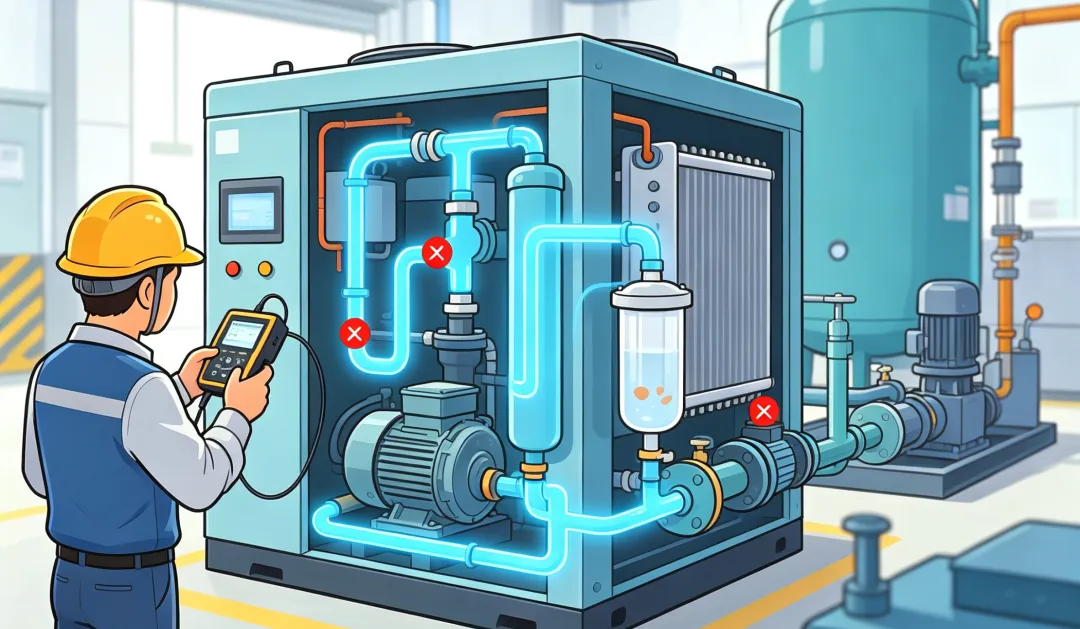
The refrigeration circuit includes the compressor, evaporator, condenser, expansion device, refrigerant filter drier, hot-gas bypass valve, pressure switches, gauges, and related components.
Qualified personnel should investigate abnormal refrigeration pressures, suspected refrigerant leakage, repeated protection trips, or declining cooling performance.
Refrigerant should not be added simply because outlet moisture has increased; other causes should be checked first.
Electrical Inspection
Periodically inspect:
- Electrical terminals
- Contactors
- Protection devices
- Fan operation
- Wiring condition
- Control components
Loose electrical connections and deteriorated components can cause unreliable operation or unplanned shutdowns.
Monitor Dryer Performance
Tracking operating data helps identify gradual deterioration before it causes production problems.
Useful parameters include:
- Inlet temperature
- Ambient temperature
- Operating pressure
- Airflow
- Pressure drop
- Outlet pressure dew point
- Condensate discharge
- Refrigeration operating condition
Troubleshooting High Outlet Dew Point
A high dew point does not automatically mean that the dryer is low on refrigerant.
Potential causes include:
- Airflow exceeding dryer capacity
- Excessive inlet temperature
- High ambient temperature
- Dirty condenser
- Poor ventilation
- Hot-air recirculation
- Drain malfunction
- Refrigeration-system fault
- Heat exchanger contamination
Check the operating conditions systematically before changing refrigeration components.
Dryer Is Not Cooling Properly
If the dryer is running but cooling performance is poor, inspect:
- Condenser cleanliness
- Ambient temperature
- Ventilation and clearance
- Condenser fan operation
- Inlet air temperature
- Actual airflow
- Refrigeration pressures and controls
If basic airflow and operating-condition checks do not identify the problem, refrigeration diagnosis should be performed by qualified service personnel.
High-Pressure Alarm
A high refrigeration pressure condition may be associated with insufficient condenser heat rejection.
Possible causes include:
- Dirty condenser
- Failed or poorly performing condenser fan
- Obstructed airflow
- Hot-air recirculation
- Excessively high ambient temperature
- Refrigeration-system problems
Repeatedly resetting the protection without correcting the cause can lead to further equipment problems.
Drain Does Not Discharge
If condensate is not leaving the dryer:
- Check the drain valve
- Inspect the discharge line for blockage
- Confirm the drain control is operating
- Check for contamination inside the drain
- Verify that downstream piping is not creating excessive backpressure
Regular drain inspection is especially important in humid environments and continuously operating systems.
Abnormal Noise or Vibration
Possible sources include:
- Fan imbalance
- Loose fasteners
- Refrigeration compressor vibration
- Panel resonance
- Worn mechanical components
- Improper installation
Identify the source before replacing parts. A level installation and secure mounting should be verified first.
Where Is a High-Capacity Air-Cooled Dryer Used?
A dryer in the 1130 SCFM range can support centralized compressed air systems serving multiple production areas.
Automotive and General Manufacturing
In automotive and general manufacturing, dry compressed air can support pneumatic tools, assembly machinery, actuators, controls, and automated production equipment.
Electronics and Precision Manufacturing
Moisture control can help protect sensitive pneumatic and production equipment.
For electronics and precision manufacturing, refrigerated drying can form one stage of a broader compressed air purification system.
Metal Fabrication
Compressed air is widely used in machining, pneumatic equipment, and metal-processing operations.
For certain metal fabrication and laser cutting applications, the required pressure dew point and final air quality should be evaluated carefully because some processes may require treatment beyond standard refrigerated drying.
Chemical Processing
In petrochemical and chemical processing, compressed air may support pneumatic valves, instrumentation, and general plant systems.
The dryer configuration should be matched to the site’s process, safety, and air-quality requirements.
When Is a Refrigerated Dryer the Right Choice?
Refrigerated drying is commonly used when the goal is to prevent liquid-water problems in general industrial compressed air systems.
Lingyu’s broader range of refrigerated air dryers covers different airflow, cooling, and energy-efficiency requirements.
However, refrigerated dryers and adsorption dryers serve different dew-point requirements.
If the application needs a pressure dew point far below 0°C—for example, for extremely moisture-sensitive processes or piping exposed to very low temperatures—an adsorption dryer may be more appropriate.
Selecting the drying technology according to the actual required pressure dew point avoids both insufficient drying and unnecessary system complexity.
Plan Maintenance Around Operating Conditions
A fixed statement such as “clean the condenser weekly” or “service the refrigerant every quarter” may not suit every facility.
A better maintenance strategy combines scheduled inspection with condition monitoring.
A clean indoor compressor room may allow longer intervals between condenser cleaning, while a dusty facility may require much more frequent attention.
Likewise, refrigerant pressure should be diagnosed when operating data indicates a refrigeration problem rather than treated as a routine refrigerant-recharging schedule.
Long-Term Reliability Starts With Correct Operation
The service life of an industrial refrigerated air dryer cannot be guaranteed simply by stating a fixed number of years. It depends on load, ambient conditions, maintenance, installation quality, operating hours, and component condition.
Keeping the dryer within its specified pressure, temperature, and airflow limits is therefore more important than targeting an arbitrary lifespan.
Regular inspection of the condenser, automatic drain, refrigeration circuit, electrical system, filters, and operating data can help identify deterioration early and reduce unplanned downtime.
Reliable Drying for High-Flow Compressed Air Systems
The 1130 SCFM Air-Cooled Refrigerated Air Dryer can provide effective moisture control for high-flow industrial compressed air systems without requiring cooling-water infrastructure.
Successful operation depends on correct sizing, sufficient ventilation, proper drainage, appropriate filtration, low system pressure drop, and condition-based maintenance. Under suitable operating conditions, refrigerated drying provides a practical pressure dew point of 2–10°C for a wide range of industrial applications.
For project-specific sizing or installation support, contact Lingyu with your required airflow, operating pressure, inlet temperature, ambient temperature, and target pressure dew point.