Compressed air systems operating in demanding industrial environments require more than basic moisture removal. High airflow demand, continuous production schedules, elevated inlet temperatures, and changing operating conditions can place considerable stress on air treatment equipment. A heavy duty air dryer is intended to deliver dependable moisture control under these challenging conditions while supporting equipment protection and production stability.
Whether installed in a large manufacturing facility, a metal processing plant, or a centralized compressed air station, choosing the right dryer involves evaluating its operating capacity, pressure dew point, cooling requirements, and long-term reliability.
At Lingyu, we provide industrial compressed air drying solutions designed to accommodate a wide range of operating requirements, from high-capacity refrigerated systems to advanced adsorption dryers.
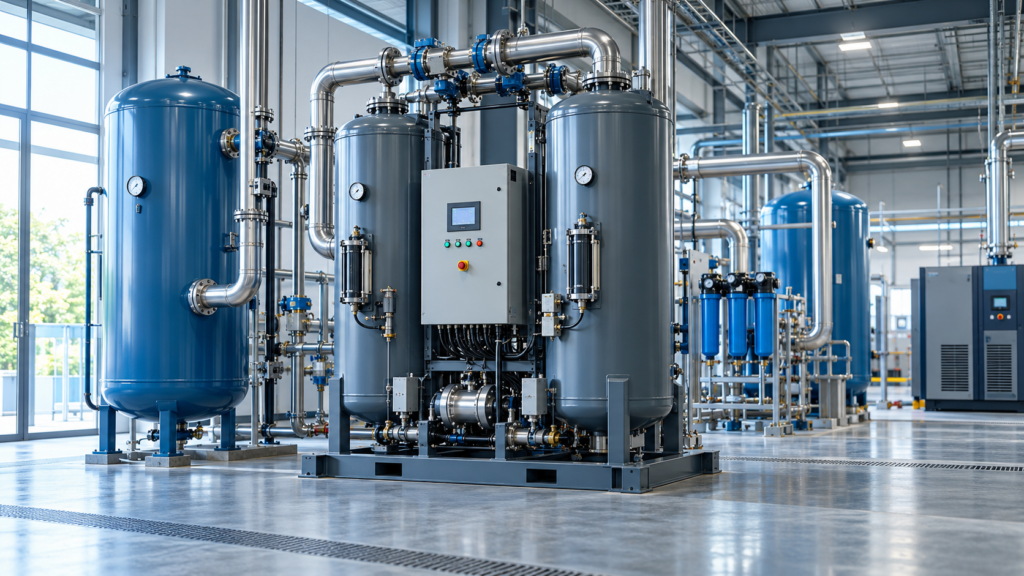
What Is a Heavy Duty Air Dryer?
A heavy duty air dryer is a compressed air treatment unit selected and configured for demanding industrial service, particularly applications involving high airflow volumes, prolonged operating hours, or challenging inlet conditions.
Unlike smaller dryers used in intermittent or light-duty applications, heavy-duty industrial systems must maintain adequate drying performance during sustained production.
Common operating demands include:
Continuous or extended operating schedules in industrial facilities
High compressed air flow rates across multiple production lines
Elevated compressed air inlet temperatures
Fluctuating air demand and changing operating conditions
Strict moisture control requirements for sensitive equipment
Reliable performance with minimal unplanned downtime
The term “heavy duty” does not refer to a single standardized dryer design. Instead, it describes the operating demands a dryer must meet. Actual suitability depends on equipment specifications, installation conditions, and application requirements.
For large compressed air installations, the goal is not simply to remove water. It is to maintain consistent air quality while minimizing pressure losses, excessive energy consumption, and maintenance interruptions.
Why Heavy-Duty Industrial Applications Need Reliable Air Drying
Compressed air naturally contains water vapor. During compression and subsequent cooling, moisture may condense into liquid water inside the air distribution system.
Without effective treatment, accumulated moisture can cause several operational problems.
1. Corrosion in Compressed Air Pipelines
Condensed water can accelerate corrosion in metallic pipes, fittings, valves, and storage vessels.
Over time, corrosion products may contaminate downstream equipment and contribute to maintenance problems.
2. Reduced Performance of Pneumatic Equipment
Moisture entering pneumatic tools, actuators, and control valves can interfere with normal operation.
In production environments where equipment reliability is critical, unstable compressed air quality may contribute to unplanned stoppages.
3. Product Quality Issues
Certain industrial processes are particularly sensitive to moisture.
For example, excess water in compressed air can contribute to coating defects, interfere with precision manufacturing, or affect the reliability of moisture-sensitive equipment.
4. Operational Problems During Low-Temperature Conditions
When moisture remains inside compressed air pipelines exposed to freezing temperatures, ice formation can restrict airflow or interfere with valves and instruments.
A properly selected drying system helps reduce these risks by maintaining a pressure dew point appropriate for the operating environment.
Key Features to Consider in a Heavy Duty Air Dryer
Not every industrial air dryer is suitable for high-demand applications. Several technical characteristics should be evaluated before choosing equipment.
High Airflow Handling Capacity
Airflow capacity is one of the most important considerations.
A dryer must be capable of processing the required compressed air volume without exceeding its rated operating limits.
For large facilities, air demand may vary significantly throughout the day. Engineers should evaluate both normal and peak demand rather than relying solely on average compressor output.
Lingyu offers several high-capacity refrigerated drying solutions, including its 8830 CFM water-cooled high-temperature refrigerated dryer, which is designed for large compressed air treatment applications.
Stable Pressure Dew Point
Pressure dew point indicates the temperature at which moisture in compressed air begins to condense at the specified operating pressure.
The required dew point depends on the application, ambient conditions, and downstream air quality requirements.
For general industrial applications, refrigerated air dryers can provide suitable moisture control when their rated dew point meets process requirements.
Applications requiring significantly lower pressure dew points may benefit from adsorption drying technology.
Compatibility With High Inlet Temperatures
Heavy-duty compressor stations may operate with relatively high compressed air discharge temperatures, particularly when cooling conditions are challenging.
Excessive inlet temperature can reduce dryer capacity or cause operation outside the manufacturer’s rated conditions.
For this reason, the dryer should be selected according to its specified inlet temperature range, not simply its nominal airflow rating.
Low Pressure Drop
Pressure loss across a dryer affects the overall compressed air system.
An unnecessarily high pressure drop may require the compressor to operate at a higher discharge pressure to maintain sufficient pressure at the point of use.
Selecting a dryer with an appropriate flow path and acceptable pressure drop helps support efficient system operation.
Maintainability and Reliable Controls
Industrial dryers also require accessible service components, dependable condensate drainage, suitable protective controls, and practical maintenance procedures.
For facilities operating continuously, these factors can be just as important as the initial equipment price.
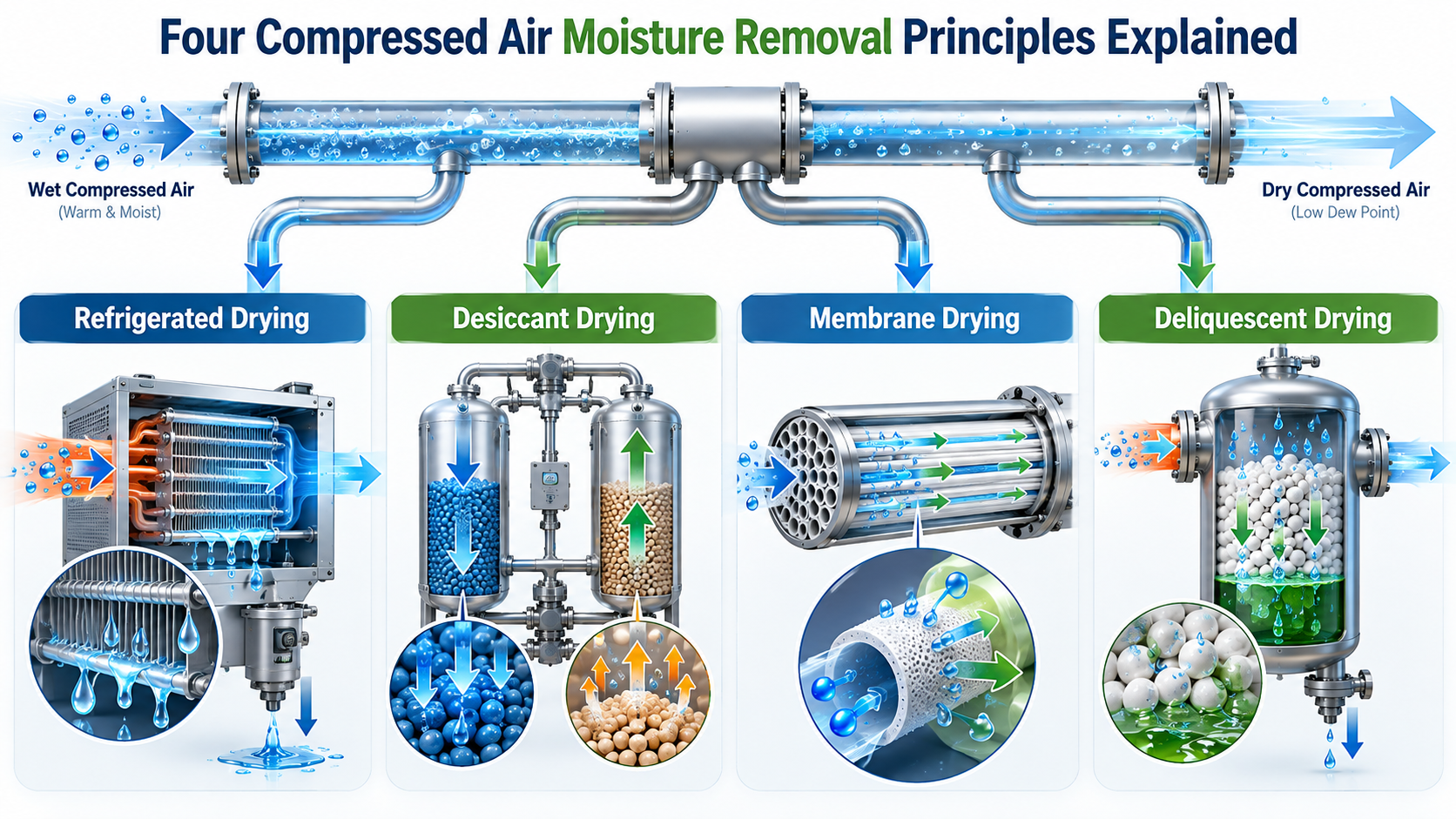
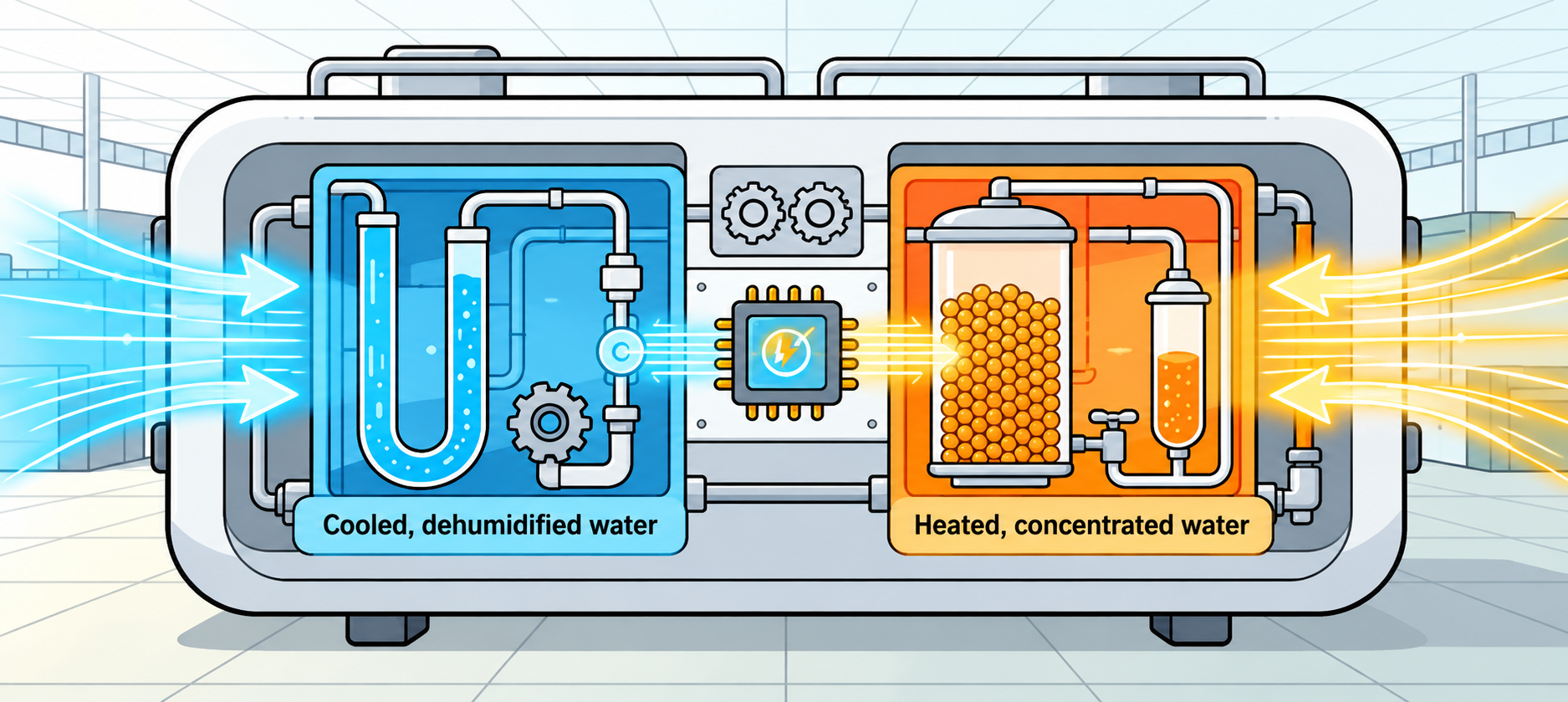
Heavy Duty Refrigerated Air Dryers vs. Adsorption Air Dryers
Heavy-duty compressed air applications can use different drying technologies. The most appropriate choice depends primarily on the required air quality and operating conditions.
| Evaluation Factor | Refrigerated Air Dryer | Adsorption Air Dryer |
|---|---|---|
| Drying principle | Cooling and condensation | Moisture adsorption using desiccant |
| Typical application | General industrial moisture control | Applications requiring low dew points |
| Dew point capability | Generally above freezing | Can achieve substantially lower dew points |
| Main energy considerations | Refrigeration power and cooling | Regeneration air, heating, and auxiliary equipment |
| Key maintenance areas | Refrigeration system, condenser, drains | Desiccant, valves, filters, regeneration system |
| Heavy-duty suitability | High-capacity industrial installations | Continuous processes requiring very dry air |
Both technologies can be designed for demanding operating conditions.
The decision should be based on the required pressure dew point, available utilities, operating profile, and total cost of ownership.
High-Capacity Refrigerated Drying
Refrigerated dryers are commonly used in industrial facilities where moisture removal is required without the extremely low dew points provided by adsorption technology.
Water-cooled systems may be particularly suitable for larger compressor stations with an adequate cooling water supply.
Lingyu’s refrigerated air dryer solutions include equipment for various compressed air capacities and operating environments.
Heavy-Duty Adsorption Drying
Adsorption dryers use desiccant materials to remove water vapor from compressed air.
They are especially relevant when low pressure dew points are necessary for process protection, exposed pipelines, or moisture-sensitive manufacturing.
For large installations, regeneration efficiency becomes an important consideration.
Lingyu’s blower and zero-purge adsorption dryers provide options for industrial applications where regeneration energy consumption and compressed air losses must be carefully evaluated.
The appropriate regeneration technology should be selected according to the actual operating profile and available energy resources.
How to Size a Heavy Duty Air Dryer Correctly
Proper sizing is essential for maintaining reliable drying performance under demanding operating conditions.
A dryer selected only according to the compressor’s nominal capacity may be insufficient if actual site conditions differ from the dryer’s rated conditions.
Step 1: Determine the Required Airflow
Identify the maximum compressed air volume that the dryer must process.
Include realistic production peaks, expected operating patterns, and any planned capacity expansion.
Airflow values should be compared on a consistent basis, with particular attention to the reference conditions used by equipment manufacturers.
Step 2: Confirm Operating Pressure
Dryer capacity depends partly on operating pressure.
Determine the normal operating pressure and its expected variation. Confirm that the selected equipment is rated for those conditions.
Step 3: Evaluate Inlet and Ambient Temperatures
Check the maximum compressed air inlet temperature.
For air-cooled dryers, consider the ambient temperature and ventilation conditions.
For water-cooled systems, confirm cooling water temperature, pressure, flow availability, and water quality requirements.
Step 4: Specify the Required Pressure Dew Point
Determine the dew point needed to protect the final application.
The required air quality should be established before selecting between refrigerated and adsorption drying technologies.
Step 5: Apply Manufacturer Correction Factors
Rated dryer capacities are generally based on specific reference conditions.
When actual operating conditions differ, the manufacturer’s correction factors or engineering selection data should be used.
A simplified selection relationship is:
Required Rated Dryer Capacity = Actual Airflow ÷ Applicable Combined Capacity Correction Factor
The combined correction factor must come from the manufacturer’s technical data and should not be assumed.
Step 6: Evaluate the Complete Air Treatment System
A heavy duty air dryer operates as part of a larger compressed air purification system.
Its performance also depends on upstream condensate removal, filtration, drainage, piping arrangement, and downstream protection.
Appropriate compressed air filtration can help manage contaminants and protect equipment, although filter grades and installation positions must be matched to the specific process.
Heavy Duty Air Dryer Applications
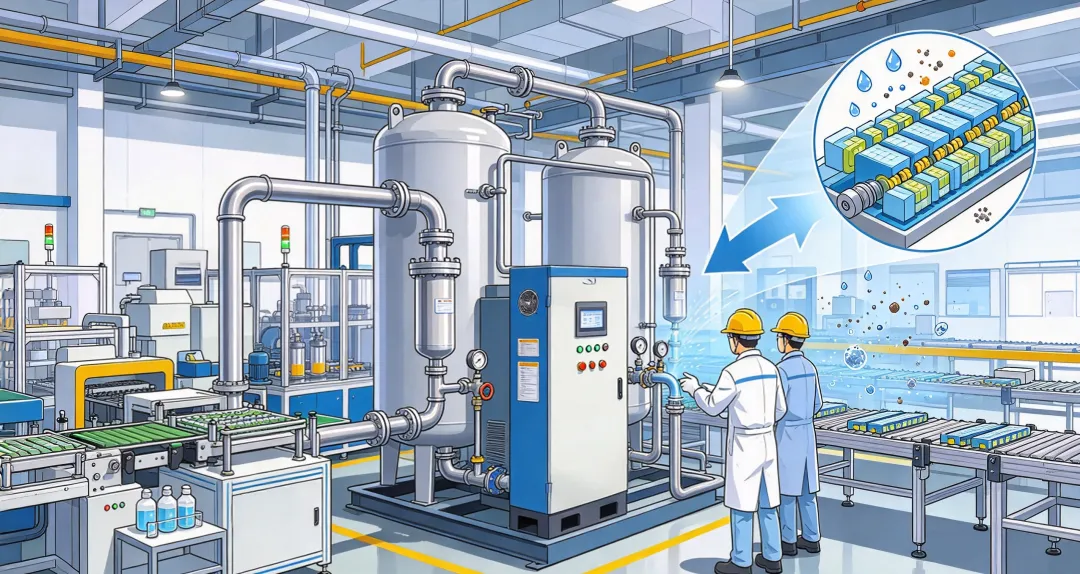
Heavy-duty drying equipment is used across industries that depend on large volumes of reliable compressed air.
Metal Fabrication and Manufacturing
Metalworking facilities often operate multiple pneumatic machines, production tools, and automated equipment.
Stable compressed air quality helps protect equipment and maintain consistent production.
Petrochemical and Chemical Processing
Industrial processing facilities may require continuous compressed air for instruments, pneumatic systems, and process equipment.
Dryer selection should account for the applicable air quality requirements, operating conditions, and relevant site safety standards.
Large-Scale Automotive Manufacturing
Automotive manufacturing uses compressed air for assembly, automation, and other production operations.
Certain applications, particularly surface finishing, can require additional moisture and contaminant control.
Power Generation and Utilities
Utility facilities use compressed air in instrumentation, maintenance, and general plant operations.
Where compressed air is required for critical control functions, system designers may also need to consider redundancy, monitoring, and backup arrangements.
Mining and Heavy Industry
Dust, demanding production schedules, temperature variation, and high compressed air consumption can create challenging service conditions.
The selected dryer must be compatible with the operating environment and supported by an appropriate maintenance program.
How to Improve Heavy Duty Air Dryer Reliability
Long-term performance depends on more than purchasing equipment with sufficient capacity.
A structured maintenance and monitoring program can help identify problems before they result in serious performance deterioration.
Monitor the pressure dew point. Unexpected changes can indicate insufficient drying capacity, changing inlet conditions, or equipment problems.
Inspect condensate drains. Blocked or malfunctioning drains can allow separated water to remain in the system.
Maintain cooling performance. Keep air-cooled condensers clean and ensure adequate ventilation. For water-cooled systems, monitor cooling water conditions and maintain the cooling circuit.
Monitor pressure differential. Increasing pressure drop may indicate filter blockage or another restriction in the air treatment system.
Follow regeneration maintenance procedures. Adsorption dryers require appropriate inspection of valves, desiccant condition, regeneration components, and associated filters.
Plan maintenance around production requirements. Facilities with critical compressed air demand should assess whether bypass arrangements, standby capacity, or redundant drying equipment are necessary.
Effective maintenance supports dependable performance, but the exact service schedule should follow the equipment manufacturer’s instructions and actual operating conditions.
Why Consider Lingyu for Heavy-Duty Compressed Air Drying?
Guangdong Lingyu Energy Equipment Co., Ltd. specializes in compressed air purification and separation equipment, including refrigerated dryers, adsorption dryers, combined drying systems, and precision filters.
Established in 2009, Lingyu integrates research and development, manufacturing, sales, and technical service.
Our compressed air drying portfolio includes solutions for different capacities, dew point requirements, and regeneration methods.
Depending on your application, suitable options may include:
High-capacity water-cooled refrigerated dryers for large industrial compressor stations
Heatless and heated-regeneration adsorption dryers for low-dew-point applications
Blower-assisted regeneration systems for applications requiring careful energy management
Heat-of-compression drying systems for compatible compressor installations
Selecting a heavy duty air dryer requires more than choosing the largest available model. The equipment must match the actual compressed air conditions, operating demands, and required moisture control performance.
Conclusion
A heavy duty air dryer plays an important role in maintaining compressed air quality across demanding industrial operations.
When selecting equipment for continuous operation, engineers and procurement teams should carefully evaluate airflow capacity, inlet temperature, operating pressure, pressure dew point, cooling requirements, and long-term maintenance needs.
A properly engineered compressed air drying system can reduce moisture-related equipment problems, support stable production, and contribute to efficient plant operation.
Looking for a heavy duty air dryer for your industrial facility?
Explore Lingyu’s compressed air treatment products or contact our team to discuss your required airflow capacity, operating pressure, inlet temperature, and target pressure dew point.
Our team can help you identify an appropriate compressed air drying solution for your application.