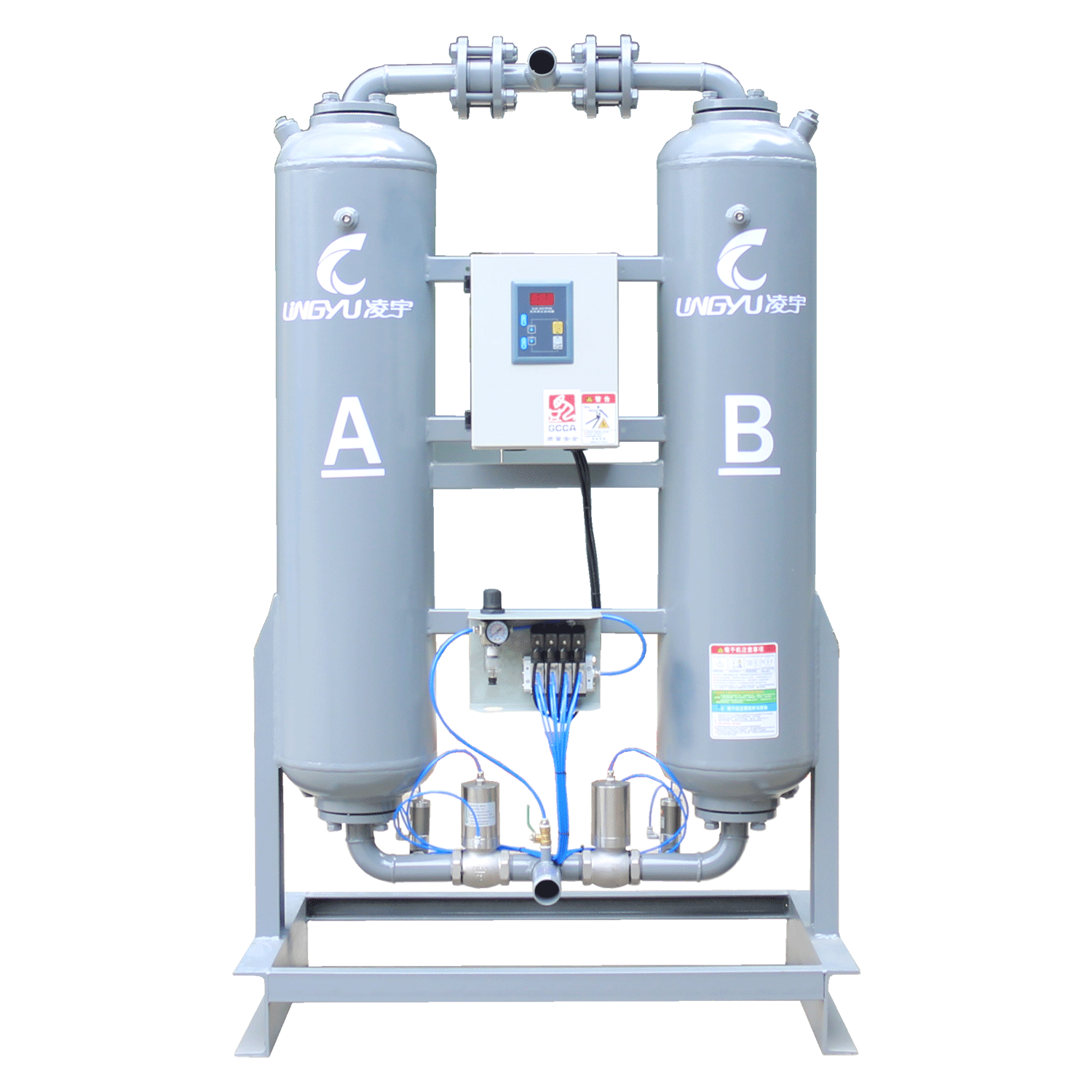
The CH Series Heatless Regeneration Adsorption Dryer is designed for industrial compressed air systems that require reliable moisture removal and a pressure dew point between −50°C and −20°C.
Using activated alumina as the desiccant, the dryer operates through pressure swing adsorption without an external regeneration heater. Part of the dry outlet air is used to regenerate the saturated desiccant, resulting in a relatively simple system structure, convenient operation, and reliable continuous drying.
The CH Series Heatless Regeneration Adsorption Dryer is available in capacities up to 150 m³/min, with customized configurations available for larger airflow requirements or special operating conditions.
How Does the CH Series Heatless Adsorption Dryer Work?
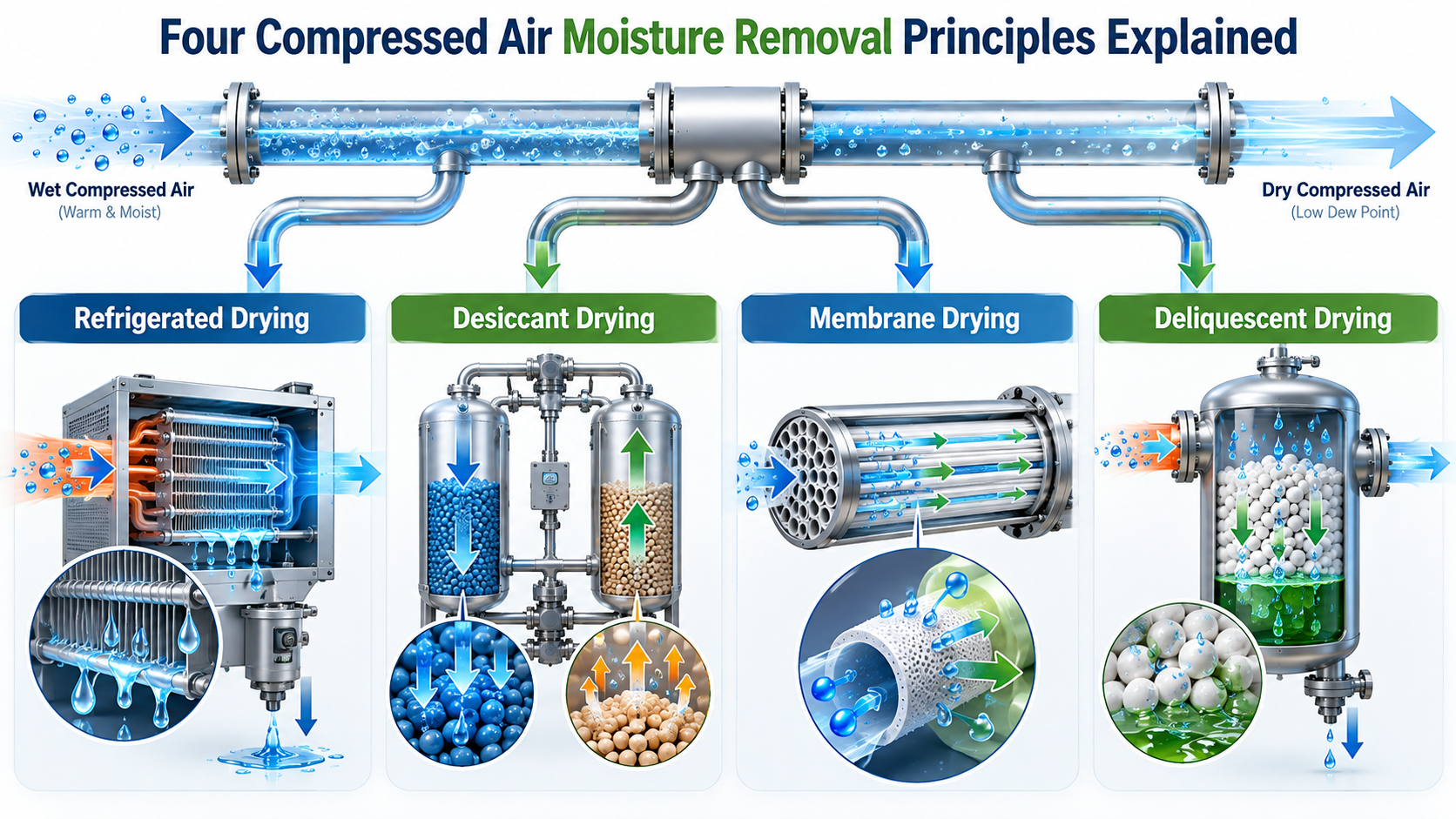
The CH Series operates on the principle of Pressure Swing Adsorption (PSA).
A twin-tower configuration allows adsorption and regeneration to take place alternately.
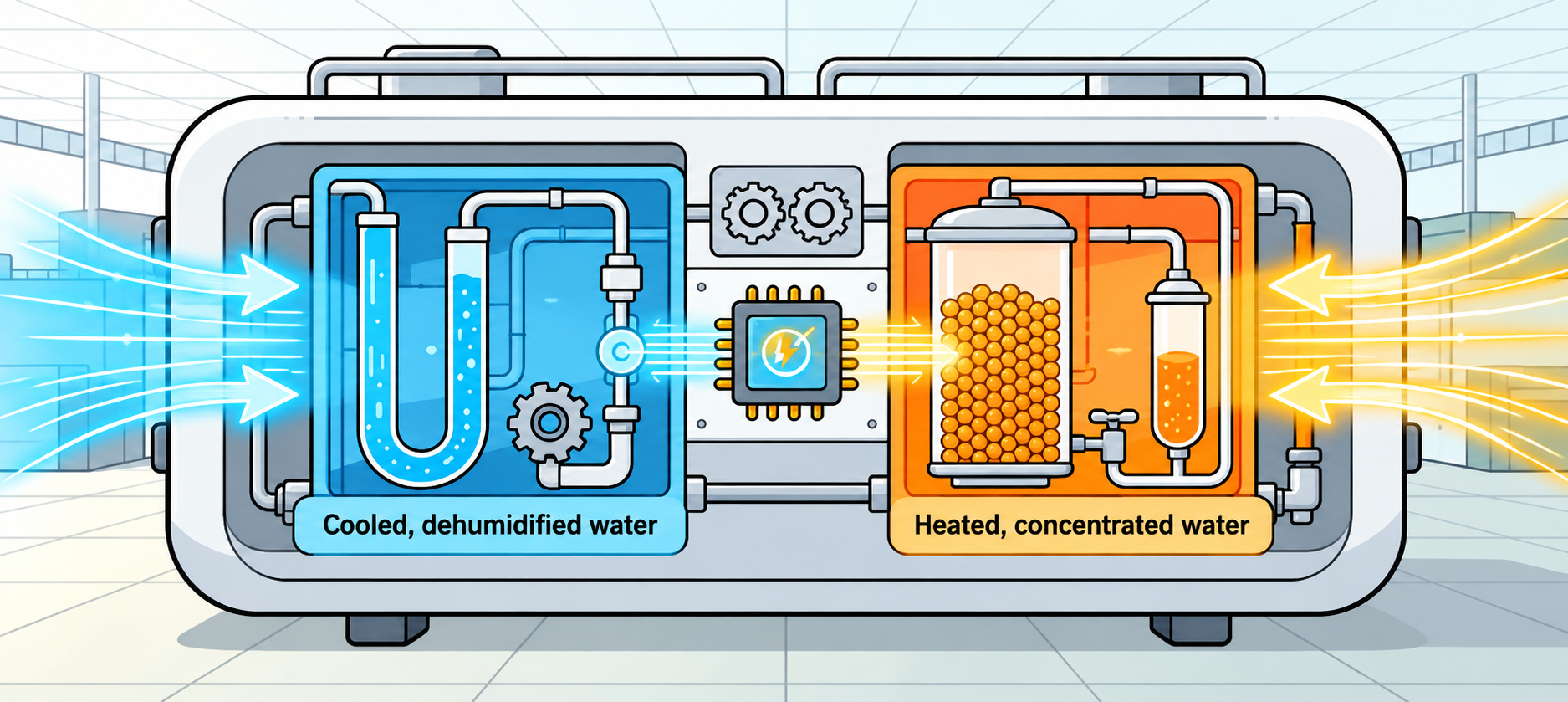
During the adsorption stage, wet compressed air enters one vessel and passes through the activated alumina bed. Water vapor is adsorbed by the desiccant, and dry compressed air flows to the downstream system.
At the same time, the second vessel undergoes regeneration. A portion of the dry product air is expanded to a lower pressure and passed through the saturated desiccant. This purge air removes the adsorbed moisture and carries it out of the dryer.
Before the vessels switch functions, the system automatically repressurizes and equalizes the pressure. This helps reduce pressure fluctuations and mechanical impact on the desiccant.
Because heatless regeneration does not require an external heater or a separate cooling stage, adsorption and regeneration can be completed through a straightforward repeating cycle.
CH Series Operating Conditions
The standard CH Series operates under the following conditions:
- Applicable Medium: Compressed air / non-corrosive air
- Rated Inlet Pressure: 0.7 MPa
- Operating Pressure Range: 0.6–1.0 MPa
- Rated Inlet Temperature: 10–30°C
- Maximum Inlet Temperature: ≤40°C
- Average Purge Air Consumption: 8–14%
- Outlet Pressure Dew Point: −50°C to −20°C
- Desiccant: Activated alumina
- Rated Ambient Temperature: 35°C
- Ambient Operating Range: 2–45°C
- Maximum Standard Airflow: 150 m³/min
For airflow above 150 m³/min or applications involving special pressure, materials, temperatures, or installation requirements, a customized configuration should be evaluated.
Key Design Features
The CH Series combines a straightforward regeneration method with components intended to support stable long-term operation.
High-Performance Pneumatic Valves
Fast and reliable pneumatic valves manage switching between the adsorption and regeneration vessels.
Stable switching is important because valve delays or leakage can affect vessel pressure, purge-air consumption, and outlet dew point.
High-Torque Pneumatic Actuators
The pneumatic actuators are designed to provide smooth and dependable valve movement during repeated operating cycles.
Reliable actuation is particularly important in facilities where the dryer operates continuously.
High-Performance Desiccant
Activated alumina provides strong moisture adsorption and abrasion resistance.
Maintaining the desiccant in good condition helps provide stable dew-point performance while limiting excessive dust generation during long-term operation.
Intelligent Programmable Control
An electronic programmable controller automatically manages vessel switching and regeneration cycles, reducing the need for constant manual intervention.
Automatic Repressurization
Before switching, pressure between the vessels is equalized automatically.
This reduces sudden pressure changes, limits impact on the desiccant bed, and helps support stable operation.
Low-Noise Operation
Check valves and silencers help reduce exhaust noise generated during depressurization and regeneration.
How to Select the Right CH Series Dryer
Correct selection should be based on actual operating conditions rather than compressor nameplate capacity alone.
Determine Peak Airflow
The dryer should have sufficient capacity for the highest compressed air demand expected during normal production.
If demand fluctuates, a reasonable capacity margin can help prevent the dryer from operating continuously at its maximum rated flow.
However, excessive oversizing should be avoided. A larger dryer increases investment cost without necessarily improving the actual compressed air system.
Check Operating Pressure
The standard rated inlet pressure is 0.7 MPa, with a normal operating range of 0.6–1.0 MPa.
Changes in pressure influence the actual volume of compressed air the dryer must process. Systems operating substantially differently from rated conditions should therefore be evaluated before model selection.
Consider Inlet Temperature
The rated inlet temperature is 10–30°C, with a maximum allowable inlet temperature of 40°C.
Higher inlet temperatures increase the moisture load entering the dryer. Effective aftercooling and condensate separation upstream can therefore reduce the burden placed on the adsorption bed.
Define the Required Dew Point
The CH Series provides an outlet pressure dew-point range of −50°C to −20°C.
A lower dew point means a more demanding drying requirement. The target should therefore be determined according to the actual downstream process rather than simply specifying the lowest possible value.
Different applications may require very different moisture levels. Lingyu’s broader range of desiccant air dryers provides additional configurations where another regeneration method or dew-point range is more appropriate.
Where Is the CH Series Used?
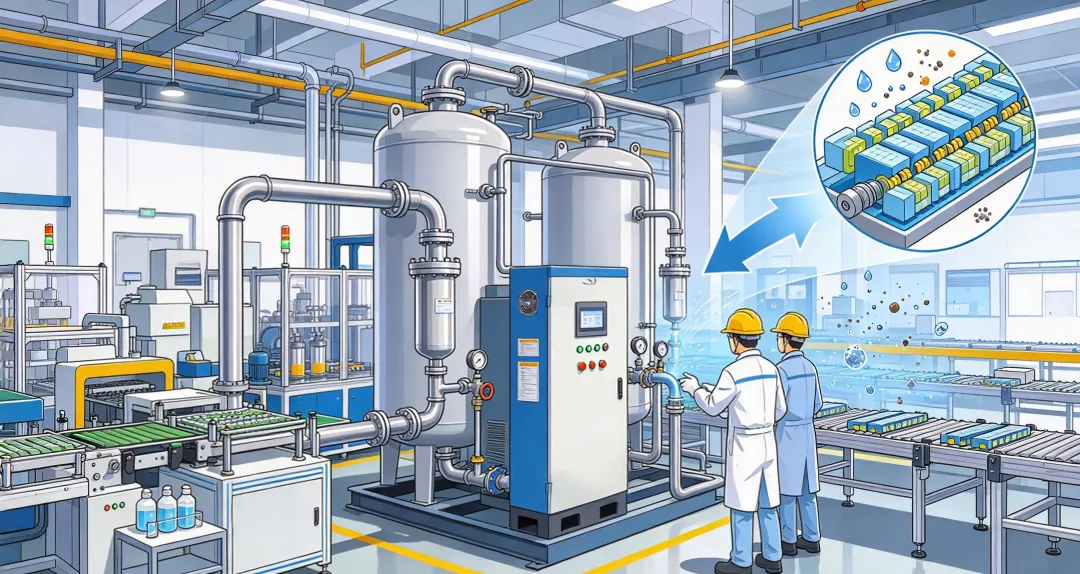
Heatless adsorption dryers can serve a wide range of industrial processes where moisture in compressed air could interfere with equipment, instrumentation, or production.
Laboratory and Analytical Equipment
Low-dew-point compressed air can be important for analytical instruments and moisture-sensitive laboratory equipment.
In laboratory and analytical equipment applications, dry compressed air may support analyzers, pneumatic instruments, gas analysis equipment, and other systems requiring controlled air quality.
Electronics and Precision Manufacturing
Moisture can cause problems in pneumatic components and sensitive manufacturing environments.
For electronics and precision manufacturing, dry compressed air can support automation equipment, production tools, instrumentation, and other moisture-sensitive processes.
Medical and Dental Systems
Compressed air used in medical and dental environments can require careful control of moisture and other contaminants.
In medical and dental applications, the adsorption dryer can form one stage of a complete compressed air purification system designed around the required final air quality.
Automotive and General Manufacturing
Dry compressed air is widely used to support automation, pneumatic tools, controls, and production equipment.
For automotive and general manufacturing, moisture removal can help protect pneumatic components and improve compressed air system reliability.
Other potential applications include air bearings, dry sprinkler systems, pneumatic controls, robotic machinery, instrumentation, environmental testing equipment, and other processes where a low pressure dew point is required.
The Importance of Pre-Filtration
An adsorption dryer removes water vapor, but it should not be expected to remove every contaminant in compressed air.
Liquid water, oil aerosols, rust, and solid particles can contaminate the desiccant and reduce its adsorption capacity. Upstream air treatment is therefore essential for reliable operation.
Appropriate condensate separation should remove bulk liquid water before the dryer, while a suitable precision compressed air filter can help reduce oil aerosols and particles before they enter the adsorption bed.
Depending on the required final air quality, an after-filter may also be installed downstream to capture fine desiccant particles.
Protecting the desiccant is generally more economical than allowing contamination to shorten its useful life.
Maintenance Tips for Long-Term Reliability
Although heatless dryers have a relatively straightforward regeneration process, regular maintenance is still necessary.
Monitor Outlet Dew Point
Dew point provides an important indication of drying performance.
If the outlet dew point begins to rise unexpectedly, possible causes can include:
- Excessive airflow
- High inlet temperature
- Contaminated desiccant
- Inadequate regeneration
- Valve leakage
- Abnormal switching
- Poor upstream condensate removal
Monitoring trends is generally more useful than waiting until the dryer can no longer meet the required air quality.
Check Pressure Drop
Increasing pressure drop can indicate contaminated filters, airflow restrictions, or problems within the dryer.
Excessive pressure loss not only affects downstream pressure but also requires the compressor to work harder, increasing overall energy consumption.
Inspect Pneumatic Valves
Heatless dryers rely on frequent valve switching.
Pneumatic valves, actuators, solenoid valves, check valves, and silencers should therefore be inspected regularly for leakage, slow movement, abnormal noise, or incomplete switching.
Inspect the Desiccant
Activated alumina should be checked periodically for contamination, excessive dusting, or declining adsorption performance.
Desiccant replacement should be based on actual condition, air quality, operating hours, and dryer performance rather than assuming that every system requires replacement at exactly the same interval.
Check for Compressed Air Leaks
Leaks in valves, piping, fittings, and connections increase compressor loading and waste energy.
Because a heatless dryer already consumes part of the dry compressed air for regeneration, eliminating unnecessary leakage elsewhere is particularly important.
Understanding the 8–14% Purge-Air Requirement
The CH Series uses an average of approximately 8–14% of the dry product air for regeneration under specified operating conditions.
This purge air is not simply an avoidable loss. It performs the essential function of removing moisture from the saturated desiccant.
Reducing purge flow too aggressively can result in incomplete regeneration and declining dew-point performance.
Energy optimization should therefore focus on ensuring that regeneration air is appropriate for the required drying performance rather than simply minimizing purge consumption.
Where purge-air cost becomes a major concern, especially in larger compressed air stations, it may be worth evaluating heated, blower-assisted, or other lower-purge regeneration technologies.
How to Improve CH Series Operating Efficiency
The dryer itself is only one part of compressed air system efficiency.
Several operating practices can help reduce unnecessary energy consumption while maintaining reliable drying.
Keep inlet temperature under control. Effective cooling and condensate separation reduce the moisture load entering the adsorption dryer.
Maintain clean filters. Clogged filter elements increase pressure loss and force the compressor to operate at a higher discharge pressure.
Eliminate compressed air leaks. Even small leaks can result in significant energy waste during continuous operation.
Avoid unnecessary operating pressure. Higher compressor pressure generally means higher energy consumption.
Monitor dew point regularly. Dew-point data can help operators identify when drying performance changes rather than compensating by unnecessarily increasing regeneration.
Match dryer capacity to actual demand. Correct sizing prevents both overload and excessive capital investment.
CH Series vs. Extremely Low-Dew-Point Applications
One important consideration is that the CH Series and other heatless dryers should not automatically be treated as interchangeable simply because they use similar regeneration principles.
The CH Series uses activated alumina and is specified for a −50°C to −20°C pressure dew-point range.
Applications requiring a consistent dew point of ≤−40°C may require a configuration specifically designed around that requirement, including appropriate desiccant selection and operating parameters.
For this reason, selection should always begin with the required outlet air quality rather than simply choosing a heatless dryer according to airflow.
Key Benefits of the CH Series
The CH Series is a practical choice for facilities seeking reliable low-dew-point compressed air without an external regeneration heater. Its combination of pressure swing adsorption, activated alumina, automatic repressurization, programmable control, dependable pneumatic components, and straightforward maintenance supports continuous industrial operation.
Key advantages include stable outlet dew-point performance, simple heatless regeneration, reliable valve switching, long-term desiccant performance when properly protected, convenient maintenance, and the ability to cover compressed air demands up to 150 m³/min in standard configurations.
For applications where operating conditions differ from standard requirements, dryer sizing and configuration should be evaluated according to the actual system.
Selecting a Complete Compressed Air Treatment System
Reliable compressed air drying depends on more than the adsorption dryer alone.
Airflow, inlet pressure, inlet temperature, condensate removal, oil content, particle contamination, filtration, target pressure dew point, pressure loss, and downstream process requirements all influence the final system design.
When these factors are considered together, the dryer can maintain more stable performance while protecting the desiccant and reducing unnecessary operating costs.
If you need assistance selecting a CH Series model, contact Lingyu with your actual airflow, operating pressure, inlet temperature, required pressure dew point, compressor type, and downstream air-quality requirements.