Industrial compressed-air systems that require a low pressure dew point, reduced purge-air consumption, corrosion-resistant equipment construction, and stable air quality can benefit from a stainless-steel blower-heated adsorption dryer.
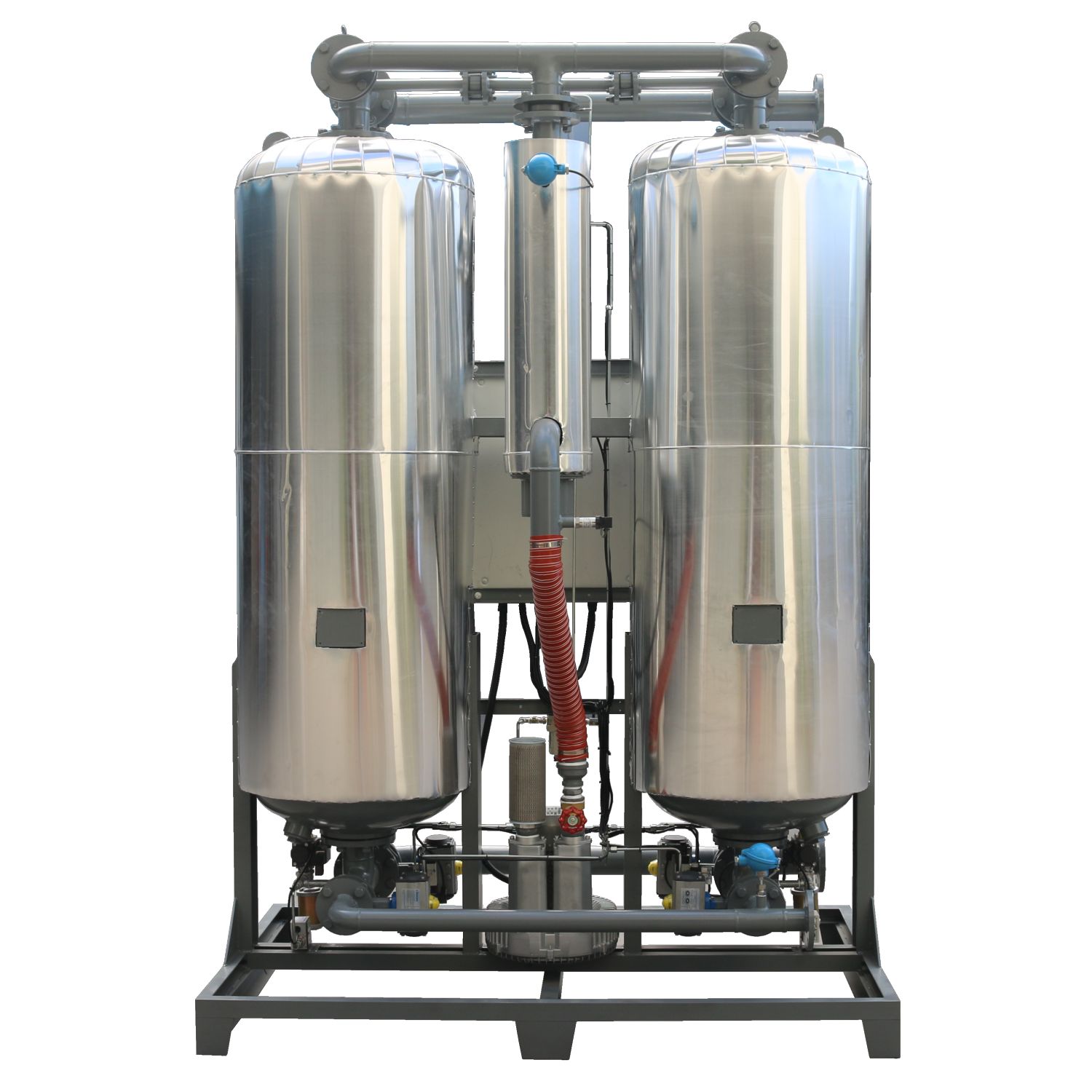
A Lingyu project uses six stainless-steel low-purge blower-heated regenerative adsorption dryers, each rated at 50 m³/min. The system is designed for a pressure dew point of ≤−40°C, oil content of ≤0.01 ppm, particle size of ≤1 μm, and regeneration-air consumption of ≤3%.
This configuration combines blower-assisted regeneration with stainless-steel construction, optimized airflow distribution, pneumatic valve control, temperature and pressure monitoring, and intelligent system control. Users comparing different adsorption technologies can also review Lingyu’s desiccant air dryer range for additional configurations.
How Low-Purge Blower-Heated Regeneration Works
A low-purge blower-heated adsorption dryer differs from a zero-purge blower-heated system in the way the regenerated desiccant bed is cooled.
In this stainless-steel low-purge configuration, regeneration-air consumption is ≤3%. The dryer reduces the amount of compressed air required during regeneration but does not completely eliminate compressed-air consumption.
Zero-purge blower-heated systems use a different cooling arrangement. Construction material and regeneration method should therefore be evaluated separately when selecting an adsorption dryer.
Adsorption Stage
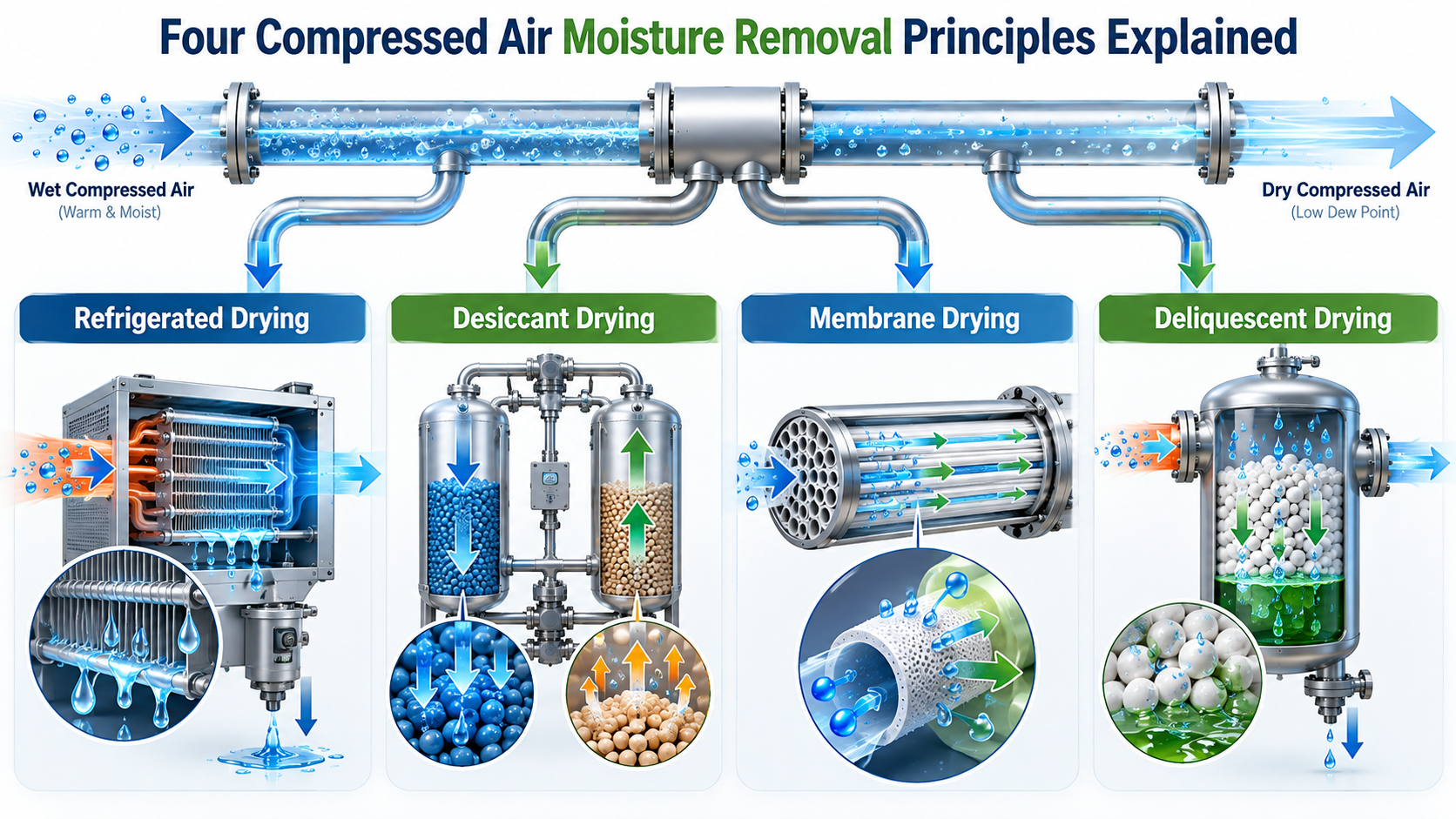
During adsorption, compressed air passes through the active adsorption vessel. The desiccant removes water vapor from the compressed air, allowing the system to achieve the required low pressure dew point.
While one vessel is drying the compressed air, the other vessel proceeds through regeneration so that the twin-vessel system can maintain continuous operation.
Heating and Desorption Stage
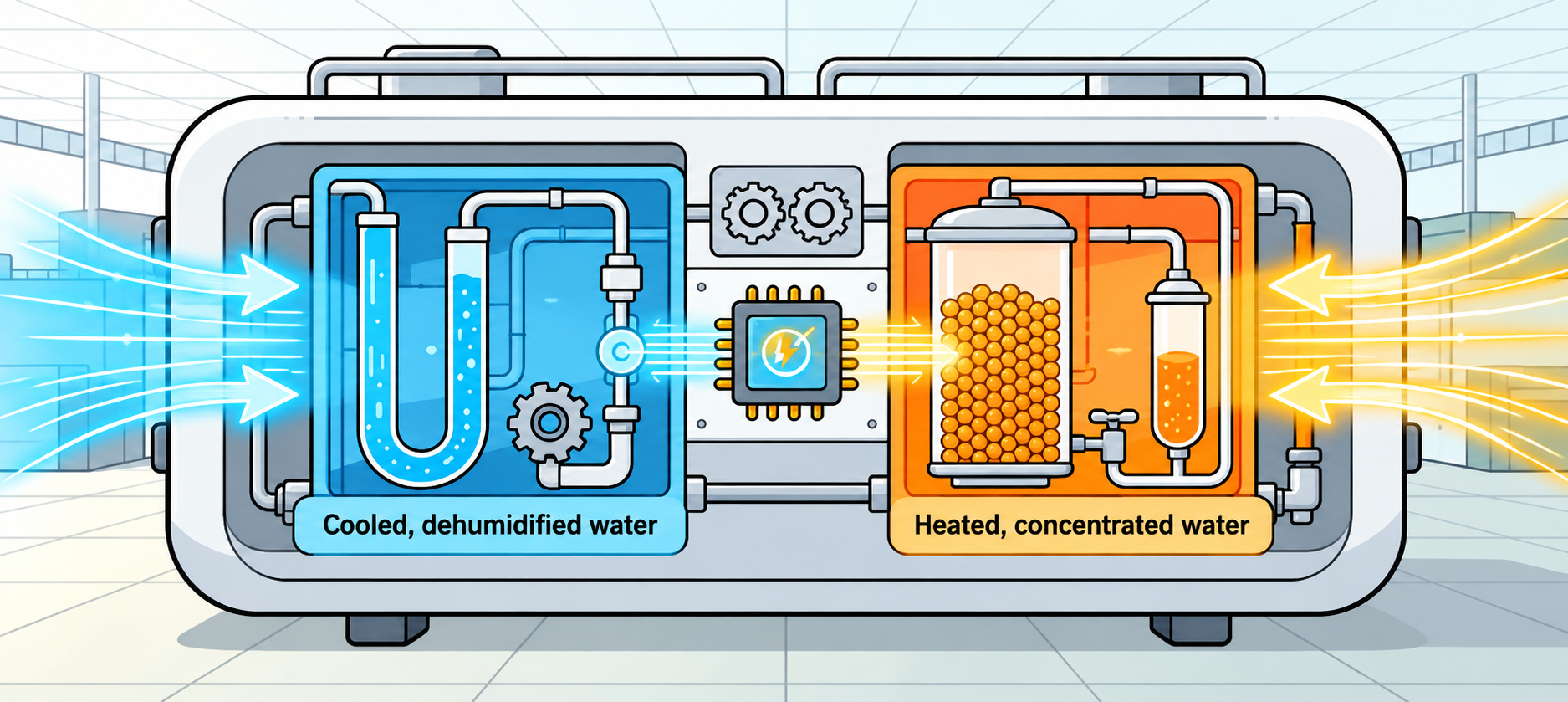
During regeneration, an independent blower draws ambient air into the system. The air passes through a heater and is then directed through the regeneration vessel.
The heated airflow transfers thermal energy to the desiccant, releasing moisture that was adsorbed during the previous drying cycle. The released moisture leaves the vessel with the regeneration airflow.
Cooling Stage
After heating and desorption, the regenerated desiccant must be cooled before the vessel returns to adsorption service.
In the standard HRB-E low-purge blower-heated configuration, approximately 2% of system airflow is used as dry product air during cooling. Overall regeneration-air consumption is 2–3%.
For the stainless-steel project described here, regeneration-air consumption is ≤3%.
Why Blower Heating Reduces Compressed-Air Consumption
Traditional heated-purge adsorption dryers use dry compressed air as part of the regeneration gas stream.
A blower-heated dryer instead uses ambient air for the main heating and desorption process. The blower moves ambient air through the heater and regeneration vessel, reducing the amount of dry compressed air consumed during regeneration.
In a low-purge design, compressed air is mainly required during the cooling stage rather than throughout the complete heating and desorption process.
This operating method reduces purge-air consumption while maintaining the regeneration process required for continuous drying.
Stainless-Steel Construction
Stainless-steel construction is suitable for projects where corrosion resistance, cleanliness, material compatibility, or long-term equipment durability are important selection considerations.
The construction material itself should not be treated as the reason for lower regeneration-air consumption. Purge-air performance is primarily determined by the blower-heated regeneration process and its control strategy.
Stainless-steel construction can also be combined with different regeneration methods. Depending on the system configuration, a stainless-steel adsorption dryer may use low-purge blower heating, zero-purge blower heating, heatless regeneration, heated regeneration, or another customized process.
The project covered here combines stainless-steel construction with low-purge blower-heated regeneration and ≤3% regeneration-air consumption.
Project Performance Parameters
The system consists of six stainless-steel low-purge blower-heated regenerative adsorption dryers with an airflow capacity of 50 m³/min per unit.
| Parameter | Project Requirement |
|---|---|
| Quantity | 6 units |
| Airflow capacity | 50 m³/min per unit |
| Configuration | Stainless-steel low-purge blower-heated regenerative adsorption dryer |
| Pressure dew point | ≤−40°C |
| Oil content | ≤0.01 ppm |
| Particle size | ≤1 μm |
| Regeneration-air consumption | ≤3% |
The system also uses high-performance hard-seated pneumatic butterfly valves, high-quality adsorbent, optimized airflow distribution, temperature and pressure monitoring, a 7-inch touchscreen, and stainless-steel construction.
Pressure Dew Point Performance
The project pressure dew point requirement is ≤−40°C.
The standard HRB-E low-purge blower-heated Series is available with −20°C and −40°C pressure-dew-point configurations.
The required pressure dew point should be selected according to the actual application rather than applying one value universally to every stainless-steel adsorption dryer.
Stable low-dew-point performance depends on multiple operating factors, including inlet moisture loading, desiccant condition, regeneration quality, airflow distribution, pressure, temperature, and control strategy.
Operating Pressure and Temperature
For the standard HRB-E low-purge blower-heated configuration, the operating conditions include:
Rated inlet pressure: 0.7 MPa
Operating pressure range: 0.6–1.0 MPa
Rated inlet temperature: 10–30°C
Maximum inlet temperature: ≤40°C
Rated ambient temperature: 35°C
Ambient operating range: 2–40°C
Custom stainless-steel configurations may use different operating limits depending on capacity, materials, inlet conditions, and project requirements.
Airflow Distribution and Desiccant Utilization
Uniform airflow distribution is important for both adsorption and regeneration performance.
Uneven airflow through the desiccant bed can reduce effective adsorbent utilization and create localized loading. An optimized distribution structure helps direct air more evenly through the vessel during both drying and regeneration.
For large-capacity adsorption dryers, effective airflow distribution also helps limit unnecessary flow resistance and supports consistent use of the desiccant bed.
High-Quality Adsorbent
The stainless-steel system uses high-quality adsorbent to support stable pressure-dew-point performance.
Desiccant condition is influenced by actual operating conditions. Important factors include inlet oil contamination, liquid-water carryover, operating temperature, pressure, regeneration quality, desiccant dusting, and total operating hours.
Desiccant condition should therefore be evaluated during routine maintenance instead of relying on a universal fixed replacement interval.
Pneumatic Butterfly Valves
The system uses high-performance hard-seated pneumatic butterfly valves.
Valve reliability is important in a twin-vessel adsorption dryer because continuous operation depends on accurate switching between adsorption and regeneration flow paths.
Valve leakage, slow actuation, or incomplete switching can affect pressure stability and regeneration performance. Valve operation should therefore be included in planned inspection and maintenance.
Temperature and Pressure Monitoring
The system includes comprehensive temperature and pressure monitoring.
Blower-heated regeneration involves multiple controlled stages, including heating, desorption, cooling, pressurization, depressurization, and vessel switching. Stable temperature and pressure conditions are important throughout these stages.
For the standard HRB-E configuration, monitored parameters include outlet temperature, heating temperature, regeneration exhaust temperature, tower pressures, and blower pressure.
Pressure dew point monitoring is also available as an option.
7-Inch Touchscreen Control
The stainless-steel project uses a 7-inch touchscreen together with international-brand electrical components.
The touchscreen provides a central interface for operating and monitoring the dryer, allowing operators to supervise regeneration stages and system conditions.
The standard HRB-E Series supports RS-485 communication, while IoT connectivity and other communication solutions can be selected according to project requirements.
Filtration and Final Air Quality
Drying alone does not remove every compressed-air contaminant.
The project requires oil content of ≤0.01 ppm and particle size of ≤1 μm in addition to a pressure dew point of ≤−40°C.
Achieving the complete air-quality target normally requires coordinated drying and filtration. Lingyu’s precision compressed air filters can be integrated where additional oil or particulate removal is required.
Effective upstream treatment also helps protect the adsorption dryer. Excessive liquid water, oil contamination, and particulate loading can negatively affect desiccant condition, airflow distribution, valves, and long-term dryer performance.
Industrial Applications
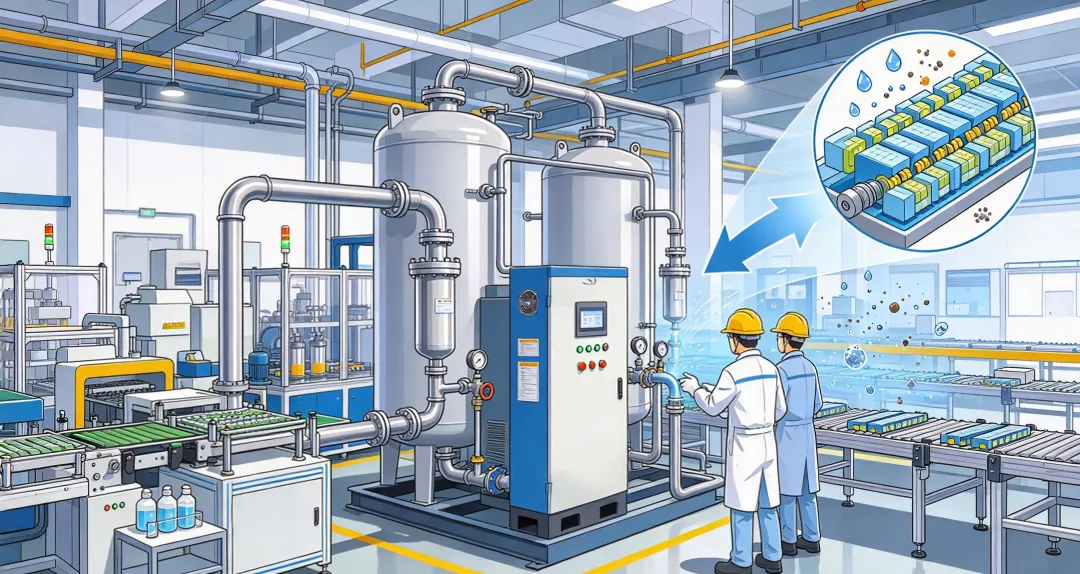
Stainless-steel blower-heated adsorption dryers are well suited to larger industrial compressed-air systems where low pressure dew point, corrosion-resistant construction, controlled air quality, and reduced purge-air consumption are important.
One project uses six 50 m³/min stainless-steel low-purge blower-heated units.
Another new-energy project uses eight 95 m³/min stainless-steel adsorption dryers, demonstrating the suitability of stainless-steel adsorption equipment for high-capacity industrial compressed-air stations.
For battery and related manufacturing environments, users can also review Lingyu’s new energy and battery manufacturing application.
How to Select a Stainless-Steel Low-Purge Blower-Heated Adsorption Dryer
Selection should be based on actual compressed-air system requirements rather than a single nominal dryer specification.
Airflow and Operating Conditions
Required airflow, inlet pressure, inlet temperature, ambient temperature, and compressor-station operating pattern should all be considered during sizing.
The dryer must be able to handle the actual inlet conditions while maintaining the required outlet air quality.
Required Pressure Dew Point
The target pressure dew point should be selected according to the downstream process.
Applications requiring very dry compressed air may need a −40°C pressure dew point, while other industrial processes may operate with a different drying requirement.
Regeneration-Air Consumption
Purge-air consumption directly affects compressed-air system efficiency.
For the stainless-steel low-purge project configuration described here, regeneration-air consumption is ≤3%.
Material Requirements
Stainless-steel construction can be selected where corrosion resistance, cleanliness, material compatibility, or project-specific equipment requirements make it preferable to standard construction materials.
Filtration and Air Quality
Required oil content, particle size, and dew point should be considered together.
The dryer and filtration system should therefore be selected as an integrated air-treatment solution rather than as isolated equipment.
Controls and Monitoring
Temperature monitoring, pressure monitoring, touchscreen control, communication requirements, valve configuration, and system integration should be evaluated according to the operating and maintenance requirements of the compressed-air station.
For projects requiring stainless-steel construction and low-purge blower-heated regeneration, Lingyu’s stainless steel blast heating regeneration adsorption dryer is designed for this type of industrial air-treatment application.
Conclusion
A stainless-steel low-purge blower-heated adsorption dryer combines corrosion-resistant construction with a regeneration process designed to reduce compressed-air consumption.
In the 50 m³/min project configuration, six dryers are used, with a pressure dew point of ≤−40°C, oil content of ≤0.01 ppm, particle size of ≤1 μm, and regeneration-air consumption of ≤3%.
The system incorporates stainless-steel construction, hard-seated pneumatic butterfly valves, high-quality adsorbent, optimized airflow distribution, comprehensive temperature and pressure monitoring, and a 7-inch touchscreen.
In the standard HRB-E low-purge blower-heated configuration, ambient air is supplied by a blower during heating and desorption. Approximately 2% of system airflow is used as dry product air during cooling, while overall regeneration-air consumption is 2–3%.
Selection should focus on airflow, inlet conditions, required pressure dew point, regeneration-air consumption, material requirements, filtration, valve reliability, monitoring, controls, and integration with the complete compressed-air system.