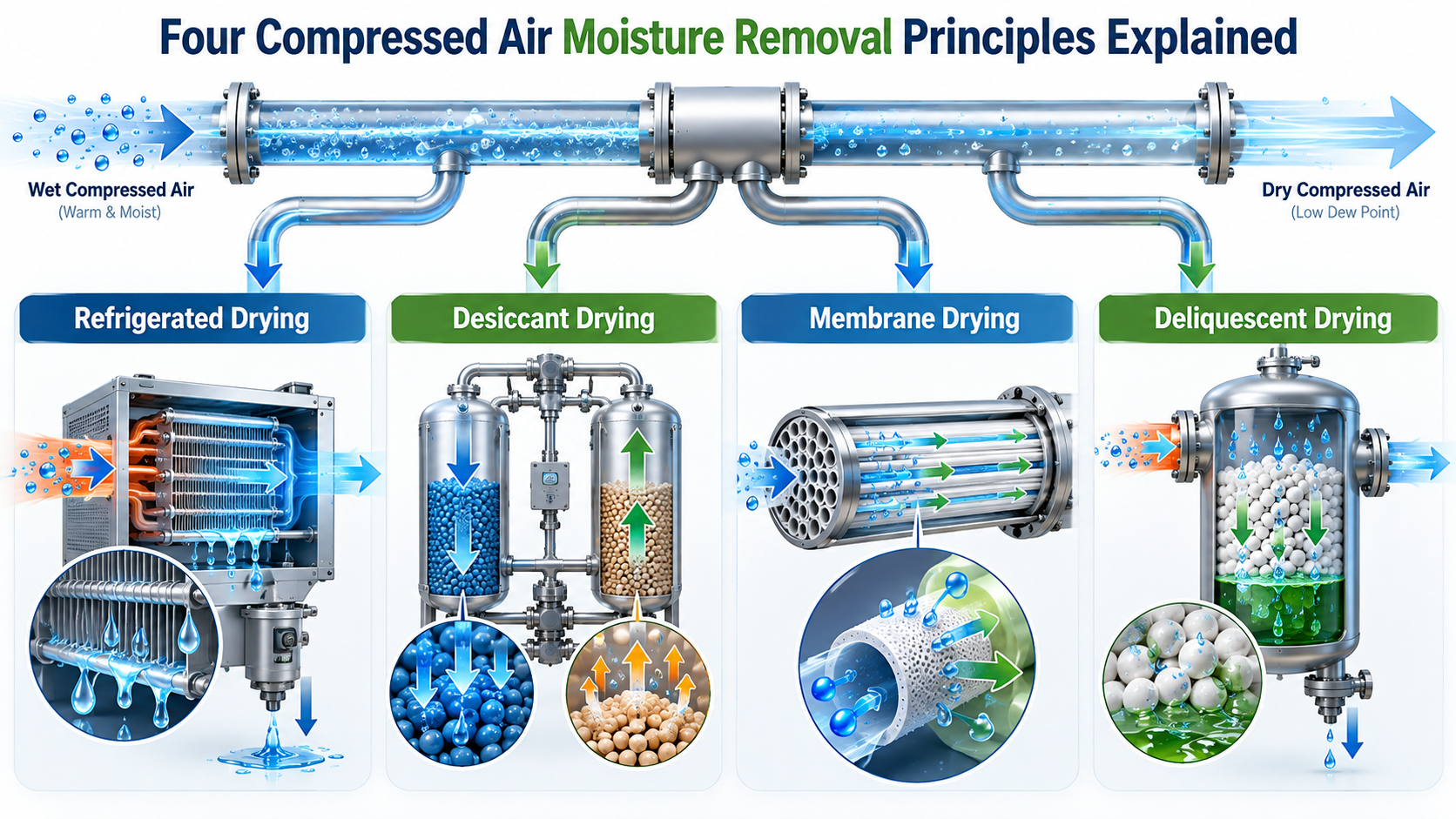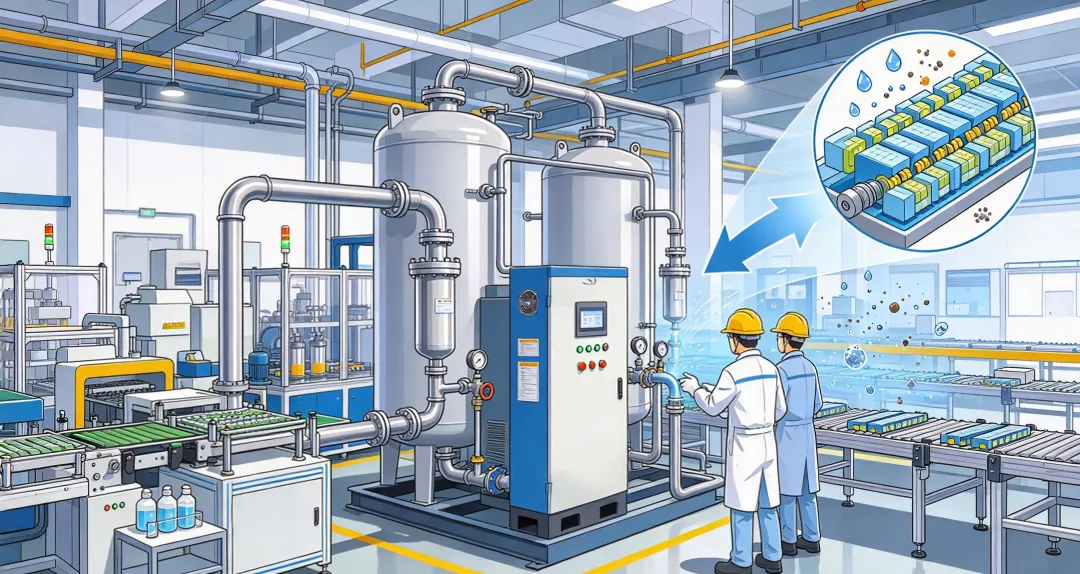
A 100 CFM air-cooled refrigerated air dryer is designed to remove condensed moisture from compressed air before it reaches pneumatic tools, production equipment, controls, and downstream treatment components.
Correct sizing and maintenance are just as important as the dryer’s nominal capacity. Inlet temperature, operating pressure, ambient temperature, airflow variation, ventilation, filtration, and condensate drainage can all influence actual drying performance.
For systems in this capacity range, the 100 CFM Air-Cooled Refrigerated Air Dryer provides a compact solution for industrial compressed air treatment.
How Does an Air-Cooled Refrigerated Air Dryer Work?
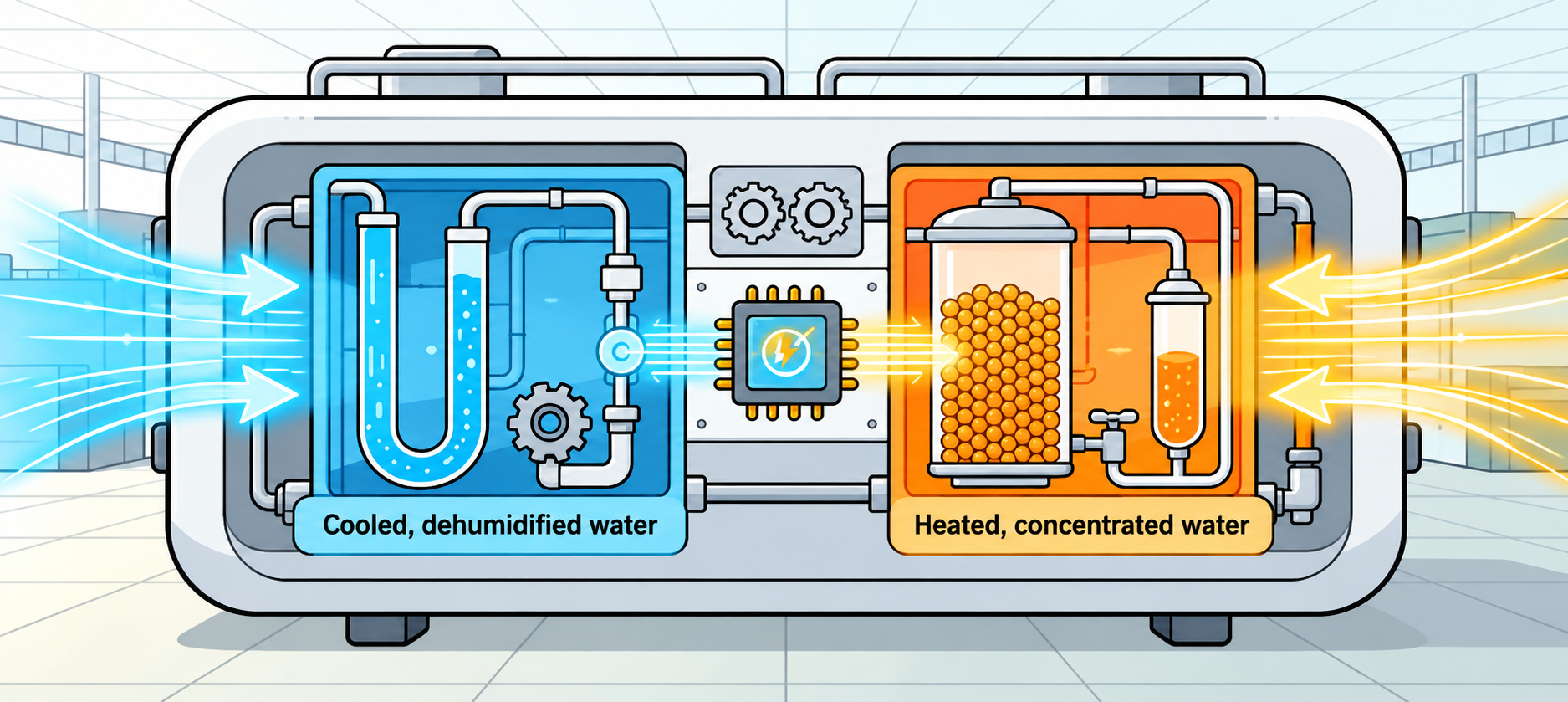
A refrigerated air dryer removes moisture by lowering the temperature of compressed air.
High-temperature compressed air first passes through a pre-cooling section and an air-to-air heat exchanger. It then enters the refrigerant evaporator, where further cooling causes water vapor, oil, and some impurities to condense.
The condensed liquid is separated from the compressed air by an air-water separator and discharged through an automatic drain.
The dried air then passes back through the air-to-air heat exchanger, where it is reheated closer to ambient temperature before entering the compressed air distribution system.
This process provides a pressure dew point of approximately 2–10°C under specified operating conditions.
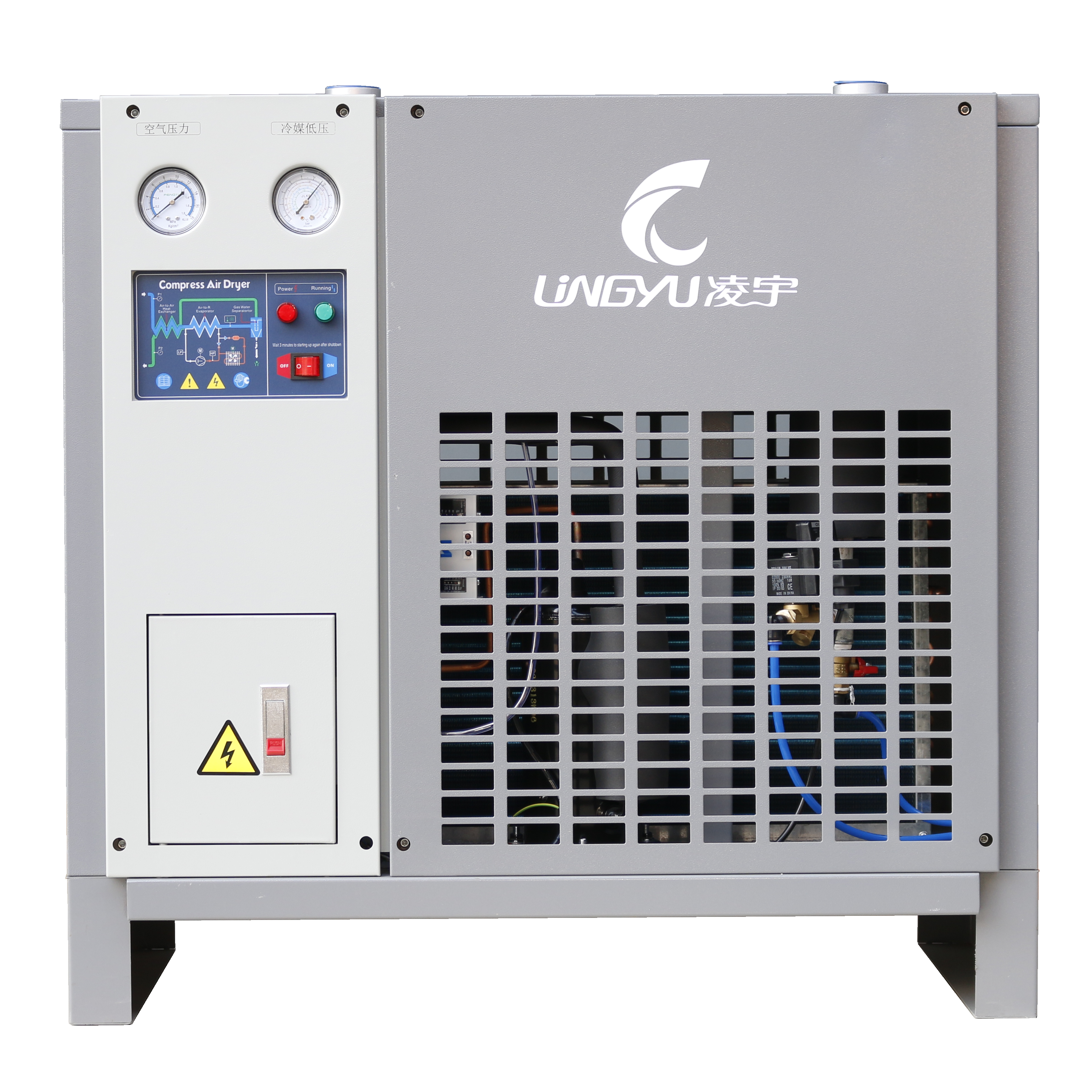
Typical Operating Conditions
For Lingyu’s AH Series air-cooled refrigerated drying technology, standard operating conditions include:
- Rated inlet pressure: 0.7 MPa
- Operating pressure range: 0.6–1.0 MPa
- Rated inlet temperature: 50°C
- Maximum inlet temperature: ≤80°C
- Pressure dew point: 2–10°C
- Rated ambient temperature: 32°C
- Ambient operating range: 2–45°C
- Pressure drop: ≤0.025 MPa
- Cooling method: Air-cooled
- Installation: Indoor, on a level concrete floor
- Recommended clearance: At least 1.5 m around the unit
Actual product configuration should be confirmed according to the specific model and project requirements.
How to Select the Right Dryer Capacity
A common mistake is to select a dryer simply because its nominal airflow is similar to the compressor’s rated output.
A 100 CFM dryer may be appropriate when the actual compressed air demand is around 100 CFM, but the selection should also account for real operating conditions.
Check Maximum Airflow, Not Only Average Demand
The dryer must be able to handle the highest airflow that can pass through it during normal operation.
If a plant averages 80 CFM but regularly reaches 100 CFM during production peaks, the dryer should be evaluated at the higher flow.
A capacity margin may be appropriate where demand fluctuates significantly, but automatically oversizing every dryer by a fixed percentage is not necessary.
Apply Operating Correction Factors
Dryer capacity is influenced by:
- Inlet air temperature
- Ambient temperature
- Operating pressure
- Actual airflow
- Compressor operating pattern
A useful sizing concept is:
Required dryer capacity = actual airflow × applicable operating correction factors
The manufacturer’s correction data should be used when conditions differ from the rated design point.
Pay Particular Attention to Inlet Temperature
Temperature has a major effect on moisture load.
Hotter compressed air contains more water vapor. If the dryer receives air close to its maximum allowable inlet temperature, its effective drying capacity may be lower than under normal rated conditions.
Good compressor-room ventilation and effective upstream cooling can therefore make a significant difference.
Consider Ambient Temperature
Because an air-cooled dryer rejects refrigeration heat into the surrounding air, ambient conditions directly affect condenser performance.
Installing the dryer in a hot, poorly ventilated compressor room can reduce heat rejection and place additional load on the refrigeration system.
The dryer should therefore have adequate surrounding space and unobstructed airflow.
Where Is a 100 CFM Refrigerated Air Dryer Used?
A refrigerated dryer is suitable for many applications that require dependable moisture control but do not require the extremely low dew points associated with adsorption drying.
Automotive and General Manufacturing
Moisture can contribute to corrosion, valve problems, and inconsistent pneumatic operation.
In automotive and general manufacturing, refrigerated dryers can support pneumatic tools, cylinders, controls, assembly equipment, and general plant air.
Electronics and Precision Manufacturing
Dry compressed air can help protect pneumatic systems, production equipment, and instrumentation from condensation.
For electronics and precision manufacturing, the required dryer and filtration configuration should be selected according to the sensitivity of the specific process.
Food and Beverage Production
Compressed air may be used for pneumatic machinery, packaging systems, conveying, and other production processes.
In food and beverage applications, moisture control should be considered together with filtration and the required final air quality.
General Pneumatic Systems
A 100 CFM refrigerated dryer can also support:
- Pneumatic tools
- Automated machinery
- Packaging equipment
- Air-operated pumps
- Workshops
- Industrial controls
- General production equipment
Where a process requires a pressure dew point well below 0°C, a refrigerated dryer alone may not be sufficient. In such cases, desiccant air dryers should also be evaluated.
Why Pre-Filtration Matters
A refrigerated dryer removes condensed moisture, but it is not a substitute for proper compressed air filtration.
Compressor air can contain oil aerosols, solid particles, rust, and other contamination.
These contaminants can foul heat exchanger surfaces, affect drains, and increase the burden on downstream equipment.
An appropriately selected precision compressed air filter can help remove oil aerosols and particles as part of a complete air-treatment system.
Filter placement and grade should be chosen according to the compressor type, dryer, and downstream air-quality requirement.
Maintenance Tips for Longer, More Reliable Operation
Preventive maintenance can help keep the dryer operating within its intended temperature and pressure range.
Inspect the Automatic Drain
The condensate drain is one of the most important components in the dryer.
If it becomes blocked or fails to discharge properly, separated water may accumulate and eventually carry downstream.
Regularly check that:
- Condensate is being discharged
- The drain is not blocked
- Drain piping is unrestricted
- There is no abnormal air leakage
Maintenance frequency should reflect operating conditions rather than relying on one fixed interval for every installation.
Keep the Air-Cooled Condenser Clean
The condenser must transfer heat efficiently to ambient air.
Dust, oil mist, lint, and other debris on the condenser surface restrict airflow and reduce heat-transfer performance.
Inspect and clean the condenser according to the contamination level of the compressor room.
Facilities with dusty operating conditions may need considerably more frequent cleaning than clean indoor installations.
Maintain Ventilation Around the Dryer
The dryer should not be installed directly against walls, machinery, or other objects that block condenser airflow.
The recommended installation clearance helps prevent discharged hot air from immediately recirculating into the condenser inlet.
Good ventilation also reduces the risk of excessive refrigeration pressure during hot operating conditions.
Monitor Pressure Drop
An unexpected increase in pressure loss may indicate restrictions in filters, piping, or treatment equipment.
Excessive pressure drop affects downstream equipment and can force the compressor to operate at a higher discharge pressure, increasing overall energy consumption.
Check the Heat Exchanger
Fouling in the air-to-air exchanger, evaporator, or separator can reduce heat-transfer efficiency and interfere with moisture separation.
Heat exchanger condition should therefore be included in periodic servicing.
Inspect Refrigeration Components
The refrigeration circuit includes components such as the compressor, condenser, evaporator, expansion device, refrigerant filter drier, pressure protection devices, and hot-gas bypass system.
Refrigeration-system diagnosis and refrigerant work should be performed by qualified personnel where required.
How to Improve Energy Efficiency
Refrigerated air dryer efficiency depends heavily on installation and operating conditions.
Avoid Operating Beyond Rated Airflow
Overloading the dryer increases the thermal and moisture load.
Even if compressed air continues to pass through the unit, outlet dew-point performance may deteriorate.
Correct sizing is therefore the first efficiency measure.
Keep Inlet Air as Cool as Practical
Reducing excessive compressor discharge temperature before the air reaches the dryer lowers refrigeration load.
A properly functioning aftercooler and effective condensate separation upstream can improve overall system performance.
Keep the Condenser Clean
Good condenser airflow allows the refrigeration system to reject heat efficiently.
A clean condenser does not create a fixed guaranteed percentage of energy savings, but it helps prevent the performance loss and increased refrigeration load associated with fouled heat-transfer surfaces.
Maintain Low System Pressure Drop
Energy efficiency is not determined only by the dryer’s electrical consumption.
Every unnecessary pressure loss in the compressed air system increases the compressor pressure required to deliver the necessary pressure at the point of use.
Maintaining filters, piping, and dryer passages can therefore reduce total system energy consumption.
Repair Compressed Air Leaks
Leaks increase the volume of air that the compressor must produce and the dryer must process.
A dryer that appears undersized may sometimes be serving a system with excessive leakage rather than genuine production demand.
Should You Install an Air Receiver?
An air receiver can help stabilize compressed air demand and provide temporary storage during short periods of increased consumption.
Its effect depends on where it is installed in the system.
A receiver can help:
- Reduce rapid pressure fluctuations
- Provide buffer capacity for intermittent demand
- Improve overall compressor-system stability
- Reduce short-term airflow peaks through downstream equipment in appropriately designed systems
Receiver size and placement should be determined as part of the complete compressed air system rather than added solely as a dryer accessory.
Common Problems and Troubleshooting
Moisture Appears Downstream
Possible causes include:
- Airflow above dryer capacity
- Excessive inlet temperature
- Excessive ambient temperature
- Poor condenser ventilation
- Drain malfunction
- Refrigeration-system fault
- Bypassing around the dryer
- Downstream piping condensation
Start by checking airflow, inlet temperature, ambient conditions, drain operation, and outlet dew point before assuming that refrigerant is the problem.
The Drain Does Not Discharge
Possible causes include a blocked drain, restricted discharge line, or drain component failure.
Inspect the drain and condensate piping and clean or service them as required.
Refrigeration Compressor Cycles Abnormally
Abnormal cycling can be associated with changing load, condenser problems, airflow restrictions, temperature conditions, protection devices, or refrigeration-system issues.
Verify condenser cleanliness and ventilation first. Persistent abnormal cycling should be evaluated by qualified service personnel.
The Dryer Runs Hot
Check:
- Ambient temperature
- Condenser cleanliness
- Ventilation clearance
- Fan operation
- Air recirculation around the unit
- Inlet air temperature
Operating the dryer in a confined area with inadequate ventilation can significantly affect refrigeration performance.
Excessive Noise or Vibration
Abnormal noise can originate from fans, the refrigeration compressor, panels, loose fasteners, or other mechanical components.
Do not assume the fan is always responsible. Identify the source of the noise before replacing components.
When a Refrigerated Dryer Is Not Enough
A 2–10°C pressure dew point is suitable for many industrial compressed air systems, but not every process.
Applications involving outdoor piping in freezing environments, highly moisture-sensitive processes, instrumentation with extremely low dew-point requirements, or certain specialized production systems may require deeper drying.
Lingyu’s broader range of refrigerated air dryers and adsorption drying equipment allows the treatment method to be selected according to the actual pressure dew point required.
Choosing a lower-dew-point technology than the process needs can add unnecessary cost, while choosing a refrigerated dryer for an application requiring extremely dry air can result in inadequate moisture control.
A Practical Approach to 100 CFM Dryer Selection
A 100 CFM air-cooled refrigerated dryer should be selected as part of the complete compressed air system rather than solely by its CFM rating.
The most important factors are actual peak airflow, operating pressure, inlet temperature, ambient temperature, required pressure dew point, filtration, ventilation, pressure drop, and condensate management.
Once installed, regular drain inspection, condenser cleaning, filter maintenance, and operating-condition monitoring can help maintain stable drying performance and avoid unnecessary energy consumption.
For assistance matching a dryer to your compressor and operating conditions, contact Lingyu with your airflow, inlet pressure, inlet temperature, ambient conditions, and required outlet dew point.