Compressed air is widely used in industries such as manufacturing, automotive, food processing, electronics, and pharmaceuticals. However, compressed air naturally contains moisture, which can lead to corrosion, equipment damage, poor product quality, and costly downtime. Selecting the best air dryer for an air compressor is essential to ensure clean, dry, and reliable compressed air.
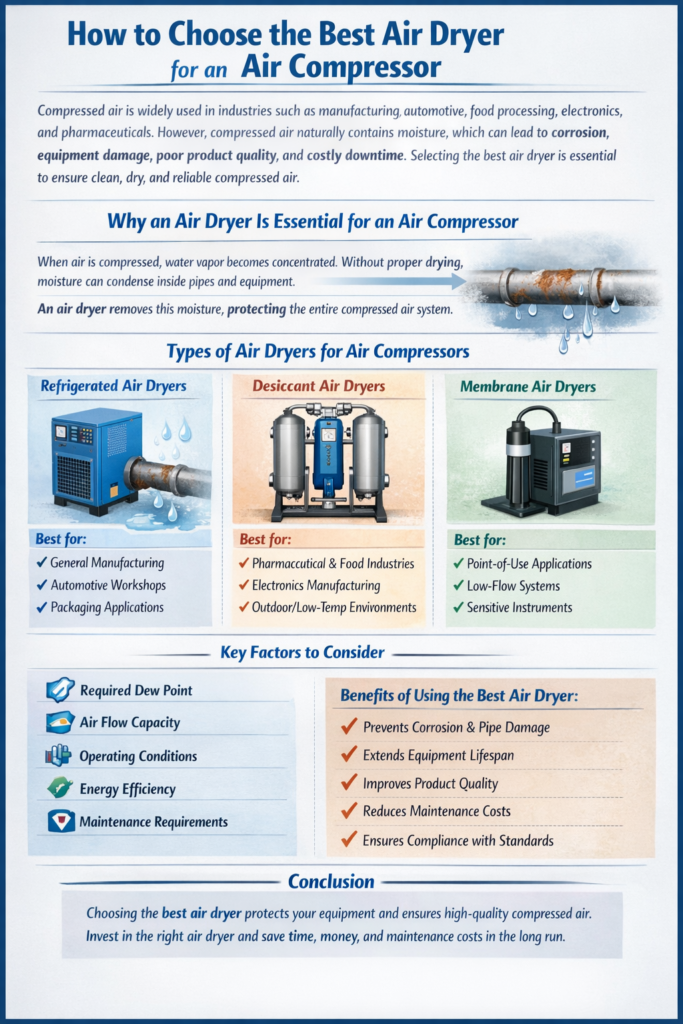
Why an Air Dryer Is Essential for an Air Compressor
When air is compressed, water vapor becomes concentrated. Without proper drying, moisture can condense inside pipes and equipment, causing rust, freezing, and contamination. An air dryer removes this moisture, protecting the entire compressed air system and improving overall efficiency.
Types of Air Dryers for Air Compressors
To choose the best air dryer, it is important to understand the main types available:
1. Refrigerated Air Dryers
Refrigerated air dryers cool compressed air to condense and remove moisture. They are ideal for general industrial applications and typically achieve pressure dew points around 3°C (37°F).
Best for:
General manufacturing
Automotive workshops
Packaging applications
2. Desiccant Air Dryers
Desiccant air dryers use moisture-absorbing materials to achieve very low dew points, down to -40°C or even -70°C.
Best for:
Pharmaceutical and food industries
Electronics manufacturing
Outdoor or low-temperature environments
3. Membrane Air Dryers
Membrane dryers separate moisture using semi-permeable fibers. They are compact and require minimal maintenance.
Best for:
Point-of-use applications
Low-flow systems
Sensitive instruments
Key Factors to Consider When Choosing the Best Air Dryer
Required Dew Point
Different applications require different moisture levels. Always select an air dryer that meets or exceeds your required pressure dew point.Air Flow Capacity
The air dryer must be properly sized to handle the maximum flow rate of the air compressor.Operating Conditions
Ambient temperature, inlet air temperature, and operating pressure all affect dryer performance.Energy Efficiency
Energy-efficient air dryers reduce operating costs and improve system sustainability.Maintenance Requirements
Consider ease of maintenance, replacement parts, and long-term service costs.
Benefits of Using the Best Air Dryer for Your Air Compressor
Prevents corrosion and pipe damage
Extends the lifespan of pneumatic tools and equipment
Improves product quality and process reliability
Reduces maintenance costs and system downtime
Ensures compliance with industry standards
Conclusion
Choosing the best air dryer for an air compressor is a critical decision that directly affects system performance, reliability, and operating costs. By understanding your application requirements and comparing dryer technologies, you can select the right air dryer to protect your equipment and ensure consistent, high-quality compressed air. Investing in the correct air dryer today will save time, money, and maintenance costs in the long run.