Laser cutting is widely used in modern metal fabrication because it combines high cutting speed, precision, and repeatability. When stainless steel, aluminum, and other materials need a clean cut surface with limited oxidation, nitrogen can be used as the assist gas.
Nitrogen generation for laser cutting allows manufacturers to produce nitrogen on-site from compressed air instead of relying entirely on cylinders or bulk liquid nitrogen deliveries.
However, a successful laser-cutting nitrogen system depends on more than simply selecting a high-purity generator. Purity, flow rate, point-of-use pressure, compressed-air quality, storage capacity, and operating cost should all be considered together.
For a broader overview of this application, see Lingyu’s metal fabrication and laser cutting solutions.
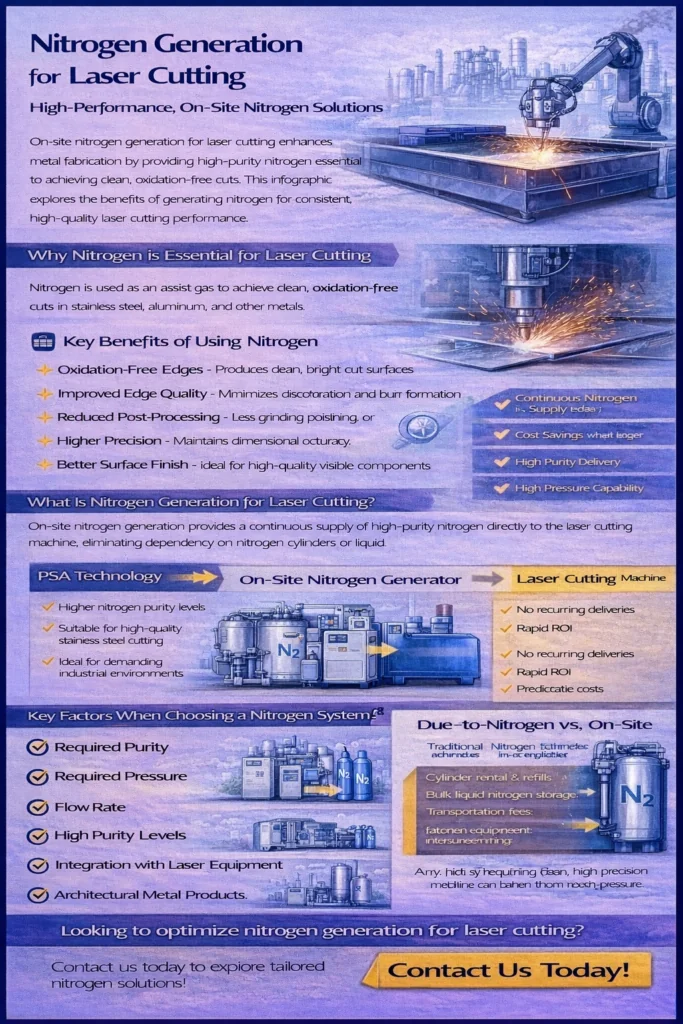
Why Nitrogen Is Used in Laser Cutting
During laser cutting, an assist gas helps remove molten material from the kerf and influences the final cut surface.
Nitrogen is commonly used when minimizing oxidation is important. Compared with oxygen-assisted cutting, nitrogen does not intentionally promote an oxidation reaction at the cut edge.
This makes it suitable for applications where manufacturers want to achieve a cleaner surface and reduce oxide formation.
Potential benefits include:
- Cleaner cut edges
- Reduced oxidation and discoloration
- Less downstream finishing in suitable applications
- More consistent visible surfaces
- Better compatibility with components that will be welded, coated, or finished later
The actual result still depends on material type, thickness, laser power, nozzle conditions, assist-gas pressure, flow, and gas quality.
What Is an On-Site Nitrogen Generation System for Laser Cutting?
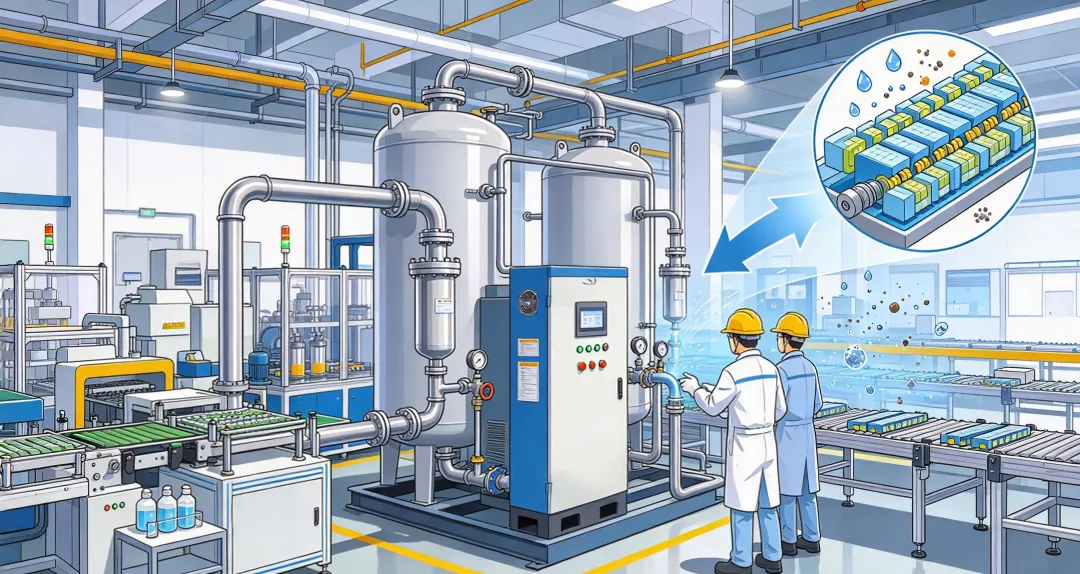
An on-site nitrogen system produces nitrogen from compressed air and supplies it to the laser-cutting process.
A typical system may include:
- Air compressor
- Air receiver
- Refrigerated or adsorption dryer
- Filtration stages
- PSA nitrogen generator
- Nitrogen buffer tank
- Nitrogen analyzer
- Pressure-control equipment
- Downstream storage or boosting equipment where required
Lingyu’s PSA system diagram includes an air compressor, air receiver, refrigerated air dryer, buffer tank, nitrogen buffer tank, pressure-reducing valve, nitrogen/oxygen analyzer, off-spec nitrogen outlet, and nitrogen supply control.
This is why the nitrogen generator should be treated as part of a complete gas-production system rather than as an isolated machine.
How PSA Nitrogen Generation Works
Lingyu’s nitrogen generation equipment uses Pressure Swing Adsorption, or PSA.
The generator contains two adsorption towers filled with Carbon Molecular Sieve. Compressed air enters one tower, where oxygen is preferentially adsorbed while nitrogen passes through as product gas.
As one tower produces nitrogen, the other regenerates. The towers alternate automatically under PLC control, allowing continuous nitrogen production.
For a more detailed explanation, see how PSA nitrogen generation works.
How Much Nitrogen Purity Is Needed?
Laser cutting does not have one correct nitrogen purity for every job.
Lingyu’s PSA range supports approximately 95% to 99.999% nitrogen purity, with product configurations including 99%, 99.5%, 99.9%, and 99.99%.
The correct purity depends on:
- Material type
- Material thickness
- Acceptable edge oxidation
- Required surface appearance
- Laser parameters
- Assist-gas flow
- Point-of-use pressure
- Downstream finishing requirements
For processes that genuinely require very low residual oxygen, a 99.99% nitrogen generator can be evaluated.
However, specifying the highest available purity by default is not always the most efficient choice. Higher purity can influence nitrogen recovery, generator output, and compressed-air consumption.
The target should be the lowest purity that consistently meets the required cut quality.
Flow Rate Is as Important as Purity
Laser cutting can consume large amounts of assist gas, especially when cutting thicker material, using larger nozzles, or operating several machines simultaneously.
For this reason, generator sizing should account for both average and peak demand.
Important information includes:
- Number of laser machines
- Material mix
- Typical thickness range
- Nozzle diameter
- Cutting pressure
- Maximum instantaneous flow
- Simultaneous machine operation
- Daily operating hours
A system sized only from average nitrogen consumption may struggle when several cutting machines demand gas at the same time.
A nitrogen buffer tank can help absorb short-duration flow peaks and stabilize supply.
Pressure Requirements Need Separate Attention
Laser-cutting assist-gas pressure should be evaluated separately from the PSA generator’s compressed-air inlet pressure.
Lingyu’s PSA catalog lists an inlet compressed-air pressure of 0.5–0.8 MPa. This is a generator feed-air condition and should not be interpreted as the final assist-gas pressure available at the laser machine.
If the laser machine requires higher point-of-use pressure, the complete nitrogen supply system may need downstream pressure boosting and appropriate high-pressure storage.
For more detail on this part of the system, see high-pressure nitrogen generation.
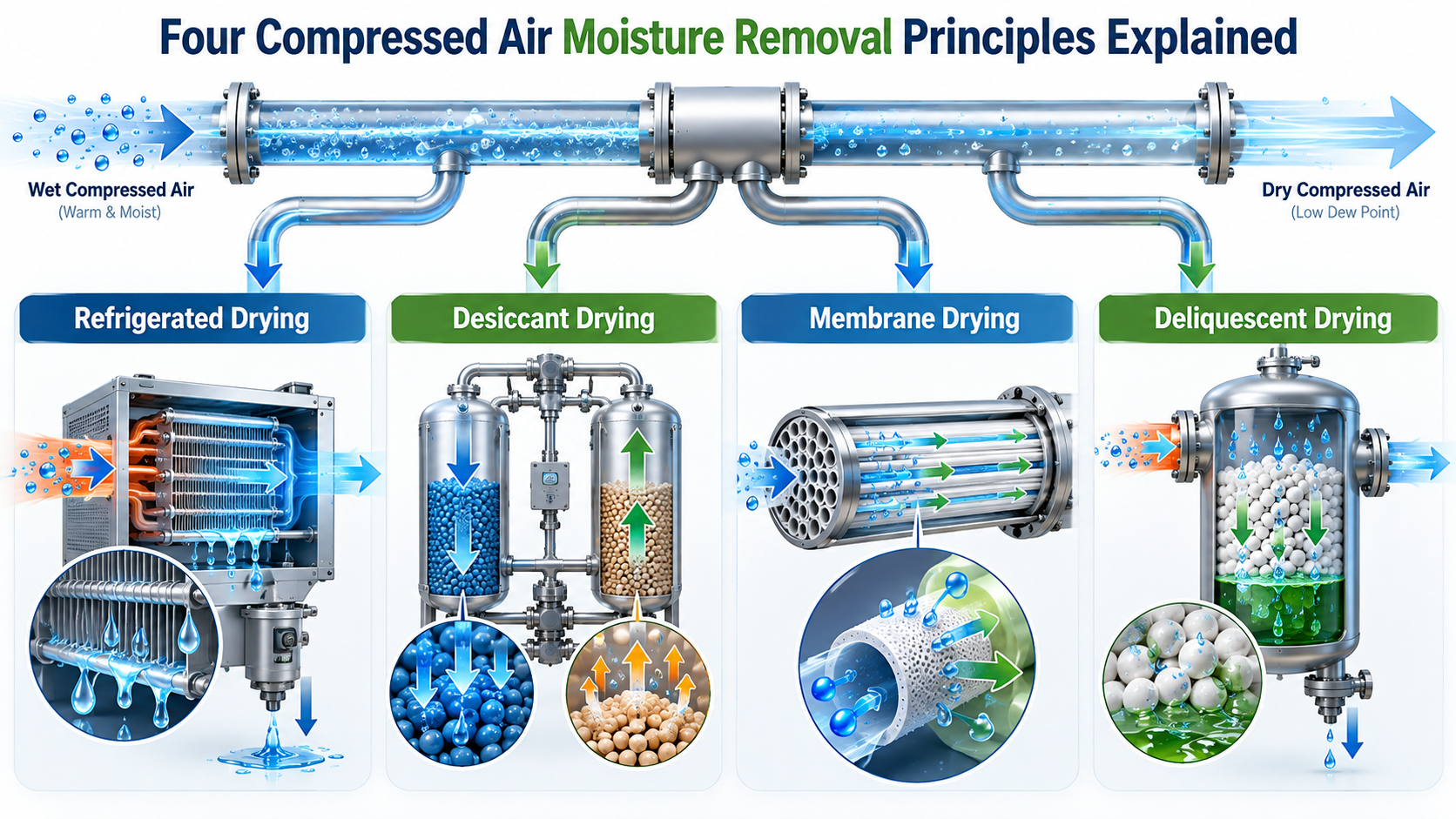
Clean and Dry Compressed Air Matters
A PSA generator depends on compressed air quality.
Moisture, oil, and particulate contamination can affect filters, pneumatic valves, CMS, analyzers, and long-term nitrogen-system performance.
Lingyu’s standard PSA operating specifications include:
- Inlet air temperature: ≤40°C
- Inlet air pressure: 0.5–0.8 MPa
- Nitrogen purity: 95%–99.999%
- Nitrogen dew point: ≤−40°C
Proper drying and filtration should therefore be included in the system design.
For laser-cutting installations where integrated compressed-air treatment is useful, Lingyu also offers a special combination machine for laser cutting.
Real-Time Purity and Flow Monitoring
Stable gas quality matters during continuous cutting.
Lingyu PSA systems provide real-time monitoring of nitrogen purity and flow. The digital touchscreen can display pressure, nitrogen purity, flow rate, and operating status.
If purity drops below the specified setpoint, an alarm is activated. If the off-spec condition continues, the system can automatically shut down for protection.
This is particularly useful in laser-cutting production because an unnoticed change in nitrogen quality can affect cut consistency.
Energy Consumption and Compressed-Air Demand
A major part of nitrogen operating cost comes from producing the compressed air required by the PSA system.
Therefore, comparing two systems only by nitrogen-generator purchase price is not enough.
Manufacturers should compare:
- Required nitrogen purity
- Nitrogen flow
- Compressed-air consumption
- Compressor power
- Dryer and filtration losses
- Boosting power where applicable
- Operating hours
Lingyu’s PSA design uses an optimized unequal-pressure equalization process that the catalog states can indirectly reduce overall energy consumption by approximately 5% under the stated design conditions.
For a broader sizing and efficiency framework, see the nitrogen generator specification guide.
On-Site Nitrogen vs. Delivered Nitrogen
Delivered cylinders and bulk liquid nitrogen can be practical in some operations, especially where demand is low or irregular.
On-site generation becomes more attractive when nitrogen consumption is regular and production continuity is important.
A realistic comparison should include:
- Delivered nitrogen price
- Cylinder or tank rental
- Transportation charges
- Storage requirements
- Nitrogen consumption
- Compressor electricity
- Dryer and filter maintenance
- Generator maintenance
- Booster energy where required
This is why claims such as “rapid ROI” or “significant savings” should not be treated as universal.
The actual financial result depends on site-specific consumption and energy costs. A more detailed comparison is available in the nitrogen generator cost and ROI guide.
Where On-Site Nitrogen Generation Is Commonly Used
Laser-cutting nitrogen systems can be relevant in:
- Sheet metal fabrication
- Stainless steel processing
- Electrical enclosure manufacturing
- Automotive component production
- Kitchen equipment manufacturing
- Machinery production
- Architectural metal fabrication
- Other operations requiring controlled cut-edge oxidation
The system should ultimately be designed around the actual laser equipment and production workload rather than the industry name alone.
What to Define Before Selecting a System
Before requesting a nitrogen-generation system, a laser-cutting facility should define the required nitrogen purity, peak flow, point-of-use pressure, number of machines, material and thickness range, operating hours, available compressor capacity, compressed-air quality, and expected future expansion.
These values allow the nitrogen generator, compressor, dryer, filtration, buffer storage, booster, and distribution system to be evaluated as one complete solution.
Conclusion
Nitrogen generation for laser cutting can provide manufacturers with greater control over nitrogen availability while reducing dependence on externally delivered gas.
But successful system selection requires more than simply choosing the highest-purity generator.
Nitrogen purity, flow rate, point-of-use pressure, compressed-air quality, storage, monitoring, and energy consumption should all be considered together.
For laser-cutting applications, the best nitrogen generation system is the one that consistently provides the required gas quality and flow at the laser machine while keeping overall operating cost under control.