The 25/35/50 CFM Air-Cooled Refrigerated Air Dryer is designed for small to medium compressed air systems where reliable moisture removal, compact installation, and straightforward operation are important.
These smaller-capacity dryers can support workshops, pneumatic equipment, light manufacturing, laboratory equipment, and other applications where a refrigerated pressure dew point is sufficient.
The 25/35/50 CFM Refrigerated Air Dryer should be selected according to actual airflow, operating pressure, inlet temperature, ambient conditions, and required outlet dew point rather than CFM rating alone.
How Does a Small Refrigerated Air Dryer Work?
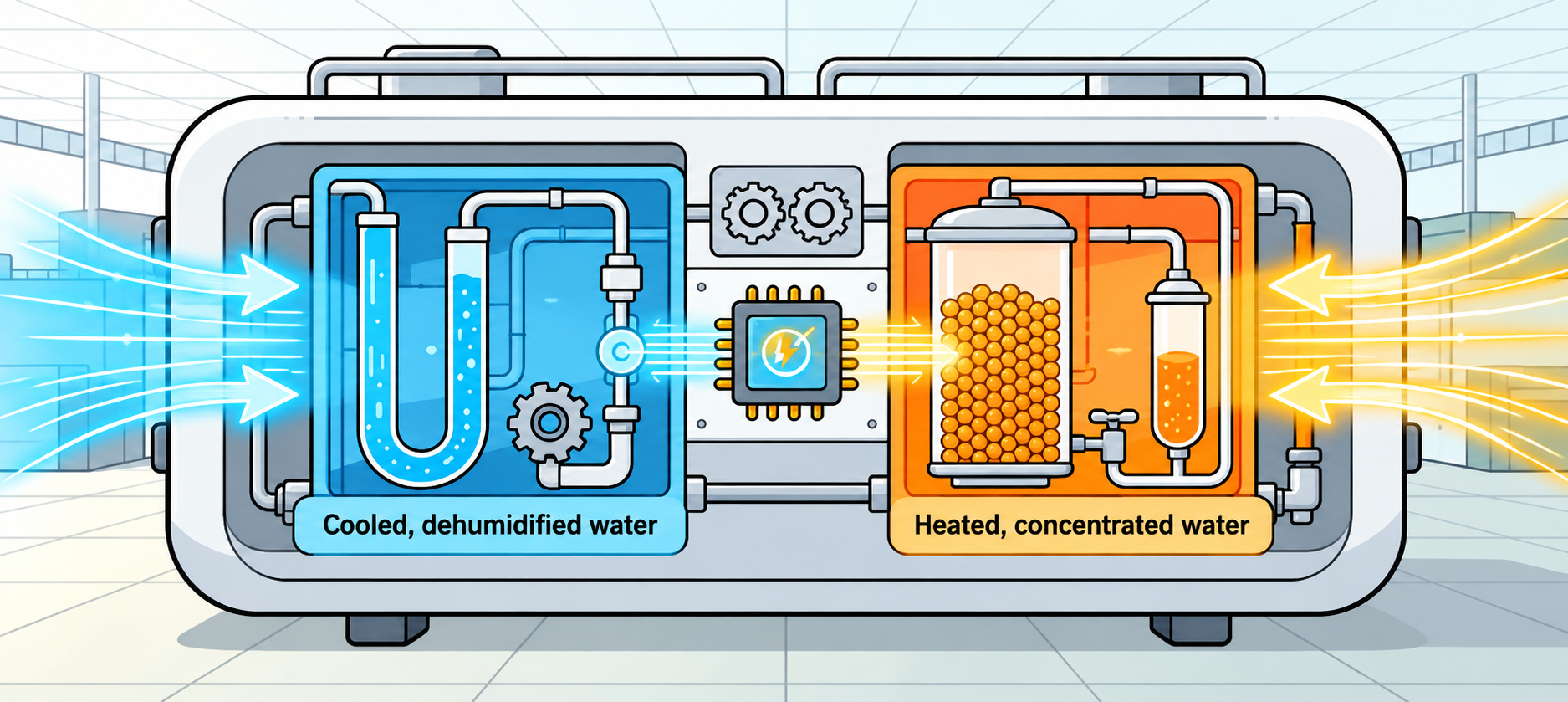
A refrigerated air dryer removes moisture by cooling compressed air until water vapor condenses.
Hot, moisture-containing compressed air is first pre-cooled before entering the refrigeration evaporator. Further cooling causes moisture, oil, and some impurities to condense.
The resulting liquid is separated from the compressed air and discharged through an automatic drain. The dried air is then reheated before leaving the dryer, helping reduce the possibility of condensation on downstream piping.
For Lingyu’s AH Series air-cooled refrigerated drying technology, the specified pressure dew point is 2–10°C under rated operating conditions.
Typical Operating Conditions
The principal operating conditions for Lingyu’s AH Series air-cooled refrigerated dryers include:
- Rated inlet pressure: 0.7 MPa
- Operating pressure range: 0.6–1.0 MPa
- Rated inlet temperature: 50°C
- Maximum inlet temperature: ≤80°C
- Pressure dew point: 2–10°C
- Rated ambient temperature: 32°C
- Ambient operating range: 2–45°C
- Pressure drop: ≤0.025 MPa
- Cooling method: Air-cooled
- Installation: Indoor, on a level concrete floor
- Recommended clearance: At least 1.5 m around the unit
These operating limits are important when selecting among the 25, 35, and 50 CFM capacities.
How to Choose Between 25, 35 and 50 CFM
The best model is not necessarily the one closest to the compressor’s nameplate output. Selection should be based on the maximum airflow the dryer will actually receive under real operating conditions.
25 CFM
A 25 CFM dryer is suited to smaller compressed air systems where demand remains within its corrected capacity.
Typical uses may include:
- Small pneumatic equipment
- Light workshop tools
- Compact automation systems
- Selected laboratory equipment
- Small production machines
35 CFM
A 35 CFM configuration provides additional capacity for systems with moderate demand or several pneumatic consumers operating together.
It can be appropriate for workshops and light manufacturing systems where a 25 CFM unit would operate too close to maximum capacity.
50 CFM
A 50 CFM dryer is better suited to higher-demand small industrial systems or applications with larger peak airflow.
Do not automatically choose the largest model for additional “efficiency.” Excessive oversizing can add unnecessary equipment cost without providing a corresponding operating benefit.
Account for Real Operating Conditions
Nominal dryer capacity is normally stated at defined operating conditions.
Actual capacity can change with:
- Inlet temperature
- Operating pressure
- Ambient temperature
- Peak airflow
- Compressor operating pattern
Higher inlet or ambient temperatures can increase the load on the refrigeration system.
When site conditions differ significantly from the rated conditions, apply the appropriate correction factors rather than relying solely on nominal CFM.
Installation Guidelines
Correct installation is one of the simplest ways to improve reliability.
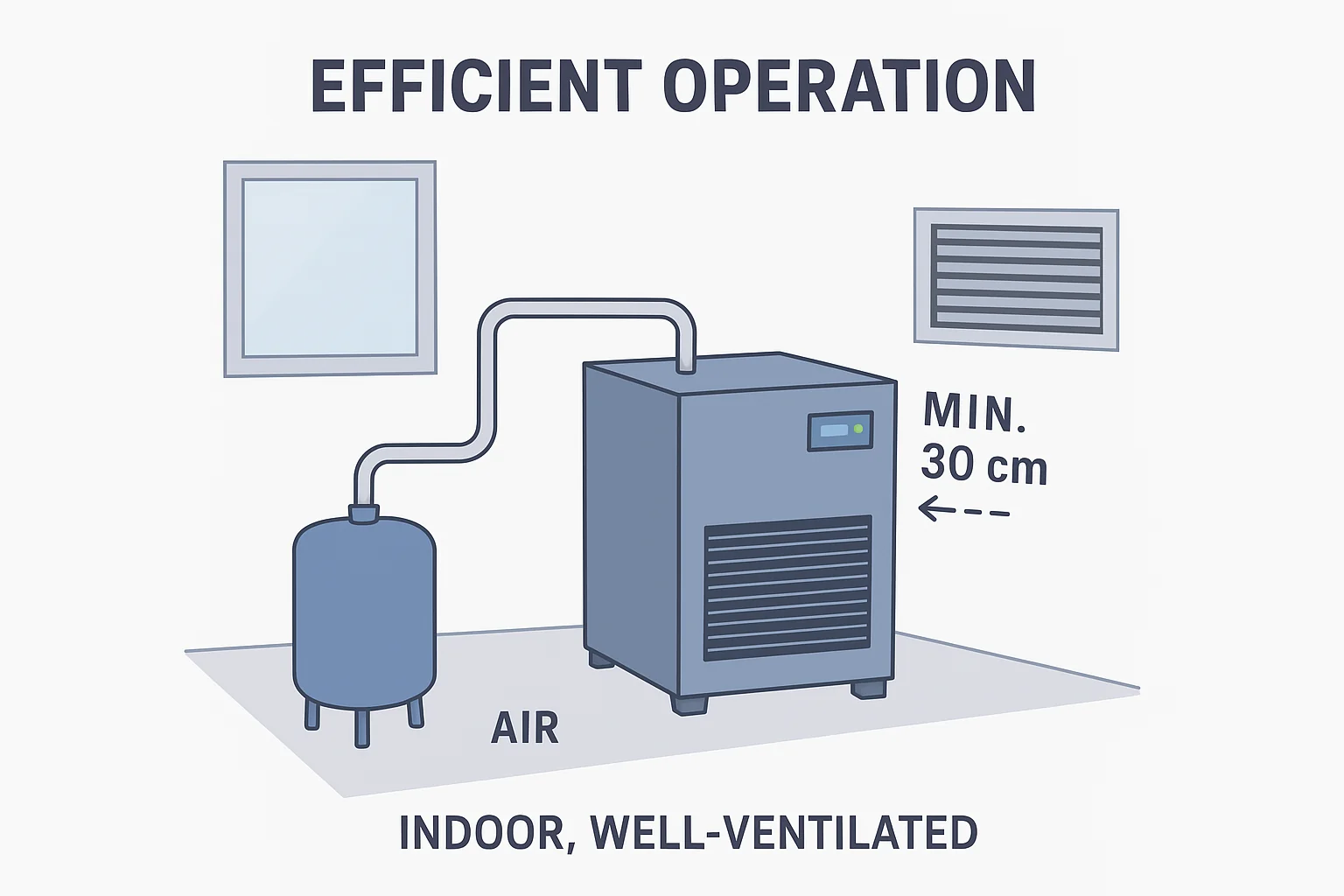
Install Indoors With Good Ventilation
Because these models are air-cooled, the condenser releases heat into the surrounding environment.
Choose a clean, ventilated indoor location where hot condenser exhaust can escape.
Avoid placing the dryer:
- In direct sunlight
- Immediately beside major heat sources
- In confined spaces
- In areas with excessive dust or oil mist
Provide Adequate Clearance
Maintain approximately 1.5 m around the dryer according to the standard AH Series installation requirements.
Adequate space improves:
- Condenser airflow
- Heat rejection
- Maintenance access
- Condenser cleaning
- Electrical and refrigeration servicing
A smaller 30–50 cm clearance should not be assumed sufficient for every installation.
Install on a Level Surface
Place the dryer on a level concrete floor.
Stable installation helps maintain correct condensate drainage and reduces unnecessary vibration.
Keep Piping Restrictions Low
Compressed air piping should be correctly sized and arranged with as few unnecessary restrictions as practical.
Excessive elbows, undersized pipe, restrictive valves, and unnecessary reducers can increase pressure drop.
Should You Install an Air Receiver Before the Dryer?
An air receiver can be useful in systems with intermittent or rapidly changing compressed air demand.
Depending on its location and system design, a receiver can:
- Buffer short demand peaks
- Help stabilize system pressure
- Provide temporary compressed air storage
- Reduce rapid airflow fluctuations through downstream equipment
However, receiver size and placement should be determined from the complete compressed air system.
It should not be assumed that adding a receiver automatically reduces dryer or compressor energy consumption.
Why Filtration Is Important
A refrigerated dryer primarily controls moisture. It does not replace filtration for oil aerosols and solid particles.
Appropriate precision compressed air filters can be installed according to the required contamination level.
Upstream filtration can help protect the dryer from particles and oil contamination, while downstream filtration can provide additional air-quality control for sensitive equipment.
The correct filtration grade and sequence should depend on the compressor and final air-quality requirement.
Energy-Saving Operation Tips
Good energy performance depends on both the dryer and the complete compressed air system.
Select the Correct Capacity
Operating continuously above the effective dryer capacity can reduce moisture-removal performance.
Choose the 25, 35, or 50 CFM configuration according to realistic peak demand and applicable correction factors.
Keep the Condenser Clean
Dust and contamination on an air-cooled condenser restrict airflow and reduce heat transfer.
Inspect the condenser regularly and clean it when necessary.
Cleaning frequency should depend on environmental conditions rather than a fixed interval. A dusty workshop may require much more frequent attention than a clean equipment room.
Maintain Good Ventilation
Avoid allowing hot condenser exhaust to recirculate back into the dryer.
The AH Series has a rated ambient temperature of 32°C and an operating range of 2–45°C, so maintaining reasonable room temperature and airflow helps the refrigeration system operate within its intended conditions.
Avoid Unnecessary System Pressure
Higher compressed air pressure generally increases compressor energy demand.
Operate the compressed air network at the pressure genuinely required by downstream equipment while remaining within the dryer’s specified pressure range.
Repair Air Leaks
Compressed air leaks increase the airflow that both the compressor and dryer must handle.
A system that appears to need a larger dryer may actually have excessive leakage.
Automatic Drain Maintenance
The automatic drain removes the liquid condensate separated during refrigeration drying.
Inspect it regularly to verify:
- Condensate is discharged
- The drain is not blocked
- Discharge piping is unrestricted
- The valve is functioning correctly
- Excessive compressed air is not continuously leaking
A malfunctioning drain is a common reason for water appearing downstream even when the refrigeration circuit itself is operating normally.
Maintenance Should Follow Actual Conditions
Fixed schedules such as replacing every filter at three months or cleaning every condenser at six months may not be appropriate for every installation.
A better approach combines periodic inspection with actual equipment condition.
Condenser
Inspect for dust, oil deposits, lint, or other contamination that restricts airflow.
Filters
Monitor filter condition and pressure drop. Replace elements according to their specified service requirements and actual contamination load.
Drain
Check condensate discharge regularly, particularly in humid or continuously operating systems.
Electrical System
Inspect wiring, terminals, protection devices, and electrical components for deterioration or abnormal heating.
Refrigeration System
If refrigeration performance deteriorates, qualified personnel should inspect operating pressures, temperatures, refrigerant condition, compressor operation, and control components.
Refrigerant should not require routine annual replacement in a properly sealed system.
Why Is There Water in the Outlet Air?
Water downstream can have several causes.
Possible reasons include:
- Airflow exceeds dryer capacity
- Inlet temperature is too high
- Ambient temperature is excessive
- Condenser is dirty
- Condenser ventilation is inadequate
- Automatic drain is blocked
- Refrigeration performance has deteriorated
- Dryer bypass is open or leaking
- Downstream piping itself is producing condensation
Check actual operating conditions before assuming that the refrigeration system requires repair.
What Causes a High Outlet Dew Point?
If the outlet dew point begins rising, inspect the system in a logical sequence:
- Check actual airflow.
- Measure inlet temperature.
- Check ambient temperature.
- Inspect condenser cleanliness.
- Confirm condenser fan operation.
- Check condensate drainage.
- Verify refrigeration operation.
Comparing these readings with normal operating data can help identify gradual performance deterioration.
What If the Dryer Frosts?
Frosting should not automatically be attributed to “excessive humidity.”
Possible causes can include abnormal refrigeration conditions, insufficient compressed air load, low temperature conditions, control problems, or other system issues.
The AH Series ambient operating range is 2–45°C, so there is no general requirement to maintain ambient temperature at or above 5°C.
Persistent icing or freezing should be investigated rather than treated only by changing room temperature.
What If Fan or Compressor Noise Increases?
Abnormal noise may originate from:
- Condenser fan
- Refrigeration compressor
- Loose panels
- Fasteners
- Bearings
- Vibration from installation
- Other mechanical components
First identify the source. Cleaning the condenser and checking the installation may solve some problems, but persistent mechanical noise should be inspected by qualified service personnel.
Can You Replace or Recharge Refrigerant Yourself?
Refrigerant work should be handled by appropriately qualified personnel and in accordance with applicable local requirements.
A sealed refrigeration circuit should not routinely lose refrigerant.
If the refrigerant charge is low, the correct approach is to locate and repair the cause of the loss before restoring the specified charge.
Typical Applications
Small-capacity refrigerated dryers can support a wide variety of compressed air users.
Automotive Workshops
In automotive and general manufacturing, dry compressed air can support pneumatic tools, controls, assembly equipment, and other workshop operations.
Laboratory Equipment
For laboratory and analytical equipment, moisture control may be important for pneumatic and instrument air.
The required pressure dew point and filtration level should still be checked for each instrument rather than assuming a refrigerated dryer is suitable for every laboratory application.
Packaging and Light Manufacturing
Pneumatic cylinders, valves, actuators, and packaging machinery can benefit from reduced moisture in the compressed air network.
The dryer capacity should be selected around the combined peak demand of equipment that may operate simultaneously.
Wood and Paper Processing
For wood and paper applications, refrigerated drying can help protect pneumatic controls and production equipment from problems associated with condensed moisture.
Do You Need a Desiccant Dryer as Well?
For many indoor industrial applications, a refrigerated pressure dew point of 2–10°C provides adequate moisture control.
Some applications, however, require substantially drier compressed air.
If the piping is exposed to freezing temperatures or the production process requires a pressure dew point well below 0°C, a desiccant air dryer may be more appropriate.
The required dew point should be defined before adding additional drying equipment.
Monitoring for Critical Applications
For processes where compressed air quality directly affects production, monitoring can help detect problems earlier.
Useful parameters include:
- Inlet temperature
- Outlet temperature
- Operating pressure
- Airflow
- Pressure dew point
- Pressure drop
- Ambient temperature
- Drain operation
Trend data can reveal gradual deterioration before it results in obvious downstream moisture problems.
Building a Reliable Small Compressed Air System
A 25, 35, or 50 CFM refrigerated dryer should be treated as one part of the complete compressed air treatment system.
Reliable performance depends on the relationship between:
compressor → aftercooling/separation → filtration → refrigerated drying → downstream filtration → distribution piping → point of use
The exact arrangement should be adapted to the compressor type and final air-quality requirement.
For applications requiring a different capacity or configuration, Lingyu’s broader refrigerated air dryer range provides additional options.
Reliable Dry Air Starts With Correct Selection and Maintenance
The 25/35/50 CFM Air-Cooled Refrigerated Air Dryer provides a compact moisture-control solution for small and medium compressed air systems.
Correct capacity selection, adequate installation clearance, good ventilation, clean condenser surfaces, reliable condensate drainage, appropriate filtration, and condition-based maintenance can help maintain stable performance while avoiding unnecessary pressure loss and energy consumption.
For help selecting between the 25, 35, and 50 CFM configurations, contact Lingyu with your compressor airflow, operating pressure, inlet temperature, ambient conditions, and required pressure dew point.