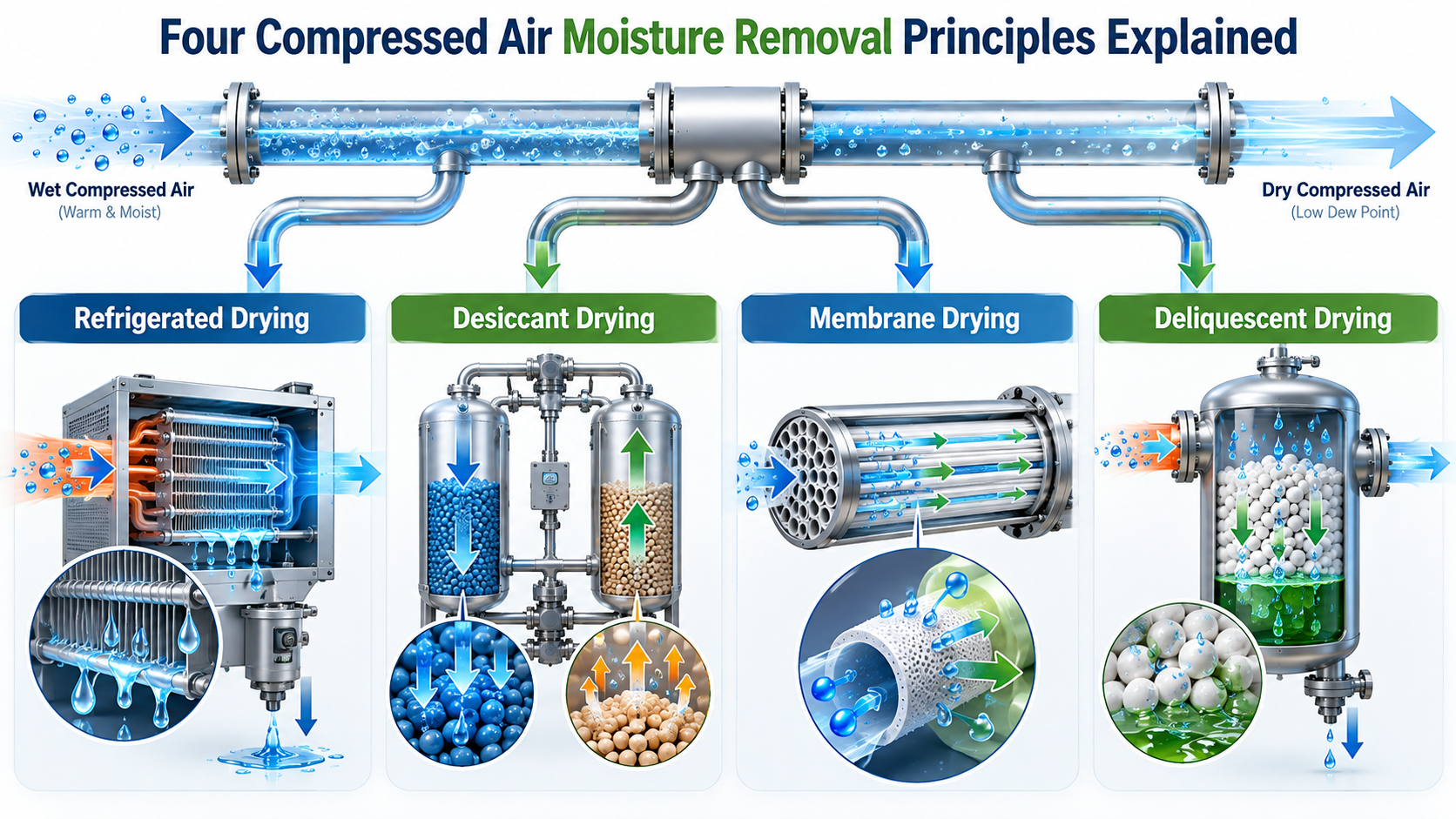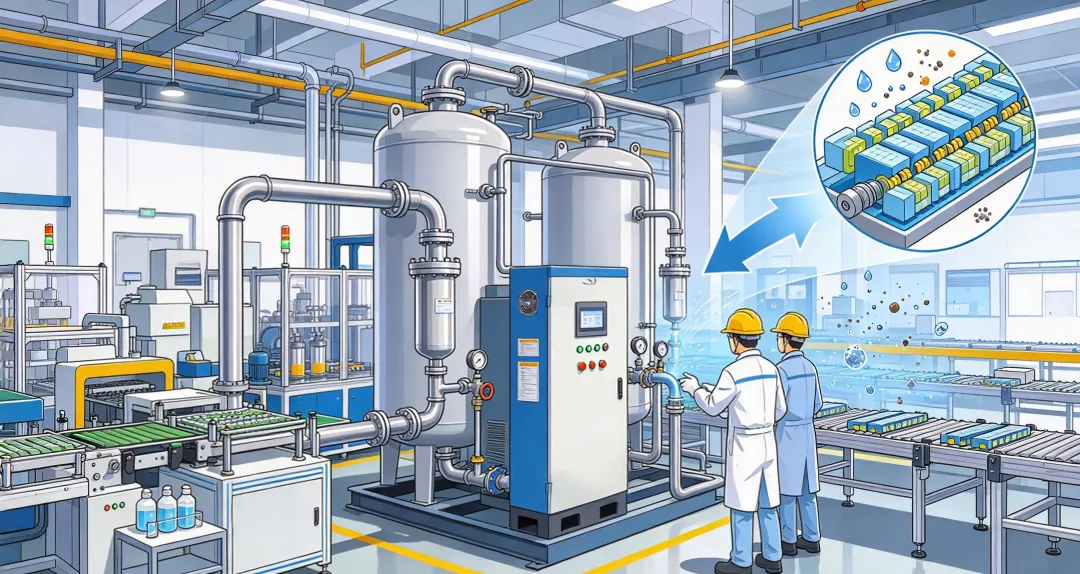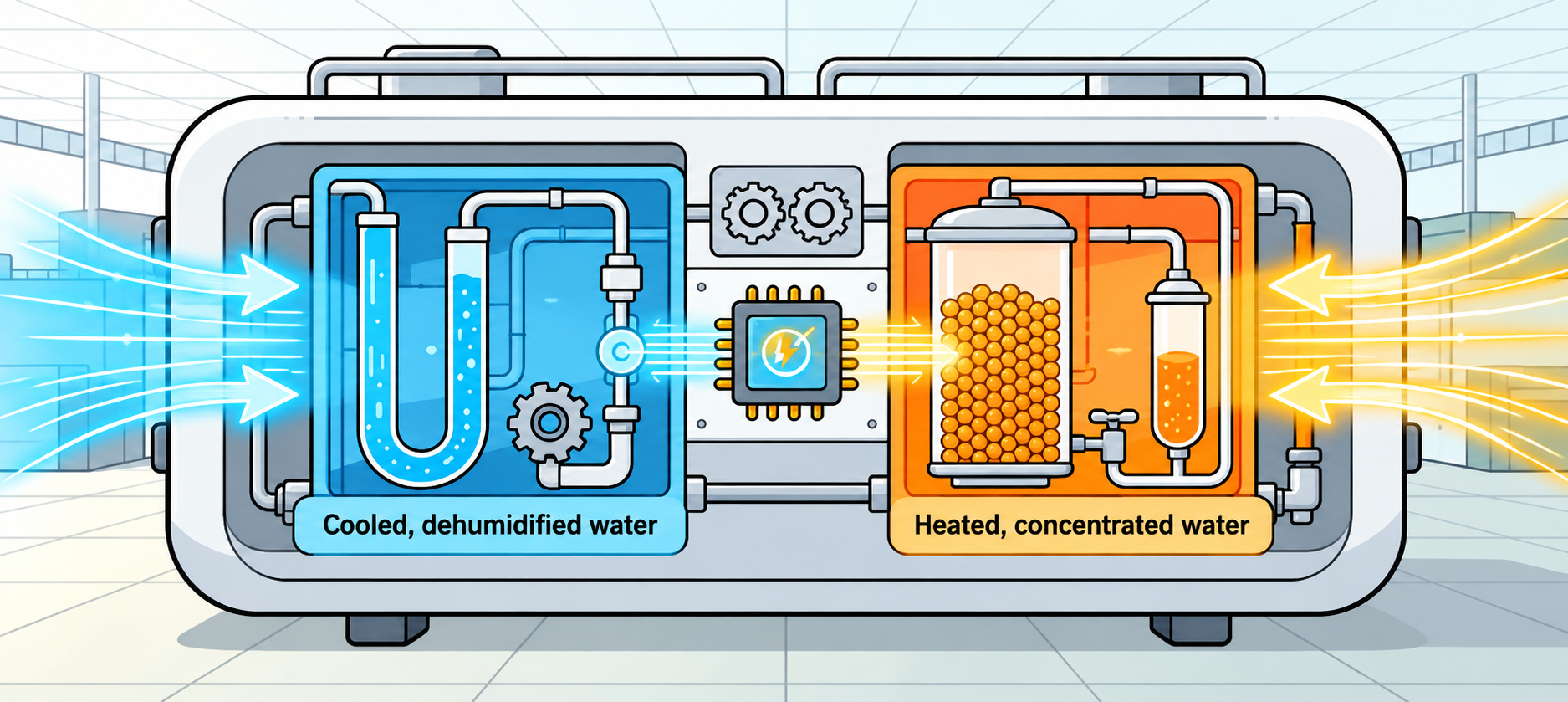
Dalam melindungi compressed air system, proses pengeringan udara sama pentingnya dengan proses kompresi itu sendiri. Dua teknologi pengeringan yang paling umum digunakan adalah desiccant air dryer dan refrigerated air dryer. Namun, bagaimana perbandingan keduanya?
Panduan ini membahas desiccant air dryer vs refrigerated air dryer, termasuk working principle, perbedaan utama, kelebihan dan kekurangan, serta cara menentukan dryer yang tepat untuk kebutuhan industri Anda.
Memahami perbedaan kedua teknologi ini membantu menyesuaikan tingkat kekeringan compressed air dengan kebutuhan aplikasi dan kondisi operasi.
What Is a Desiccant Air Dryer?
Desiccant air dryer menghilangkan moisture dari compressed air menggunakan desiccant yang mengadsorpsi water vapor.
Jenis yang umum mencakup heatless regenerative dan heated regenerative desiccant air dryer. Pada proses adsorption, moisture ditahan oleh desiccant, kemudian desiccant diregenerasi agar dapat digunakan kembali.
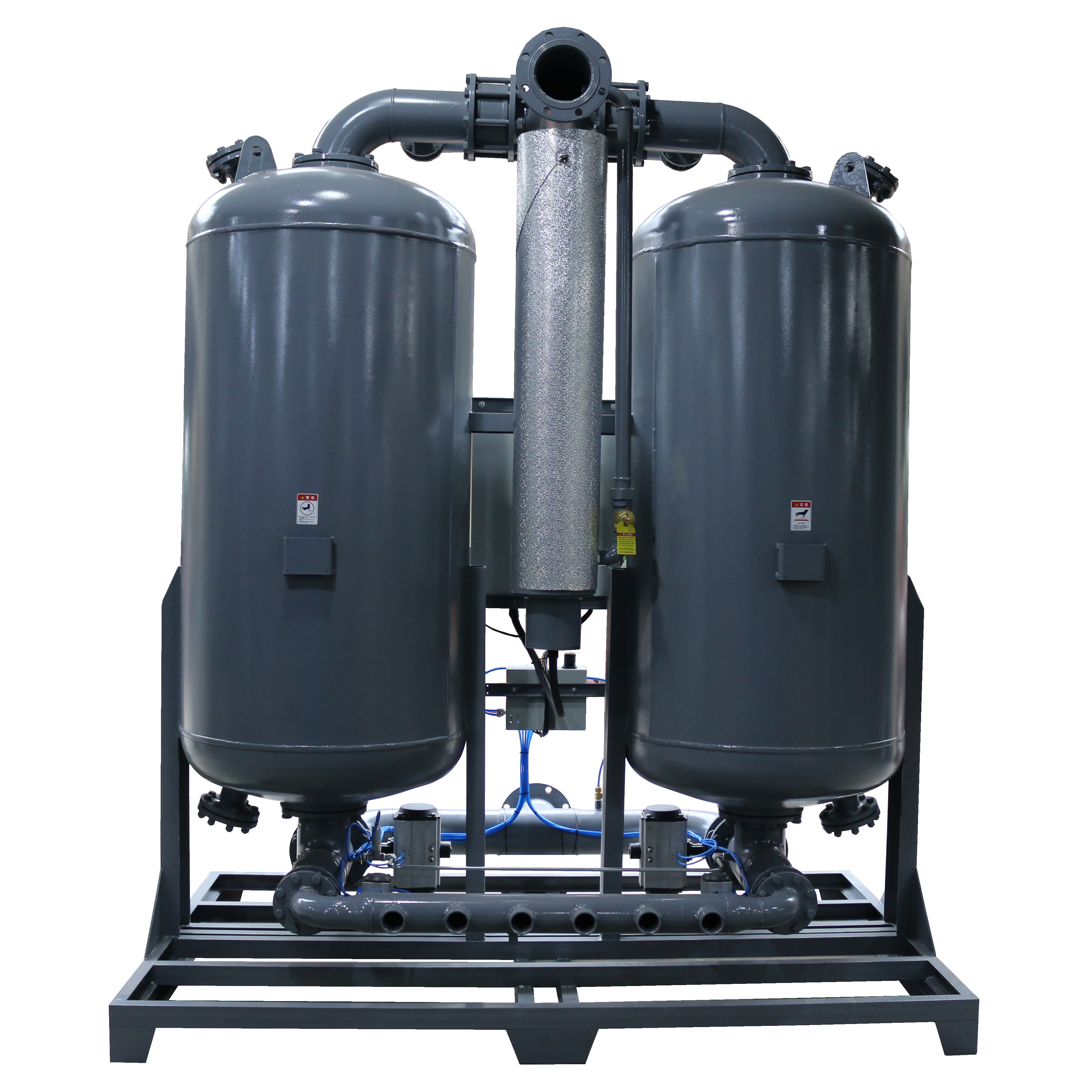
Key Features of Desiccant Air Dryers
- Dapat menghasilkan pressure dew point yang jauh lebih rendah dibandingkan refrigerated air dryer
- Cocok untuk aplikasi yang membutuhkan compressed air sangat kering
- Dapat digunakan untuk critical applications seperti pharmaceutical dan electronics
- Memerlukan regeneration untuk memulihkan kemampuan adsorption desiccant
- Desiccant memerlukan monitoring dan maintenance sesuai kondisi penggunaan
Pressure dew point yang tersedia bergantung pada jenis dan konfigurasi dryer. Sebagai contoh, modular adsorption air dryer memiliki outlet Pressure Dew Point ≤−20°C, dengan −40°C available as an option.
Untuk teknologi heatless regeneration, tersedia pula kategori heatless desiccant dryers.
What Is a Refrigerated Air Dryer?
Refrigerated air dryer menggunakan refrigeration untuk mendinginkan compressed air sehingga moisture mengalami condensation dan kemudian dipisahkan dari aliran udara.
Setelah condensate dipisahkan dan dibuang, dry compressed air dipanaskan kembali mendekati ambient temperature sebelum digunakan di downstream system.
Key Features of Refrigerated Air Dryers
- Pressure Dew Point pada AH dan WH Series: 2–10°C
- Cocok untuk general-purpose industrial compressed air
- Tidak memerlukan regeneration cycle seperti desiccant air dryer
- Tersedia dalam air-cooled dan water-cooled configurations
- Digunakan ketika proses tidak membutuhkan pressure dew point serendah yang dapat dicapai adsorption drying
Untuk sistem air-cooled, tersedia kategori air-cooled refrigerated air dryers.
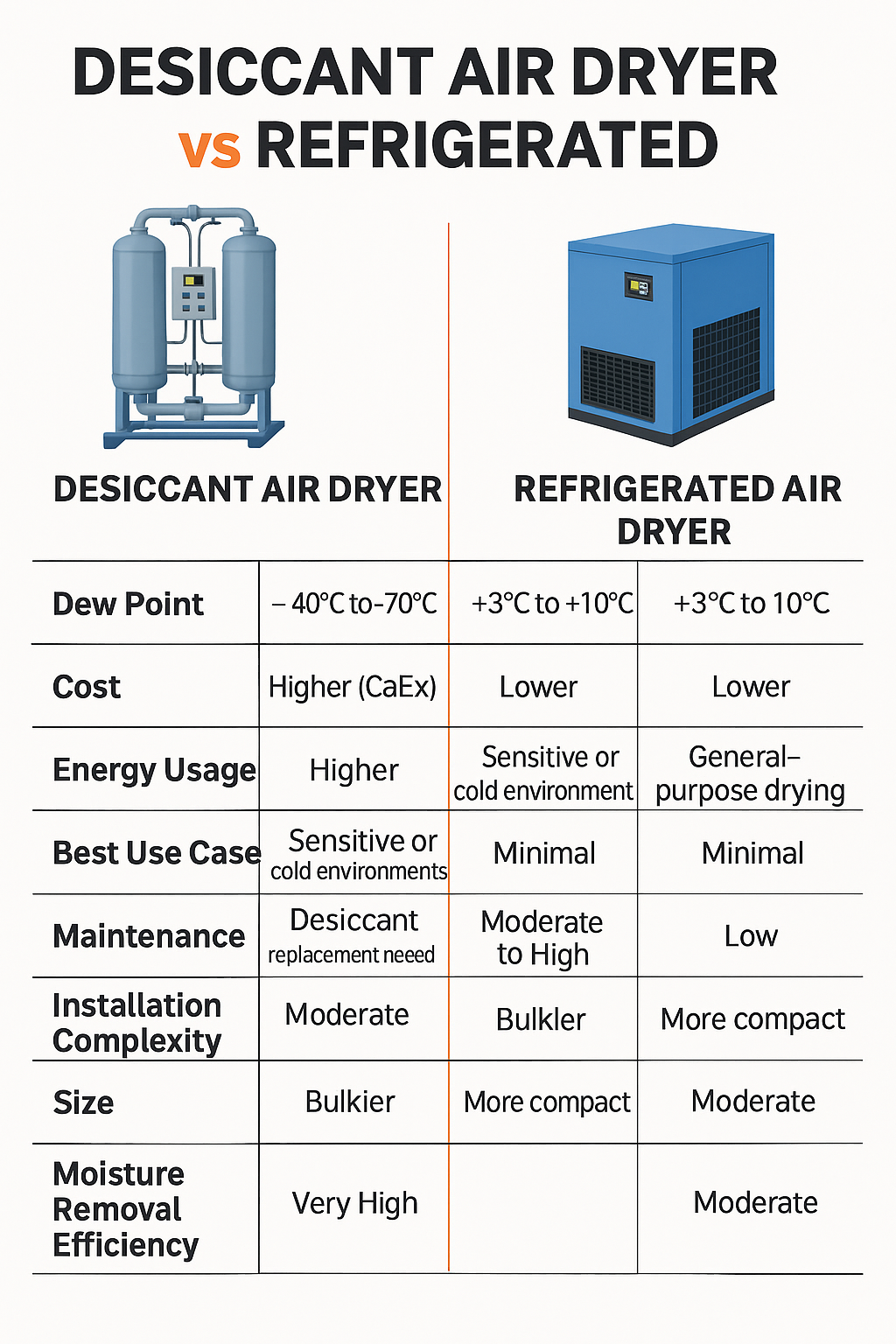
Desiccant Air Dryer vs Refrigerated Air Dryer: Comparison
| Feature | Desiccant Air Dryer | Refrigerated Air Dryer |
|---|---|---|
| Drying Method | Adsorption menggunakan desiccant | Refrigeration dan condensation |
| Pressure Dew Point | Lebih rendah; bergantung pada dryer dan configuration | 2–10°C pada AH/WH Series |
| Regeneration | Diperlukan | Tidak menggunakan desiccant regeneration |
| Best Use Case | Sensitive applications yang membutuhkan very dry compressed air | General-purpose industrial drying |
| Maintenance | Melibatkan desiccant dan regeneration system | Melibatkan refrigeration dan condensate drainage system |
| System Configuration | Heatless, heated, modular, blower-heated, HOC, dan lainnya | Air-cooled, water-cooled, dan energy-saving configurations |
Perbedaan kedua teknologi tersebut juga dibahas dalam panduan refrigerated air dryer vs desiccant air dryer.
Desiccant Air Dryer vs Refrigerated: Which One Should You Choose?
Pemilihan dryer harus disesuaikan dengan kebutuhan pressure dew point, application, dan operating environment.
Choose a Desiccant Air Dryer If
Pilih desiccant air dryer jika:
- Anda membutuhkan compressed air dengan pressure dew point yang sangat rendah
- Application Anda sensitif terhadap moisture
- Application melibatkan pharmaceutical, electronics, atau proses lain yang membutuhkan udara lebih kering
Untuk electronics production, kebutuhan compressed air dapat dilihat pada electronics and precision manufacturing.
Untuk pharmaceutical production, lihat pharmaceutical and biopharmaceutical applications.
Choose a Refrigerated Air Dryer If
Pilih refrigerated air dryer jika:
- Pressure Dew Point 2–10°C sesuai dengan kebutuhan proses
- Anda membutuhkan dry compressed air untuk general industrial applications
- Proses tidak memerlukan ultra-low pressure dew point dari adsorption drying
Untuk general industrial use seperti automotive production, lihat automotive and general manufacturing.
Memahami perbedaan desiccant air dryer vs refrigerated air dryer membantu menyesuaikan drying technology dengan kebutuhan compressed air system.
Can Refrigerated and Desiccant Air Dryers Be Combined?
Ya. Refrigerated dan desiccant drying dapat digunakan dalam satu compressed air treatment system.
Dalam konfigurasi tersebut, refrigerated drying terlebih dahulu mengurangi moisture dalam compressed air. Udara kemudian masuk ke adsorption drying system, tempat residual moisture diadsorpsi oleh desiccant untuk menghasilkan pressure dew point yang lebih rendah.
Lingyu menyediakan DC Series Combined Compressed Air Dryer yang menggabungkan refrigerated air dryer dengan regenerative desiccant air dryer.
Pada product catalog, DC Series memiliki Outlet Pressure Dew Point ≤−40°C dan tersedia dengan Heatless / Heated Purge Regeneration serta Air-Cooled / Water-Cooled configurations.
Find the Right Air Dryer for Your Needs
Pemilihan antara desiccant dan refrigerated technology harus dimulai dari kebutuhan drying pada compressed air system.
Jika aplikasi membutuhkan pressure dew point yang jauh lebih rendah, desiccant air dryer dapat digunakan. Jika 2–10°C Pressure Dew Point sudah memenuhi kebutuhan proses, refrigerated air dryer dapat digunakan.
Untuk menentukan dryer berdasarkan airflow, pressure, dew point, dan operating requirements, hubungi Lingyu.
FAQ: Desiccant Air Dryer vs Refrigerated
Which Has a Lower Pressure Dew Point: Desiccant or Refrigerated Air Dryers?
Desiccant air dryer dapat menghasilkan pressure dew point yang lebih rendah dibandingkan refrigerated air dryer.
Nilai aktual bergantung pada dryer dan configuration. Pada product catalog Lingyu, AH/WH refrigerated air dryers memiliki Pressure Dew Point 2–10°C, sedangkan berbagai desiccant dryer tersedia dengan pressure dew point yang lebih rendah.
Can I Use a Refrigerated Air Dryer When I Need Very Low Pressure Dew Point?
Jika application membutuhkan pressure dew point yang jauh di bawah range refrigerated air dryer, desiccant air dryer lebih sesuai dengan kebutuhan tersebut.
Does Every Desiccant Air Dryer Have the Same Dew Point?
Tidak. Pressure dew point berbeda menurut technology dan configuration.
Sebagai contoh, M Series memiliki Outlet Pressure Dew Point ≤−20°C, dengan −40°C optional, sedangkan CH Series Heated Purge Regenerative Desiccant Air Dryer memiliki range −50°C hingga −20°C.
Does a Desiccant Air Dryer Require Regeneration?
Ya. Desiccant harus diregenerasi setelah mengadsorpsi moisture.
Metode regeneration berbeda menurut dryer, termasuk heatless regeneration, heated purge regeneration, blower regeneration, dan heat-of-compression regeneration.
Can I Combine Both Dryers in One System?
Ya. Lingyu memiliki combined compressed air dryer yang menggunakan refrigerated drying dan adsorption drying dalam satu treatment configuration.
Conclusion: Desiccant Air Dryer vs Refrigerated
Pemilihan antara desiccant air dryer vs refrigerated air dryer bergantung pada pressure dew point yang dibutuhkan, application, dan operating conditions.
| Best For | Dryer Type |
|---|---|
| Very low pressure dew point dan moisture-sensitive applications | Desiccant Air Dryer |
| General industrial drying dengan PDP dalam range refrigerated dryer | Refrigerated Air Dryer |
| Refrigerated pre-drying + lower-PDP adsorption drying | Combined Dryer |
Kedua technologies memiliki fungsi masing-masing dalam modern compressed air systems. Kuncinya adalah menyesuaikan drying performance dengan kebutuhan proses.
Untuk pembahasan selection lebih lanjut, lihat panduan how to select a compressed air dryer.