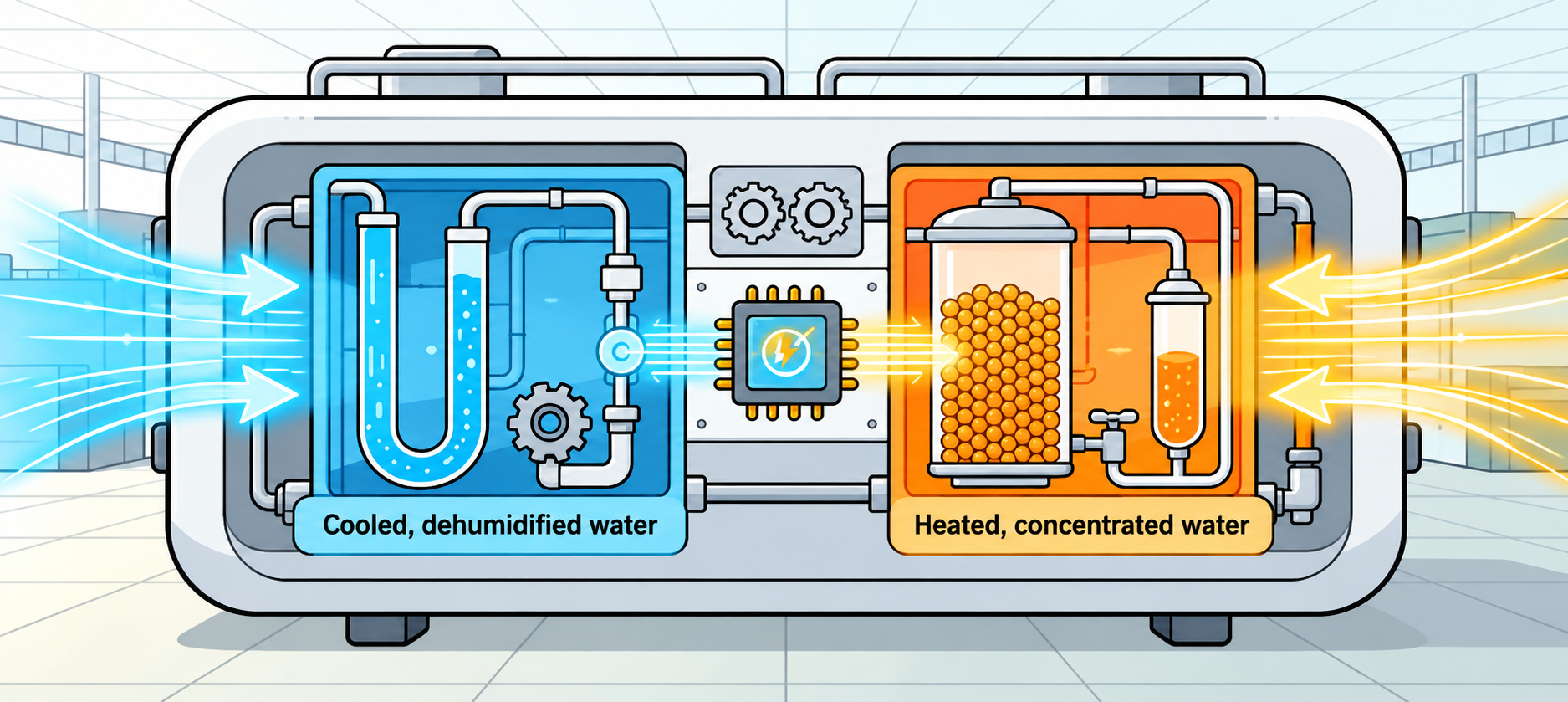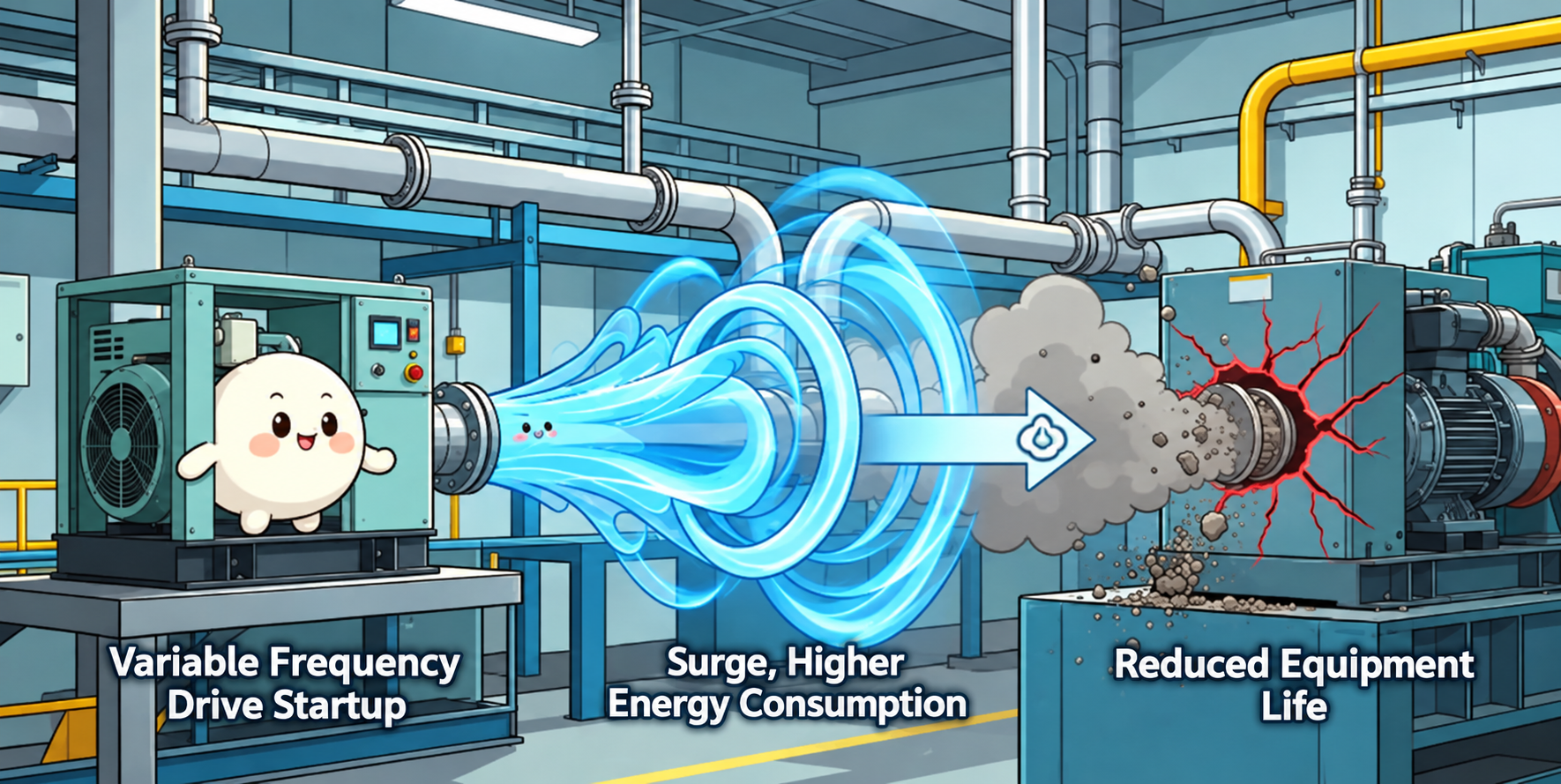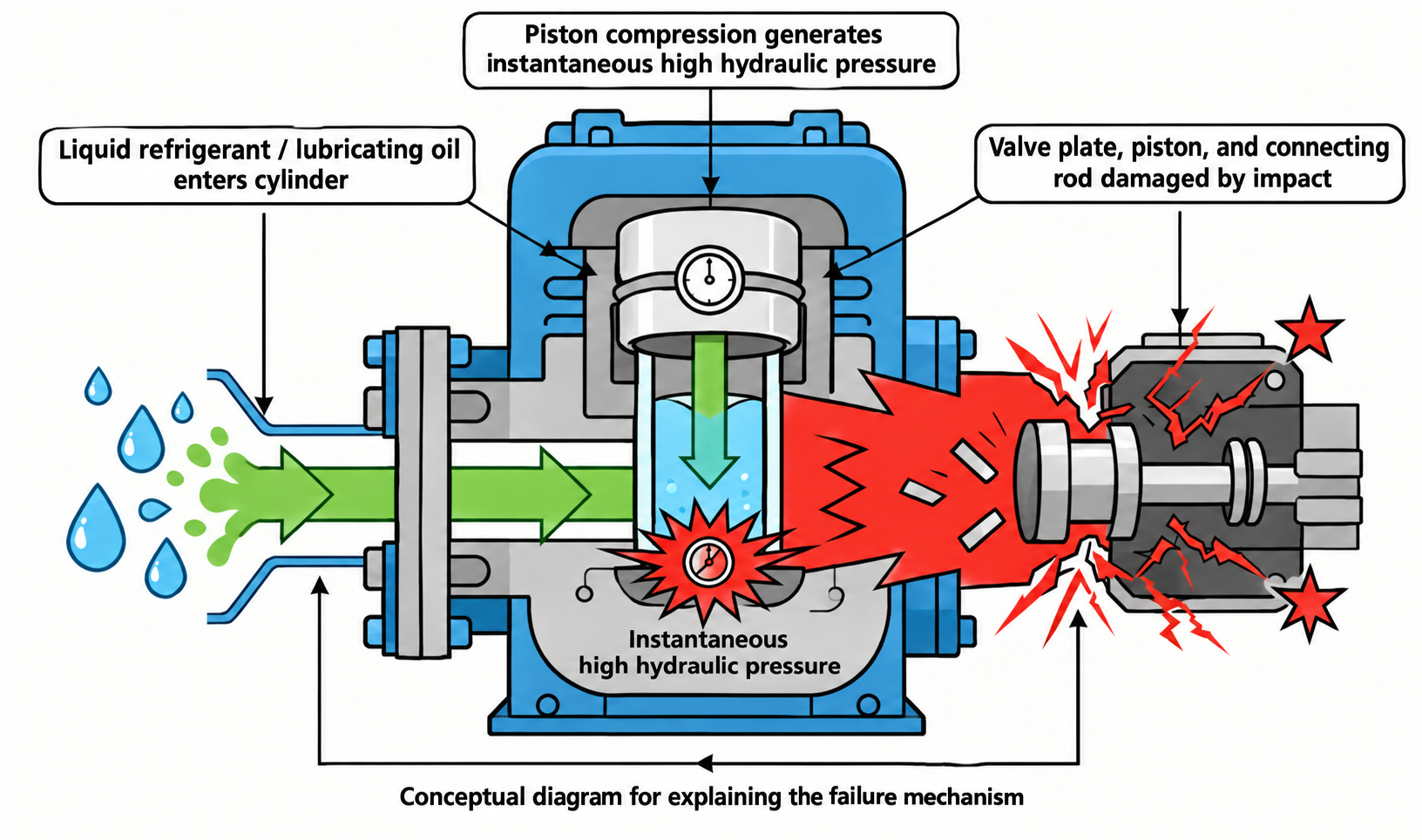
Compressed air systems power pneumatic tools, automated equipment, and production machinery across manufacturing, automotive, food processing, electronics, and other industries. However, compressed air naturally contains moisture, which can condense as the air cools and cause corrosion, equipment problems, and process instability.
A central industrial compressed air dryer is installed within a centralized compressed-air system to remove moisture before the air reaches downstream equipment and points of use.
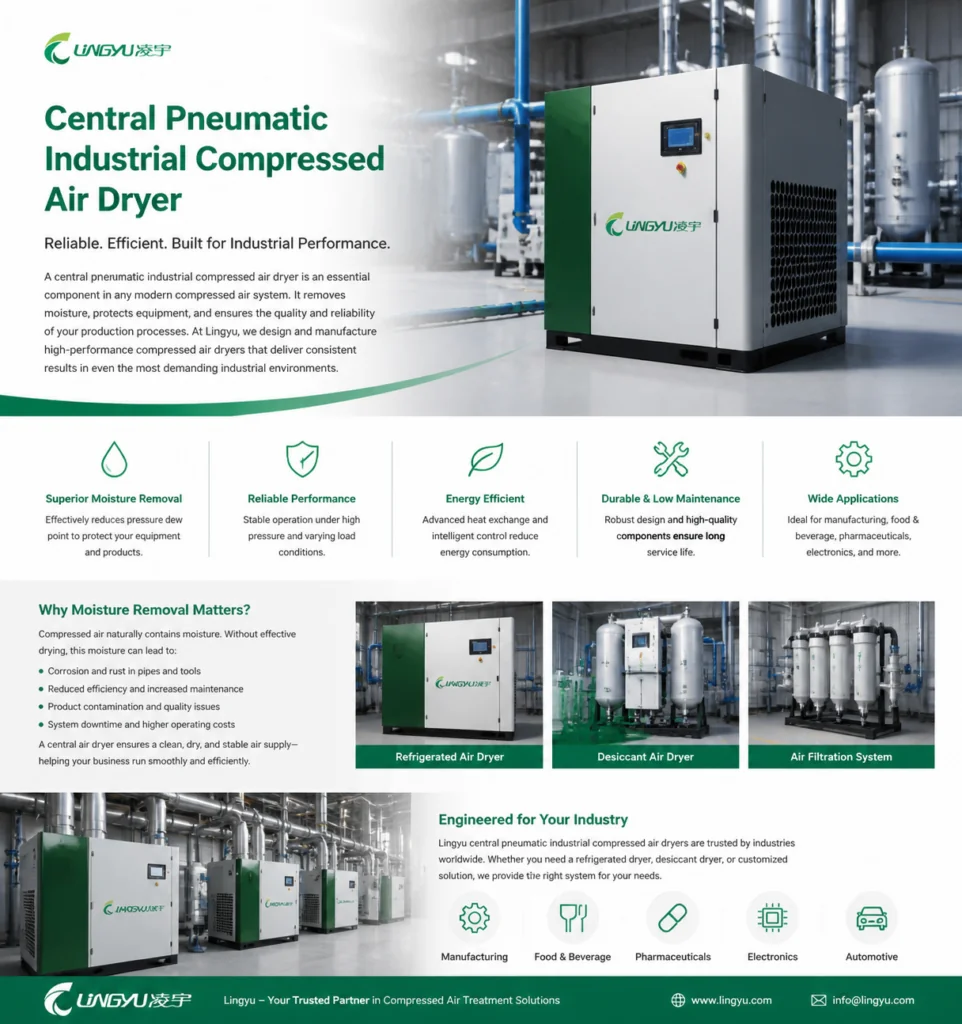
What Is a Compressed Air Dryer?
A compressed air dryer removes water vapor from compressed air before it reaches production equipment and points of use.
Without proper drying, moisture can contribute to:
- Rust and corrosion in piping
- Pneumatic equipment problems
- Moisture contamination
- Increased maintenance
- Unplanned downtime
For many general industrial applications, refrigerated drying is a practical method of moisture removal. It cools the compressed air so that water vapor condenses into liquid water, which can then be separated and discharged.
How Does a Refrigerated Industrial Air Dryer Work?
A refrigerated compressed air dryer removes moisture through a sequence of pre-cooling, refrigeration cooling, condensate separation, and reheating.
1. Pre-Cooling
Hot, moisture-containing compressed air enters the dryer and is first cooled through a pre-cooler or air-to-air heat exchanger.
This initial heat exchange reduces the temperature of the incoming air and lowers the cooling load on the refrigeration system.
2. Refrigeration Cooling
The compressed air then passes through an evaporator, where its temperature is reduced further by the refrigeration system.
In Lingyu refrigerated dryers, the compressed air can be cooled to achieve a pressure dew point of approximately 2–10°C.
3. Condensate Separation
As the compressed air cools, water vapor condenses into liquid water.
The condensate is separated from the airflow and discharged through the drainage system so that it does not continue downstream with the treated compressed air.
4. Reheating
After moisture separation, the cold, dry compressed air exchanges heat with the warmer incoming compressed air before leaving the dryer.
This heat-recovery process serves two purposes: it helps pre-cool the incoming air while reheating the treated outlet air closer to ambient conditions.
For a more detailed explanation of the complete process, see how refrigerated air drying works.
Key Features to Look for in an Industrial Compressed Air Dryer
The performance of an industrial dryer depends on more than nominal airflow capacity. Several operating characteristics should be considered when evaluating equipment.
Reliable Moisture Removal
The dryer should maintain the required pressure dew point under actual inlet temperature, pressure, airflow, and ambient conditions.
For general industrial refrigerated drying, Lingyu configurations can provide a pressure dew point of approximately 2–10°C.
Low Pressure Drop
Pressure loss through the dryer directly affects compressed-air system efficiency.
Excessive pressure drop can require the compressor to operate at a higher discharge pressure to maintain the required pressure at downstream equipment.
For a closer look at this relationship, see the guide to compressed air pressure drop and system efficiency.
Automatic Condensate Drainage
Condensed water must be removed reliably so that it does not accumulate inside the dryer or move downstream.
The drainage system should therefore operate consistently under the expected condensate load.
Stable Cooling Performance
The refrigeration system must maintain sufficient cooling capacity as compressed-air load and operating conditions change.
Cooling performance should be evaluated together with inlet temperature, airflow, ambient conditions, and the required pressure dew point.
Appropriate Capacity
The dryer should be selected according to actual:
- Airflow
- Inlet pressure
- Inlet temperature
- Ambient conditions
- Required pressure dew point
Compressor capacity alone is not sufficient for selecting dryer size because actual operating conditions affect the dryer’s treatment capacity.
Energy Efficiency in Industrial Refrigerated Dryers
Not every refrigerated air dryer has the same energy performance.
Energy consumption depends on factors such as refrigeration design, compressed-air load, heat-exchanger performance, pressure drop, control strategy, and operating hours.
Modern refrigerated dryer designs can use low-pressure-drop heat exchangers, improved refrigeration controls, or variable-frequency technology to match cooling capacity more closely to actual compressed-air demand.
Lingyu variable-frequency refrigerated dryer solutions can automatically adjust refrigeration output according to system load.
In one energy-saving retrofit, four 85 m³/min units were used. This is a project-specific configuration rather than a universal sizing or energy-saving benchmark; actual results depend on system demand, operating hours, inlet conditions, control strategy, and existing equipment.
For more information on this approach, see variable-frequency refrigerated dryer technology.
Benefits of Using an Industrial Compressed Air Dryer
Proper compressed-air drying can help:
- Reduce corrosion in piping
- Protect pneumatic tools and valves
- Improve process stability
- Reduce moisture-related maintenance
- Support more consistent production quality
The dryer itself primarily controls moisture.
Where particles, oil aerosols, liquid contaminants, or other impurities also need to be removed, appropriate filters and separators should be incorporated into the complete compressed-air treatment system.
Typical Applications
Industrial refrigerated dryers are commonly used in centralized compressed-air systems across a range of industries.
Manufacturing
Manufacturing plants use compressed air for pneumatic tools, automation, assembly, actuators, and production machinery.
Reliable moisture control helps protect the distribution system and downstream pneumatic equipment.
Automotive
Automotive facilities use compressed air for assembly, pneumatic equipment, automation, and painting-related processes.
The required air quality should be determined by the specific production operation.
Food and Beverage
Food and beverage production may require controlled compressed-air quality for packaging, processing, pneumatic equipment, and other production functions.
Drying and filtration requirements depend on how the compressed air interacts with the process and product.
Electronics Manufacturing
Electronics manufacturing can require controlled moisture levels where compressed air supports sensitive production equipment or processes.
Where significantly lower pressure dew points are required, adsorption drying may be more appropriate than conventional refrigerated drying.
General Industrial Plants
Centralized compressed-air systems can supply many different users from a common compressor and air-treatment installation.
A correctly sized dryer helps control moisture before compressed air enters the main distribution network, reducing the risk of condensation reaching downstream equipment.
How to Choose the Right Industrial Compressed Air Dryer
Dryer selection should be based on actual system requirements rather than compressor size or industry name alone.
Required Pressure Dew Point
Determine the moisture level required by the downstream process.
For many general industrial applications, a refrigerated dryer providing a pressure dew point of approximately 2–10°C may be appropriate.
Applications requiring significantly lower pressure dew points may require adsorption or combined drying.
Airflow
The dryer must be sized for the actual compressed-air flow it will receive.
Normal demand, peak demand, and expected future capacity should be considered during selection.
Inlet Pressure
Dryer performance and capacity can vary with inlet pressure.
The actual operating pressure at the dryer inlet should therefore be used for equipment selection.
Inlet Temperature
Higher inlet temperatures increase the thermal and moisture load on the refrigerated dryer.
Actual inlet temperature should be considered rather than assuming standard operating conditions.
Ambient Temperature
Ambient conditions can influence refrigeration performance, particularly for air-cooled equipment.
The installation environment should therefore be considered during sizing and configuration.
Pressure Drop
The dryer should provide the required moisture removal without creating excessive pressure loss.
Pressure drop should also be evaluated across filters, separators, piping, and other air-treatment components.
Cooling Method
Refrigerated dryers can use different cooling arrangements depending on system design and installation conditions.
Lingyu provides both air-cooled and water-cooled refrigerated dryer configurations.
Energy Consumption
Energy evaluation should include more than refrigeration power.
Heat-exchanger performance, pressure drop, operating hours, load variation, control strategy, and compressor energy should also be considered.
For a more detailed selection process, see the compressed air dryer selection guide.
When Is a Refrigerated Dryer Not Enough?
Refrigerated drying is suitable for many centralized industrial compressed-air systems, but it is not the correct technology for every moisture requirement.
Where the process requires a pressure dew point substantially below the typical refrigerated range, a desiccant air dryer may be more appropriate.
Combined drying systems can also be considered where refrigerated pre-drying is used to remove a large portion of the moisture before deeper adsorption drying.
The decision should be based on the required pressure dew point and actual operating conditions rather than assuming that one dryer technology can serve every application.
Lingyu Refrigerated Air Dryer Solutions
For centralized industrial compressed-air systems, Lingyu provides multiple refrigerated dryer configurations, including:
- Air-cooled refrigerated dryers
- Water-cooled refrigerated dryers
- Low-pressure-drop configurations
- Plate heat-exchanger configurations
- Variable-frequency refrigerated dryers
These configurations use combinations of pre-cooling, refrigeration evaporation, condensate separation, and air-to-air heat recovery to provide dry compressed air for downstream applications.
Users comparing available equipment can review the Lingyu refrigerated air dryer range.
Conclusion
A central industrial compressed air dryer helps control moisture in centralized compressed-air systems before the air reaches pneumatic equipment and production processes.
For many general industrial applications, refrigerated drying provides a practical combination of moisture removal and operating simplicity. Lingyu refrigerated dryer configurations can provide a pressure dew point of approximately 2–10°C, while available equipment includes air-cooled, water-cooled, low-pressure-drop, plate heat-exchanger, and variable-frequency designs.
The correct dryer should be selected according to required pressure dew point, airflow, inlet pressure, inlet temperature, ambient conditions, pressure drop, cooling method, energy consumption, and actual process requirements.
Where substantially lower pressure dew points are required, adsorption or combined drying should be considered instead of simply increasing refrigerated dryer capacity.
For project-specific dryer sizing and system configuration, contact Lingyu for technical support.