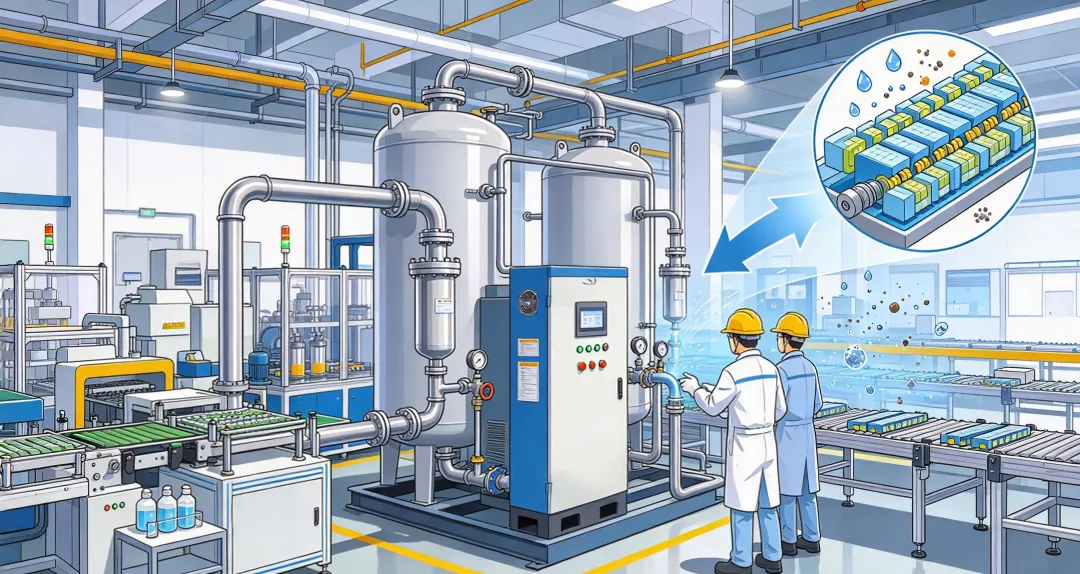
In modern manufacturing, controlling moisture in compressed air is essential for protecting pneumatic equipment, maintaining process stability, and reducing the risk of condensation in downstream pipelines. When an application requires a lower pressure dew point than a conventional refrigerated dryer can normally provide, adsorption drying becomes an important option.
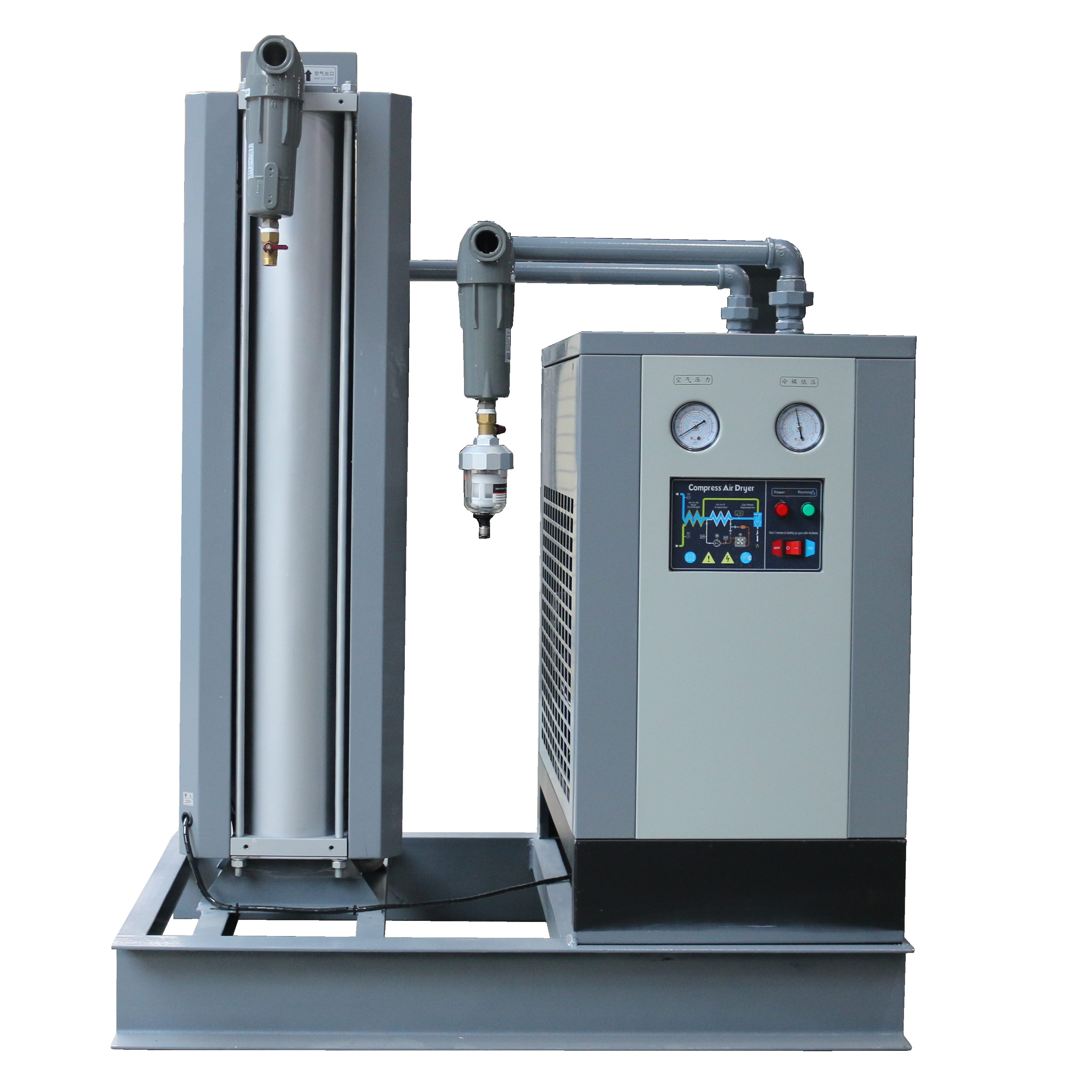
A modular adsorption dryer combines desiccant-based moisture removal with a compact modular structure. Compared with conventional large twin-tower arrangements, this configuration can provide a smaller installation footprint while maintaining low-dew-point performance for appropriately sized compressed air systems.
Lingyu’s M Series modular adsorption air dryer is designed around this concept, using activated alumina and high-performance molecular sieve as its desiccant combination. Under specified operating conditions, the series provides an outlet pressure dew point of ≤−20°C, with ≤−40°C available as an option.
What Is a Modular Adsorption Dryer?
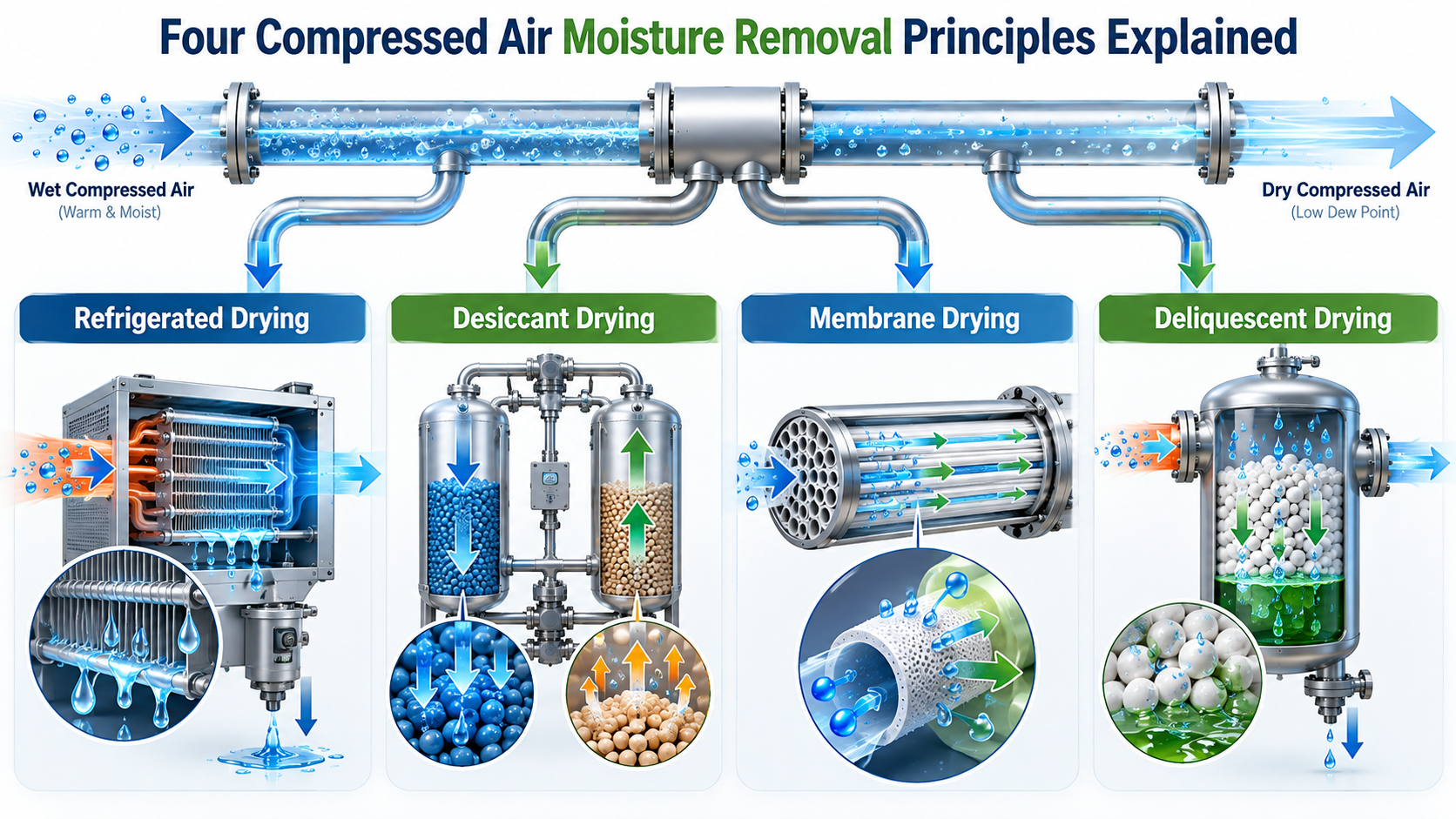
A modular adsorption dryer is a type of desiccant compressed air dryer that removes water vapor through adsorption.
Unlike refrigeration drying, which removes moisture primarily by cooling compressed air until water vapor condenses, an adsorption dryer passes compressed air through a desiccant bed. Water molecules adhere to the surface and pores of the desiccant, allowing the treated compressed air to reach a much lower pressure dew point.
The original concept of the modular dryer is therefore based on two characteristics: desiccant adsorption for deep drying and a modular physical configuration for compact installation.
How Does a Modular Adsorption Dryer Work?
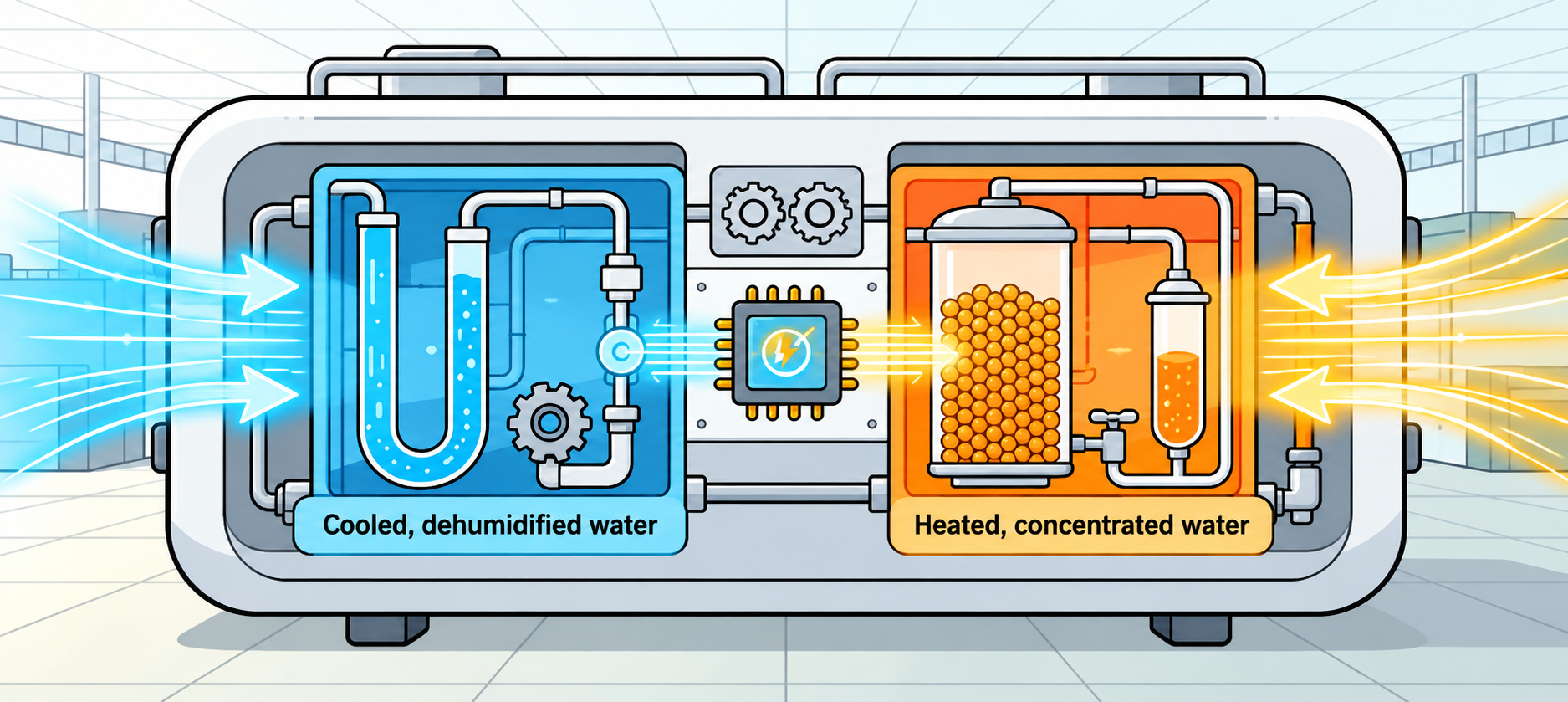
The M Series is categorized as a modular heatless adsorption dryer. Its basic operation follows a repeating adsorption and regeneration cycle.
During the adsorption stage, wet compressed air enters the active drying section and passes through the desiccant. Water vapor is adsorbed while the dried compressed air continues toward the downstream system.
As the desiccant gradually accumulates moisture, it eventually needs to be regenerated. During the regeneration stage, part of the dry compressed air is expanded and used to remove moisture from the regenerating desiccant.
The dryer alternates between adsorption and regeneration so that dry compressed air can continue to be supplied to the system.
This pressure-swing principle is also used in conventional heatless regenerative adsorption dryers, where dry product air is used as purge air to regenerate the desiccant.
Key Advantages of a Modular Adsorption Dryer
1. Compact Modular Construction
One of the primary reasons to choose a modular dryer is installation flexibility.
Instead of relying on two large conventional pressure vessels, the drying structure is divided into a more compact arrangement. This can make the equipment easier to integrate into compressor rooms where floor space or equipment layout is restricted.
The advantage becomes especially relevant in factory upgrades where the available compressor-room footprint is already established and adding a conventional large dryer would require significant changes to the existing layout.
However, “modular” should not automatically be interpreted to mean that unlimited capacity can simply be added later. Expansion capability depends on the specific equipment configuration, piping, controls, and required airflow. Capacity should therefore be selected according to actual system demand.
2. Low Pressure Dew Point
The main functional advantage of adsorption drying is its ability to achieve substantially lower pressure dew points than standard refrigerated drying.
For the M Series, the specified outlet pressure dew point is ≤−20°C, with ≤−40°C available as an option under the stated operating conditions.
This makes modular adsorption drying suitable for processes where preventing downstream condensation requires much drier compressed air.
3. Desiccant Combination for Reliable Moisture Removal
Desiccant selection influences adsorption capacity, dew-point performance, durability, and operating stability.
The M Series uses a combination of activated alumina and high-performance molecular sieve.
The desiccant removes water vapor rather than liquid condensate. For this reason, the upstream compressed air system should already remove bulk liquid water and other contaminants before the air reaches the adsorption bed.
4. Broad Capacity Range for Different Systems
A modular design is useful only if the available capacity matches actual compressed air demand.
The M Series includes multiple airflow capacities. Available models shown in Lingyu’s technical data extend through units rated at 55 m³/min, allowing the technology to serve compressed air systems of different sizes.
The dryer should still be sized according to corrected operating conditions rather than nominal airflow alone.
5. Protection Against Downstream Moisture
If water vapor remains in compressed air and the air subsequently cools below its pressure dew point, condensation can form inside downstream piping.
Over time, this moisture can contribute to corrosion and interfere with valves, cylinders, pneumatic tools, instrumentation, and production equipment.
A correctly selected adsorption dryer reduces the pressure dew point so that compressed air can remain dry under more demanding downstream temperature conditions.
Modular Adsorption Dryer vs. Refrigerated Air Dryer
A modular adsorption dryer should not automatically replace a refrigerated dryer. The two technologies serve different pressure-dew-point requirements.
A refrigerated air dryer removes moisture by cooling compressed air, condensing water vapor, and separating the resulting liquid. It is generally an efficient choice when the process does not require an extremely low pressure dew point.
An adsorption dryer removes water vapor using desiccant and can achieve much lower dew points.
The decision should therefore begin with the actual process requirement:
| Requirement | Refrigerated Dryer | Modular Adsorption Dryer |
|---|---|---|
| General industrial moisture control | Suitable | Possible, but may be unnecessary |
| Very low pressure dew point | Limited | Suitable |
| Compact installation | Depends on model | Strong advantage |
| Desiccant required | No | Yes |
| Regeneration required | No desiccant regeneration | Yes |
| Purge-air consumption | No adsorption purge | Depends on adsorption design |
Using adsorption drying when the application does not need a low dew point can increase compressed air consumption and operating cost unnecessarily. Conversely, using refrigeration drying where very low dew points are essential may not provide adequate moisture control.
For a more detailed technology comparison, see refrigerated air dryer vs. desiccant air dryer.
Important Operating Conditions
A modular adsorption dryer should always be evaluated against its specified inlet conditions.
For Lingyu’s M Series, the stated operating parameters include:
- Applicable medium: compressed air / non-corrosive air
- Rated inlet pressure: 0.7 MPa
- Operating pressure range: 0.6–1.0 MPa
- Rated inlet temperature: 10–30°C
- Maximum inlet temperature: ≤40°C
- Inlet air dew point: ≤15°C
- Outlet pressure dew point: ≤−20°C
- Optional outlet pressure dew point: ≤−40°C
- Desiccant: activated alumina + high-performance molecular sieve
- Rated ambient temperature: 35°C
- Ambient operating range: 2–45°C
These conditions are important because dryer performance cannot be separated from inlet temperature, pressure, moisture load, and airflow.
Why Upstream Air Treatment Matters
A desiccant bed is intended primarily to adsorb water vapor. It should not be expected to act as the first line of defense against bulk liquid water, oil, or excessive particulate contamination.
Proper upstream treatment can therefore help protect the adsorption bed and maintain drying performance.
Depending on compressor type and required outlet air quality, the compressed air treatment train may include condensate separation and appropriate precision compressed air filtration before or after the dryer.
Oil contamination deserves particular attention because it can adversely affect desiccant performance. System design should therefore consider the compressor, separator, filters, dryer, piping, and point-of-use requirements together.
Where Is a Modular Adsorption Dryer Used?
Modular adsorption dryers are particularly useful where a low pressure dew point and compact installation are both important.
Electronics and Precision Manufacturing
Moisture can interfere with pneumatic equipment and processes used in sensitive manufacturing environments. Low-dew-point compressed air can therefore be valuable where condensation must be tightly controlled.
More information about these requirements is available for electronics and precision manufacturing.
Pharmaceutical Production
Compressed air can be used for production equipment, instrumentation, packaging, and other operations in pharmaceutical facilities.
The required air quality depends on the specific use, particularly whether compressed air has direct or indirect process contact. Drying should therefore form part of a complete air-quality strategy rather than being treated as the only purification step.
Food and Beverage Processing
Food and beverage plants use compressed air for automation, packaging, conveying, and various production operations.
When low pressure dew points are required, adsorption drying may be selected. Filtration and other air-quality controls must still be chosen according to the actual application.
Semiconductor and PCB Manufacturing
Semiconductor and electronics facilities can have demanding compressed air requirements and limited utility-space availability.
Compact adsorption drying can be useful where low dew points are needed without allocating the footprint required by a conventional large twin-tower system.
General Manufacturing
Modular adsorption dryers can also support machinery manufacturing, automotive operations, new-energy production, and other industrial processes where downstream temperature conditions or process requirements call for low-dew-point compressed air.
How to Select the Right Modular Adsorption Dryer
Selection should begin with the required pressure dew point rather than the physical size of the dryer.
First, determine whether the process actually requires −20°C, −40°C, or another pressure dew point. Then evaluate the maximum compressed air demand, not simply the average flow.
Inlet pressure and temperature should be checked carefully because conditions outside the rated range can affect drying capacity and moisture load. Upstream air quality should also be considered to protect the desiccant.
Other important selection factors include connection size, installation footprint, pressure drop, regeneration air consumption, maintenance access, control requirements, and expected load variation.
For systems requiring very high flow rates or where purge-air consumption represents a significant operating cost, other adsorption technologies may be more economical. A blower zero-purge adsorption dryer, for example, is designed to eliminate compressed-air consumption during regeneration under its specified operating conditions.
Maintenance Considerations
A modular structure can simplify access and equipment layout, but it does not eliminate normal adsorption-dryer maintenance.
Operators should periodically inspect valves, silencers, control components, filters, and drainage equipment. Desiccant condition should also be monitored because contamination, attrition, and long-term cycling can eventually affect adsorption performance.
Pressure dew point is one of the most useful indicators of dryer condition. A gradual deterioration in dew-point performance can indicate issues such as excessive inlet moisture, contaminated or aged desiccant, valve leakage, insufficient regeneration, or operating conditions outside the equipment’s design range.
Upstream filters should also be maintained according to their differential pressure and service requirements rather than being ignored until a dryer problem occurs.
FAQ: Modular Adsorption Dryer
How does a modular adsorption dryer work?
It passes compressed air through desiccant that adsorbs water vapor. While one drying section adsorbs moisture, another is regenerated so that the adsorption cycle can continue.
What pressure dew point can a modular adsorption dryer achieve?
It depends on the model and operating conditions. Lingyu’s M Series specifies an outlet pressure dew point of ≤−20°C, with ≤−40°C available as an option.
Is a modular adsorption dryer better than a refrigerated dryer?
Not universally. A refrigerated dryer is often more appropriate for general industrial moisture control, while an adsorption dryer is preferable when the process requires a substantially lower pressure dew point.
Does a modular adsorption dryer consume purge air?
A heatless modular adsorption dryer uses dry compressed air during regeneration. The exact regeneration consumption should be evaluated according to the selected model and operating conditions rather than assumed from the term “modular.”
Can I add modules later to increase capacity?
That depends on the specific system design. Modular construction does not automatically guarantee unlimited field expansion. If future compressed air demand is expected to increase, capacity planning should be considered during initial system design.
Does the dryer remove oil and particles as well as moisture?
Its primary purpose is water-vapor removal. Appropriate filters and separators should be used to control liquid water, oil, and particulates according to the required compressed air quality.
When should I choose a −40°C pressure dew point?
A −40°C pressure dew point should be selected when required by the process or downstream environmental conditions. Specifying a lower dew point than necessary can increase drying and regeneration requirements without providing a useful process benefit.
Conclusion
A modular adsorption dryer provides a compact approach to producing low-dew-point compressed air where conventional refrigerated drying cannot meet the required moisture specification.
Its main strengths are the combination of desiccant-based deep drying, compact construction, multiple capacity options, and low pressure dew point capability. For Lingyu’s M Series, outlet pressure dew points of ≤−20°C and optionally ≤−40°C provide flexibility for applications with more demanding moisture-control requirements.
However, the best dryer is not determined by compactness or dew point alone. Airflow, inlet pressure, inlet temperature, regeneration requirements, filtration, operating cost, installation space, and actual process air-quality requirements should all be considered together.
When these factors are correctly matched, a modular adsorption dryer can provide reliable low-dew-point compressed air while making efficient use of valuable compressor-room space.