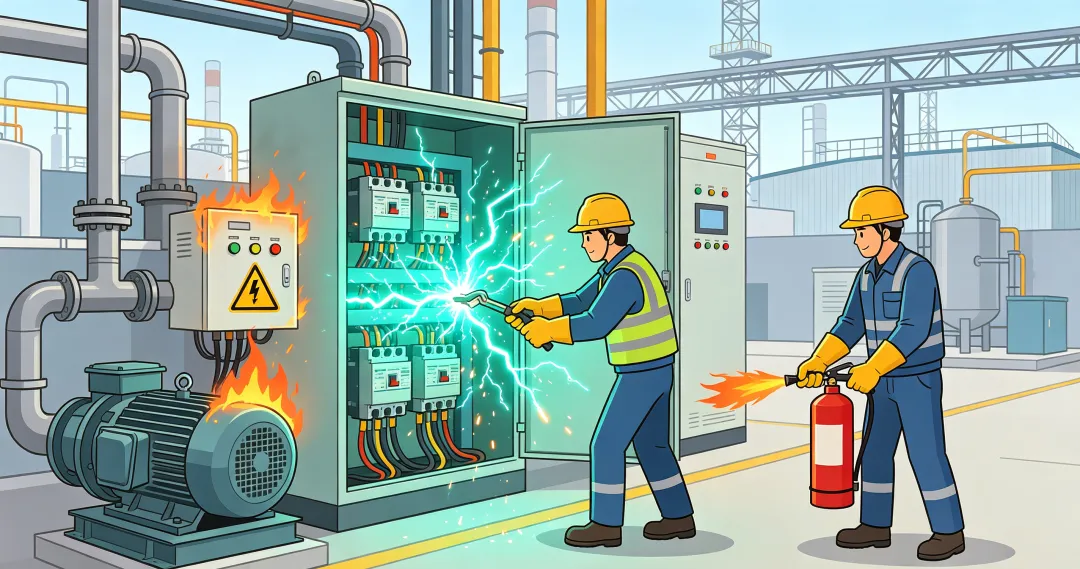
A heatless regenerative adsorption dryer produces low-dew-point compressed air without using an external heater or regeneration blower.
Instead, it relies on Pressure Swing Adsorption (PSA) and a controlled portion of dry product air to regenerate the desiccant. This makes the heatless design mechanically straightforward, but correct performance still depends on purge-air consumption, vessel switching, inlet-air conditions, desiccant condition, and filtration.
For users comparing the wider range of adsorption dryer technologies, Lingyu’s desiccant air dryer category provides additional regeneration configurations.
How Heatless Regeneration Works
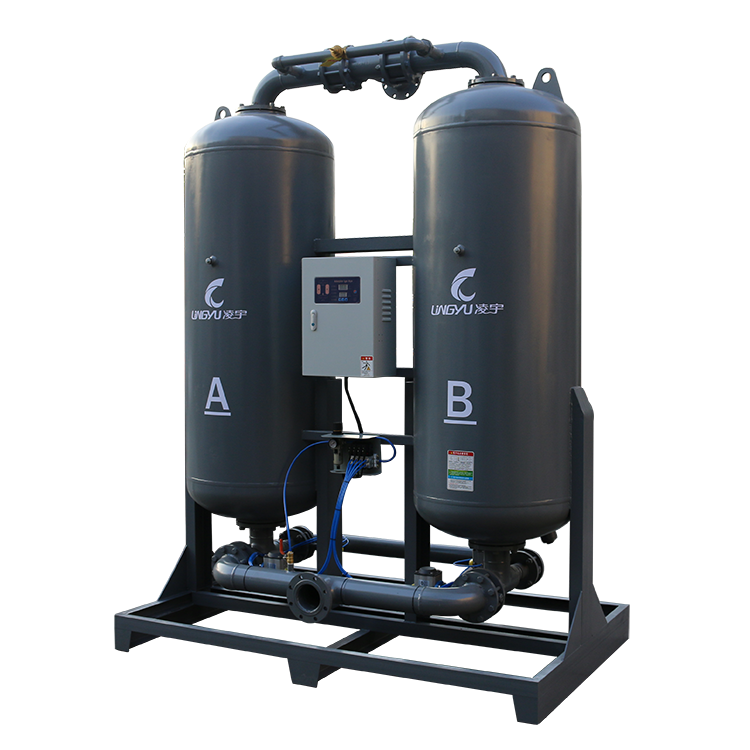
A heatless regenerative dryer normally uses two adsorption vessels operating alternately.
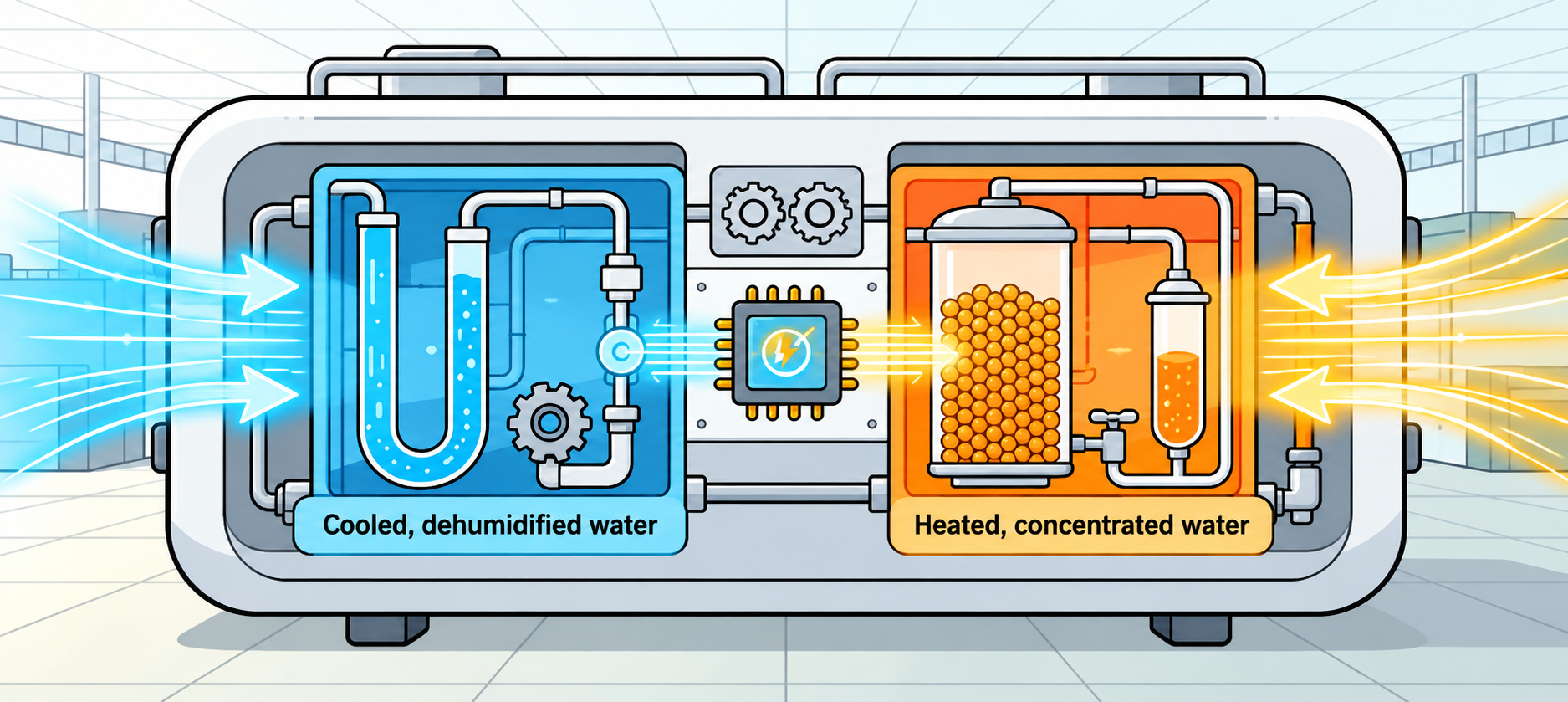
When compressed air passes through the vessel in adsorption mode, the desiccant captures water vapor under relatively high water-vapor partial pressure.
At the same time, the second vessel operates at a much lower pressure and undergoes regeneration. A portion of the dry compressed air leaving the active adsorption vessel is expanded and directed through the regeneration vessel. The reduced water-vapor partial pressure allows moisture previously retained by the desiccant to desorb.
The purge air then carries this released moisture out of the dryer through the exhaust system.
The PSA process is generally treated as isothermal, so a separate cooling stage is not required: desorption and regeneration occur within the same regeneration process.
Why Two Towers Are Required
Continuous dry-air production is possible because the two adsorption vessels operate in alternating cycles.
While one tower is drying the compressed air, the other is being regenerated. After regeneration is complete, the regenerated vessel must be prepared for the next adsorption cycle. The dryer then changes the operating state of the two towers so that the regenerated tower becomes the adsorption vessel.
The purpose of the twin-tower arrangement is therefore not simply redundancy. It enables continuous adsorption and regeneration without interrupting the dry-air supply.
Purge Air Consumption Is a Core Operating Parameter
One of the most important characteristics of a heatless adsorption dryer is that regeneration consumes part of the dry compressed air produced by the system.
Lingyu’s CH and HH heatless dryer specifications both use an average purge-air consumption of 8–14% under the stated operating conditions.
Purge-air consumption should therefore be considered when sizing the compressor and evaluating total system operating cost. The compressor must supply enough air for both usable downstream demand and regeneration purge demand.
A dryer should not be sized only according to the amount of compressed air required at the point of use.
Why Purge Air Cannot Simply Be Reduced
It may appear attractive to reduce purge airflow as much as possible because every cubic meter of purge air has already consumed compressor energy.
However, regeneration requires sufficient dry airflow to carry released moisture out of the desiccant bed. If regeneration becomes inadequate, moisture can remain in the desiccant and reduce available adsorption capacity during the next cycle.
Purge flow should therefore be controlled according to the dryer design and actual operating conditions rather than reduced arbitrarily.
Automatic Repressurization Before Switching
An important feature of the heatless dryer design is automatic repressurization.
Before the regenerated vessel returns to adsorption duty, the system repressurizes and equalizes vessel pressure. This helps reduce sudden pressure fluctuations, limit switching impact on the desiccant bed, improve vessel-switching stability, and reduce mechanical disturbance of the adsorbent.
Automatic repressurization therefore contributes directly to stable vessel switching rather than serving only as a secondary control function.
Pneumatic Valves and Actuators Matter
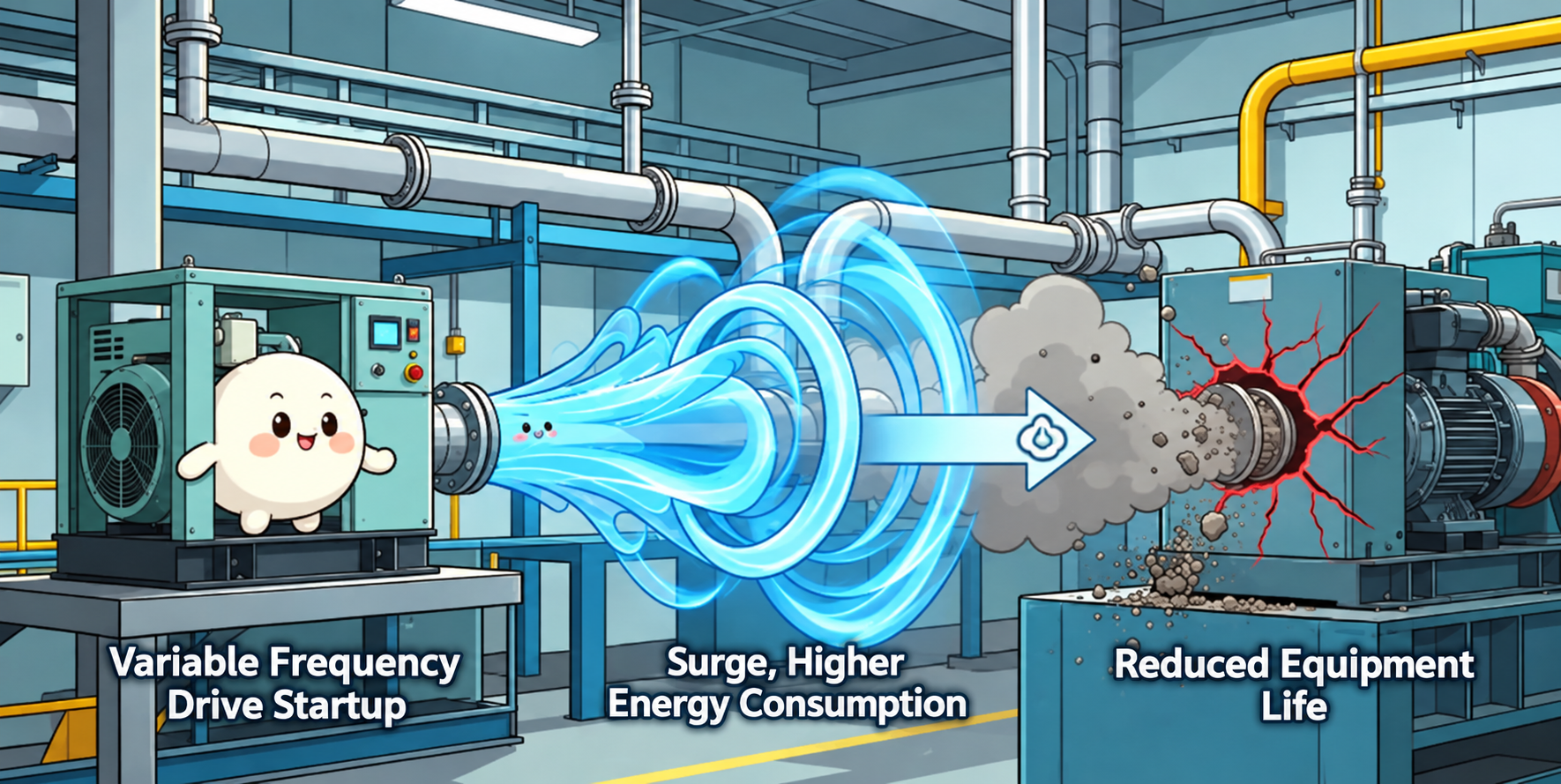
Heatless dryers repeatedly switch between adsorption, depressurization, regeneration, repressurization, and standby conditions.
The valve system is therefore one of the most heavily cycled parts of the dryer.
The heatless design uses responsive pneumatic valves together with high-torque aluminum-alloy pneumatic actuators to support stable switching.
Unstable or incomplete switching can affect vessel pressure, regeneration airflow, purge-air loss, outlet pressure stability, and dew-point performance.
Valve condition should therefore be treated as part of overall dryer performance, not only as a maintenance issue.
Low-Noise Exhaust Design
Depressurization and regeneration exhaust can create noticeable noise in a heatless dryer.
The design uses low-noise check valves and high-performance silencers to reduce noise during operation and exhaust.
Silencers should remain part of routine inspection. An obstructed or deteriorated exhaust component can affect regeneration behavior and should not be viewed merely as an acoustic accessory.
Standard Operating Conditions
The CH and HH heatless regenerative dryer families share the following main operating conditions:
| Parameter | Standard Condition |
|---|---|
| Applicable medium | Compressed air / non-corrosive air |
| Rated inlet pressure | 0.7 MPa |
| Normal operating pressure | 0.6–1.0 MPa |
| Rated inlet temperature | 10–30°C |
| Maximum inlet temperature | ≤40°C |
| Average purge-air consumption | 8–14% |
| Rated ambient temperature | 35°C |
| Ambient operating range | 2–45°C |
The actual model should still be selected according to the required airflow, pressure dew point, and project operating conditions.
Do Not Use One Universal Dew-Point Specification
Not every heatless dryer configuration uses exactly the same pressure dew-point specification.
For the CH Series Heatless Regenerative Desiccant Air Dryer, the specified outlet pressure dew point is −50°C to −20°C, with activated alumina as the standard desiccant.
For the HH Series Heatless Regenerative Desiccant Air Dryer, the specified outlet pressure dew point is ≤−40°C, using activated alumina together with high-performance molecular sieve.
A single universal dew-point figure should therefore not be applied to every heatless dryer. Required pressure dew point should be defined first, and the specific dryer configuration should then be selected accordingly.
Why Inlet Temperature Matters
The rated inlet temperature is 10–30°C, with a maximum inlet temperature of 40°C.
Temperature matters because warmer compressed air can carry more moisture. Higher inlet moisture loading means the desiccant must adsorb more water during each cycle, potentially affecting adsorption capacity and regeneration demand.
Upstream cooling and moisture separation should therefore be considered when the dryer is installed as part of a complete compressed-air system.
Filtration Protects the Adsorption System
Contamination entering the adsorption vessel can affect both the desiccant and the valve system.
Oil aerosols, liquid water, and solid particles should therefore be controlled according to the actual compressed-air quality requirement.
Suitable precision compressed air filters can be used as part of the purification system according to the required filtration grade.
Filtration should be considered part of dryer protection as well as downstream air-quality control. The exact filter arrangement should be selected for the application rather than treated as one fixed configuration for every installation.
Desiccant Life Should Be Based on Condition
A fixed universal desiccant replacement interval should not be applied to the heatless dryer.
The desiccant is designed for high adsorption capacity and abrasion resistance, with stable long-term dew-point performance and minimal dust generation. Actual desiccant condition, however, can depend on oil contamination, liquid-water carryover, inlet temperature, regeneration effectiveness, operating hours, pressure cycling, and desiccant movement and dusting.
Replacement should therefore be based on actual operating condition and dryer performance rather than a universal calendar interval.
What Should Be Monitored During Operation?
Operators should pay particular attention to changes in outlet dew point, tower pressure, switching behavior, regeneration exhaust, purge airflow, and pressure fluctuations.
Abnormal tower switching can indicate a valve or control problem, while deteriorating dew point can be related to inlet conditions, regeneration performance, contamination, or desiccant condition.
These operating signals can be used to determine when more detailed troubleshooting or maintenance is required.
Where Heatless Regeneration Makes Sense
The main characteristics of heatless regeneration include no external regeneration heater, no regeneration blower, a relatively simple regeneration process, low electrical power requirement for the dryer itself, continuous twin-tower operation, low pressure dew point, and regeneration based on dry compressed-air purge.
This design can be attractive where simplicity and dependable low-dew-point drying are more important than minimizing compressed-air purge consumption.
Conversely, in large systems where purge-air losses create substantial operating cost, heated, blower-assisted, or zero-purge regeneration technologies may deserve separate evaluation.
Application Considerations
Heatless regenerative adsorption dryers can be evaluated for industrial applications according to the required dew point, air quality, flow, pressure, and regeneration strategy rather than assigning one universal configuration to every industry.
For an industry-specific example, users can review Lingyu’s electronics and precision manufacturing application page.
This keeps application-specific air-quality and process requirements separate from the operating principles of the dryer itself.
How to Select a Heatless Dryer
Before selecting a dryer, define the actual airflow, operating pressure, maximum inlet temperature, required pressure dew point, ambient conditions, available compressor capacity, and allowable purge-air consumption.
Purge air is particularly important.
If a plant needs 100 m³/min of usable dry air downstream, the compressor and dryer system should not automatically be sized as if exactly 100 m³/min entering the dryer will provide 100 m³/min to production. Regeneration demand must be included in the system balance.
For detailed product information, users can review Lingyu’s heatless regeneration adsorption air dryer page.
Heatless vs. Heated Regeneration
The main distinction between heatless and heated regeneration is the regeneration method.
A heatless dryer regenerates by using expanded dry product air and pressure swing. A heated regeneration system introduces heat into the regeneration process, while blower-heated and heat-of-compression systems use different regeneration strategies.
These technologies should be evaluated separately according to required dew point, compressed-air consumption, available utilities, system size, and operating priorities.
Information to Prepare Before Requesting a Configuration
When requesting a heatless dryer, prepare the required dry-air flow, inlet pressure, inlet temperature, required pressure dew point, operating hours, ambient conditions, upstream filtration arrangement, and whether compressed-air purge consumption is a major operating-cost concern.
For non-standard operating conditions or model configurations, users can use Lingyu’s contact page for technical configuration support.
Conclusion
A heatless regenerative adsorption dryer uses Pressure Swing Adsorption and a portion of dry product air to regenerate the desiccant without an external heater or separate cooling stage.
For Lingyu’s heatless dryer families, key operating characteristics include 0.7 MPa rated inlet pressure, 0.6–1.0 MPa operating pressure, 10–30°C rated inlet temperature, ≤40°C maximum inlet temperature, 8–14% average purge-air consumption, 35°C rated ambient temperature, and a 2–45°C ambient operating range. The CH Series provides a specified pressure dew point of −50°C to −20°C, while the HH Series specifies ≤−40°C.
Stable performance depends not only on the adsorption principle but also on purge airflow, valve switching, automatic repressurization, inlet conditions, filtration, and desiccant condition.
When selecting a heatless dryer, these factors should be evaluated together with the required outlet pressure dew point and the total compressed-air demand of the facility.