Selecting a compressed air dryer is not simply a matter of matching a dryer’s nominal CFM rating to the compressor. The correct choice depends on required pressure dew point, actual peak airflow, inlet temperature, operating pressure, ambient or cooling-water conditions, allowable pressure drop, and the application’s final air-quality requirements.
Choosing correctly helps control downstream condensation without adding unnecessary treatment capacity, purge-air consumption, or energy cost.
1. Start With the Required Pressure Dew Point
The first step in learning how to select a compressed air dryer is determining how dry the compressed air actually needs to be.
Pressure dew point (PDP) is the temperature at which water vapor in compressed air begins to condense at system pressure.
A useful rule is to compare the required PDP with the lowest temperature the compressed air will encounter downstream.
If piping, equipment, or instruments can become colder than the delivered PDP, additional condensation may occur.
When a Refrigerated Dryer Is Appropriate
For many indoor industrial systems, a refrigerated air dryer provides sufficient moisture control.
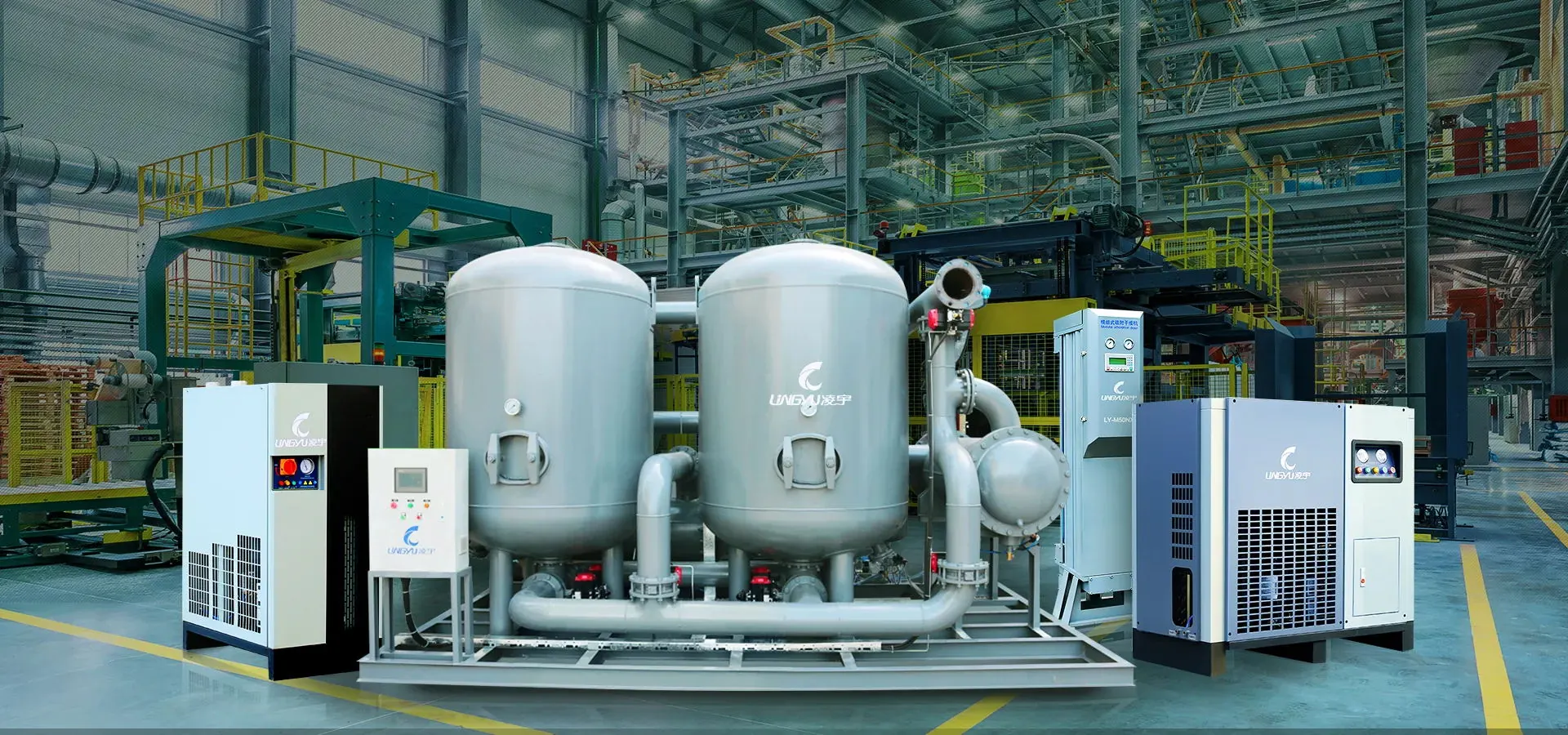
Lingyu’s conventional AH air-cooled and WH water-cooled refrigerated dryers specify a 2–10°C PDP under rated operating conditions.
Typical applications include general manufacturing, pneumatic machinery, assembly systems, workshops, and other processes where very low dew points are unnecessary.
When a Desiccant Dryer Is Appropriate
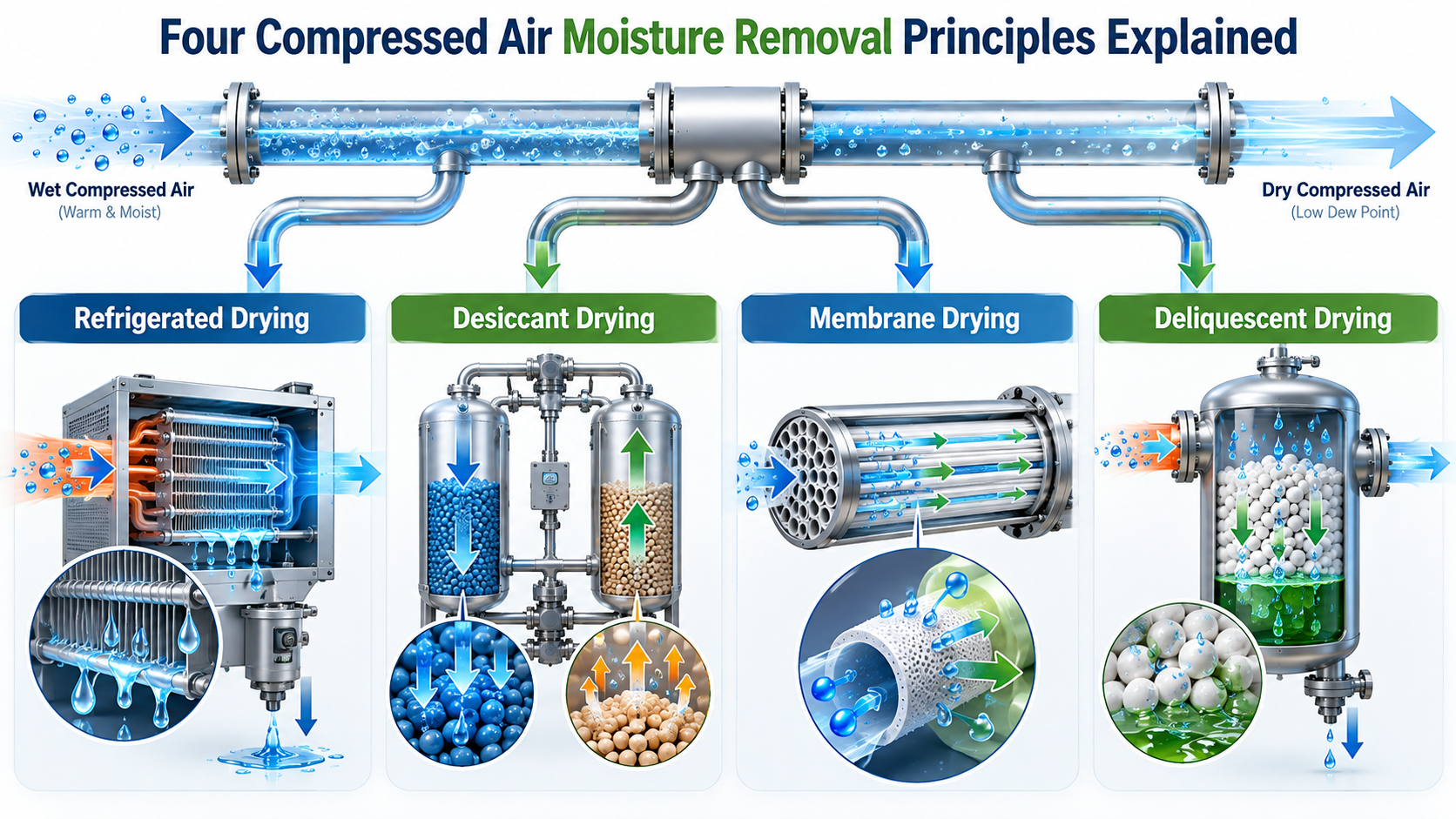
Applications requiring substantially lower PDP should be evaluated for desiccant air drying.
For example, Lingyu’s CH heatless and heated regeneration technologies specify a PDP range of −50°C to −20°C under their specified operating conditions.
Lower PDP can be important when compressed air piping is exposed to freezing temperatures or when a moisture-sensitive process requires significantly drier air.
The correct principle is therefore:
Choose the required PDP first, then choose the dryer technology.
2. Choose the Appropriate Dryer Technology
Once the required PDP is established, compare technologies that can actually achieve it.
Refrigerated Air Dryers
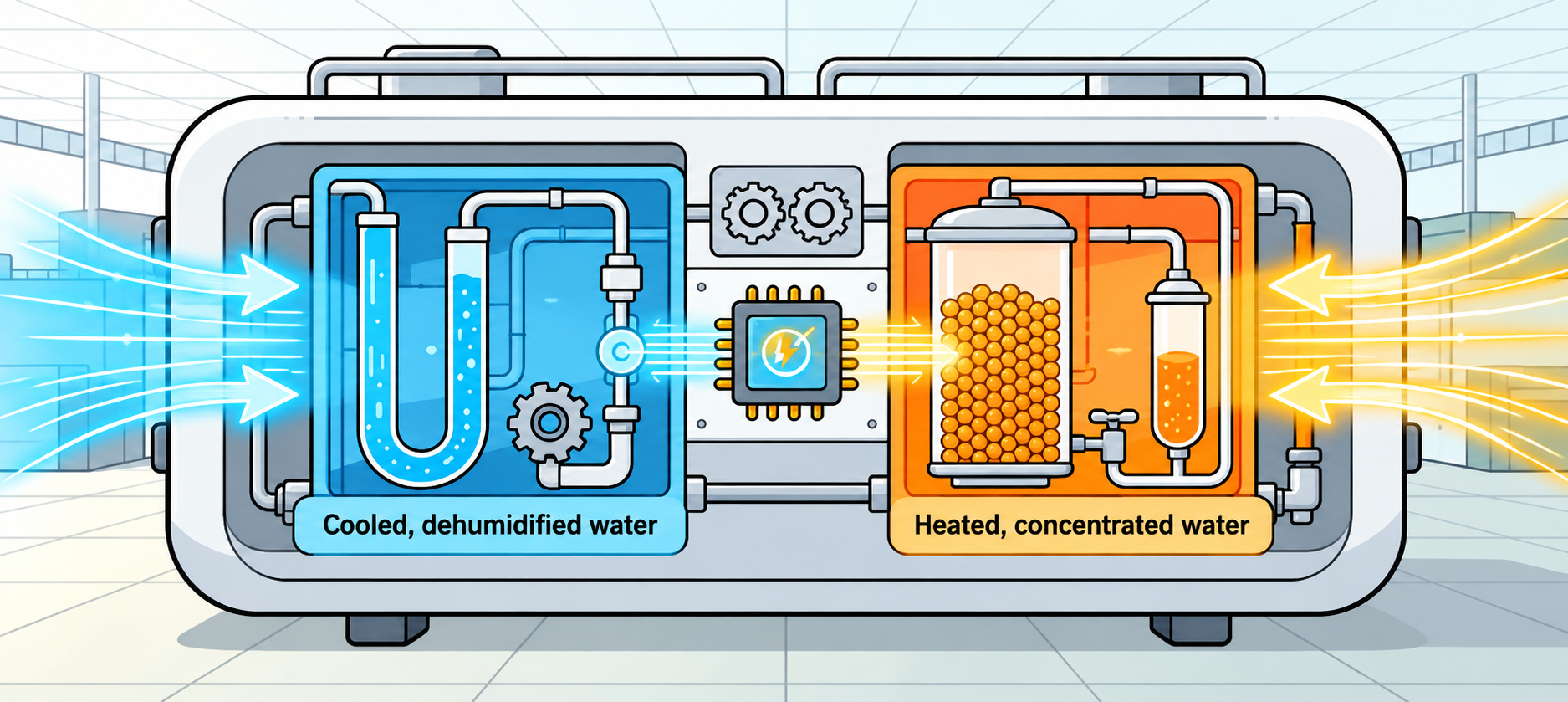
Refrigerated dryers cool compressed air so water vapor condenses into liquid. The condensed moisture is separated and automatically drained before the dry air continues downstream.
For Lingyu’s conventional AH and WH Series, typical operating specifications include:
| Parameter | Specification |
|---|---|
| Rated inlet pressure | 0.7 MPa |
| Operating pressure | 0.6–1.0 MPa |
| Rated inlet temperature | 50°C |
| Maximum inlet temperature | ≤80°C |
| Pressure dew point | 2–10°C |
| Rated ambient temperature | 32°C |
| Ambient operating range | 2–45°C |
| Pressure drop | ≤0.025 MPa |
Refrigerated technology is generally a practical choice when this PDP range satisfies the application.
Heatless Desiccant Dryers
A heatless adsorption dryer typically uses two desiccant towers. One tower dries the compressed air while a portion of the already dried air regenerates the other tower.
Lingyu’s CH Series heatless regeneration adsorption dryer operates at 0.7 MPa rated pressure, with a 0.6–1.0 MPa operating range, 10–30°C rated inlet temperature, ≤40°C maximum inlet temperature, 8–14% regeneration air consumption, and a −50°C to −20°C PDP.
Heatless technology offers a relatively straightforward regeneration method, but purge-air consumption must be included in lifecycle operating cost.
Heated Regeneration Dryers
Heated regeneration uses external heat during desorption, reducing the amount of dry compressed air required for regeneration.
Lingyu’s heated regeneration adsorption air dryer uses this approach for applications where lower purge consumption is desirable.
For the CH heated technology, regeneration air consumption is specified at 4–8%, compared with 8–14% for the CH heatless configuration.
The tradeoff is additional heater energy and system complexity.
Blower Regeneration Dryers
For larger systems where compressed-air purge represents a significant operating cost, blower regeneration can be considered.
The blower zero-purge adsorption dryer uses a different regeneration strategy intended to reduce dependence on dry compressed air during regeneration.
When comparing blower and conventional purge technologies, consider total electrical consumption, purge loss, operating profile, maintenance, and required PDP rather than looking at purge percentage alone.
Heat-of-Compression Dryers
Where the compressor configuration provides suitable thermal energy, heat-of-compression drying can use compressor heat for desiccant regeneration.
The suitability of heat-of-compression dryers depends heavily on compressor type, discharge temperature, operating profile, airflow, and required PDP.
HOC selection should therefore be considered together with the compressor station rather than as an isolated dryer decision.
Combined Dryers
A combined dryer integrates refrigerated and adsorption drying.
The refrigerated stage first removes a substantial portion of the moisture load. The adsorption stage then provides deeper drying.
Lingyu’s DH Series combined compressed air dryer is an example of this integrated approach.
Combined technology can be considered where low-PDP air is required and refrigerated pre-drying provides a useful first treatment stage.
3. Calculate the Actual Peak Airflow
After choosing the appropriate dryer technology, determine how much compressed air the dryer must actually process.
Do not size solely from average consumption.
The dryer should be evaluated against the maximum airflow expected through it during normal operation.
For a single-compressor installation, this may be relatively straightforward. For multi-compressor stations, however, consider how many compressors can operate simultaneously and how the control system sequences them.
For example, if two compressors can supply the common header simultaneously, the dryer may need to handle their combined flow rather than the output of one compressor.
Future expansion should also be considered when there is a realistic plan to add compressed-air demand.
4. Do Not Select a Dryer by Nominal CFM Alone
A dryer rated for a particular airflow under one set of conditions will not necessarily provide the same effective capacity under different conditions.
The actual moisture and thermal load depends on factors including:
airflow + inlet pressure + inlet temperature + ambient/cooling-water conditions
This is why correction factors are important.
A dryer should be selected using the manufacturer’s rated conditions and applicable correction data rather than applying a universal oversizing percentage.
Simply buying a dryer that is 10%, 20%, or 30% larger does not replace proper sizing.
5. Check the Compressor Discharge and Dryer Inlet Temperature
Inlet temperature has a major effect on refrigerated dryer performance.
Hotter compressed air contains a greater thermal load and can carry more water vapor into the dryer.
Lingyu’s conventional AH and WH high-inlet-temperature refrigerated dryers are rated at an inlet temperature of 50°C, with a maximum specified inlet temperature of ≤80°C.
An effective aftercooler and condensate separator upstream of the dryer can reduce both temperature and bulk liquid load before the air reaches the drying stage.
For adsorption systems, inlet temperature requirements differ.
Lingyu’s conventional CH and HH adsorption technologies specify a rated inlet temperature of 10–30°C, with a maximum of ≤40°C.
Do not assume that a dryer designed for one inlet-temperature range can be substituted directly for another.
6. Check Actual Operating Pressure
Operating pressure affects dryer capacity.
Lingyu’s conventional AH/WH refrigerated dryers and CH/HH adsorption dryers typically use 0.7 MPa as the rated inlet pressure, with a 0.6–1.0 MPa operating range.
Other pressures can require a different configuration or manufacturer confirmation.
When actual operating pressure differs from the rated condition, use the appropriate correction factor rather than relying only on nominal flow capacity.
7. Evaluate the Installation Environment
Air-Cooled Refrigerated Dryers
Air-cooled dryers reject heat into the surrounding air.
Adequate ventilation is therefore essential.
Lingyu’s conventional AH Series specifies a rated ambient temperature of 32°C and an operating ambient range of 2–45°C.
For indoor installation, the dryer should be positioned on a level concrete floor without requiring a dedicated foundation, with approximately 1.5 m minimum clearance around the equipment.
Poor ventilation, high ambient temperatures, dirty condenser surfaces, or recirculation of hot discharge air can reduce cooling performance.
Water-Cooled Refrigerated Dryers
Where suitable cooling water is available, water-cooled refrigerated dryers can be considered.
Lingyu’s WH Series specifies cooling-water pressure of 0.2–0.4 MPa, rated cooling-water temperature of ≤32°C, and an operating cooling-water temperature range of 2–38°C.
Actual cooling-water flow and connection requirements should be confirmed for the selected model.
Water quality and the facility’s ability to reject the absorbed heat should also be included in the system evaluation.
8. Consider Air-Cooled vs. Water-Cooled Refrigerated Dryers
When refrigerated drying is appropriate, condenser cooling method becomes another selection decision.
Air-cooled refrigerated dryers are convenient where sufficient ventilation and suitable ambient conditions are available.
Water-cooled systems can be useful where plant cooling water is available or where rejecting a large refrigeration heat load directly into the equipment room is undesirable.
Neither cooling method is universally more efficient.
The better choice depends on installation environment, cooling-water availability and cost, ventilation, maintenance capability, and total facility energy consumption.
9. Evaluate Pressure Drop
Pressure drop is frequently overlooked during dryer selection.
Every filter, dryer, separator, valve, fitting, and section of piping contributes to total system pressure loss.
If excessive pressure loss forces the compressor to operate at a higher discharge pressure to maintain the required point-of-use pressure, total energy consumption can increase.
Lingyu’s conventional AH and WH refrigerated dryers specify pressure drop of ≤0.025 MPa under rated conditions.
For applications where lower pressure loss is an important design objective, Lingyu’s 3-in-1 plate heat exchange refrigerated air dryer uses an integrated aluminum plate exchanger design and specifies pressure drop below 0.015 MPa.
Pressure drop should therefore be evaluated alongside dryer power consumption when comparing alternatives.
10. Match Energy-Saving Technology to the Load Profile
A dryer with advanced control technology does not automatically save the same amount of energy in every installation.
The site’s actual load profile matters.
For systems with substantial airflow variation, Lingyu’s frequency-conversion refrigerated air dryer uses variable-frequency compressor control to match refrigeration output more closely to demand.
This type of control can be particularly relevant when a compressed air system spends significant time at partial load.
A plant operating continuously near full load may have different optimization priorities.
Energy analysis should therefore consider annual operating hours and load variation rather than relying only on rated power.
11. Include Filtration in Dryer Selection
A dryer primarily addresses water vapor. It should not be expected to remove every contaminant in compressed air.
Depending on compressor type and application, compressed air can also contain:
- Solid particles
- Rust and pipe scale
- Oil aerosols
- Oil vapor
- Other process-specific contaminants
Suitable compressed air filtration should therefore be incorporated according to the required final air quality.
For adsorption dryers in particular, correct upstream filtration helps protect the desiccant from contamination.
Downstream filtration may also be required according to the final particle and oil specification.
12. Select the Dryer According to the Application
The same dryer is not appropriate for every industry.
In automotive manufacturing, general pneumatic tools and assembly machinery may have different air-quality requirements from painting and finishing processes.
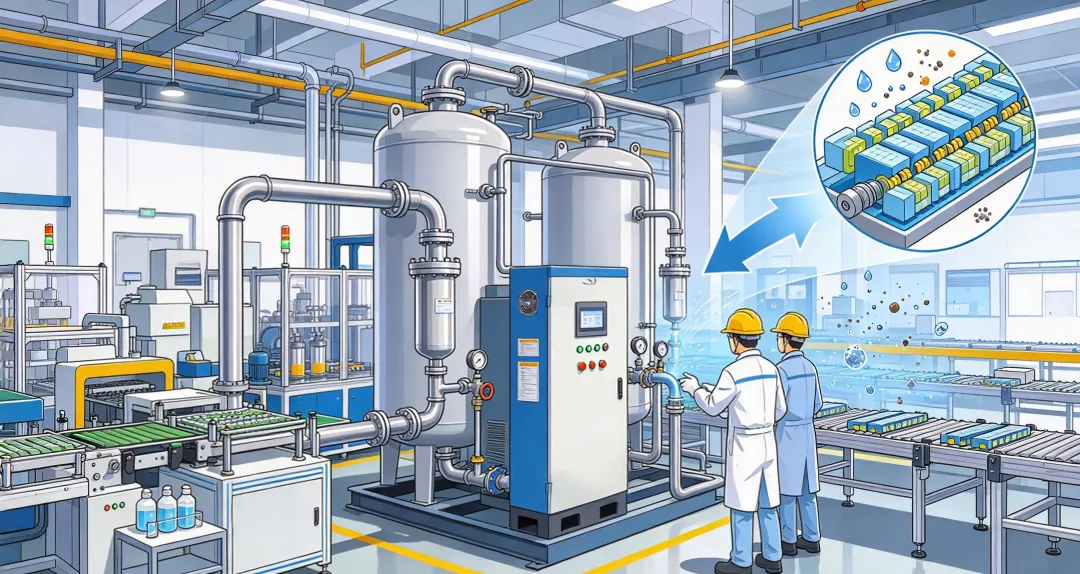
In semiconductor and PCB manufacturing, moisture-sensitive operations may require a substantially lower PDP and tighter contamination control than general pneumatic equipment.
For laboratory and analytical equipment, the required air quality should likewise be determined by the specific instrument or process.
The industry name provides useful context, but the actual process specification should determine the dryer.
13. Consider Maintenance Before Buying
A dryer’s purchase price is only one part of its lifecycle cost.
Before selecting equipment, consider accessibility for maintenance, drain inspection, filter replacement, refrigeration-system service, valve maintenance, desiccant inspection, heater or blower service where applicable, spare-part availability, and the ability to monitor operating performance.
Maintenance intervals should be based on the selected equipment, operating hours, environmental conditions, contamination level, and actual component condition.
A universal “service every 6–12 months” rule is not appropriate for every dryer.
14. Plan for Expansion Without Blind Oversizing
Future capacity can be considered when plant expansion is genuinely expected.
However, buying a much larger dryer simply “for safety” is not always the best approach.
Depending on dryer technology and control strategy, excessive oversizing can increase capital cost without delivering meaningful operating benefits.
For large or expanding compressed air stations, alternatives can include modular expansion or multiple dryers configured with appropriate piping and controls.
The objective is to provide sufficient capacity at peak conditions while maintaining practical operating flexibility.
A Practical Compressed Air Dryer Selection Checklist
Before requesting a dryer quotation or comparing models, define the following:
| Selection Factor | Information Required |
|---|---|
| Required pressure dew point | °C PDP |
| Maximum airflow | m³/min, CFM or SCFM |
| Operating pressure | MPa, bar or psi |
| Inlet temperature | Normal and maximum |
| Ambient temperature | Normal and maximum |
| Cooling method | Air-cooled or water-cooled |
| Cooling water | Temperature, pressure and availability |
| Minimum downstream temperature | Especially important for outdoor piping |
| Compressor type | Oil-injected, oil-free, centrifugal, etc. |
| Required particle/oil quality | Based on end-use specification |
| Operating profile | Continuous, variable or intermittent |
| Allowable pressure drop | System design requirement |
| Future expansion | Confirmed or realistically planned |
Providing these conditions allows the dryer to be evaluated against the actual system instead of nominal CFM alone.
Frequently Asked Questions
What is the most important factor when selecting a compressed air dryer?
The required pressure dew point is one of the first factors because it determines which drying technologies are technically suitable.
Flow, pressure, temperature, environmental conditions, and final air-quality requirements then determine the appropriate capacity and configuration.
Is a refrigerated or desiccant dryer better?
Neither is universally better.
Refrigerated drying is practical when its achievable PDP satisfies the application.
Adsorption drying is more appropriate when substantially lower pressure dew points are required, including certain freezing environments and moisture-sensitive processes.
Can refrigerated and adsorption dryers be used together?
Yes.
A combined system can use refrigerated drying for bulk moisture removal before adsorption drying provides a lower PDP.
This configuration should be engineered around the required air quality and operating conditions rather than simply connecting two independently sized dryers in series.
Do I always need a desiccant dryer for high-quality compressed air?
No.
“High-quality compressed air” can refer to water, particles, oil, or a combination of contaminants.
If the required water specification can be achieved by refrigerated drying, a desiccant dryer may not be necessary. Other air-quality requirements can be addressed with appropriate filtration and treatment.
Will a larger dryer always perform better?
No.
The dryer needs sufficient corrected capacity for the maximum expected operating conditions, but excessive oversizing does not automatically improve air quality or energy efficiency.
Proper selection is better than applying an arbitrary oversizing percentage.
How often should a compressed air dryer be serviced?
There is no universal interval suitable for every dryer.
Maintenance should follow the requirements of the selected model and consider operating hours, inlet conditions, environment, pressure drop, drain performance, refrigeration condition, desiccant condition, and other relevant operating data.
Select for the Real Operating Conditions
Understanding how to select a compressed air dryer comes down to matching the dryer to the actual process rather than choosing from nominal capacity or purchase price alone.
Start with the required pressure dew point. Then determine peak airflow and verify inlet temperature, operating pressure, ambient or cooling-water conditions, pressure drop, filtration requirements, regeneration method, load profile, and lifecycle operating cost.
For many general industrial applications, refrigerated drying is sufficient. For lower PDP requirements, adsorption technologies—including heatless, heated, blower, and heat-of-compression configurations—provide different regeneration and energy options.
The final selection can be summarized as:
required PDP → peak airflow → inlet temperature → operating pressure → environmental conditions → dryer technology → corrected capacity → filtration → pressure drop → lifecycle cost
For project-specific selection, contact Lingyu with your operating data and required compressed air quality so the dryer can be matched to the actual working conditions.