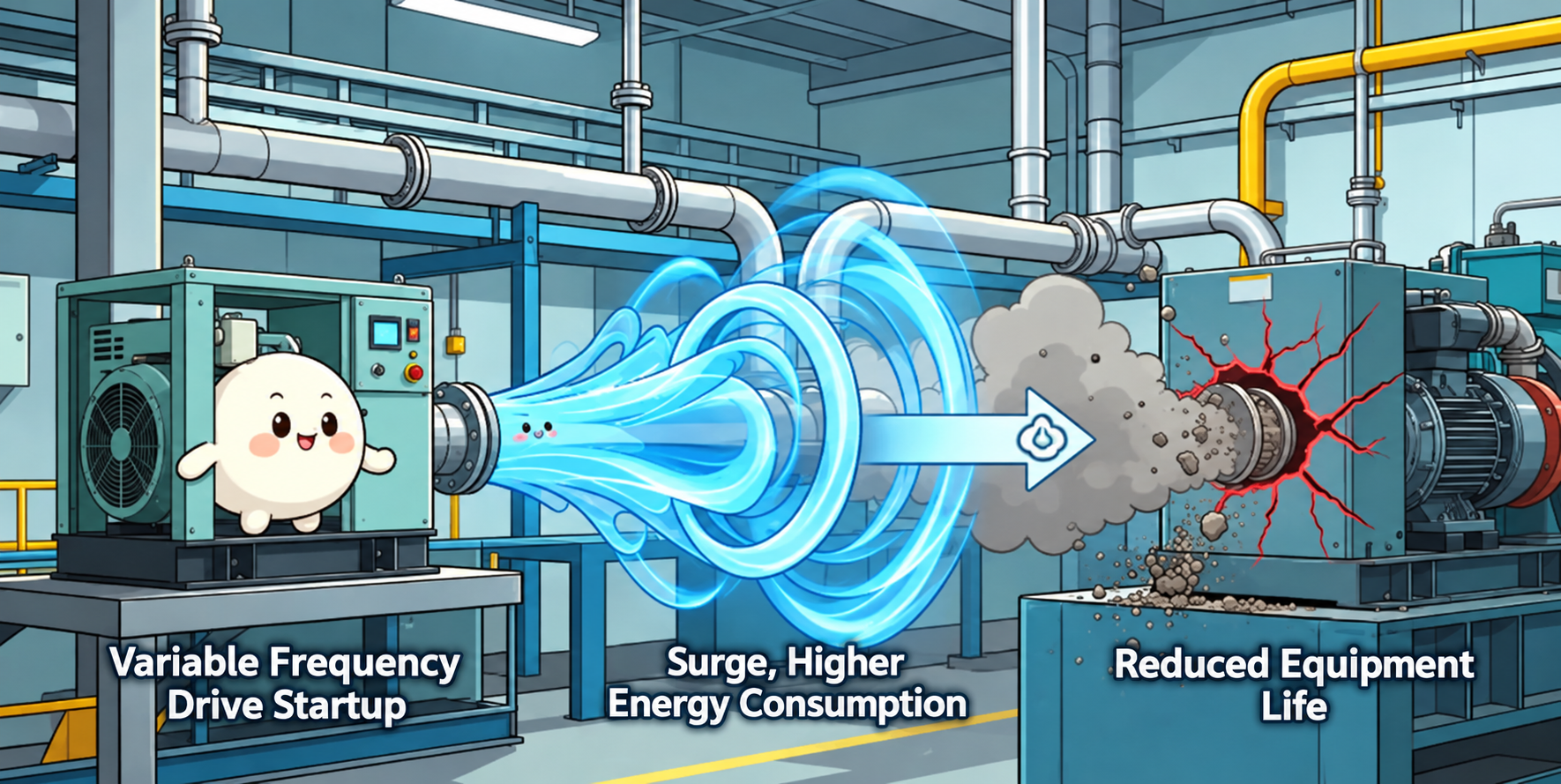
In a compressed-air system, pressure loss is more than a technical specification. Every unnecessary pressure drop can affect downstream pressure stability and may require the compressor system to operate at a higher discharge pressure.
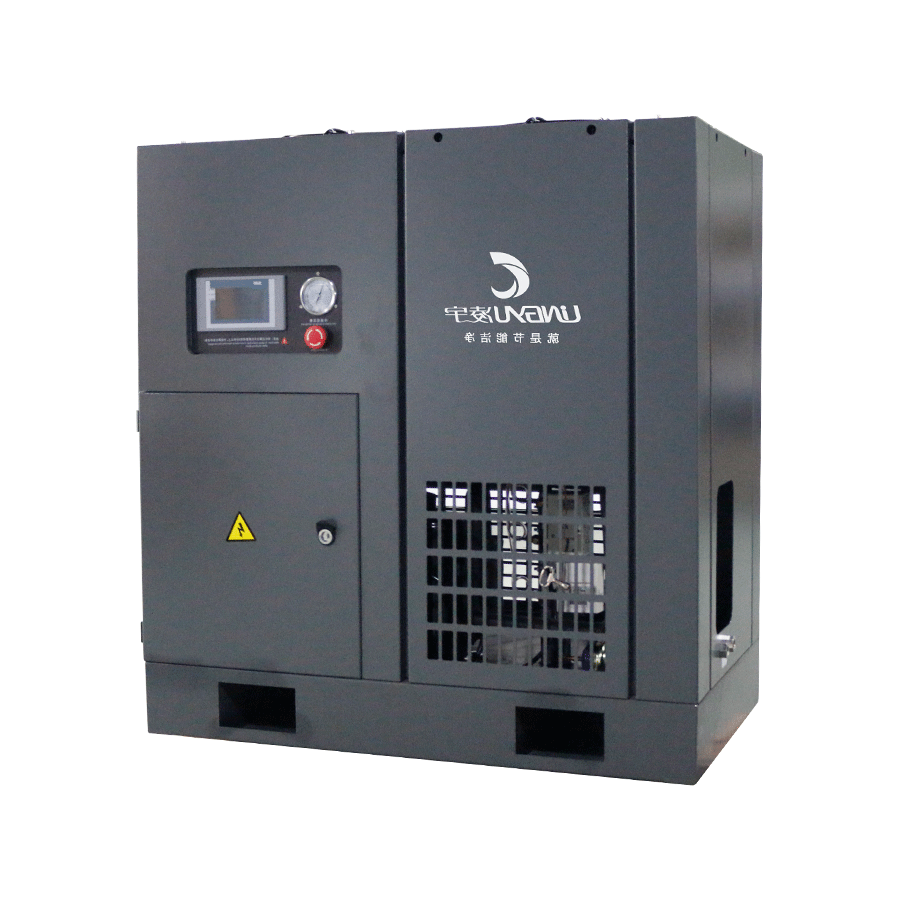
The DD Series Low-Pressure-Drop Refrigerated Air Dryer is designed for industrial compressed-air applications where moisture removal and low resistance to airflow are both important. Under standard operating conditions, the series provides a pressure dew point of 2–10°C while maintaining a full-load pressure drop of <0.01 MPa.
This guide focuses on the DD Series design, operating conditions, technical specifications, system integration, and selection considerations.
What Makes a Low-Pressure-Drop Refrigerated Air Dryer Different?
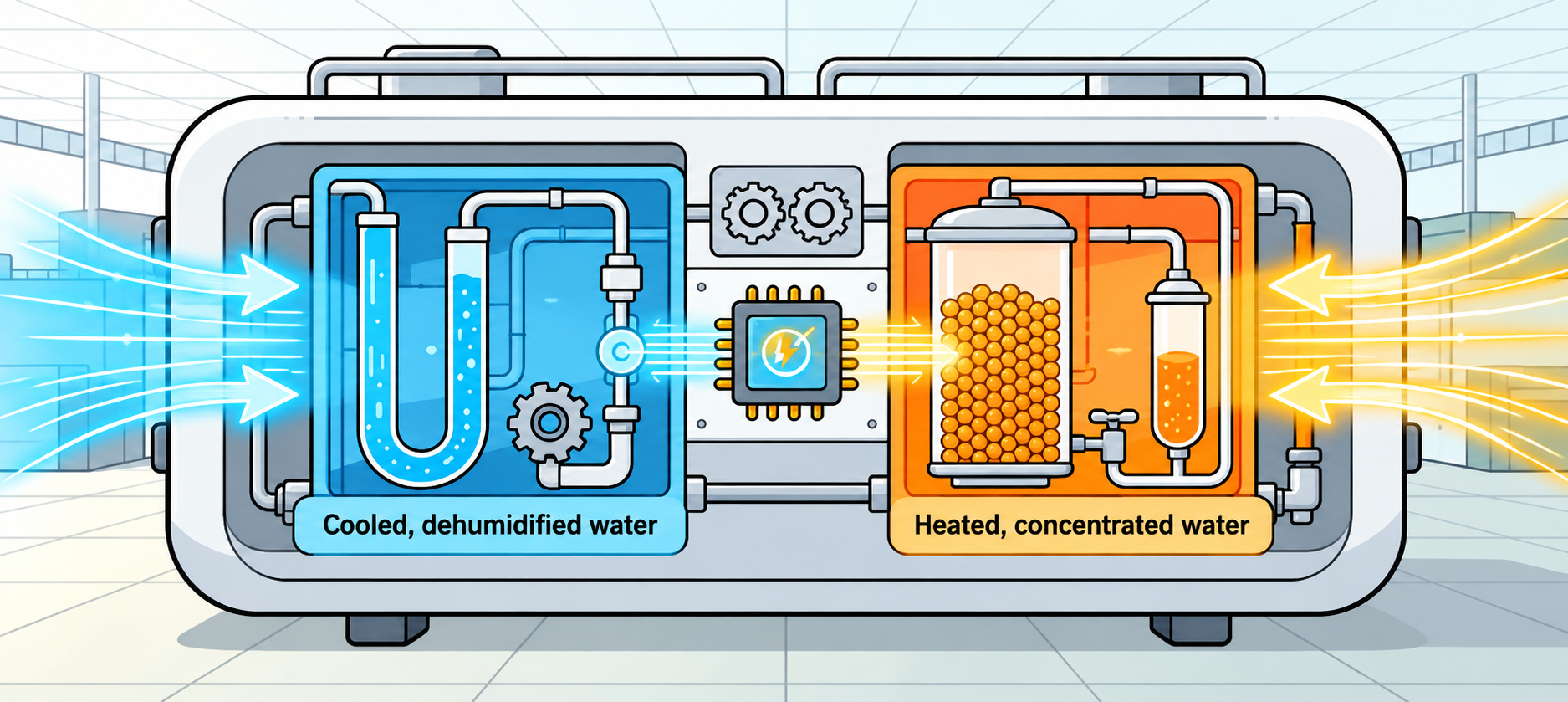
A refrigerated air dryer removes moisture by cooling compressed air until water vapor condenses into liquid water. The condensate is then separated and discharged before the treated air leaves the dryer.
The DD Series applies the same basic refrigeration principle, but its design places additional emphasis on reducing airflow resistance.
Its pre-cooler uses a newly designed annular tube configuration with approximately three times more tubes than conventional designs. The larger effective flow area reduces air resistance and helps keep the overall pressure drop below 0.1 bar, equivalent to 0.01 MPa.
This makes pressure-drop performance one of the defining characteristics of the DD Series rather than simply another specification.
DD Series Operating Conditions
The standard DD Series operating conditions are:
| Parameter | Standard Condition |
|---|---|
| Applicable medium | Compressed air / non-corrosive air |
| Rated inlet pressure | 0.7 MPa |
| Operating pressure range | 0.6–1.0 MPa |
| Rated inlet temperature | 45°C |
| Maximum inlet temperature | ≤80°C |
| Full-load pressure drop | <0.01 MPa |
| Outlet pressure dew point | 2–10°C |
| Rated ambient temperature | 35°C |
| Ambient operating range | 2–45°C |
| Cooling method | Air-cooled / water-cooled optional |
These operating limits are important during equipment selection. A dryer should not be sized according to compressor airflow alone. Actual inlet temperature, operating pressure, ambient temperature, and required treatment capacity also need to be considered.
How the DD Series Reduces Pressure Loss
Pressure drop is created whenever compressed air passes through heat exchangers, separators, filters, valves, and piping.
For the DD Series, the airflow path and heat-exchanger structure are designed specifically to reduce this resistance.
Enlarged Pre-Cooler Flow Area
The annular-tube pre-cooler uses an increased number of tubes, providing a larger effective airflow area and reducing resistance through the pre-cooling stage.
Integrated Heat-Exchange Structure
The evaporator core is located at the center of the integrated heat-exchanger assembly.
This arrangement reduces cooling losses and allows more cooling capacity to be utilized during the pre-cooling process.
Integrated Water Separation
Condensed moisture must be removed efficiently without introducing excessive airflow resistance.
The DD Series uses a newly designed gravity water separator together with multi-layer 304 stainless steel wire mesh to improve gas-liquid separation.
Together, these design elements allow the dryer to maintain moisture-removal performance while controlling pressure loss.
Pressure Dew Point Performance
The DD Series is designed to provide an outlet pressure dew point of 2–10°C under its specified operating conditions.
For many general industrial compressed-air systems, this range is suitable for controlling condensation in downstream equipment and piping when extremely low sub-zero dew points are not required.
However, refrigerated drying should be distinguished from adsorption drying.
A refrigerated air dryer normally targets a positive pressure dew point, while applications requiring substantially lower dew points may require another drying technology. Dryer selection should therefore begin with the actual air-quality requirement rather than assuming that the lowest possible dew point is automatically the best choice.
DD Series Technical Specifications
Representative DD Series models are shown below.
| Model | Airflow | Total Power | Connection | Weight | Dimensions |
|---|---|---|---|---|---|
| LY-DD30A | 3.8 m³/min | 1.50 kW | G1½” | 202 kg | 1000×600×1050 mm |
| LY-DD50A | 6.5 m³/min | 2.50 kW | G1½” | 222 kg | 1100×600×1100 mm |
| LY-DD75A | 10.5 m³/min | 2.70 kW | G2″ | 276 kg | 1250×700×1155 mm |
| LY-DD100A/W | 13.5 m³/min | 3.20 kW | G2½” | 326/320 kg | 1400×800×1200 mm |
| LY-DD120A/W | 17.0 m³/min | 4.90 kW | DN80 | 358/352 kg | 1500×950×1400 mm |
| LY-DD400A/W | 45.0 m³/min | 9.80 kW | DN100 | 657/639 kg | 1900×980×1580 mm |
| LY-DD800A/W | 85.0 m³/min | 18.80 kW | DN125 | 1370/1345 kg | 2400×1100×1650 mm |
| LY-DD1200A/W | 120.0 m³/min | 28.50 kW | DN150 | 1890/1865 kg | 2450×1200×2250 mm |
The standard DD Series range extends from 3.8 to 120 m³/min. For airflow above 120 m³/min, or special requirements involving pressure, materials, or temperature, a customized technical evaluation is appropriate.
For product-specific information, see Lingyu’s DD Series low-pressure differential refrigerated dryer.
Why Pressure Drop Matters in a Compressed-Air System
A compressed-air system must maintain sufficient pressure at the actual point of use.
When air passes through dryers, filters, piping, valves, and other treatment equipment, each component introduces resistance. If total system pressure drop becomes too high, the compressor station may need to operate at a higher pressure to maintain the required downstream pressure.
Dryer pressure drop should therefore not be evaluated in isolation. The complete pressure-loss path includes dryer pressure drop, filter pressure drop, piping diameter and layout, valve resistance, required point-of-use pressure, and compressor discharge pressure.
The objective is to minimize unnecessary resistance throughout the entire compressed-air treatment system.
Air-Cooled or Water-Cooled: Which Configuration Should You Choose?
The DD Series can be configured for air-cooled or water-cooled operation, depending on the model and project requirements.
Air-cooled systems can be easier to integrate where sufficient ventilation and ambient cooling are available because they do not require a separate cooling-water circuit.
Water-cooled configurations may be considered where plant cooling water is already available or where ambient conditions make air-cooled heat rejection less suitable.
The decision should not be based only on equipment preference. Available cooling infrastructure, installation environment, ambient temperature, maintenance conditions, and utility costs should all be considered.
Intelligent Control and Load Matching
The DD Series is equipped with a PLC and touchscreen as standard.
Refrigeration capacity can be automatically adjusted according to evaporator load. This allows the dryer to respond to actual operating conditions rather than maintaining the same refrigeration output regardless of system demand.
An RS-485 communication interface is also included as standard, allowing the dryer to be incorporated into suitable monitoring or control systems.
This is particularly useful in centralized compressed-air stations where operators need visibility into dryer operating status as part of the broader system.
Upstream and Downstream Filtration
A refrigerated dryer primarily removes condensed moisture. It should therefore be viewed as part of a complete compressed-air purification system rather than as the only treatment component.
Depending on the required air quality, the system may also need filters for oil aerosols and solid particles.
Suitable precision compressed-air filters can therefore be integrated before or after the dryer according to the required treatment configuration.
Moisture, oil, and solid particles should be treated as distinct compressed-air contaminants rather than assuming that the dryer performs every purification function.
How to Select the Correct DD Series Model
The first step is to determine the actual airflow requirement, but airflow alone is not enough.
Inlet Temperature
The DD Series has a rated inlet temperature of 45°C and supports inlet temperatures up to 80°C under its specified design conditions.
Higher inlet temperature means the refrigeration system must handle a greater thermal and moisture load. Actual maximum inlet temperature should therefore be provided during equipment selection.
Operating Pressure
The standard rated inlet pressure is 0.7 MPa, with a normal operating range of 0.6–1.0 MPa.
If the plant operates outside this range, the required configuration should be verified rather than selecting a standard model directly.
Required Airflow
The dryer should be selected for actual system demand while allowing for operating conditions that may affect effective capacity.
Required Dew Point
If a 2–10°C pressure dew point satisfies the process requirement, refrigerated drying may be appropriate.
If substantially lower pressure dew points are required, a refrigerated dryer alone may not meet the application requirement.
Pressure-Drop Requirement
Where compressor-station efficiency or downstream pressure stability is particularly important, dryer pressure drop should be evaluated together with filter and piping losses.
This is where the DD Series <0.01 MPa full-load pressure drop becomes especially relevant.
Maintenance Points That Affect Long-Term Performance
Routine maintenance should focus on components involved in heat exchange, refrigeration, moisture separation, condensate drainage, and airflow.
Important inspection areas include the condenser, evaporator, pre-cooler, drainage system, water separator, refrigeration compressor, and filters.
For air-cooled systems, adequate ventilation and clean condenser surfaces help maintain heat rejection. For water-cooled configurations, cooling-water condition and flow need to remain suitable for stable operation.
Common refrigerated dryer service components can also include fans, compressors, condensers, evaporators, filter driers, expansion valves, bypass valves, pressure gauges, and drain valves.
Maintenance should be based on actual operating condition and system performance rather than relying only on fixed replacement intervals.
Where the DD Series Fits in Industrial Applications
The DD Series is best evaluated according to the compressed-air requirements of the production process rather than assigned to a long generic list of devices.
Its industrial coverage can include sectors such as electronics, power, home appliances, aerospace, steel, machinery, automotive, and lithium-battery production.
The DD Series may be considered where an industrial process requires 2–10°C pressure dew point, low system pressure loss, moderate-to-high inlet-temperature capability, air- or water-cooled configuration, and intelligent control and communication.
The final selection should still be based on the actual compressed-air quality and operating requirements at the point of use.
When Another Refrigerated Dryer May Be More Suitable
The DD Series is specifically optimized around low pressure drop, but that does not mean it is the correct refrigerated dryer for every project.
A facility may place greater priority on variable-frequency operation, a particular heat-exchanger design, extremely large airflow, or another installation requirement.
Lingyu also provides conventional air-cooled refrigerated dryers and water-cooled refrigerated dryers for other system configurations.
The correct choice should therefore be based on the actual system objective rather than choosing a dryer only because one individual specification appears better.
Information to Prepare Before Requesting a Dryer
Before selecting a DD Series model, prepare the actual airflow, inlet pressure, maximum inlet temperature, ambient temperature, required pressure dew point, available cooling method, required downstream pressure, operating hours, and any special communication or installation requirements.
These parameters help determine whether a standard DD Series model is suitable or whether a customized configuration is necessary.
Conclusion
The DD Series Low-Pressure-Drop Refrigerated Air Dryer is designed to combine reliable moisture removal with a full-load pressure drop below 0.01 MPa and an outlet pressure dew point of 2–10°C.
Its low-resistance pre-cooler, integrated heat-exchange structure, gravity water separator with multi-layer 304 stainless steel wire mesh, PLC and touchscreen control, RS-485 communication, load-responsive refrigeration control, and air- or water-cooled configurations make it particularly relevant for compressed-air systems where both drying performance and pressure stability need to be considered.
When selecting a model, airflow, inlet temperature, operating pressure, cooling conditions, required dew point, filtration, and total system pressure drop should be evaluated together. This provides a more reliable basis for selecting the correct dryer than comparing nominal airflow or power consumption alone.