For vessels operating far from shore, dependable utility systems are essential. Nitrogen can be used onboard where an inert, low-oxygen atmosphere is required for process protection, storage, purging, or other marine operations.
A nitrogen generator for dual engine vessels produces nitrogen onboard from compressed air, reducing dependence on externally supplied cylinders or liquid nitrogen.
For marine operators, the most important considerations are not simply maximum nitrogen purity. Required purity, flow rate, operating pressure, available installation space, compressed-air quality, control reliability, and actual onboard use should all be evaluated together.
Why Is Nitrogen Used Onboard Marine Vessels?
Nitrogen is valued because it is chemically stable under many operating conditions and can be used to reduce oxygen concentration in a controlled space or process.
Depending on vessel design and operating requirements, onboard nitrogen may support applications such as:
- Inerting
- Purging
- Blanketing
- Process protection
- Equipment protection
- Storage-system atmosphere control
In hydrocarbon-related environments, reducing oxygen concentration can help create conditions less favorable to combustion. However, the actual nitrogen concentration, oxygen limit, pressure, flow, and safety requirements should be determined by the vessel designer, system specification, applicable classification rules, and relevant marine regulations.
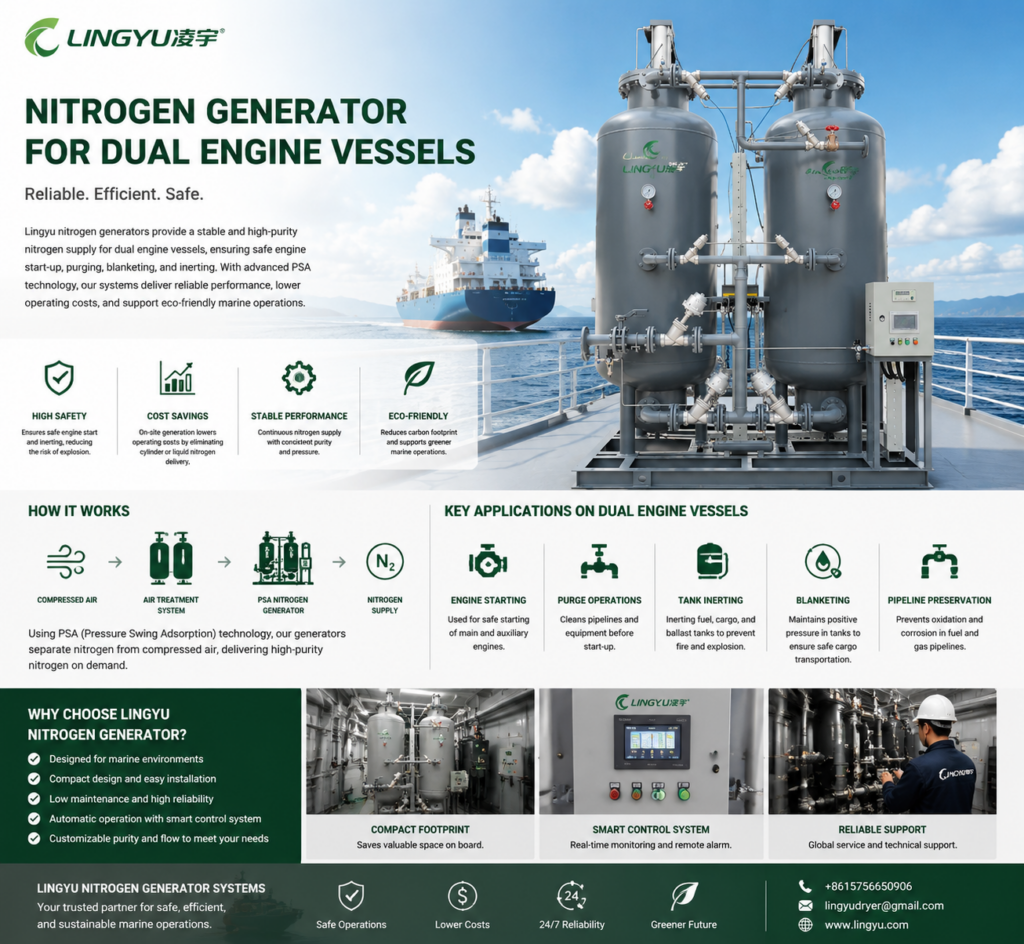
How Does an Onboard PSA Nitrogen Generator Work?
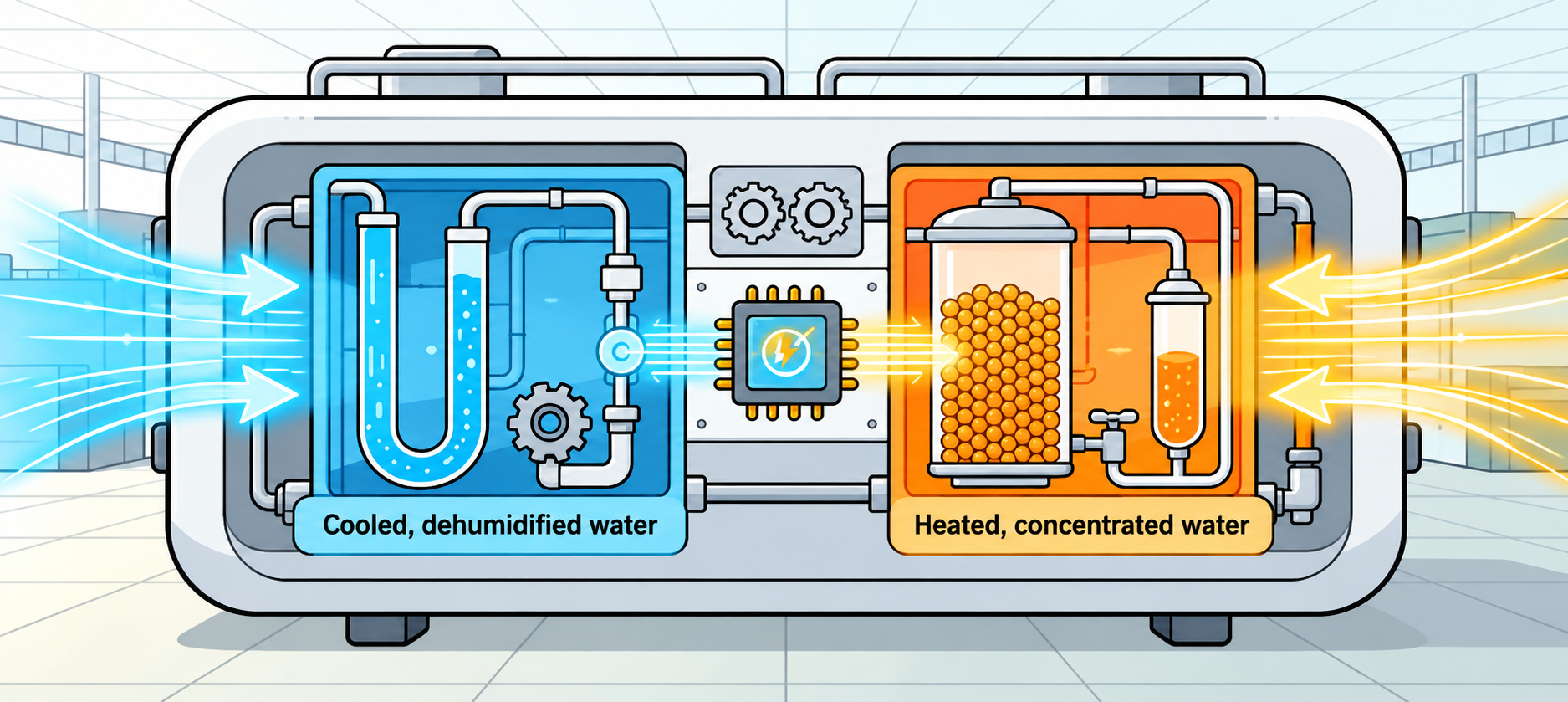
A PSA nitrogen generator uses compressed air as the feed gas and separates nitrogen from oxygen using Carbon Molecular Sieve, or CMS.
The process is based on Pressure Swing Adsorption and normally uses two adsorption vessels that alternate between nitrogen production and regeneration.
1. Compressed-Air Supply
The nitrogen generator first requires a stable supply of compressed air.
For Lingyu’s PSA nitrogen generator, the standard operating conditions include:
- Inlet air pressure: 0.5–0.8 MPa
- Inlet air temperature: ≤40°C
- Ambient temperature: ≤40°C
These conditions are important because nitrogen-generation capacity and purity depend on the quality and condition of the feed air.
2. Compressed-Air Treatment
Before air enters the adsorption towers, it should be properly treated.
Water, oil, and particulates can affect valves, Carbon Molecular Sieve, and overall separation performance.
A typical treatment train can therefore include:
- Moisture separation
- Compressed-air drying
- Oil removal
- Particulate filtration
Precision compressed-air filters can be arranged in different filtration stages according to particle- and oil-removal requirements.
For a broader explanation of upstream treatment, see the core components of compressed air purification.
3. PSA Nitrogen Separation
The PSA generator contains two pressure vessels filled with Carbon Molecular Sieve.
Compressed air enters one adsorption tower. The CMS preferentially adsorbs oxygen while nitrogen passes through the bed as product gas.
At the same time, the second tower depressurizes and regenerates.
Once the first tower reaches its predetermined adsorption capacity, the control system switches the towers. The second tower begins producing nitrogen while the first regenerates.
This alternating process allows continuous nitrogen production under automatic PLC control.
For a deeper explanation of the separation process, see how PSA nitrogen generation uses Carbon Molecular Sieve.
4. Nitrogen Monitoring and Control
Stable nitrogen quality is particularly important in unattended or continuously operated systems.
Lingyu’s PSA system can incorporate:
- Automatic operating-cycle switching
- PLC-controlled pneumatic valves
- Real-time nitrogen purity monitoring
- Real-time flow monitoring
- Off-spec nitrogen alarm and protection
- Automatic CMS compaction
- Touchscreen monitoring of pressure, purity, flow, and operating status
These functions help operators identify abnormal conditions before off-spec nitrogen is supplied downstream.
5. Nitrogen Storage and Distribution
Depending on system design, generated nitrogen may be sent directly to the point of use or stored in a receiver to provide buffering.
A receiver can help balance short-term changes between generator output and nitrogen demand.
Storage volume and distribution pressure should be determined according to the vessel’s actual nitrogen-consumption profile rather than using a universal tank size.
What Nitrogen Purity Can a PSA System Provide?
Lingyu’s PSA nitrogen generator provides a nitrogen purity range of 95%–99.999%.
Different purity levels require different amounts of feed air and affect nitrogen recovery and operating efficiency.
For many inerting applications, unnecessarily high purity may increase system size and compressed-air consumption without providing an operational benefit.
Therefore, purity should be selected according to the required oxygen concentration at the point of use.
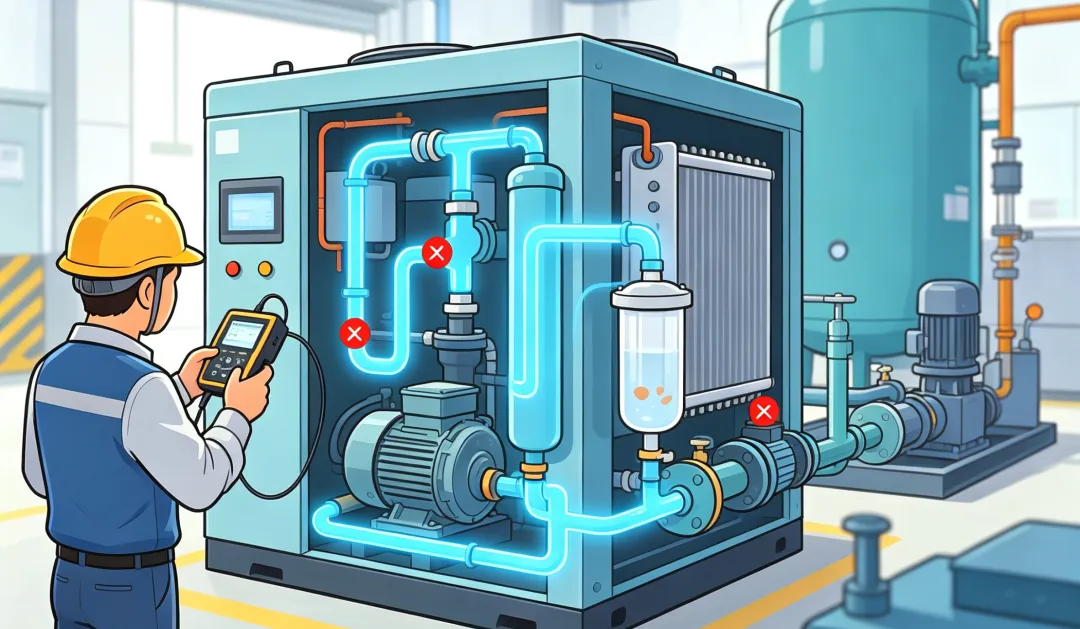
Why Feed-Air Quality Matters at Sea
A PSA nitrogen generator is only as reliable as the compressed air supplied to it.
Marine environments can involve high humidity, temperature variation, continuous operating schedules, and limited maintenance access.
If excessive moisture or oil enters the adsorption system, nitrogen-production stability can deteriorate.
Important feed-air parameters to monitor include:
- Compressor discharge condition
- Inlet pressure
- Inlet temperature
- Dryer performance
- Filter differential pressure
- Condensate drainage
- Oil carryover
The PSA nitrogen generator operating specification includes a nitrogen dew point of ≤−40°C.
Properly designed upstream compressed-air treatment is therefore an important part of stable nitrogen generation.
Key Advantages of Onboard Nitrogen Generation
Continuous Nitrogen Availability
An onboard PSA system can generate nitrogen whenever suitable compressed air and electrical power are available.
This reduces dependence on replenishing nitrogen cylinders at port.
Adjustable Purity
The generator can be selected according to actual purity requirements instead of automatically producing the highest possible purity.
A nitrogen purity range of 95%–99.999% allows system selection to be matched more closely to the application.
Automated Operation
PLC-controlled tower switching, purity monitoring, flow monitoring, alarms, and automatic protection help reduce routine manual intervention.
Continuous Production
Twin adsorption towers operate alternately, so one tower can adsorb while the other regenerates.
This enables continuous nitrogen output rather than batch-only production.
Reduced Dependence on External Nitrogen Supply
Producing nitrogen from compressed air can reduce logistical dependence on bottled nitrogen delivery, especially during long voyages or operations far from shore.
What Should Be Considered When Selecting a Marine Nitrogen Generator?
A marine nitrogen system should be sized according to actual vessel operating requirements rather than engine count alone.
Required Nitrogen Purity
Determine the maximum allowable oxygen content at the point of use first.
Do not select 99.999% nitrogen unless the process actually requires it.
Nitrogen Flow Rate
Calculate:
- Normal consumption
- Peak consumption
- Purging demand
- Simultaneous users
- Future expansion
The generator should be sized according to the highest realistic operating requirement.
Available Compressed Air
The feed-air system must provide sufficient pressure and flow without interfering with other onboard compressed-air users.
Lingyu’s standard PSA operating range specifies 0.5–0.8 MPa feed-air pressure.
Feed-Air Temperature
Excessive feed temperature can affect adsorption performance.
The specified inlet air temperature is ≤40°C.
Installation Space
Vessel machinery rooms often have limited installation space, so equipment dimensions, access clearance, receiver arrangement, filtration, and piping layout should be considered early in the design.
Controls and Monitoring
For marine operation, useful functions can include:
- Purity display
- Flow monitoring
- Pressure monitoring
- Alarm output
- Automatic shutdown protection
- PLC communication
- Remote status integration
The final monitoring and communication configuration should be selected according to the vessel’s automation requirements.
High-Purity Nitrogen Options
For applications requiring exceptionally low residual oxygen, standard PSA nitrogen can be followed by an additional purification stage.
A carbon-based deoxygenation purification system can upgrade approximately 99.9% nitrogen to ≥99.999%, reducing residual oxygen through further purification.
This is technically different from assuming that every PSA system should operate at the highest available purity.
Where very high purity is genuinely required, the complete nitrogen-generation and purification route should therefore be evaluated according to the application.
Maintenance Priorities for an Onboard PSA Nitrogen System
Reliable onboard operation depends heavily on routine inspection.
Operators should regularly check:
- Feed-air quality
- Dryer performance
- Filter condition
- Condensate drains
- Pneumatic valves
- Pressure readings
- Nitrogen purity
- Nitrogen flow
- Alarms
- CMS condition
Lingyu’s PSA system includes automatic CMS compaction to help maintain packing density and reduce pulverization caused by bed movement.
Trend records for purity, flow, pressure, and operating hours can also help identify gradual performance deterioration before it causes an interruption.
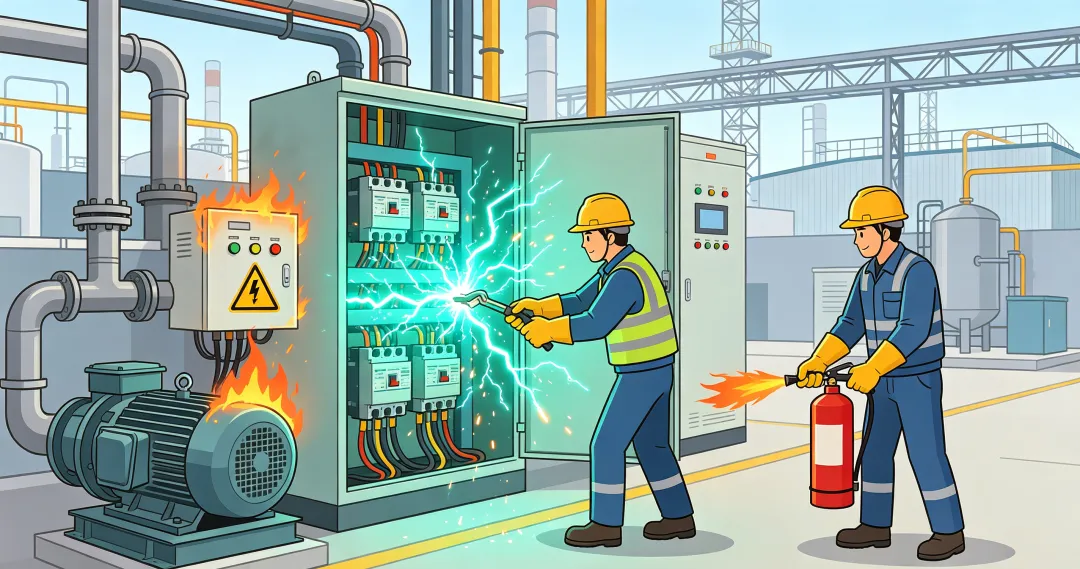
Marine Safety and Compliance Considerations
Nitrogen is widely used in inerting applications, but marine-system compliance must be evaluated for the specific vessel, equipment configuration, and intended function.
Relevant considerations can include:
- Vessel type
- Flag-state requirements
- Classification-society rules
- Applicable IMO requirements
- Fuel or cargo type
- Hazardous-area classification
- Actual nitrogen-system function
Required marine certification and approvals should be confirmed for the specific project and equipment configuration before installation.
A generic claim that a nitrogen generator is automatically compliant with every marine requirement should not replace project-specific engineering and certification review.
Why Consider Lingyu for an Onboard Nitrogen System?
Lingyu’s PSA nitrogen-generator platform uses Carbon Molecular Sieve and twin adsorption towers to provide continuous nitrogen production.
Key operating parameters include:
- Nitrogen purity: 95%–99.999%
- Inlet air pressure: 0.5–0.8 MPa
- Inlet air temperature: ≤40°C
- Ambient temperature: ≤40°C
- Nitrogen dew point: ≤−40°C
The system uses automatic PLC-based operation and can monitor nitrogen purity, flow, pressure, and operating status while providing alarm and protection functions.
For users comparing equipment configurations, Lingyu’s PSA nitrogen generator solutions provide a direct entry point for nitrogen-generation equipment.
Conclusion
A nitrogen generator for dual engine vessels can provide a continuous onboard source of nitrogen for applications requiring a controlled low-oxygen atmosphere.
For reliable operation, the system should be selected according to required nitrogen purity, flow demand, available compressed air, inlet temperature, storage requirements, control strategy, installation space, and applicable marine requirements.
Lingyu’s PSA nitrogen-generation technology uses Carbon Molecular Sieve, twin adsorption towers, automatic PLC control, and real-time purity and flow monitoring to provide nitrogen at selectable purity levels from 95% to 99.999%.
For a specific vessel project, the final system configuration should be engineered around actual nitrogen demand and onboard operating conditions rather than assuming that every marine application requires the same purity, capacity, or compliance specification.
For project-specific sizing and technical requirements, contact Lingyu.