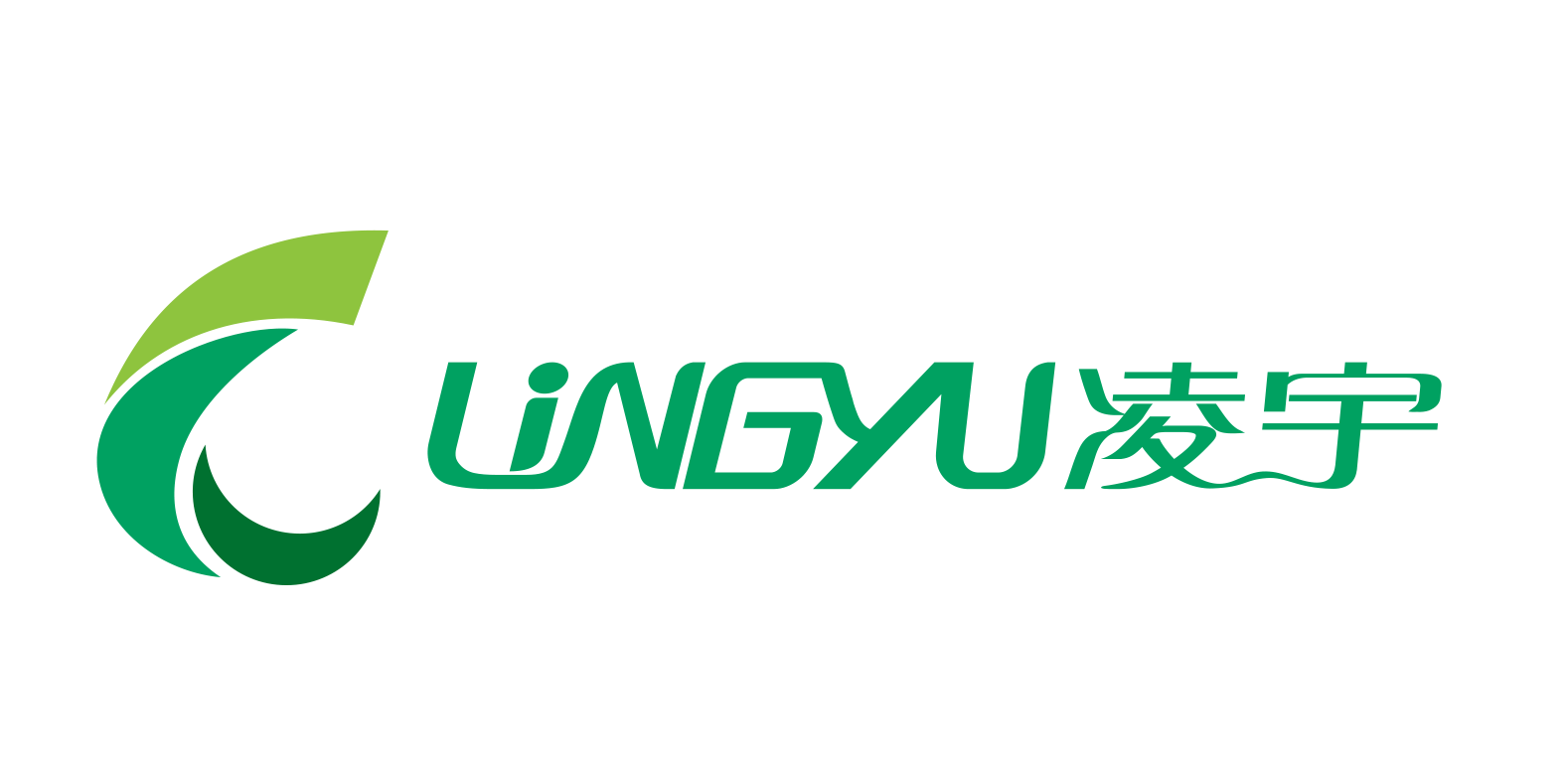
In modern food manufacturing, maintaining freshness, appearance, flavor, and consistent product quality is an important production objective. Nitrogen is widely used in food processing and packaging because it can help create a low-oxygen environment around products and reduce unwanted oxidation in suitable applications.
A nitrogen generator for a food production factory allows manufacturers to produce nitrogen on site from compressed air. Instead of relying entirely on cylinders or bulk gas deliveries, factories can generate nitrogen according to their production schedule and consumption requirements.
For a broader overview of compressed-air and gas-treatment requirements in this sector, see Lingyu’s food and beverage applications.
Why Nitrogen Is Important in Food Production
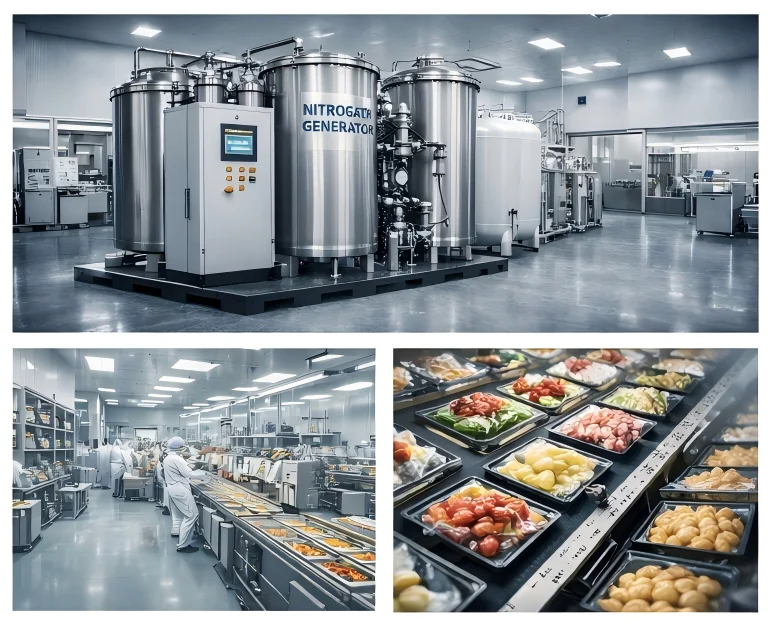
Oxygen exposure can contribute to changes in food color, flavor, aroma, and other quality characteristics. In suitable processes, nitrogen can be used to displace or reduce oxygen around a product, helping create a more controlled processing, storage, or packaging environment.
Potential benefits can include:
- Reduced oxidation
- Better protection of product appearance and flavor
- Improved packaging consistency
- Protection of oxygen-sensitive products
- More controlled storage conditions
- Reduced oxygen concentration inside packages or tank headspaces
The actual effect depends on the food product, packaging material, residual oxygen target, storage conditions, temperature, and overall process design.
For a more focused explanation of this application, see how nitrogen supports food preservation and shelf-life protection.
What Is a Nitrogen Generator for a Food Production Factory?
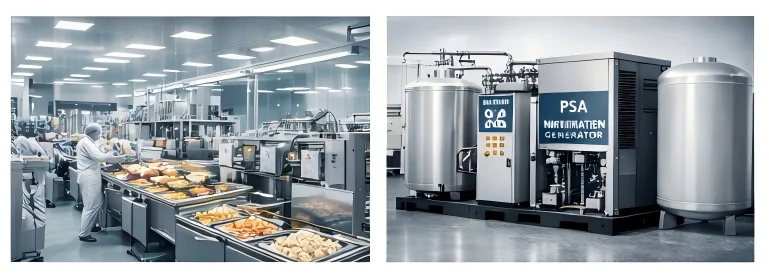
A nitrogen generator is an on-site gas-production system that separates nitrogen from compressed air and supplies it to food-processing, packaging, storage, or other suitable production equipment.
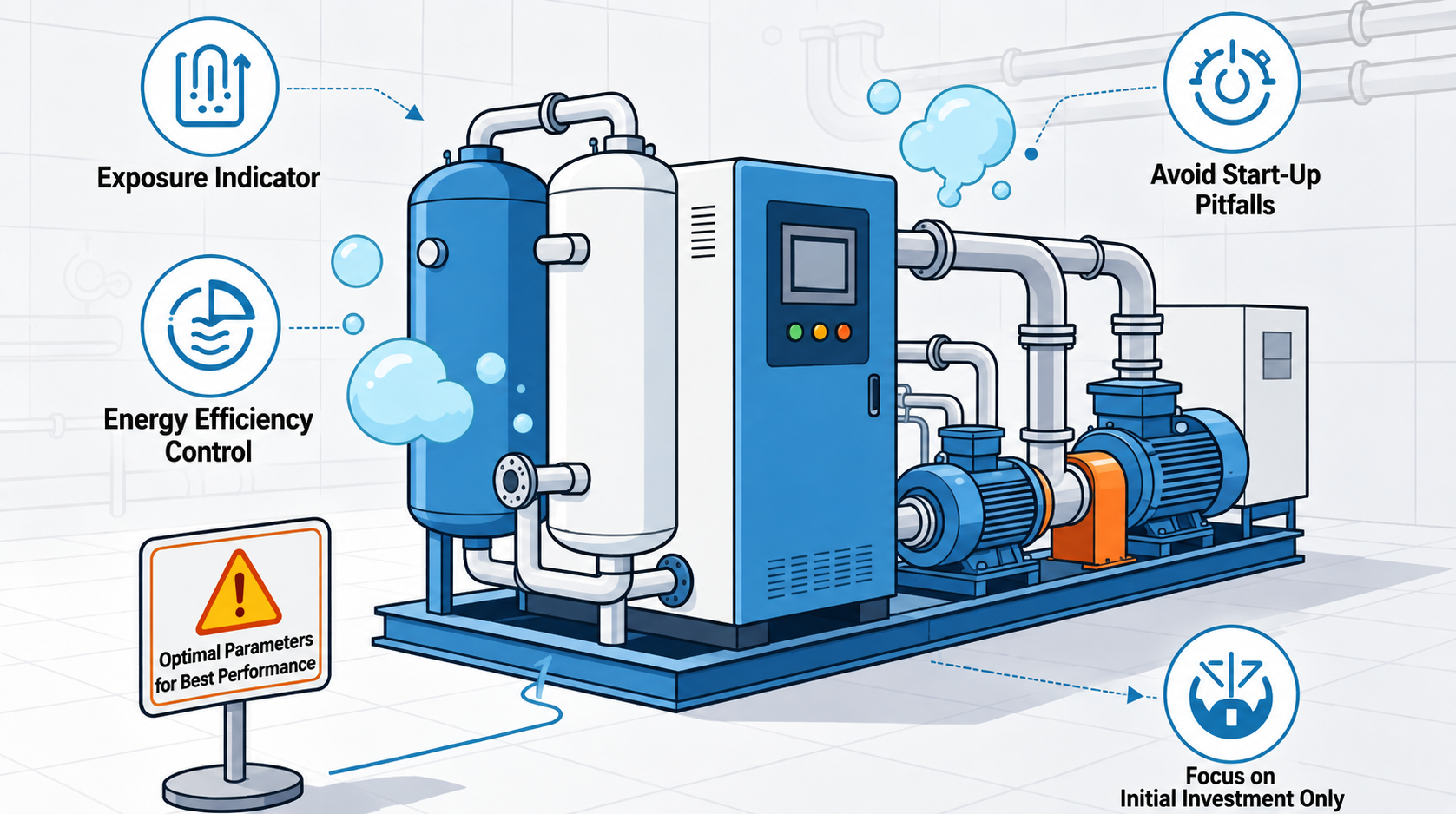
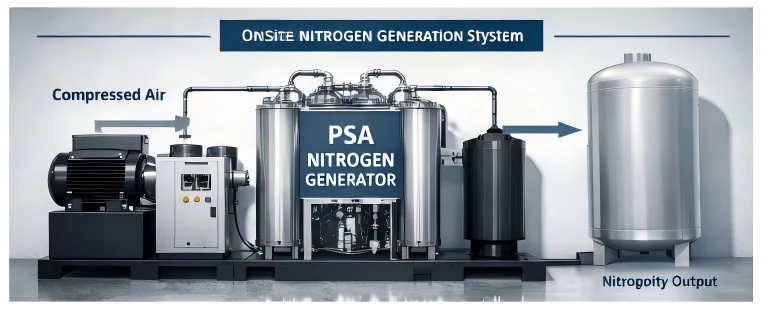
A typical system may include:
- Air compressor
- Air receiver
- Compressed-air dryer
- Filtration system
- PSA nitrogen generator
- Nitrogen buffer tank
- Gas analyzer
- Pressure-control equipment
- Distribution piping
Rather than viewing the nitrogen generator as a standalone machine, food manufacturers should consider the complete system from compressed-air generation and treatment through nitrogen storage and point-of-use delivery.
Lingyu’s PSA nitrogen generator can be configured for different nitrogen purity and production-capacity requirements.
How PSA Nitrogen Generation Works
Lingyu’s industrial nitrogen generation systems use Pressure Swing Adsorption (PSA) technology.
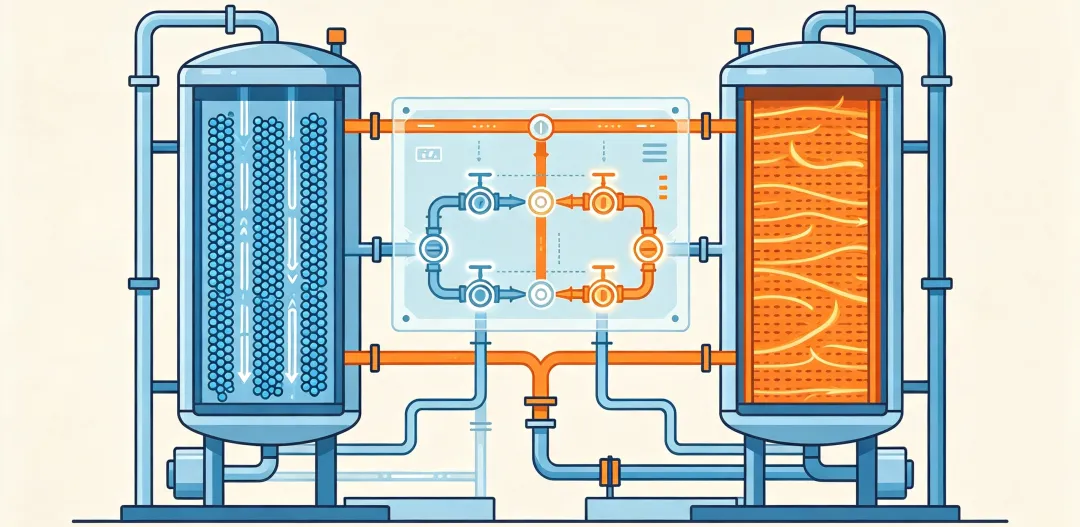
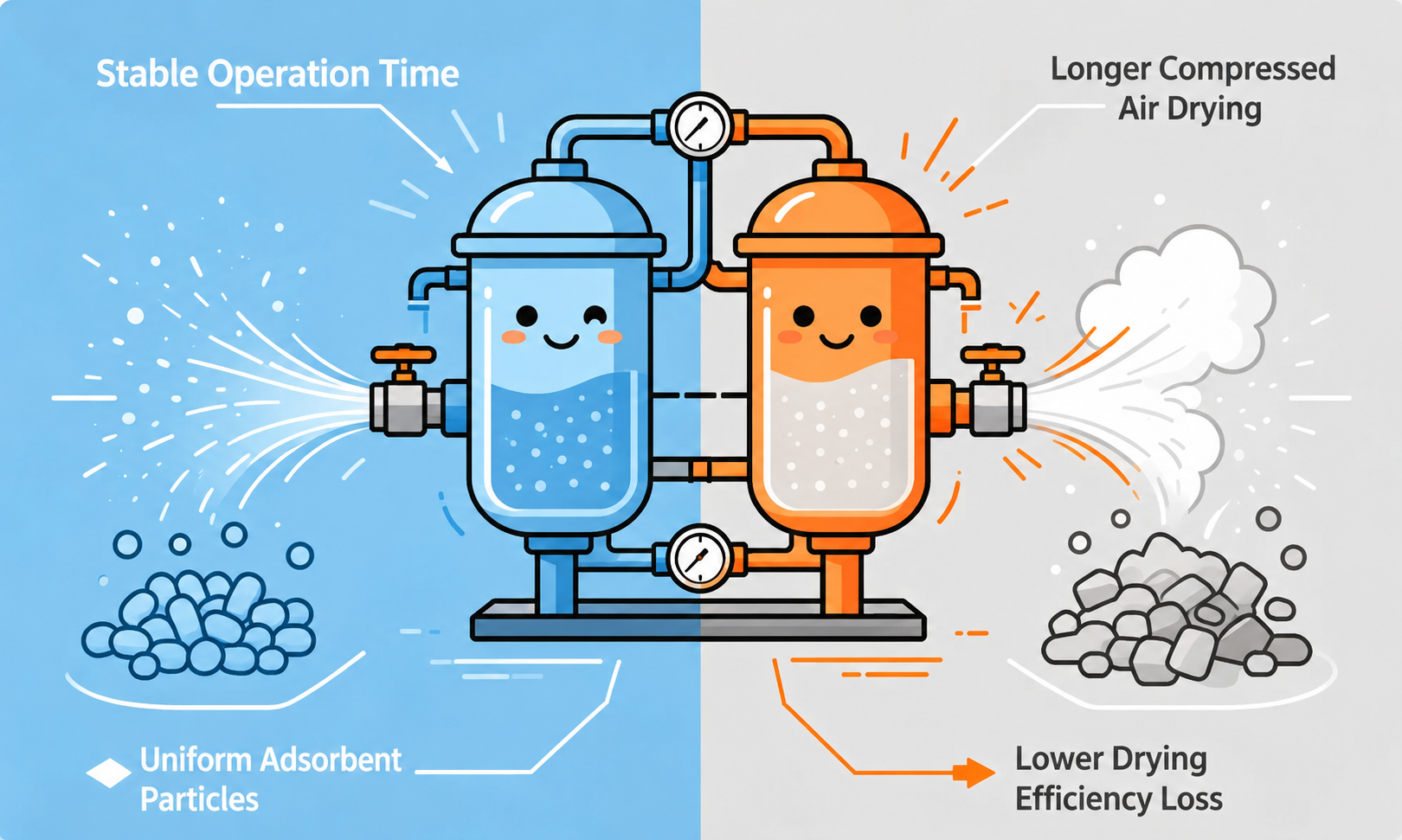
Inside the PSA generator, two adsorption towers are filled with Carbon Molecular Sieve (CMS). Conditioned compressed air enters one tower, where oxygen is preferentially adsorbed by the CMS while nitrogen passes through as product gas.
While one tower produces nitrogen, the other depressurizes and regenerates. The towers alternate automatically to maintain continuous nitrogen production.
Depending on system configuration, monitoring and control functions may include nitrogen purity measurement, flow monitoring, PLC-based operation, alarms, and off-spec gas handling.
For a deeper technical explanation, see how PSA nitrogen generation works.
Common Applications of Nitrogen in Food Factories
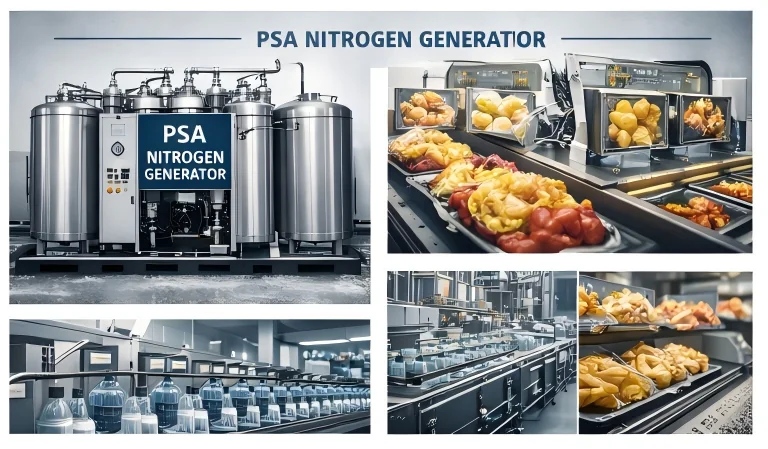
Modified Atmosphere Packaging
Modified Atmosphere Packaging, or MAP, uses a controlled gas composition inside a package instead of leaving ordinary atmospheric air around the food.
Nitrogen can be used as part of a gas mixture or as a flushing gas to reduce oxygen concentration.
This approach can be useful for packaged foods where oxidation, package stability, or shelf-life management is important.
The required nitrogen purity and gas composition should be determined according to the product, target residual oxygen level, packaging equipment, and process requirements rather than applying one specification to every MAP application.
Snack, Nut, and Bakery Packaging
Products such as chips, nuts, crackers, and selected bakery goods can be sensitive to oxidation and environmental exposure.
Nitrogen flushing can help reduce oxygen inside the package while providing a controlled package atmosphere.
For high-speed packaging lines, generator sizing should account not only for average nitrogen consumption but also for short-duration flow requirements during filling and flushing cycles.
Where several packaging machines operate simultaneously, peak gas demand can be considerably higher than the average consumption of an individual line.
Edible Oil and Liquid Food Storage
Nitrogen can be introduced into the headspace of storage tanks to reduce contact between the product and atmospheric oxygen.
This type of blanketing may be useful for oxidation-sensitive liquids such as edible oils and selected liquid-food or beverage processes.
When designing a blanketing system, engineers should consider:
- Tank volume
- Filling rate
- Emptying rate
- Operating pressure
- Target oxygen concentration
- Nitrogen flow requirements
- Venting and pressure-control arrangements
The generator should therefore be sized according to actual tank operating conditions rather than tank volume alone.
Beverage Processing
Nitrogen may also be used in selected beverage-production operations for blanketing, packaging, process support, or controlled pressurization.
Because beverage processes vary considerably, nitrogen purity, pressure, flow, and gas quality should be matched to the actual production equipment and product requirements.
For a more specific example in this sector, see Lingyu’s nitrogen generator application for beer and beverage production.
How Pure Should Nitrogen Be for Food Production?
There is no single nitrogen purity that is correct for every food factory or packaging process.
The required level can depend on factors such as:
- Food type
- Product sensitivity to oxygen
- Packaging process
- Target residual oxygen
- Storage period
- Filling speed
- Gas consumption
- Quality-control requirements
Lingyu’s PSA nitrogen generator range includes configurations covering different nitrogen purity requirements.
The important point is that higher purity should not automatically be specified unless the process requires it.
Increasing nitrogen purity can affect nitrogen recovery, available generator capacity, and compressed-air consumption. Unnecessarily specifying very high purity may therefore increase system size or operating cost without providing a corresponding process benefit.
For production lines where this purity level matches the actual requirement, a 99.5% nitrogen generator may be considered.
The final specification should be matched to the actual packaging process, acceptable residual oxygen level, product requirements, and applicable quality procedures.
Flow Rate and Peak Gas Demand
Correct nitrogen generator sizing requires more than knowing the target purity.
Food packaging lines frequently have intermittent or rapidly changing gas demand. Multiple packaging machines may also consume nitrogen simultaneously.
When selecting a system, determine:
- Average nitrogen consumption
- Peak nitrogen consumption
- Number of packaging machines
- Simultaneous operating rate
- Production shifts per day
- Packaging cycle characteristics
- Planned future expansion
A nitrogen buffer tank can help accommodate short-duration demand peaks while allowing the nitrogen generator to operate at a more stable production rate.
This can be particularly important in factories where several packaging or processing lines share one nitrogen system.
Why Compressed-Air Quality Matters
A PSA nitrogen generator depends on compressed air as its feed gas.
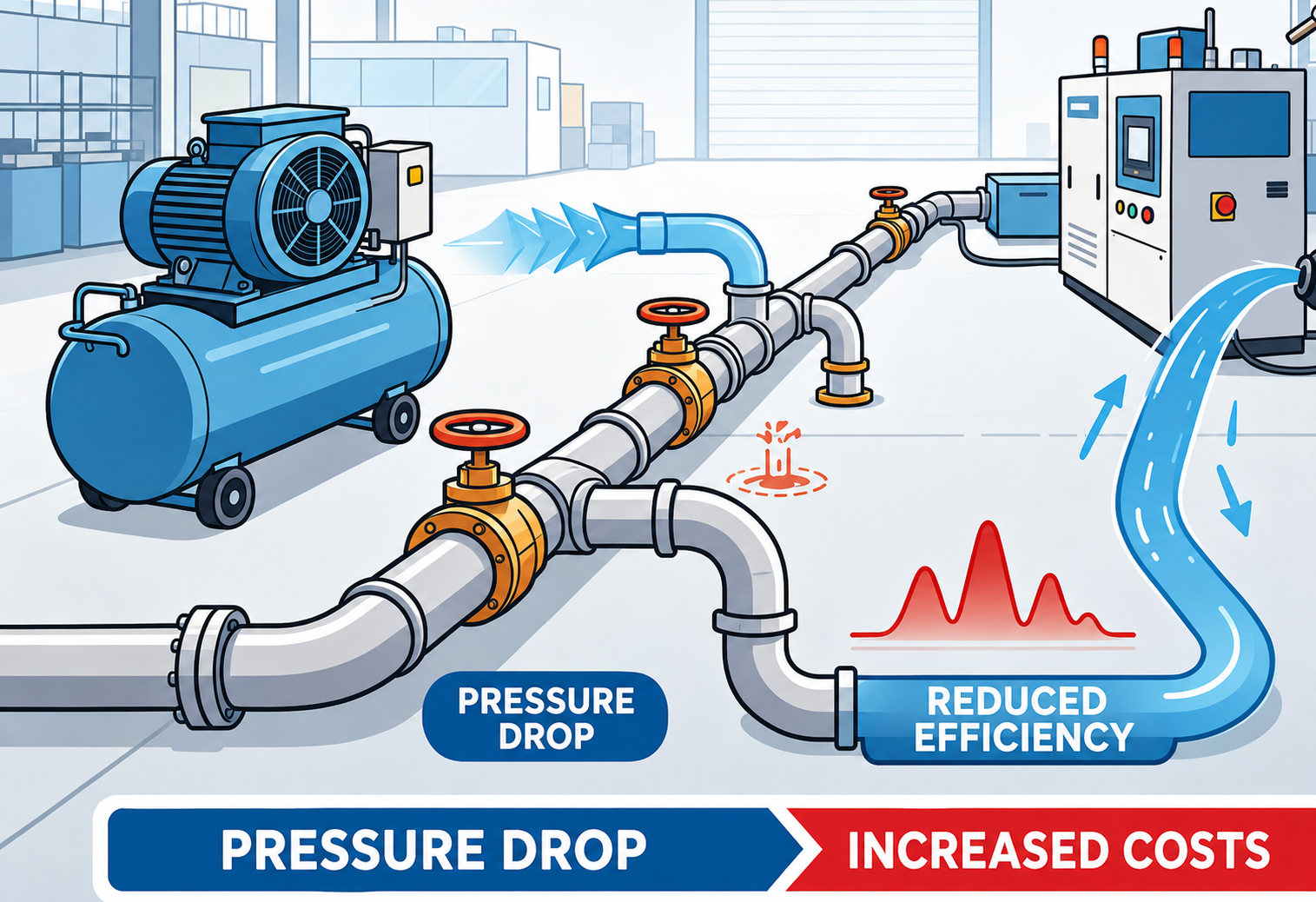
Moisture, oil, and particulate contamination can affect filters, pneumatic valves, CMS, analyzers, piping, and overall system reliability. Proper compressed-air pretreatment is therefore an important part of the nitrogen-generation system.
Depending on inlet-air conditions and the selected system, treatment may include:
- Air separation or moisture removal
- Compressed-air drying
- Pre-filtration
- Oil-removal filtration
- Fine particulate filtration
A suitable precision compressed-air filter can form part of this upstream air-treatment arrangement.
Lingyu’s standard PSA operating conditions include an inlet-air pressure range of approximately 0.5–0.8 MPa, a maximum inlet temperature of approximately 40°C, and nitrogen dew-point performance reaching approximately −40°C or lower under specified conditions.
These operating values should be matched to the actual site and downstream process requirements during system selection.
Gas Quality Monitoring Is Important
For food-production environments, maintaining the required gas quality throughout operation is more important than simply achieving the target purity during initial commissioning.
A nitrogen system should therefore provide suitable monitoring and process controls according to the application.
Depending on configuration, these functions may include:
- Nitrogen purity monitoring
- Nitrogen flow monitoring
- Pressure monitoring
- Operating-status display
- Alarm functions
- Off-spec nitrogen handling
- PLC-based automatic operation
These functions allow operators to determine whether the nitrogen-generation system remains within the required operating conditions.
Where product quality depends on maintaining a specified residual oxygen level, the system’s response to off-spec nitrogen should be considered during system design.
Food-Grade Nitrogen: A Specification That Requires Care
The phrase “food-grade nitrogen” should not be treated as meaning only a particular percentage of nitrogen purity.
Nitrogen purity describes the concentration of nitrogen, but food-related gas suitability can also depend on contamination control, gas quality, production practices, and applicable regulatory or customer requirements.
Depending on the application and jurisdiction, system evaluation may need to consider:
- Nitrogen purity
- Residual oxygen
- Moisture
- Oil contamination
- Particulate contamination
- Filtration
- Materials exposed to the gas stream
- Gas-quality verification
- Applicable food-production requirements
Therefore, instead of asking only whether a nitrogen generator is “food grade,” buyers should define the required gas specification and identify any applicable regulatory, customer, or factory quality requirements.
A nitrogen generator’s stated purity alone does not establish compliance with every food-contact or food-processing standard.
Advantages of On-Site Nitrogen Generation
For food-production facilities with regular nitrogen demand, on-site generation can provide several operational advantages.
Continuous Nitrogen Availability
Nitrogen can be produced according to the plant’s production schedule, reducing dependence on cylinder replacement or external delivery timing.
Reduced Gas Logistics
On-site generation can reduce cylinder handling, transportation, and some storage requirements associated with delivered gas.
Greater Control of Nitrogen Supply
Factories can monitor nitrogen production and relevant operating parameters directly at the facility.
Flexible Capacity Planning
Generator capacity and nitrogen storage can be sized around packaging lines, production shifts, peak demand, and expected expansion.
Potential Operating-Cost Benefits
For facilities with sufficiently regular nitrogen consumption, on-site generation may reduce some recurring logistics and supply costs associated with delivered gas.
However, an economic advantage should not be assumed for every factory. The result depends on nitrogen consumption, required purity, compressed-air use, electricity cost, maintenance, operating hours, and the cost of alternative supply methods.
On-Site Generation vs. Delivered Nitrogen
On-site nitrogen generation is not automatically the best option for every food-production facility.
Low-volume or occasional users may find cylinders practical, while larger facilities may already have suitable bulk-gas infrastructure.
A meaningful comparison should include:
- Annual nitrogen consumption
- Required purity
- Required pressure
- Delivered gas price
- Cylinder rental or bulk-storage charges
- Delivery and logistics costs
- Compressor energy consumption
- Dryer and filter maintenance
- Nitrogen generator maintenance
- Storage requirements
- Expected operating hours
The decision should be based on the long-term cost of usable nitrogen at the point of use rather than only the initial equipment price.
For a wider engineering framework covering purity, flow, pressure, compressed-air demand, and system sizing, see the nitrogen generator specification guide.
What to Consider Before Selecting a Food-Factory Nitrogen Generator
Before requesting a quotation, a food manufacturer should ideally define:
- Required nitrogen purity or maximum residual oxygen
- Average nitrogen consumption
- Peak nitrogen consumption
- Required outlet pressure
- Number of production or packaging lines
- Operating hours
- Existing compressor capacity
- Compressed-air quality
- Required nitrogen dew point
- Site temperature
- Installation conditions
- Applicable product or quality requirements
- Expected future expansion
These values provide a much better basis for sizing the nitrogen generator, compressed-air treatment equipment, storage capacity, controls, and distribution system.
Higher purity or greater generator capacity should not be selected automatically. The objective is to supply the required nitrogen quality and quantity under actual operating conditions.
System Reliability and Maintenance
Food-production lines can operate continuously or on tightly scheduled production shifts, so system reliability should be considered during equipment selection.
Routine maintenance can include:
- Filter-element replacement
- Drain inspection
- Valve inspection
- Gas-analyzer calibration
- CMS condition checks
- Air-dryer maintenance
- Pressure-instrument inspection
- Flow-instrument inspection
Upstream compressed-air treatment should be maintained as part of the complete nitrogen system rather than treated as unrelated equipment.
Preventive maintenance helps support consistent nitrogen quality and reduce the risk of unexpected production interruptions.
Conclusion
A nitrogen generator for a food production factory can provide an on-site nitrogen source for packaging, blanketing, storage, beverage processing, and other suitable food-manufacturing applications.
However, the correct system should not be selected according to nitrogen purity alone.
Nitrogen purity, residual oxygen, peak flow, pressure, compressed-air capacity, air quality, filtration, storage, monitoring, process requirements, and operating conditions should all be evaluated together.
For many factories, the most suitable solution is not necessarily the system with the highest available nitrogen purity. It is the system that consistently provides the gas quality, flow, and pressure required by the actual food-production process while maintaining acceptable operating efficiency and lifecycle cost.
Explore Lingyu’s nitrogen generator range with your application, required nitrogen purity, flow rate, pressure, compressed-air conditions, and production schedule for system selection support.