In pharmaceutical and medicinal manufacturing, controlling oxygen exposure, moisture, and process conditions can be important for protecting sensitive materials and maintaining consistent production quality.
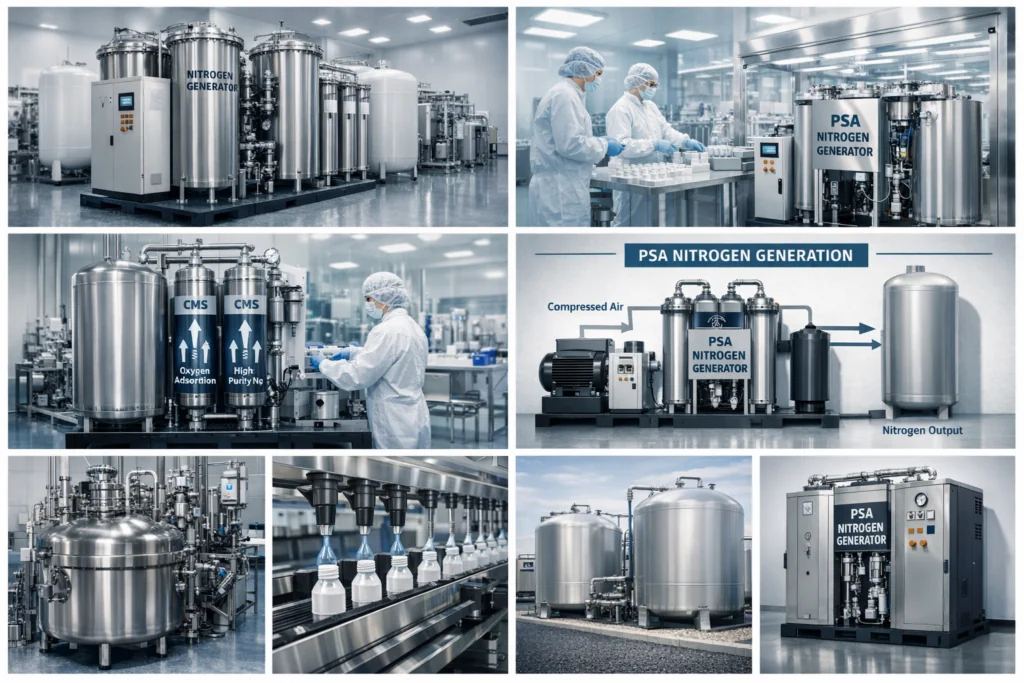
Nitrogen is widely used as an inert process gas in pharmaceutical manufacturing because it can help create a controlled, low-oxygen environment around oxygen-sensitive ingredients, process vessels, storage systems, and selected packaged products.
A nitrogen generator for pharmaceutical manufacturing enables facilities to produce nitrogen on site from compressed air rather than depending entirely on cylinders or bulk gas deliveries. When properly configured for purity, flow, pressure, dew point, and gas quality, an on-site system can provide a stable nitrogen supply for a range of pharmaceutical processes.
For more information about compressed-air and gas-treatment requirements in this sector, explore Lingyu’s pharmaceutical and biopharmaceutical applications.
Why Nitrogen Is Used in Pharmaceutical Manufacturing
Nitrogen is relatively inert under many common process conditions, making it useful where oxygen exposure needs to be reduced.
Depending on the application, nitrogen may be used to:
- Reduce oxidation of oxygen-sensitive materials
- Maintain a low-oxygen atmosphere inside process vessels
- Protect materials during storage and transfer
- Reduce oxygen concentration inside selected packages
- Support controlled process conditions
- Supply suitable laboratory and analytical equipment
Nitrogen itself, however, does not make a pharmaceutical process sterile.
Sterility, cleanliness, contamination control, and regulatory compliance depend on the complete manufacturing process, equipment design, filtration, qualification, validation, operating procedures, and applicable quality requirements. This distinction is particularly important in pharmaceutical applications.
What Is a Nitrogen Generator for Pharmaceutical Manufacturing?
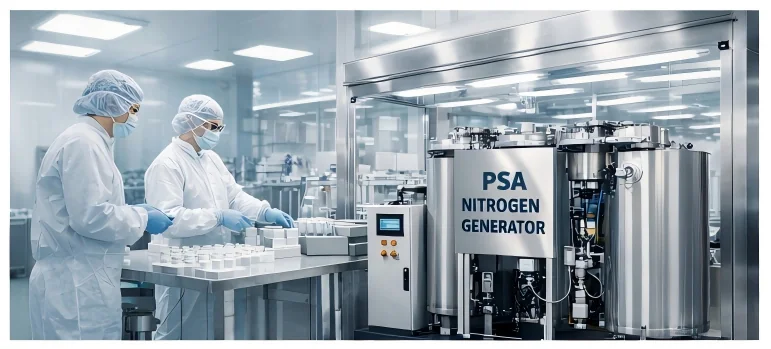
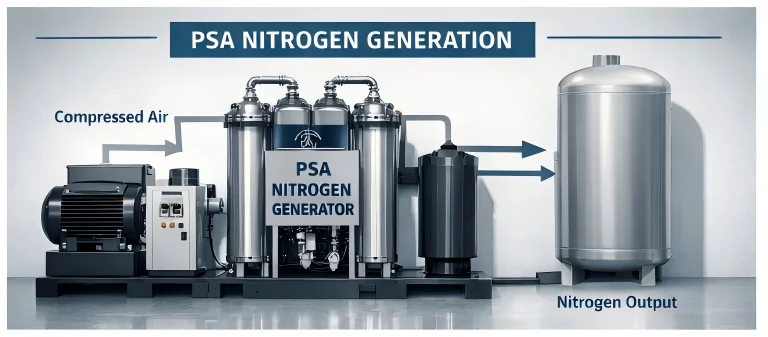
A nitrogen generator is an on-site gas-production system that separates nitrogen from compressed air and supplies it directly to the point of use.
A typical system may include:
- Air compressor
- Air receiver
- Compressed-air dryer
- Filtration stages
- PSA nitrogen generator
- Nitrogen buffer tank
- Gas analyzer
- Pressure-control equipment
- Distribution piping
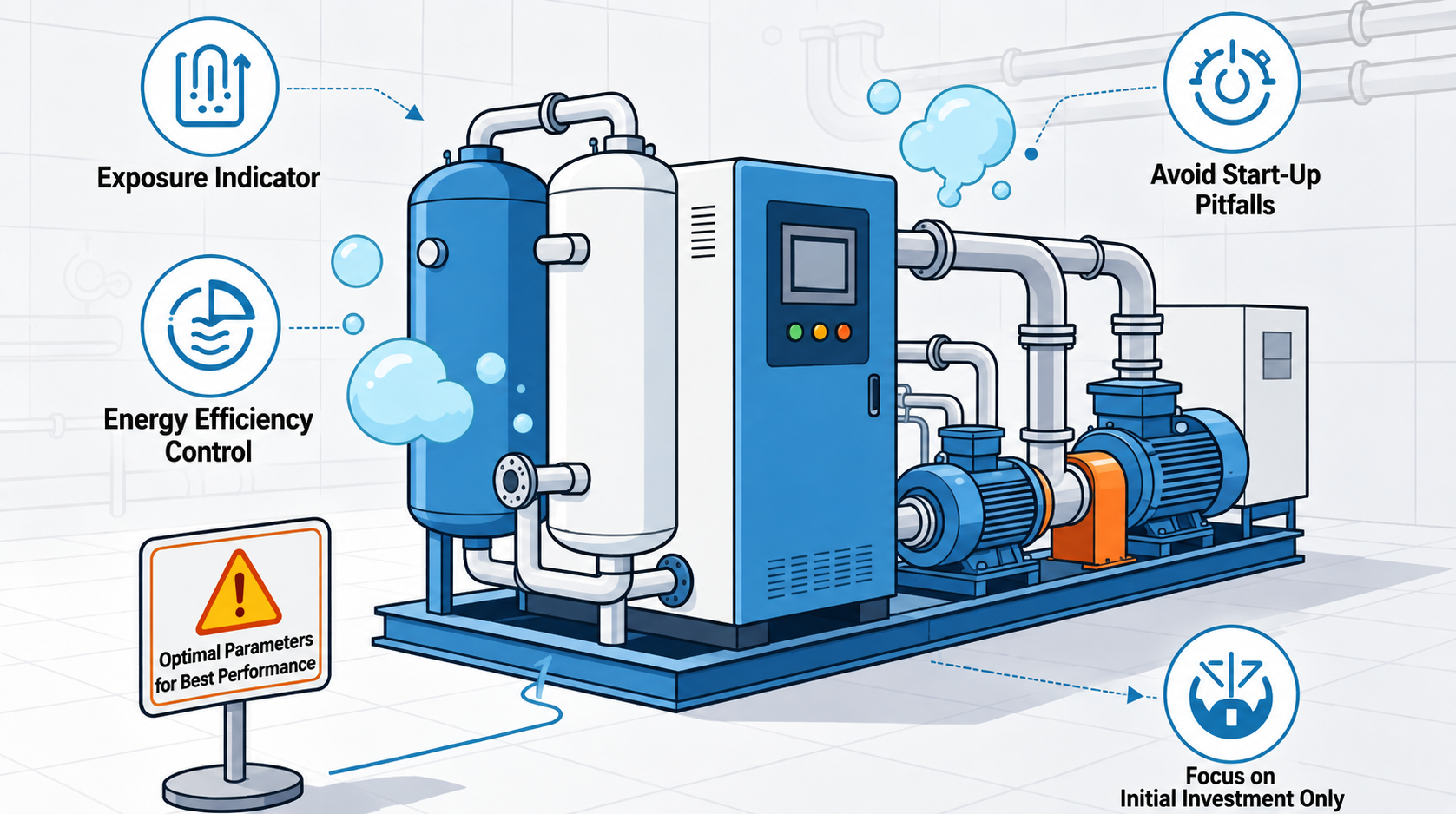
Rather than treating the nitrogen generator as a standalone unit, pharmaceutical manufacturers should evaluate the complete compressed-air-to-nitrogen system.
Lingyu’s PSA nitrogen generator can be configured for different nitrogen purity and production-capacity requirements.
How PSA Nitrogen Generation Works
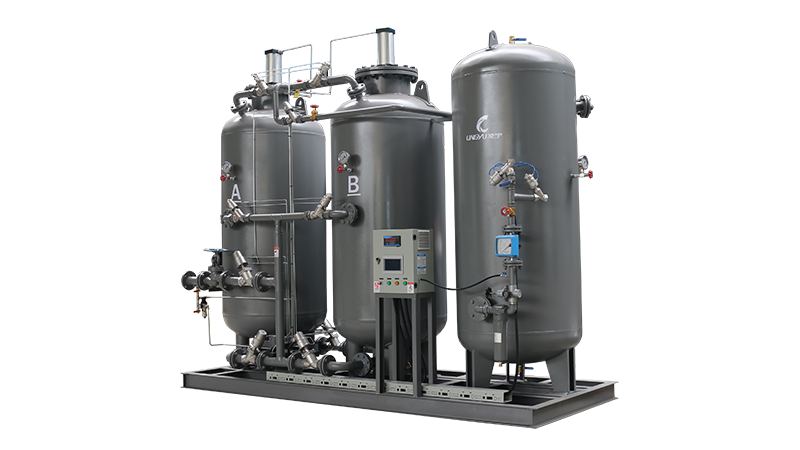
Lingyu’s nitrogen generation equipment uses Pressure Swing Adsorption (PSA) technology.
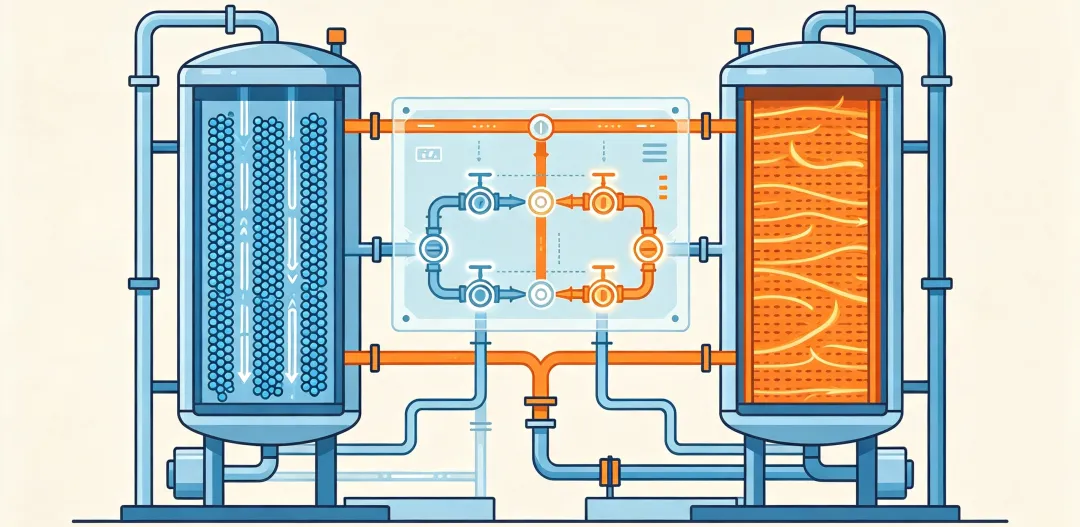
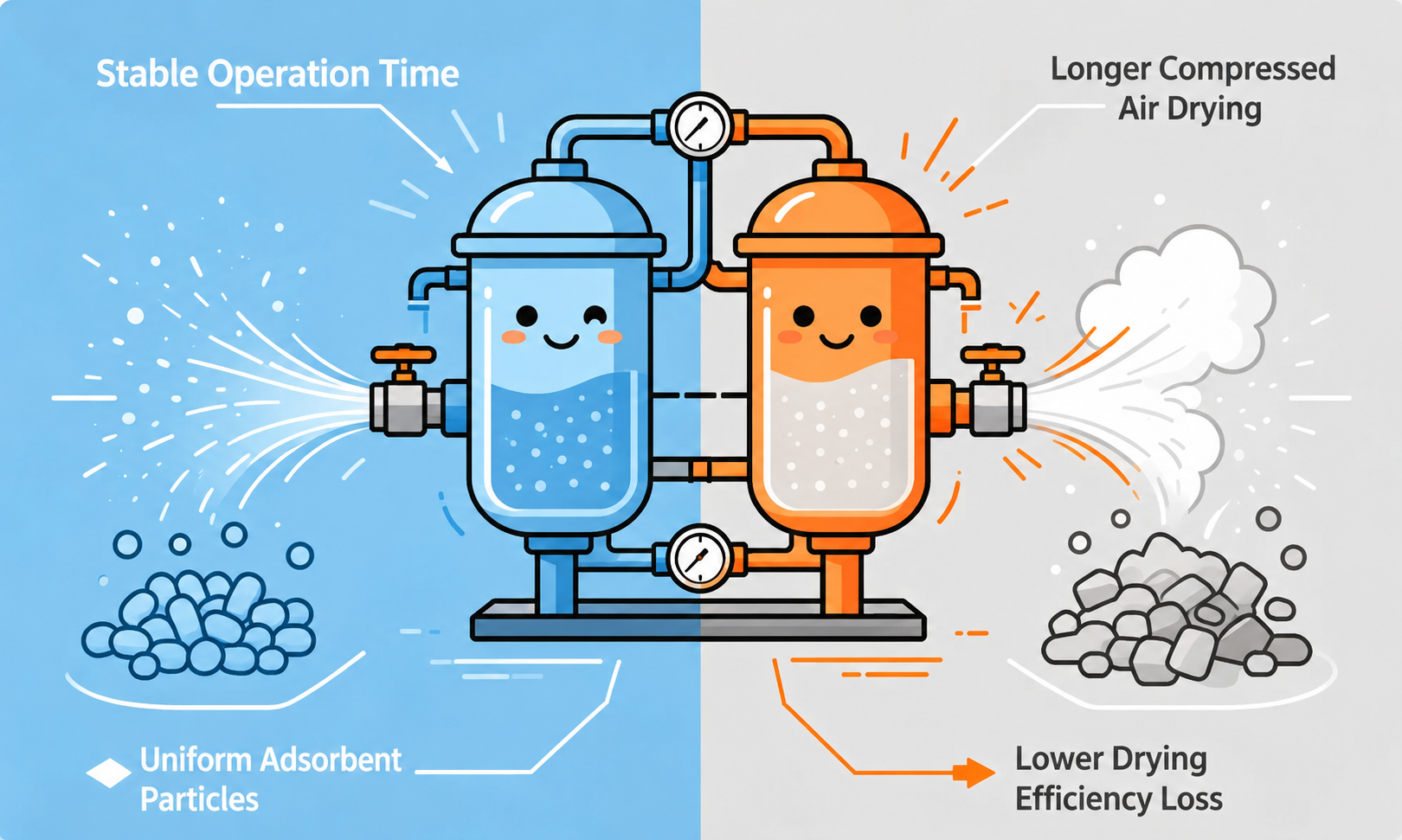
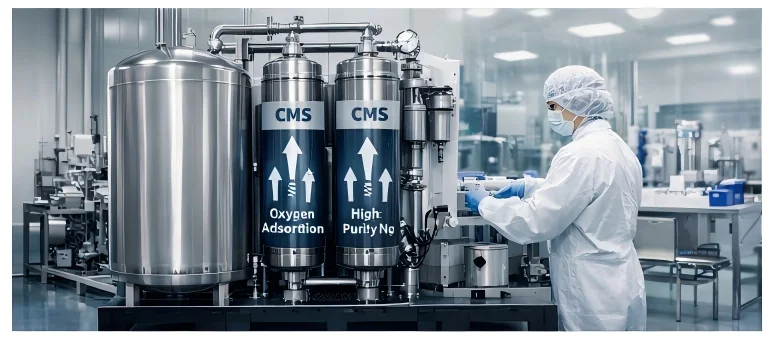
The PSA generator contains two adsorption towers filled with Carbon Molecular Sieve (CMS). Conditioned compressed air enters one tower, where oxygen is preferentially adsorbed while nitrogen passes through as product gas.
At the same time, the other tower depressurizes and regenerates. The two towers alternate automatically to maintain continuous nitrogen production.
Depending on the system configuration, monitoring and control functions may include nitrogen purity measurement, flow monitoring, PLC-based operation, alarms, and off-spec gas handling.
For a more detailed explanation of the separation principle, see how PSA nitrogen generation works.
Applications of Nitrogen in Pharmaceutical Manufacturing
API and Drug Production
Nitrogen can be used during selected chemical reactions and pharmaceutical manufacturing steps where reducing oxygen exposure helps limit unwanted oxidation or other oxygen-related reactions.
In these applications, the required nitrogen purity should be determined by the sensitivity of the process rather than by assuming that every API operation requires ultra-high-purity nitrogen.
Process chemistry, allowable residual oxygen, moisture requirements, pressure, and the facility’s quality specifications should all be considered.
Pharmaceutical Packaging
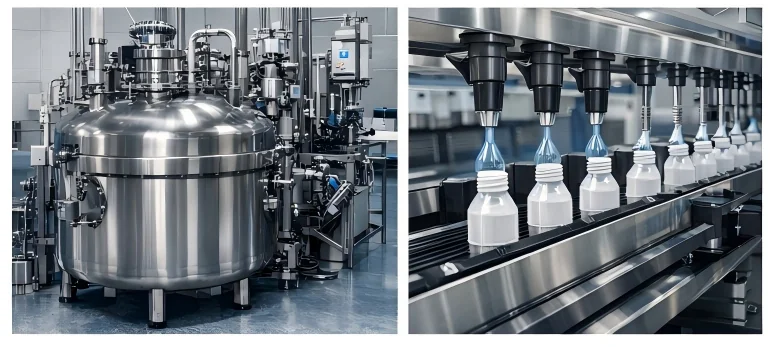
Nitrogen flushing can be used in selected pharmaceutical packaging processes to reduce the amount of oxygen remaining inside a package or container.
This can be relevant for oxygen-sensitive formulations or products whose stability may be affected by oxygen exposure.
The appropriate nitrogen specification depends on:
- Packaging system
- Product sensitivity
- Target residual oxygen
- Filling conditions
- Gas flow requirements
- Applicable quality requirements
Nitrogen purity should therefore be linked to the actual packaging process rather than selected as an isolated equipment specification.
Tank and Vessel Blanketing
Nitrogen blanketing can help maintain a controlled low-oxygen atmosphere in storage or process vessels.
It may be used during storage, transfer, mixing, or other suitable operations where limiting contact with atmospheric oxygen is beneficial.
System sizing should account for:
- Vessel volume
- Filling rate
- Emptying rate
- Operating pressure
- Required oxygen concentration
- Peak nitrogen flow
- Normal nitrogen consumption
The nitrogen generator should therefore be selected according to actual vessel operating conditions rather than vessel size alone.
Laboratory and Analytical Applications
Pharmaceutical laboratories may use nitrogen for selected analytical instruments, sample handling, evaporation, or controlled-atmosphere procedures.
Individual instruments can have very different requirements for gas purity, pressure, flow, moisture, and contamination levels. For this reason, the nitrogen supply should be matched to the equipment manufacturer’s specification.
For more information about this use case, explore Lingyu’s laboratory and analytical equipment applications.
How Pure Should Nitrogen Be for Pharmaceutical Production?
There is no single nitrogen purity that is correct for every pharmaceutical process.
Lingyu’s PSA nitrogen generator range covers different nitrogen purity requirements, including high-purity configurations.
The correct purity should be based on factors such as:
- Maximum allowable oxygen content
- Product sensitivity
- Process chemistry
- Packaging requirements
- Required dew point
- Downstream equipment requirements
- Internal quality specifications
Where a process requires very low residual oxygen, a 99.99% nitrogen generator may be one configuration to evaluate.
The key principle is to specify only the nitrogen purity actually required by the process.
Higher purity is not automatically preferable. Increasing purity can affect nitrogen recovery, generator capacity, compressed-air consumption, and overall operating cost.
Higher-Purity Nitrogen and Additional Purification
Some pharmaceutical processes may require gas quality beyond the standard output of a PSA nitrogen generator.
In such cases, downstream purification may be considered as part of the complete system. The purification stage should be selected according to a defined process specification rather than simply to achieve the highest possible nitrogen percentage.
Parameters such as residual oxygen, dew point, oil content, particles, and any applicable quality limits should be defined before selecting the purification method.
Where additional deoxygenation or purification is required, the selected system should be matched to the specific process conditions and required gas-quality parameters.
Dew Point and Moisture Control
Moisture can be just as important as nitrogen purity in some pharmaceutical processes.
Nitrogen dew-point performance can reach approximately −40°C or lower under the applicable operating conditions.
The required dew point should be based on the actual process requirement rather than simply selecting the driest possible gas.
A lower dew point may be important for moisture-sensitive materials or equipment, while other applications may not require the same level of dryness.
Dew point should therefore be specified together with nitrogen purity, pressure, and flow.
Why Compressed-Air Quality Matters
PSA nitrogen generation depends on properly treated compressed air.
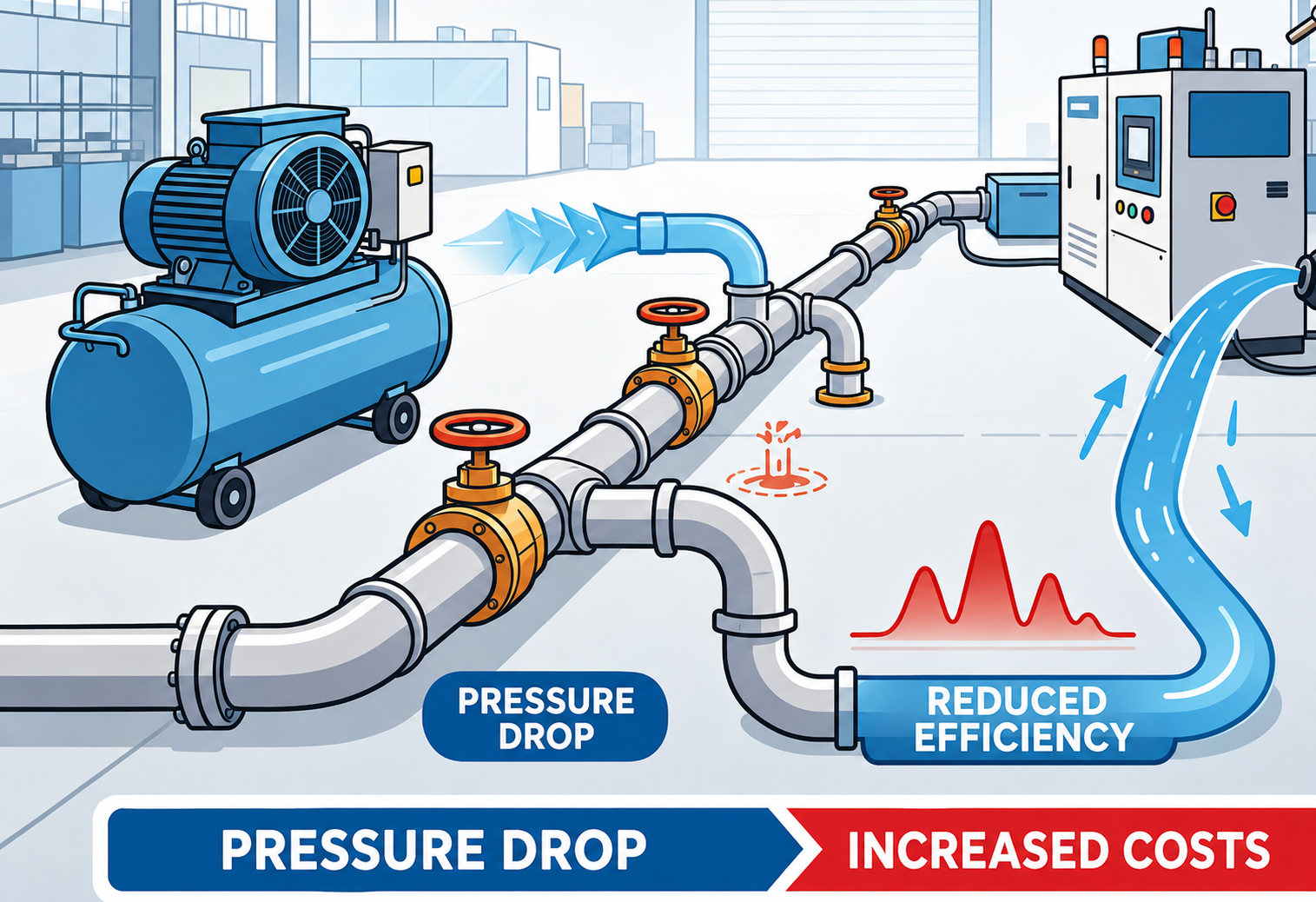
Oil, moisture, and particles can affect CMS, valves, instrumentation, filters, and downstream gas quality.
A suitable pretreatment system may include:
- Compressed-air receiver
- Refrigerated or adsorption dryer
- Oil-removal filtration
- Particle filtration
- Automatic drainage
A suitable precision compressed-air filter can form part of this pretreatment system where required.
For pharmaceutical applications, gas quality should be evaluated across the entire supply chain rather than by looking only at nitrogen purity at the generator outlet.
Flow Rate and Peak Demand
The nitrogen generator must provide enough nitrogen not only for average consumption but also for peak production demand.
A pharmaceutical facility may have several users operating simultaneously, including packaging equipment, storage vessels, reactors, transfer systems, laboratories, and process skids.
Before selecting generator capacity, determine:
- Average nitrogen consumption
- Peak nitrogen consumption
- Number of simultaneous users
- Production shifts
- Batch frequency
- Expected future expansion
A nitrogen buffer tank can help stabilize supply during short-duration demand fluctuations.
However, storage should be sized as part of the overall system design rather than used to compensate for a fundamentally undersized generator.
Pressure Requirements
Different pharmaceutical operations may require different nitrogen pressures.
Blanketing systems, packaging lines, laboratory instruments, and process vessels do not necessarily operate at the same pressure.
The inlet compressed-air pressure for Lingyu PSA nitrogen generation systems is approximately 0.5–0.8 MPa.
This is the feed-air condition for the generator and should not be confused with the final nitrogen pressure required at each point of use.
If higher downstream nitrogen pressure is required, additional storage or pressure-boosting equipment may need to be considered.
Both the required nitrogen flow and the actual point-of-use pressure should therefore be defined when configuring the system.
Real-Time Monitoring and Process Control
For pharmaceutical production, stable gas quality is generally more important than achieving the target specification only during initial commissioning.
Depending on the configuration, a nitrogen generation system may incorporate:
- Nitrogen purity monitoring
- Flow monitoring
- Pressure monitoring
- PLC-based automatic operation
- Touchscreen status display
- Alarm functions
- Off-spec gas handling
These functions can help operators verify that the system remains within the required operating range.
Equipment monitoring does not replace a pharmaceutical facility’s own qualification, validation, calibration, sampling, or quality-assurance procedures.
Pharmaceutical Gas Quality and Compliance
Nitrogen purity is only one part of pharmaceutical gas quality.
A nitrogen generator does not automatically become “GMP compliant” simply because it produces high-purity nitrogen.
Depending on the application, the required gas specification may also involve:
- Residual oxygen
- Moisture
- Oil contamination
- Particles
- Microbiological requirements where applicable
- Materials of construction
- Filtration
- Sampling
- Monitoring
- Qualification
- Validation
- Applicable pharmacopoeial requirements
- Internal quality specifications
The exact requirements depend on where and how the nitrogen is used.
A nitrogen supply suitable for one non-product-contact operation may not automatically be suitable for a different pharmaceutical process.
Manufacturers should therefore define the required gas-quality specification first and then determine whether the proposed generation, treatment, storage, and distribution system can support it.
Nitrogen purity alone should not be used as evidence of GMP or pharmaceutical compliance.
Advantages of On-Site Nitrogen Generation
For suitable pharmaceutical facilities, on-site nitrogen generation can offer several practical advantages.
Local Nitrogen Production
Nitrogen can be generated at the facility according to the site’s operating schedule.
Reduced Dependence on Deliveries
On-site production can reduce reliance on cylinder replacement or external gas-delivery schedules.
Lower Cylinder Handling Requirements
Facilities using large numbers of cylinders may be able to reduce some handling, storage, and logistics requirements.
Greater Visibility into Gas Production
Depending on the control configuration, operators can monitor parameters such as nitrogen purity, flow, pressure, and system status.
Potential Lifecycle Cost Benefits
For facilities with regular nitrogen demand, on-site generation may provide economic advantages over delivered gas.
A complete lifecycle-cost evaluation should consider:
- Compressor electricity
- Air treatment
- Maintenance
- Filters
- Nitrogen storage
- Monitoring
- Pressure boosting where required
The economic result depends on the site’s actual operating profile.
What to Define Before Selecting a Pharmaceutical Nitrogen Generator
Before selecting a system, define:
- Required nitrogen purity or maximum oxygen content
- Required dew point
- Average nitrogen flow
- Peak nitrogen flow
- Required outlet pressure
- Number of simultaneous users
- Existing compressor capacity
- Compressed-air quality
- Operating hours
- Batch schedule
- Installation conditions
- Applicable gas-quality requirements
- Internal pharmaceutical quality specifications
These values provide a stronger engineering basis for selecting the generator, compressed-air treatment system, nitrogen storage, controls, and distribution equipment.
For additional guidance on purity, flow, pressure, compressed-air requirements, and system sizing, see the nitrogen generator specification guide.
Reliability and Maintenance
Routine maintenance is important where nitrogen forms part of a production process.
Typical service considerations may include:
- Filter replacement
- Valve inspection
- Gas-analyzer calibration
- Drain inspection
- CMS condition checks
- Air-dryer maintenance
- Pressure-instrument verification
- Flow-instrument verification
The nitrogen generator and upstream compressed-air treatment system should therefore be maintained as one integrated utility rather than as unrelated pieces of equipment.
Preventive maintenance can help support stable nitrogen quality and reduce the risk of unexpected production interruptions.
Conclusion
A nitrogen generator for pharmaceutical manufacturing can provide an on-site nitrogen source for drug production, packaging, vessel blanketing, laboratory use, and other suitable processes.
The correct system should not be selected according to purity alone.
Nitrogen purity, residual oxygen, dew point, flow, pressure, compressed-air quality, filtration, monitoring, storage, process requirements, and the facility’s own gas-quality specifications should all be evaluated together.
For pharmaceutical users, the most appropriate nitrogen generation system is one that consistently supports the defined process specification while fitting the site’s operating, quality, and maintenance requirements.
Explore Lingyu’s nitrogen generator range or contact Lingyu with your required nitrogen purity, dew point, flow rate, pressure, compressed-air conditions, and application requirements for system configuration support.