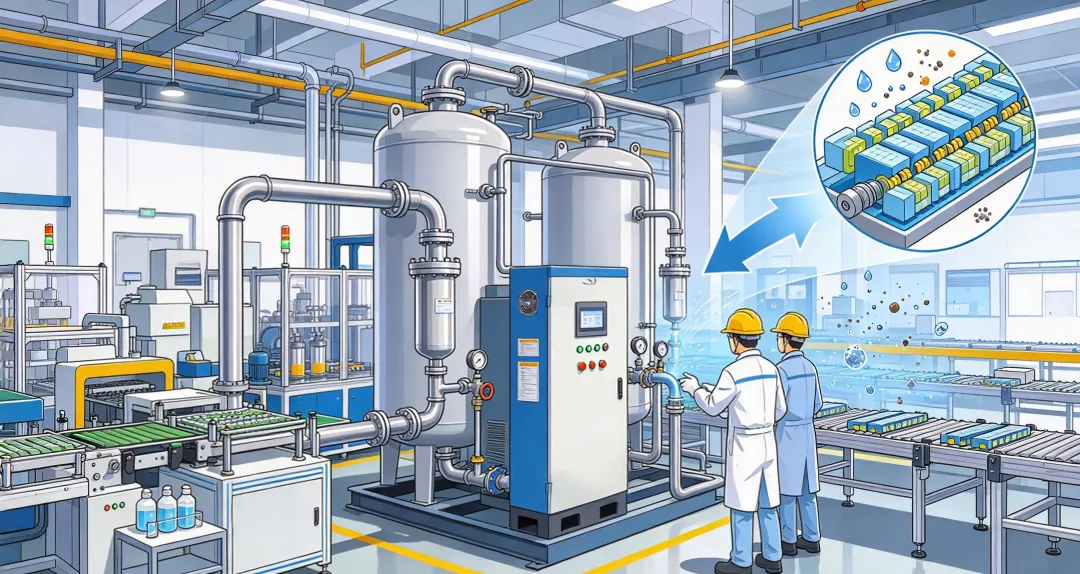
In a compressed-air system, a desiccant air dryer is used when the process requires a significantly lower pressure dew point than a conventional refrigerated dryer can normally provide.
Correct dryer selection is important because an undersized or poorly matched adsorption dryer can lead to unstable dew-point performance, excessive regeneration demand, unnecessary pressure loss, increased maintenance, and higher long-term operating cost.
Three of the most common selection mistakes are:
- Specifying a lower pressure dew point than the process actually requires
- Sizing the dryer only according to compressor nameplate flow
- Ignoring inlet-air quality, regeneration method, and lifecycle energy cost
The objective is not to choose the driest, largest, or most expensive dryer available. It is to select a system that reliably provides the required compressed-air quality under the site’s actual operating conditions.
Manufacturers comparing available technologies can also review Lingyu’s desiccant air dryer range.
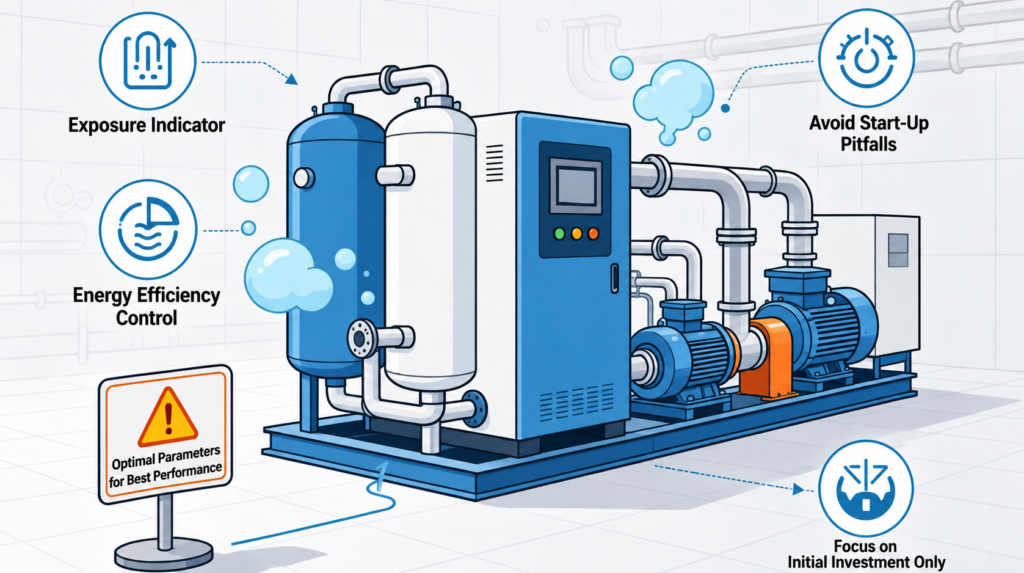
Mistake 1: Specifying a Lower Pressure Dew Point Than the Process Actually Requires
One of the most common mistakes in desiccant dryer selection is specifying an outlet pressure dew point substantially lower than the actual process requirement.
The primary function of an adsorption dryer is to remove water vapor from compressed air until the required pressure dew point is achieved.
However, lower pressure dew-point requirements can place greater demands on adsorption capacity, regeneration, controls, and overall system design.
Dryer selection should therefore begin with a simple question:
What pressure dew point does the process actually require?
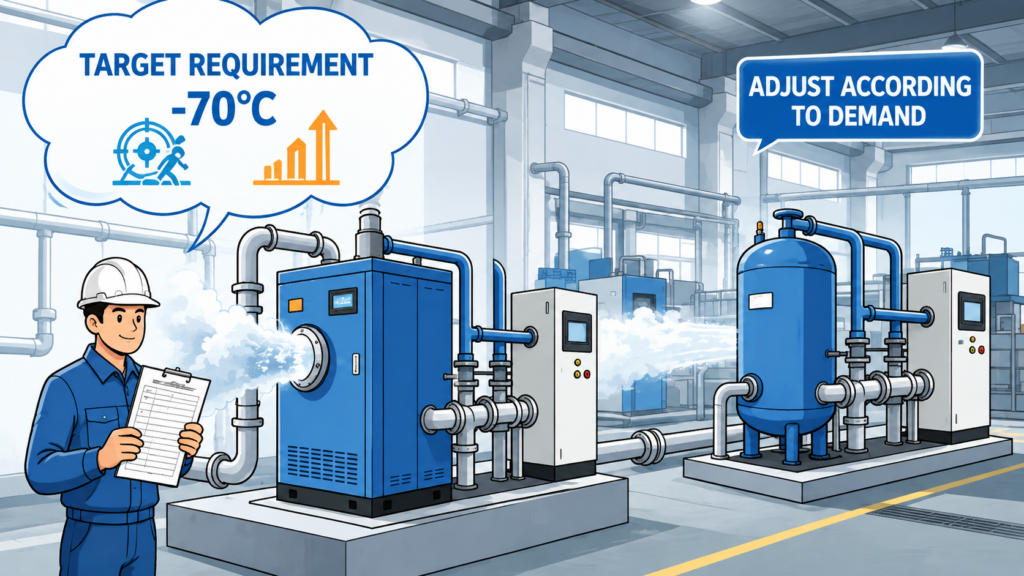
General Plant Air and Pneumatic Applications
Not every compressed-air application requires a desiccant dryer.
For general plant air, pneumatic tools, cylinders, and many production applications where the main objective is to prevent liquid-water condensation, a refrigerated air dryer may be sufficient.
A refrigerated dryer normally operates at a positive pressure dew point and can provide an efficient solution where ultra-dry compressed air is unnecessary.
A desiccant dryer becomes more appropriate when:
- Piping is exposed to temperatures below the achievable refrigerated-dryer dew point
- The process is highly sensitive to moisture
- Instrumentation requires very dry compressed air
- Product quality depends on a low moisture level
- The specified compressed-air quality requires a substantially lower pressure dew point
The important principle is:
Do not specify ultra-dry compressed air unless the application actually requires it.
Producing substantially drier air than necessary can increase equipment complexity and regeneration energy without providing a corresponding process benefit.
Moisture-Sensitive Industrial Applications
Applications involving instrumentation, electronics, pharmaceutical production, chemical processing, precision manufacturing, and other moisture-sensitive operations may require substantially lower pressure dew points.
In these cases, a desiccant dryer can be more appropriate.
The required pressure dew point should be determined according to factors such as:
- Process sensitivity to moisture
- Product-quality requirements
- Minimum ambient temperature
- Exposure of compressed-air piping
- Downstream equipment specifications
- Required compressed-air quality
- Applicable internal or external standards
The correct approach is to select a dryer capable of reliably maintaining the required pressure dew point under actual operating conditions rather than simply choosing the lowest advertised dew point.
Do Not Assume Every Desiccant Dryer Has the Same Capability
Different adsorption dryer technologies use different regeneration methods and are designed for different operating conditions.
Common configurations include:
- Heatless regenerative dryers
- Heated-purge dryers
- Blower-heated dryers
- Heat-of-compression dryers
- Combined refrigerated and adsorption dryers
- Modular adsorption dryers
These technologies differ in regeneration energy, compressed-air consumption, installation requirements, control strategy, and suitability for different load profiles.
For a broader comparison of the major technologies, see Lingyu’s guide to compressed air dryer types.
Consider a Combined Refrigerated + Desiccant Drying System
Where the inlet moisture load is relatively high but the process requires a low final pressure dew point, a combined drying arrangement may be worth evaluating.
A typical sequence can be:
Refrigerated Dryer → Filtration → Desiccant Dryer
The refrigerated stage removes a significant portion of condensable moisture before the air reaches the adsorption dryer.
This can reduce the moisture load presented to the desiccant system and change the regeneration requirements of the downstream adsorption stage.
Lingyu’s DC Series combined compressed air dryer integrates refrigerated and adsorption drying functions for applications where this type of arrangement is appropriate.
Whether a combined system is economically preferable depends on inlet conditions, required pressure dew point, airflow, operating hours, and regeneration technology.
It should therefore be evaluated as a complete system rather than automatically selected whenever a low dew point is required.
Mistake 2: Sizing the Dryer Only by Compressor Nameplate Flow
The second major mistake is selecting a desiccant dryer simply because its nominal airflow rating appears to match the rated capacity of the air compressor.
Dryer capacity is defined under specific reference conditions.
If actual inlet temperature, pressure, moisture load, or airflow differs from those conditions, the effective dryer capacity and dew-point performance may also change.
Correct sizing should therefore be based on actual dryer inlet conditions and process demand.
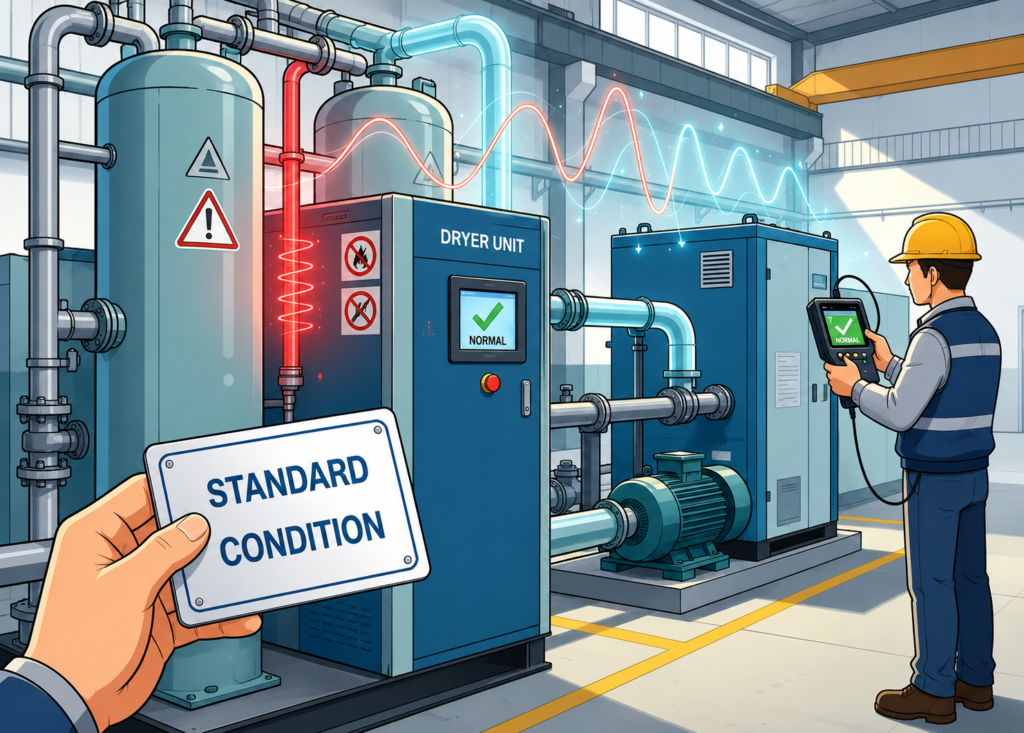
Check the Maximum Actual Airflow
Begin with the maximum airflow that must pass through the dryer.
Consider:
- Normal operating flow
- Peak production demand
- Simultaneous equipment use
- Production shifts
- Intermittent high-flow users
- Seasonal demand
- Future production expansion
The dryer should be able to handle the required flow without unacceptable pressure drop or loss of dew-point performance.
However, choosing the largest available dryer is not the objective.
Correct sizing means matching dryer capacity to the real operating requirement with an appropriate engineering allowance.
Inlet Temperature Is a Critical Sizing Parameter
The moisture load entering a desiccant dryer is strongly influenced by compressed-air temperature.
If air entering the adsorption dryer is hotter than the conditions used for the dryer’s nominal rating, the desiccant system may be required to handle a greater water-vapor load.
Potential consequences can include:
- Faster desiccant loading
- Reduced effective adsorption time
- Greater regeneration demand
- Unstable pressure dew point
- Reduced effective dryer capacity
Actual inlet temperature should therefore be checked against the selected dryer’s performance data.
Effective aftercooling, condensate separation, drainage, and upstream treatment can be important parts of the dryer system.
This is also one reason why two dryers with the same nominal flow rating should not automatically be considered equivalent.
Operating Pressure Must Also Be Considered
Actual operating pressure affects compressed-air density, dryer airflow, pressure drop, and regeneration conditions.
Selection should consider:
- Minimum operating pressure
- Normal operating pressure
- Maximum operating pressure
- Maximum airflow at the actual pressure
The dryer’s performance data should be evaluated at conditions representative of the real compressed-air system.
A model rated for a particular airflow under one reference pressure may not provide exactly the same effective capacity under significantly different operating conditions.
This is why a sizing calculation should include both flow and pressure, not airflow alone.
Consider Variable Air Demand
Many compressed-air systems do not operate continuously at full design load.
Demand may vary by production shift, machine utilization, batch cycle, season, product type, or weekend and nighttime operation.
This load profile can have an important effect on dryer energy consumption.
A dryer that regenerates according to a fixed cycle may continue using regeneration energy even when compressed-air demand is significantly below the original design flow.
Depending on the selected dryer and control system, variable-load installations may benefit from functions such as:
- Dew-point-dependent switching
- Load-responsive regeneration
- Extended adsorption cycles
- Intelligent sequencing
- Parallel dryer control
- Central system integration
These functions should be confirmed for the specific dryer configuration rather than assumed to be standard on every adsorption dryer.
Allow an Appropriate Engineering Margin
Dryer sizing should allow for realistic variations in operating conditions, including short-duration peak flow, seasonal inlet-temperature changes, pressure variations, future production expansion, and aging or fouling of upstream equipment.
There is no universal rule that every desiccant dryer should automatically be oversized by a fixed percentage.
Too little capacity can result in unstable pressure dew point or excessive pressure loss.
Too much unnecessary capacity increases initial investment and can lead to a poorly optimized installation.
The correct model should therefore be selected using actual operating data and model-specific performance information.
Mistake 3: Ignoring Inlet-Air Quality and Regeneration Energy
The third major mistake is comparing desiccant dryers primarily by purchase price.
For an adsorption dryer, lifecycle operating cost can be strongly affected by:
- Regeneration air
- Heater electricity
- Blower electricity
- Pressure drop
- Filtration
- Desiccant condition
- Valve maintenance
- Annual operating hours
A lower initial equipment price does not necessarily mean a lower long-term drying cost.
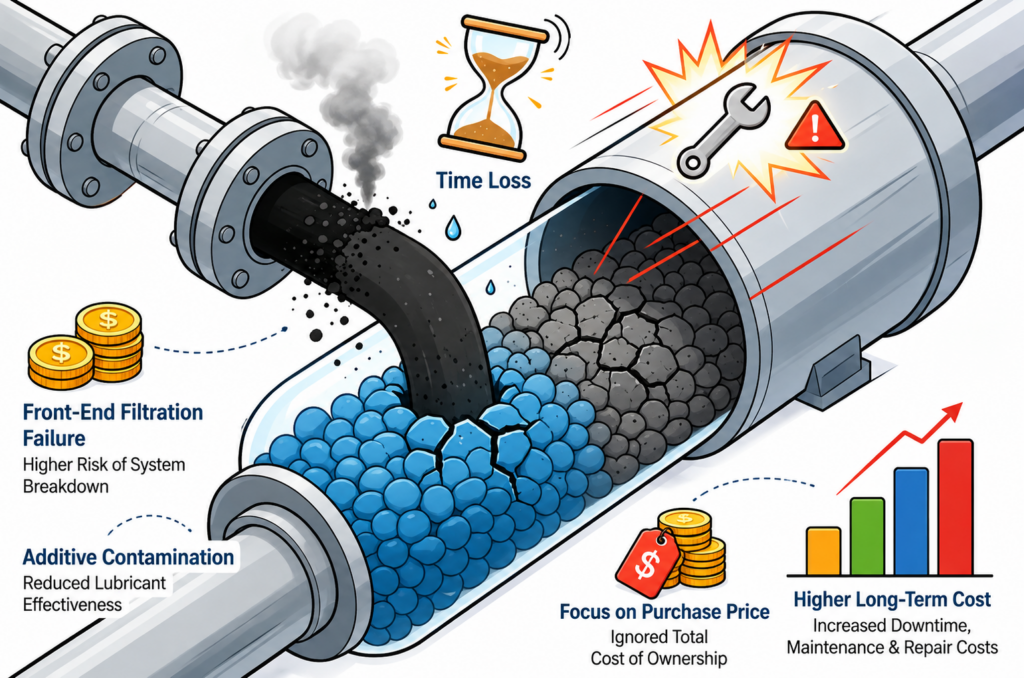
Protect the Desiccant With Proper Upstream Filtration
Compressed air can contain liquid water, water vapor, oil aerosols, particles, and other contaminants.
Contaminants reaching the adsorption bed can interfere with dryer operation and contribute to:
- Reduced adsorption performance
- Increased pressure drop
- Desiccant contamination
- Dusting
- Valve problems
- Increased maintenance
Proper upstream air treatment is therefore essential.
Depending on compressor type, dryer requirements, and required compressed-air quality, filtration may include:
- Water and particle removal
- General-purpose pre-filtration
- High-efficiency oil-aerosol removal
- Fine particulate filtration
- Activated-carbon filtration where required
Lingyu’s compressed air filter selection and maintenance guide covers AO, AA, AX, and ACS filtration configurations.
Filtration should be selected according to the actual air-quality requirement rather than simply installing the maximum number of filter stages.
Compare Regeneration Technologies
Regeneration technology is one of the biggest differences between desiccant dryer systems.
The four common approaches have different operating characteristics.
| Regeneration Technology | Basic Principle | Main Selection Consideration |
|---|---|---|
| Heatless | Uses a portion of dried compressed air to regenerate the desiccant | Simple design, but regeneration consumes valuable compressed air |
| Heated purge | Uses external heat together with dry purge air | Can reduce purge demand, but heater energy must also be included |
| Blower heated | Uses heated ambient air supplied by a blower | Can reduce dependence on dry compressed air for regeneration |
| Heat of compression | Uses heat available from compressor discharge air | Can provide high energy efficiency when compressor and dryer operating conditions are compatible |
These descriptions represent the general operating principles. Actual purge rates and power consumption depend on the selected dryer, operating conditions, regeneration cycle, and control configuration.
Heatless Desiccant Air Dryer
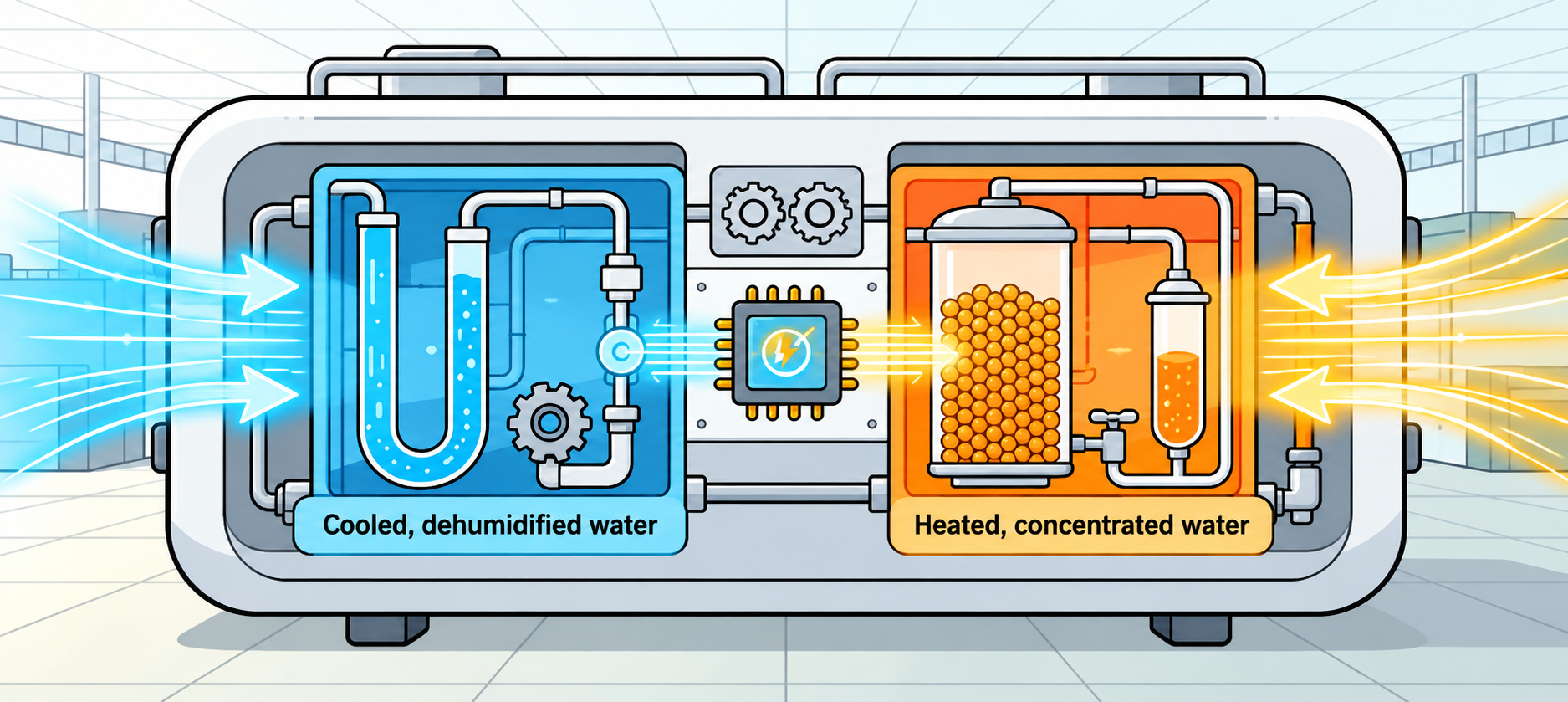
A heatless adsorption dryer uses pressure-swing regeneration.
A portion of the dried compressed air is expanded to a lower pressure and passed through the regenerating tower to remove adsorbed moisture.
Potential advantages include:
- Relatively simple operating principle
- No regeneration heater
- Straightforward system architecture
- Suitability for many industrial installations
The main trade-off is that purge air has already been compressed and dried, so its consumption represents an operating-energy cost.
Lingyu’s heatless desiccant air dryer is one example of this regeneration approach.
When evaluating a heatless dryer, compare the actual regeneration consumption under the conditions relevant to your site.
Heated-Purge Desiccant Air Dryer
A heated regeneration adsorption dryer adds thermal energy during regeneration.
Heating helps desorb moisture from the adsorption material and can reduce reliance on dry compressed-air purge compared with a purely heatless regeneration approach.
However, the energy calculation should include both:
Compressed-air regeneration cost + heater electricity
rather than comparing purge percentage alone.
Lingyu also offers a heated regeneration adsorption air dryer within its adsorption-dryer range.
Whether a heated design provides a lower lifecycle cost depends on airflow, duty cycle, local electricity cost, compressor efficiency, and operating hours.
Blower-Heated Desiccant Air Dryer
A blower-heated adsorption dryer uses ambient air supplied by a blower and heats it for regeneration.
This design can reduce the amount of dry compressed air required during regeneration compared with conventional heatless systems.
For large installations operating continuously, reducing compressed-air regeneration losses can have a significant effect on operating cost.
However, blower and heater electricity must also be included in the energy balance.
Lingyu’s blower-heated adsorption air dryer represents this type of configuration.
The relevant comparison is therefore total regeneration energy, not purge-air percentage alone.
Heat-of-Compression Desiccant Dryer
A heat-of-compression dryer uses thermal energy available in hot compressor discharge air as part of the desiccant-regeneration process.
This can reduce the need to generate regeneration heat separately when the compressor type, discharge temperature, operating profile, and dryer design are compatible.
Heat-of-compression systems should therefore be evaluated together with the compressor rather than as completely independent equipment.
Lingyu’s heat-of-compression dryer range covers this type of application.
A HOC dryer can be an efficient solution in the right installation, but it should not be assumed to provide the lowest operating cost in every compressed-air system.
Compare Total Lifecycle Cost, Not Just Purchase Price
A dryer with the lowest purchase price does not automatically provide the lowest cost of ownership.
When comparing desiccant dryers, evaluate:
- Initial equipment cost
- Compressor energy required for regeneration air
- Heater electricity
- Blower electricity
- Pressure-drop-related compressor energy
- Filter replacement
- Desiccant replacement
- Valve and actuator maintenance
- Heater or blower maintenance
- Instrumentation maintenance
- Annual operating hours
- Expected loading profile
- Downtime risk
For continuously operated industrial systems, regeneration-related energy can become a major part of lifecycle cost.
A more efficient regeneration method may therefore justify a higher initial investment in suitable installations.
However, payback should be calculated using actual operating data rather than a generic savings percentage or fixed payback period.
Practical Desiccant Air Dryer Selection Checklist
Before choosing a desiccant air dryer, confirm the following:
Required pressure dew point: What dew point does the process actually require?
Maximum actual airflow: What is the highest flow the dryer must treat?
Inlet temperature: What is the highest realistic dryer inlet temperature?
Operating pressure: What are the minimum, normal, and maximum pressures?
Load profile: Is demand stable or highly variable?
Upstream air quality: Are liquid water, oil, and particles adequately controlled?
Regeneration technology: Is heatless, heated-purge, blower-heated, heat-of-compression, or a combined system most appropriate?
Energy consumption: What are the annual costs of regeneration air, heaters, blowers, and pressure loss?
Pressure drop: What pressure loss will the complete dryer and filtration system introduce?
Maintenance: Which filters, valves, heaters, blowers, analyzers, and desiccant components require service?
Future expansion: Is compressed-air demand expected to increase?
These parameters should be evaluated together.
Selecting a dryer from only one specification—whether flow, pressure dew point, or purchase price—can create problems elsewhere in the compressed-air system.
Conclusion: Select the Dryer Around the Process, Not the Specification Sheet
Choosing the right desiccant air dryer is not simply a matter of selecting the lowest pressure dew point, the largest capacity, or the lowest purchase price.
The three most important mistakes to avoid are:
- Specifying a pressure dew point lower than the process actually requires
- Selecting dryer capacity without accounting for actual airflow, inlet temperature, pressure, and load profile
- Ignoring inlet-air quality, regeneration energy, and lifecycle operating cost
A properly selected adsorption dryer should provide the required compressed-air quality under real operating conditions without imposing unnecessary energy consumption or maintenance.
Depending on the application, the most suitable solution may be a heatless dryer, heated-purge dryer, blower-heated dryer, heat-of-compression dryer, or combined refrigerated and adsorption drying system.
The correct choice depends on both the process conditions and operating economics.
For project-specific selection, contact Lingyu with your maximum airflow, inlet pressure, inlet temperature, required pressure dew point, operating schedule, and compressed-air quality requirements.