Industrial compressed air can contain water vapor, condensed moisture, oil contamination, and particles. Without appropriate air treatment, these contaminants can contribute to pipeline corrosion, pneumatic equipment problems, process instability, and reduced product quality.
When an application requires a much lower pressure dew point than a refrigerated dryer can typically provide, a desiccant or adsorption dryer may be required.
A heated regeneration adsorption air dryer, also called a heated-purge regenerative desiccant air dryer, uses an external heat source together with a controlled quantity of dry product air to regenerate the desiccant. Compared with heatless regeneration, heating reduces the amount of compressed purge air required.
Lingyu’s product portfolio includes dedicated CH Series and HH Series heated regenerative adsorption dryers.
What Is a Heated Regeneration Adsorption Air Dryer?
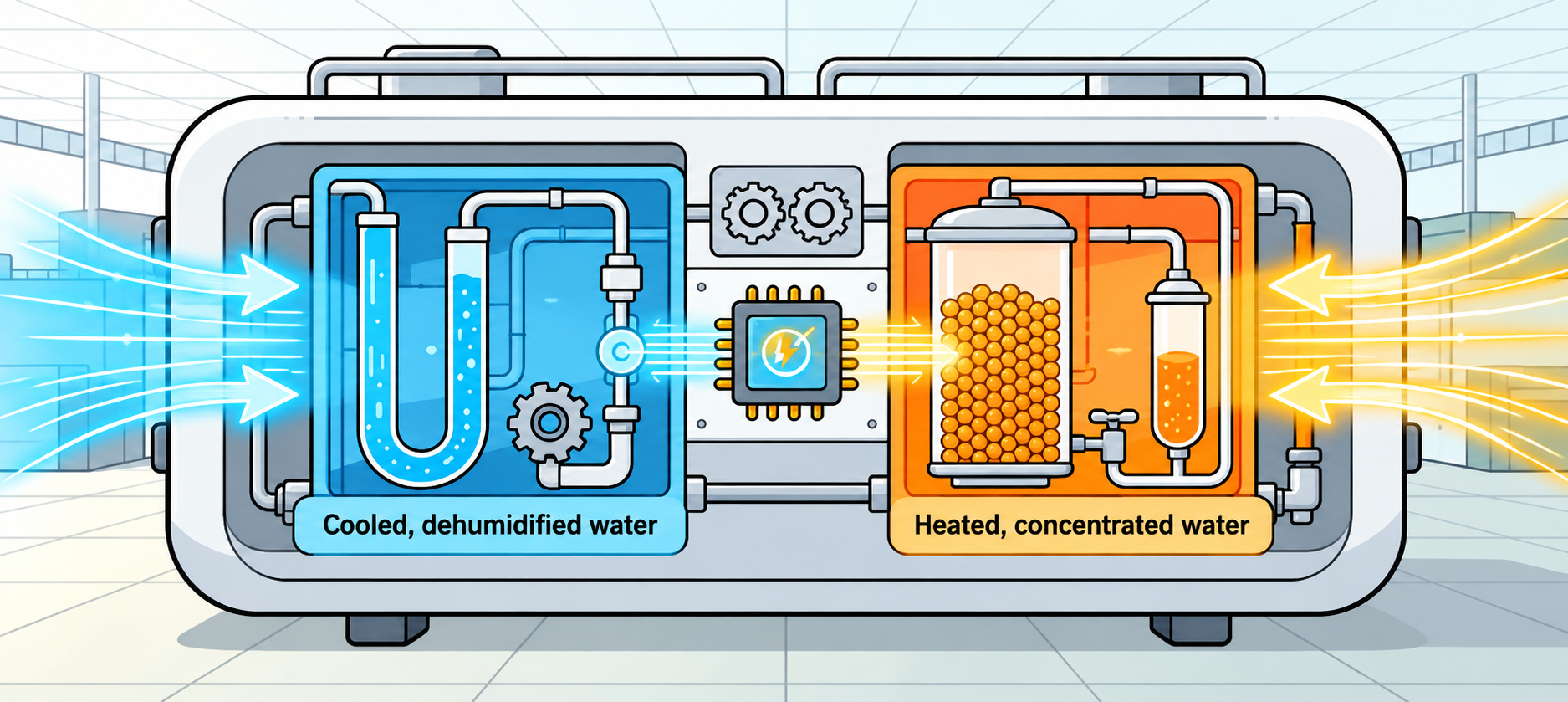
A heated regeneration adsorption air dryer is a twin-tower desiccant dryer that removes water vapor by adsorption and restores the moisture-loaded desiccant using heat.
One tower remains in adsorption service while the second tower is regenerated. After regeneration and cooling are complete, the towers switch roles so that dry compressed air can be supplied continuously.
The main difference from a heatless dryer is the regeneration method.
A heatless dryer depends entirely on dry compressed purge air to create the conditions required for desorption. A heated-purge dryer adds thermal energy. Heating the desiccant makes it easier to release adsorbed water, so less dry compressed air is required as the regeneration carrier gas.
Lingyu describes its heated-purge process as Temperature Swing Adsorption (TSA). The desiccant adsorbs moisture at a lower temperature and releases it when heated.
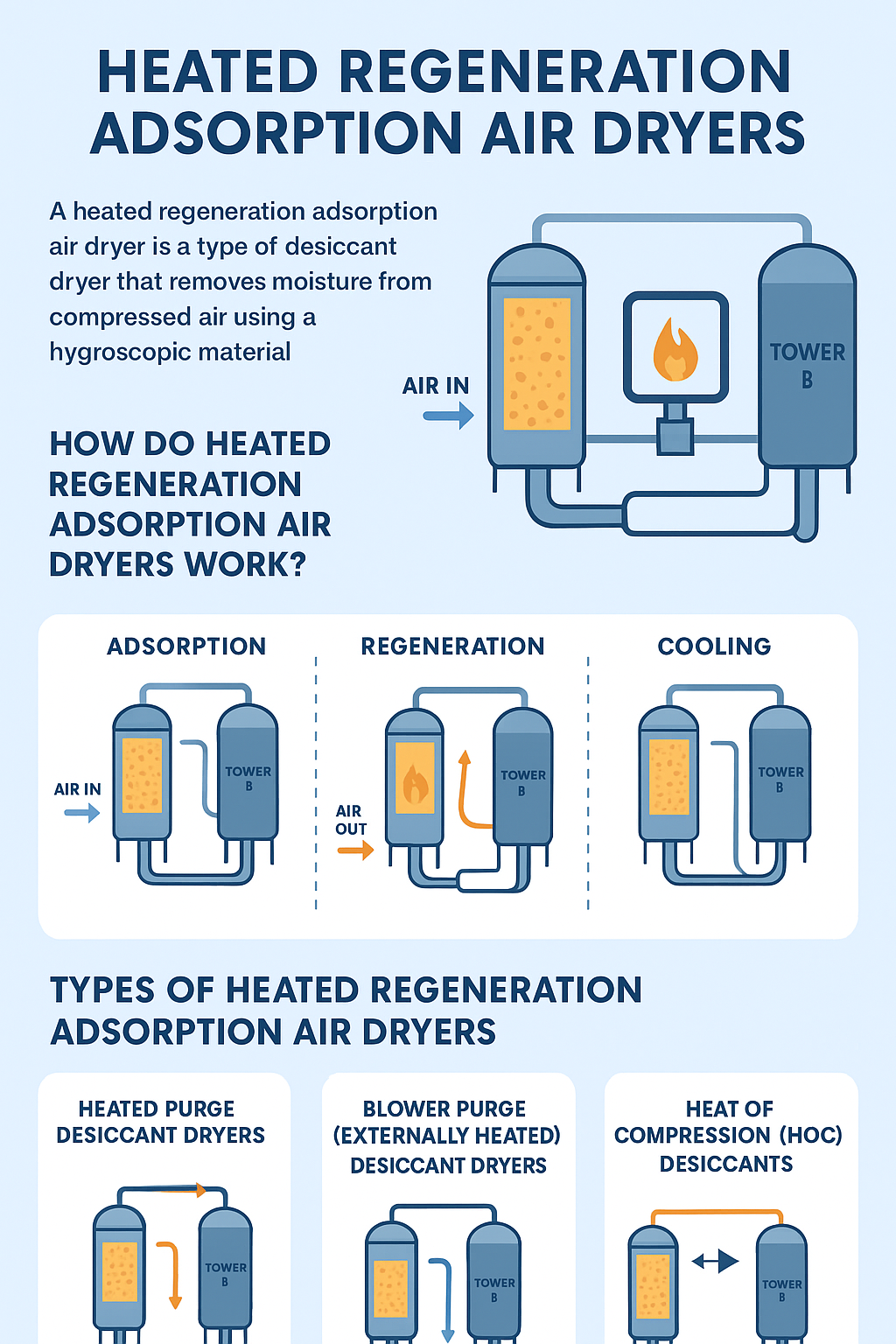
How Does a Heated Regeneration Adsorption Dryer Work?
The complete operating cycle includes adsorption, heated desorption, cooling, repressurization, and tower switching.
1. Adsorption
Wet compressed air enters the active adsorption vessel.
Water vapor is captured by the desiccant while dry compressed air leaves the tower and continues toward the downstream air system.
During this period, the second tower is undergoing regeneration.
2. Heated Desorption
An external heat source supplies the thermal energy required for regeneration.
A portion of the dry product air passes through the heating system and regeneration tower, carrying heat into the desiccant bed.
As the desiccant temperature rises, previously adsorbed moisture is released back into the gas phase and transported out of the dryer by the regeneration airflow.
This combination of external heat and controlled dry purge airflow allows the system to regenerate the desiccant while using less compressed purge air than a conventional heatless dryer.
3. Cooling
Heating the desiccant is only part of the regeneration process.
After desorption, the adsorption bed remains hot. Its full adsorption capacity is restored only after it has cooled toward its normal adsorption temperature.
The regeneration sequence therefore includes:
Heated desorption → cooling regeneration
A regenerated but still-hot desiccant bed is not immediately ready to return to full drying duty.
4. Repressurization and Tower Switching
Before a regenerated tower returns to adsorption, pressure is equalized.
Lingyu’s heated regenerative dryer includes automatic repressurization before switching, helping reduce pressure fluctuations and mechanical disturbance of the desiccant bed.
The towers then exchange roles and the cycle continues.
CH Series Heated Regeneration Dryer
Lingyu’s CH Series Heated Purge Regenerative Desiccant Air Dryer uses activated alumina as its specified desiccant.
Its main operating specifications include:
- Rated inlet pressure: 0.7 MPa
- Operating pressure: 0.6–1.0 MPa
- Rated inlet temperature: 10–30°C
- Maximum inlet temperature: ≤40°C
- Average purge-air consumption: 4–8%
- Outlet pressure dew point: −50°C to −20°C
- Desiccant: Activated alumina
- Ambient operating range: 2–45°C
For direct product information, see the CH Series heated regeneration adsorption air dryer.
HH Series Heated Regeneration Dryer
The HH Series Heated Purge Regenerative Desiccant Air Dryer uses a combination of activated alumina and high-performance molecular sieve.
Its specified conditions include:
- Average purge-air consumption: 4–8%
- Outlet pressure dew point: ≤−40°C
- Desiccant: Activated alumina + high-performance molecular sieve
- Rated inlet pressure: 0.7 MPa
- Operating pressure: 0.6–1.0 MPa
- Maximum inlet temperature: ≤40°C
- Ambient operating range: 2–45°C
For more model-specific technical information, see the HH Series thermal regenerative adsorption dryer guide.
CH vs. HH Heated Regeneration Dryers
The two series use the same overall heated-purge regeneration principle but differ in desiccant configuration and specified dew-point performance.
| Parameter | CH Heated Purge | HH Heated Purge |
|---|---|---|
| Regeneration method | External heat + dry purge air | External heat + dry purge air |
| Average purge-air consumption | 4–8% | 4–8% |
| Outlet pressure dew point | −50°C to −20°C | ≤−40°C |
| Desiccant | Activated alumina | Activated alumina + high-performance molecular sieve |
| Rated inlet pressure | 0.7 MPa | 0.7 MPa |
| Operating pressure | 0.6–1.0 MPa | 0.6–1.0 MPa |
| Maximum inlet temperature | ≤40°C | ≤40°C |
These product-specific values provide a more useful basis for selection than applying one generic dew-point range to every heated regenerative dryer.
What Dew Point Can a Heated Regeneration Dryer Achieve?
For Lingyu’s conventional heated-purge product range, the specified pressure dew points differ between the two series.
The CH Series is specified at −50°C to −20°C, while the HH Series is specified at ≤−40°C.
Pressure dew point should be selected according to the actual process requirement rather than simply specifying the lowest possible number.
Why Heating Reduces Purge-Air Consumption
The principal operating advantage over heatless regeneration is lower purge-air demand.
Lingyu’s CH and HH heatless dryers specify average purge consumption of 8–14%. Their heated-purge counterparts specify 4–8%.
This reduction matters because purge air has already been compressed and dried.
The energy trade-off is that the heated dryer uses electrical energy for the regeneration heater.
A meaningful economic comparison should therefore consider:
Heater electricity + purge-air production cost + pressure drop + maintenance + annual operating hours
The presence of a heater alone does not determine total operating cost, just as lower purge consumption alone does not guarantee the lowest lifecycle cost.
Heated Regeneration vs. Heatless Dryer
A heatless dryer has no regeneration heater and uses dry compressed air as the regeneration medium.
That makes the system relatively simple, but purge-air consumption is higher.
A heated-purge dryer uses additional thermal energy so that less compressed purge air is required.
Facilities comparing the two technologies can review Lingyu’s heatless desiccant dryer range.
The practical choice depends on system size, operating hours, compressed-air production cost, maintenance preferences, and required pressure dew point.
Is a Blower-Heated Dryer a Heated-Purge Dryer?
Not exactly.
A blower-heated dryer uses heat, but its regeneration-air source is different.
Lingyu’s blower-heated systems draw ambient air through an independent blower and heater rather than relying primarily on compressed product air during regeneration.
The HRB-E low-purge version uses approximately 2% dry product air during cooling and specifies total regeneration-air consumption of 2–3%.
The HRB-Z version uses closed-loop cooling and can reduce compressed-air regeneration consumption to approximately 0%.
Blower-heated technology is therefore a separate regeneration configuration rather than simply another CH/HH heated-purge variant.
For this product family, see Lingyu’s blower zero-purge adsorption dryer range.
Is Heat of Compression the Same Technology?
No.
A Heat of Compression (HOC) dryer uses thermal energy already contained in high-temperature compressor discharge air.
It therefore differs fundamentally from a conventional heated-purge dryer, where a dedicated external heating system provides the regeneration heat.
Users evaluating compressor-heat recovery can review Lingyu’s Heat of Compression dryer range.
HOC selection depends on compatibility between compressor discharge conditions and the dryer design, while those requirements should not be treated as standard compressor requirements for CH or HH heated-purge dryers.
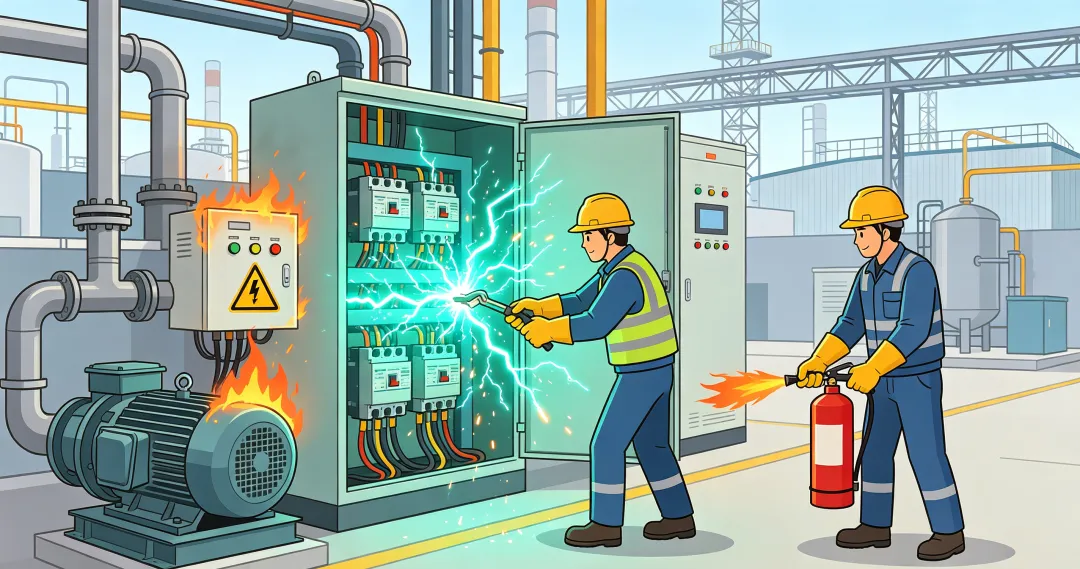
Heater Protection and Control
Heated regeneration introduces components that do not exist in a basic heatless dryer, so temperature and heater protection become important.
Lingyu’s HH heated-purge design includes heater pressure protection intended to prevent dry heating, along with programmable control and automatic repressurization.
The design also uses pneumatic switching valves and silencers to support stable tower cycling and exhaust operation.
These functions help explain why heated regeneration is more complex than heatless regeneration but can reduce purge-air consumption.
Desiccant Selection
For Lingyu’s heated-regeneration products, the desiccant configuration depends on the series.
The CH Series uses activated alumina.
The HH Series uses activated alumina plus high-performance molecular sieve.
The specified desiccant configuration should therefore be matched to the selected product series rather than assuming that all adsorption materials are standard options for every heated-purge dryer.
Does Heated Regeneration Extend Desiccant Life?
Desiccant service life depends on more than the regeneration method alone.
Lingyu’s high-performance desiccant provides abrasion resistance and stable long-term pressure-dew-point performance. The dryer also uses automatic pressure equalization to reduce pressure shocks that could affect the desiccant.
Good regeneration control, stable switching, appropriate inlet-air quality, and operation within specified conditions can help preserve desiccant performance.
Replacement timing should be based on actual dryer performance and model-specific maintenance requirements rather than assuming a universal service-life extension.
Operating Conditions Matter
For both CH and HH heated-purge dryers, the rated inlet pressure is 0.7 MPa, with an operating range of approximately 0.6–1.0 MPa.
Rated inlet temperature is 10–30°C, with maximum inlet temperature of ≤40°C. Ambient operating range is 2–45°C.
These specifications are important because adsorption capacity and regeneration performance depend on actual inlet temperature, pressure, airflow, and moisture loading.
For standard configurations above approximately 150 m³/min, or for special pressure, material, or temperature requirements, the system should be selected according to detailed project conditions.
How to Select a Heated Regeneration Adsorption Dryer
Selection should begin with the actual air-quality and operating requirements.
Important factors include required pressure dew point, maximum airflow, inlet pressure, inlet temperature, purge-air consumption, heater power, upstream contamination, pressure drop, annual operating hours, installation environment, and maintenance capability.
Buyers who already know they need a conventional externally heated design can review the broader heated regeneration adsorption air dryer product page.
The lowest purge percentage or lowest advertised dew point should not be the only selection criterion.
Where Are Heated Regeneration Dryers Used?
The most relevant applications are processes that require low-dew-point compressed air and have enough airflow or operating hours for reduced purge consumption to provide practical value.
Pharmaceutical and Biopharmaceutical Manufacturing
In pharmaceutical and biopharmaceutical manufacturing, compressed-air quality can be important across production and utility systems.
See Lingyu’s pharmaceutical and biopharmaceutical application.
Semiconductor and PCB Manufacturing
Electronics and semiconductor processes can also require controlled moisture conditions.
Users in this market can explore Lingyu’s semiconductor and PCB manufacturing application.
Petrochemical and Chemical Processing
Chemical and petrochemical facilities may use low-dew-point compressed air for instrument and process duties.
See Lingyu’s petrochemical and chemical processing application.
The correct dryer configuration should still be selected from actual process specifications rather than industry name alone.
Maintenance Requirements
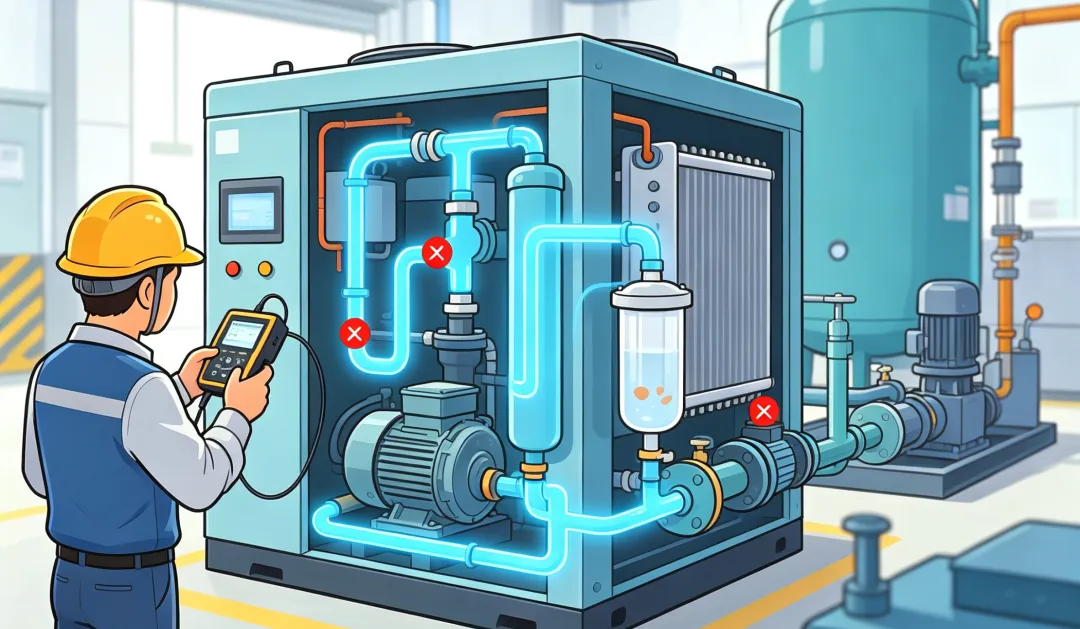
A heated-purge dryer requires maintenance of both the adsorption system and the heating/regeneration system.
Key areas include the desiccant, inlet and outlet air treatment, switching valves, pneumatic actuators, heater, temperature control, silencers, pressure equalization system, drains, and outlet dew-point performance.
The heater should also be inspected as part of preventive maintenance because regeneration performance depends on delivering sufficient heat safely and consistently.
Desiccant replacement intervals should follow actual operating condition, dew-point performance, contamination, mechanical condition, and model-specific maintenance guidance.
Heated Purge vs. Heatless vs. Blower-Heated
| Factor | Heatless | Heated Purge | Blower-Heated |
|---|---|---|---|
| Main regeneration medium | Dry compressed air | Heated dry compressed air | Heated ambient blower air |
| External heater | No | Yes | Yes |
| Lingyu purge reference | 8–14% | 4–8% | HRB-E 2–3%; HRB-Z ≈0% |
| Regeneration complexity | Lower | Medium | Higher |
| Key advantage | Simple regeneration | Lower purge than heatless | Very low compressed-air loss |
| Key trade-off | Higher purge cost | Heater power | Blower/heater/cooling complexity |
This comparison separates the regeneration technologies according to their actual airflow and energy sources rather than grouping them under one product type.
Conclusion
A heated regeneration adsorption air dryer uses external heat and a controlled amount of dry product air to regenerate a moisture-loaded desiccant bed.
Unlike heatless regeneration, where purge air alone drives desorption, heated regeneration uses temperature as an additional regeneration force. This allows the purge requirement to be reduced while maintaining a low pressure dew point.
For Lingyu’s conventional heated-purge range:
CH Series: 4–8% average purge air, −50°C to −20°C pressure dew point, and activated alumina.
HH Series: 4–8% average purge air, ≤−40°C pressure dew point, and activated alumina + high-performance molecular sieve.
The dryer operates through adsorption → heated desorption → cooling → repressurization → tower switching, with the cooling stage being essential to restore adsorption performance.
Blower-heated and Heat of Compression dryers can reduce compressed-air regeneration losses even further, but they are separate technologies with different airflow, cooling, energy, and integration requirements.
The right system should therefore be selected according to required pressure dew point, airflow, purge-air cost, heater energy, inlet conditions, annual operating hours, installation environment, pressure drop, and maintenance capability.