In any compressed air system—whether used in industrial machinery, trucks, pneumatic tools, or manufacturing lines—moisture is one of the biggest threats to performance and equipment longevity. To combat this, one component plays a crucial role: the air dryer assembly.
This complete guide explains what an air dryer assembly is, how it functions, what components it includes, and how to choose the right one for your application.
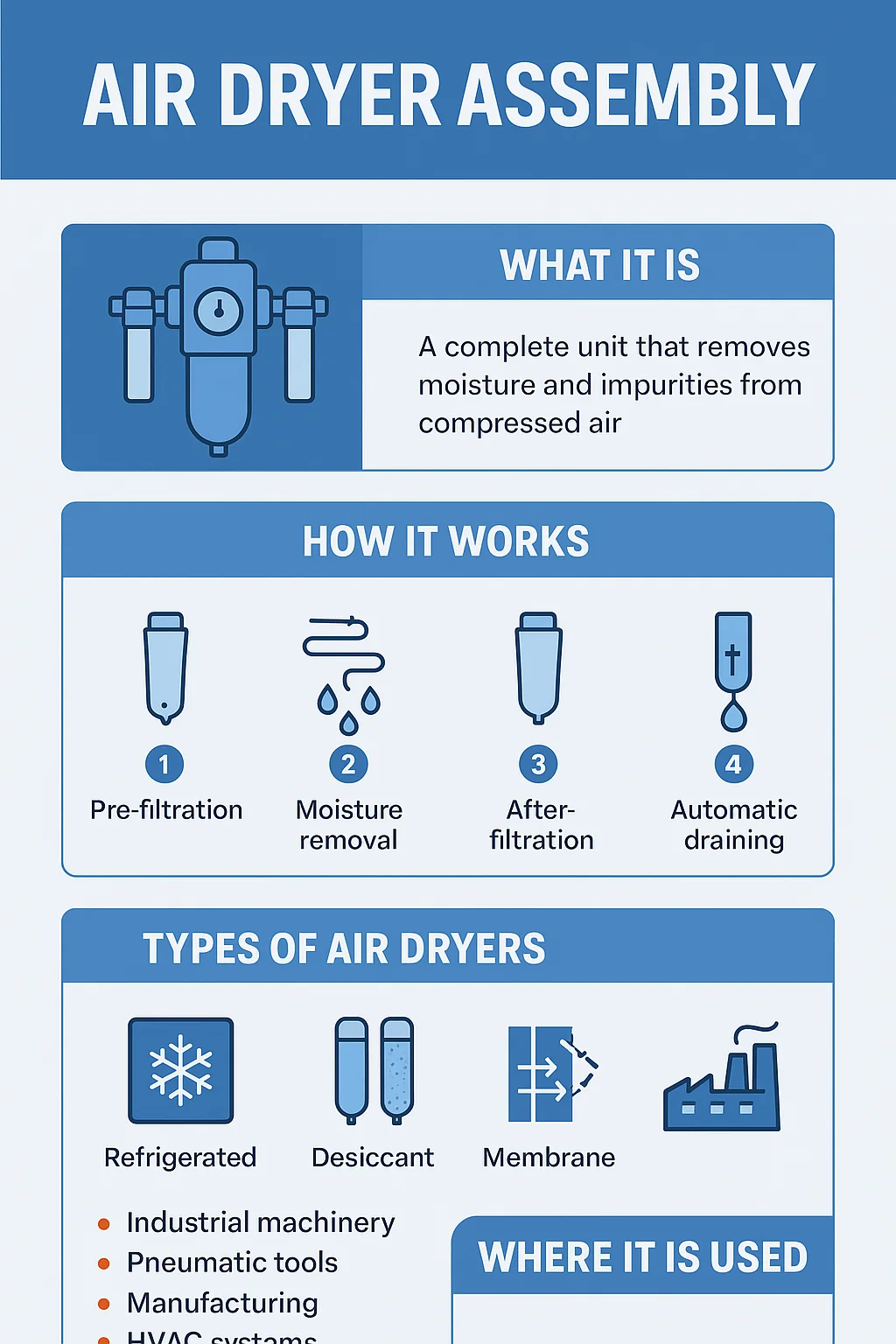
What Is an Air Dryer Assembly?
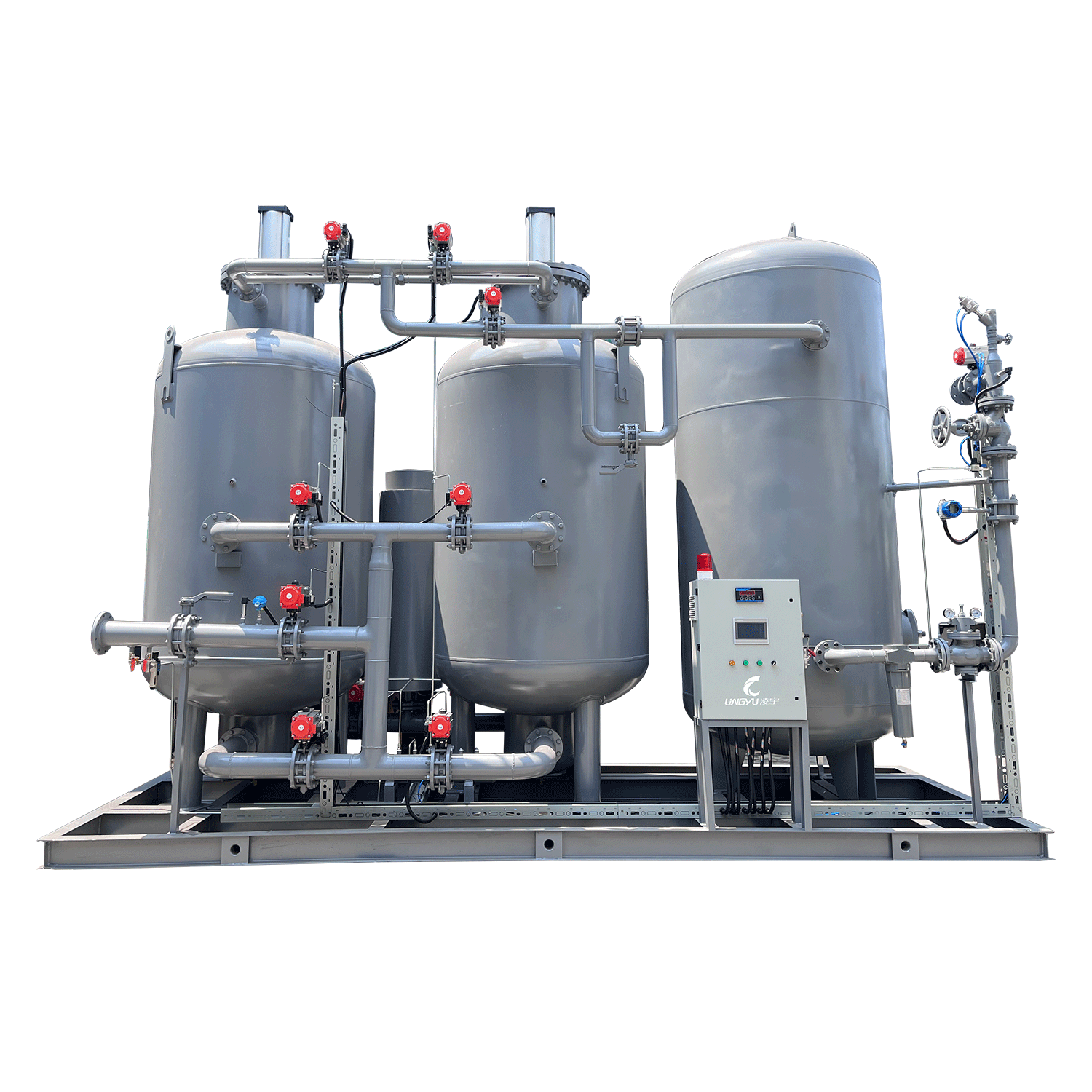
An air dryer assembly is a complete moisture-removal unit designed to dry and purify compressed air before it reaches downstream equipment. Instead of being a single component, an air dryer assembly is typically a system of integrated parts that work together to deliver clean, dry air.
A standard assembly may include:
Air dryer (refrigerated or desiccant type)
Pre-filter and after-filter
Moisture separator
Drain valve
Pressure regulator
Mounting brackets and fittings
Control components or sensors
Together, these parts remove water vapor, oil aerosols, and contaminants that would otherwise cause corrosion, clogging, and equipment damage.
Why Moisture Control Is Critical
Compressed air always contains some level of water vapor. When the air compresses, the vapor condenses into liquid water—especially in humid environments.
Without a proper air dryer assembly, this moisture can lead to:
Rust and corrosion in pipes
Blocked pneumatic valves
Poor product quality in manufacturing
Malfunctioning air tools
Shortened equipment life
Frozen lines in cold environments
Increased maintenance costs
A high-quality air dryer assembly is an investment in reliability, efficiency, and safety.
How an Air Dryer Assembly Works
While designs vary, most assemblies follow these core stages:
1. Pre-Filtration
Incoming compressed air passes through a pre-filter that removes oil mist, dust, and large contaminants.
2. Moisture Removal
Depending on the type of dryer used, moisture is removed by:
Refrigeration (cooling air to condense water)
Adsorption (desiccant absorbing moisture to very low dew points)
Membrane separation
This step delivers significantly drier air.
3. After-Filtration
Any leftover particulates or desiccant dust are captured by a fine filter.
4. Automatic Draining
Condensed water is expelled via a manual, timed, or zero-loss drain valve.
5. Monitoring & Regulation
Pressure gauges, indicators, or electronic controls ensure stable output and optimal system performance.
Types of Air Dryer Assemblies
1. Refrigerated Air Dryer Assembly
Most common for workshops and general industrial operations
Economical and easy to maintain
Provides a stable dew point around 2–10°C
Suitable for pneumatic tools, automation lines, and machinery
2. Desiccant Air Dryer Assembly
Uses desiccant (alumina, silica gel, or molecular sieve)
Achieves very low dew points (–40°C or lower)
Ideal for high-precision applications, paint lines, and cold climates
Often includes dual-tower regeneration systems
3. Membrane Air Dryer Assembly
Compact and energy-efficient
No electricity needed
Good for point-of-use drying
Suitable for light-duty or mobile applications
Where Air Dryer Assemblies Are Used
Air dryer assemblies are essential in many industries, including:
Automotive repair and body shops
CNC machining
Food and beverage processing
Pharmaceutical manufacturing
Electronics assembly
Truck and trailer air brake systems
HVAC and pneumatic controls
Packaging and printing lines
Any process requiring clean, moisture-free air benefits from a well-designed dryer assembly.
How to Choose the Right Air Dryer Assembly
When selecting an air dryer assembly, consider these key factors:
1. Air Flow (CFM or m³/min)
Choose an assembly capable of handling peak demand without pressure drop.
2. Required Dew Point
General industry → Refrigerated
High-precision or cold environments → Desiccant
Compact, low-demand systems → Membrane
3. Contaminant Levels
If your compressor produces a lot of oil vapor, ensure the assembly includes a high-efficiency coalescing filter.
4. Operating Conditions
Humidity, temperature, and compressor type influence the best dryer option.
5. Maintenance Requirements
Look for:
Easy drain access
Replaceable filters
Long-lasting desiccant
Clear indicators or digital controls
6. Installation Space
Assemblies range from compact wall-mounted systems to large, floor-standing units.
Benefits of a High-Quality Air Dryer Assembly
✔ Protects equipment from corrosion and damage
✔ Improves end-product quality
✔ Reduces downtime and maintenance costs
✔ Enhances pneumatic tool performance
✔ Prevents water contamination in process systems
✔ Extends compressor and valve life
Dry air equals longer-lasting equipment and smoother operation.
Final Thoughts
An air dryer assembly is a vital part of any compressed air system. By removing moisture and contaminants before they reach critical components, it ensures reliability, efficiency, and consistent performance. Whether you’re running a manufacturing plant, a repair shop, or a mobile air system, choosing the right air dryer assembly can dramatically improve your operation while reducing long-term costs.