Chemical tankers transport a wide range of liquid chemicals under demanding operating conditions. During loading, transportation, tank cleaning, cargo changeover, and unloading, controlling the atmosphere inside cargo tanks can be important for cargo protection and safe vessel operation.
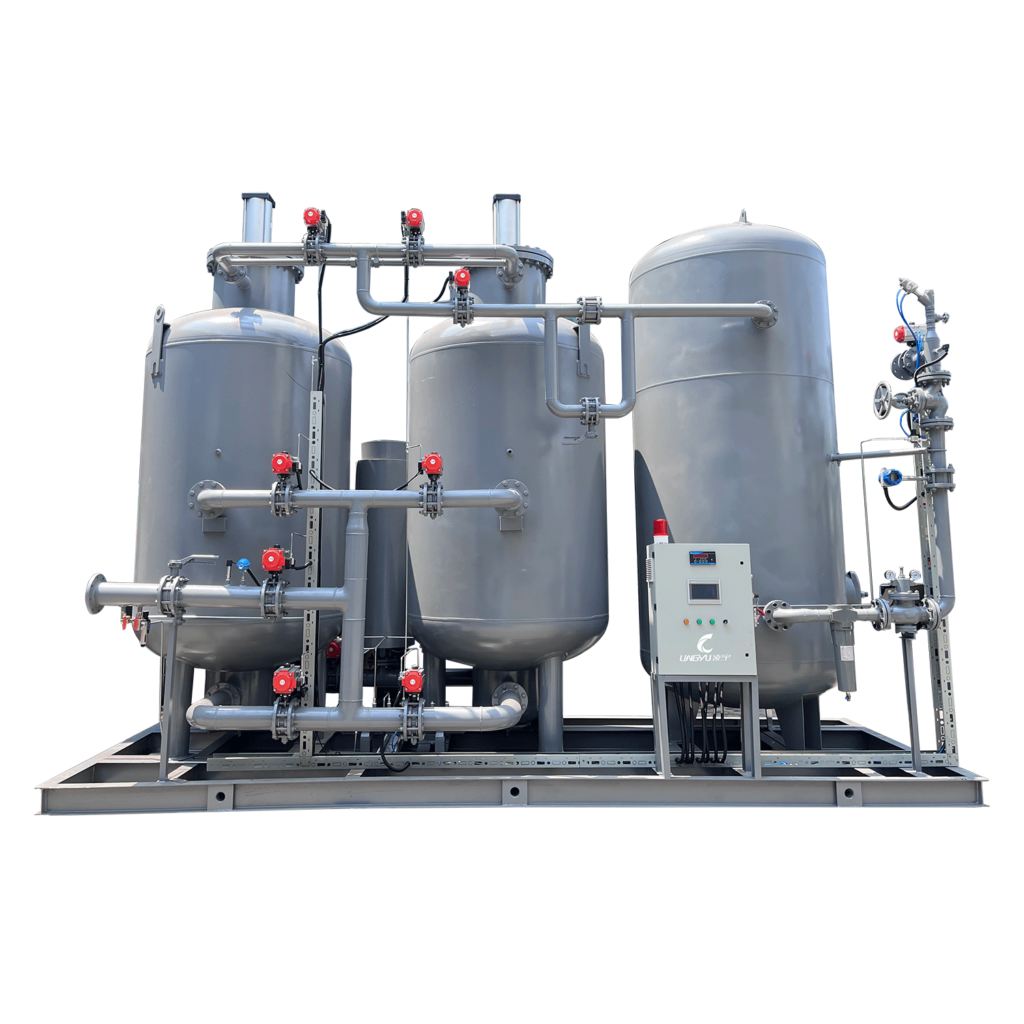
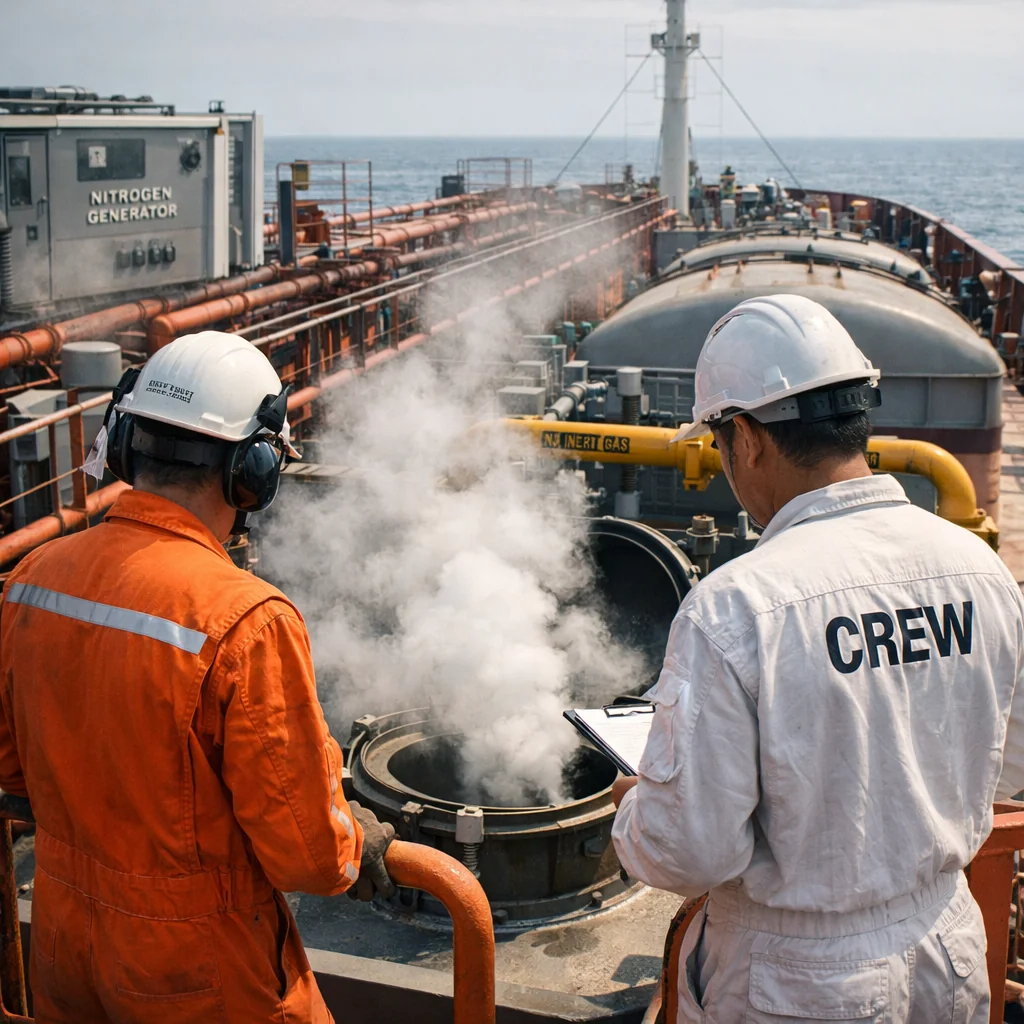
A nitrogen generator for chemical tankers provides an on-board source of nitrogen produced from compressed air. Instead of depending entirely on stored nitrogen cylinders or external nitrogen supply at port, the vessel can generate nitrogen according to its operating demand.
For more information about gas-treatment requirements in this sector, explore Lingyu’s oil, gas, offshore, and marine applications.
Why Nitrogen Is Used on Chemical Tankers
Nitrogen can be used where the oxygen concentration inside a cargo tank, pipeline, or process space needs to be reduced.
Depending on the cargo, vessel design, and operating procedure, nitrogen may support:
- Cargo tank inerting
- Tank blanketing
- Purging before loading
- Maintaining a controlled tank atmosphere during transit
- Purging during cargo changeover
- Protection of oxygen-sensitive cargoes
- Selected unloading or transfer procedures
The actual nitrogen requirement depends on factors such as cargo properties, tank volume, initial oxygen concentration, target oxygen concentration, operating pressure, purging method, and applicable vessel or cargo requirements.
For this reason, nitrogen purity and generator capacity should be determined from the actual cargo-handling procedure rather than from a single general specification.
Improving Cargo Tank Safety
Some chemical cargoes can produce flammable or otherwise hazardous vapor mixtures under certain operating conditions.
Where inerting is required, introducing nitrogen can reduce oxygen concentration and help maintain a controlled low-oxygen atmosphere inside the cargo tank.
However, nitrogen should not be treated as a standalone safety measure. Effective inerting depends on factors such as:
- Initial oxygen concentration
- Required final oxygen concentration
- Tank geometry
- Purging method
- Nitrogen flow rate
- Gas distribution
- Pressure control
- Monitoring equipment
- Cargo characteristics
- Operating procedures
The nitrogen generator should therefore operate as part of the vessel’s overall inert-gas, cargo-handling, monitoring, and safety system.
Protecting Oxygen-Sensitive Cargo
Nitrogen can also be used to reduce contact between chemical cargoes and atmospheric oxygen.
A nitrogen blanket maintained above the liquid surface can help protect cargoes that may oxidize, degrade, discolor, or otherwise change when exposed to air.
The required nitrogen purity should be based on the actual cargo specification and maximum allowable oxygen concentration rather than applying one universal purity value to every chemical tanker.
In some cases, maintaining the correct tank atmosphere may depend more on continuous nitrogen supply, pressure control, and gas distribution than on simply specifying the highest possible nitrogen purity.
What Is an On-Board Nitrogen Generator?
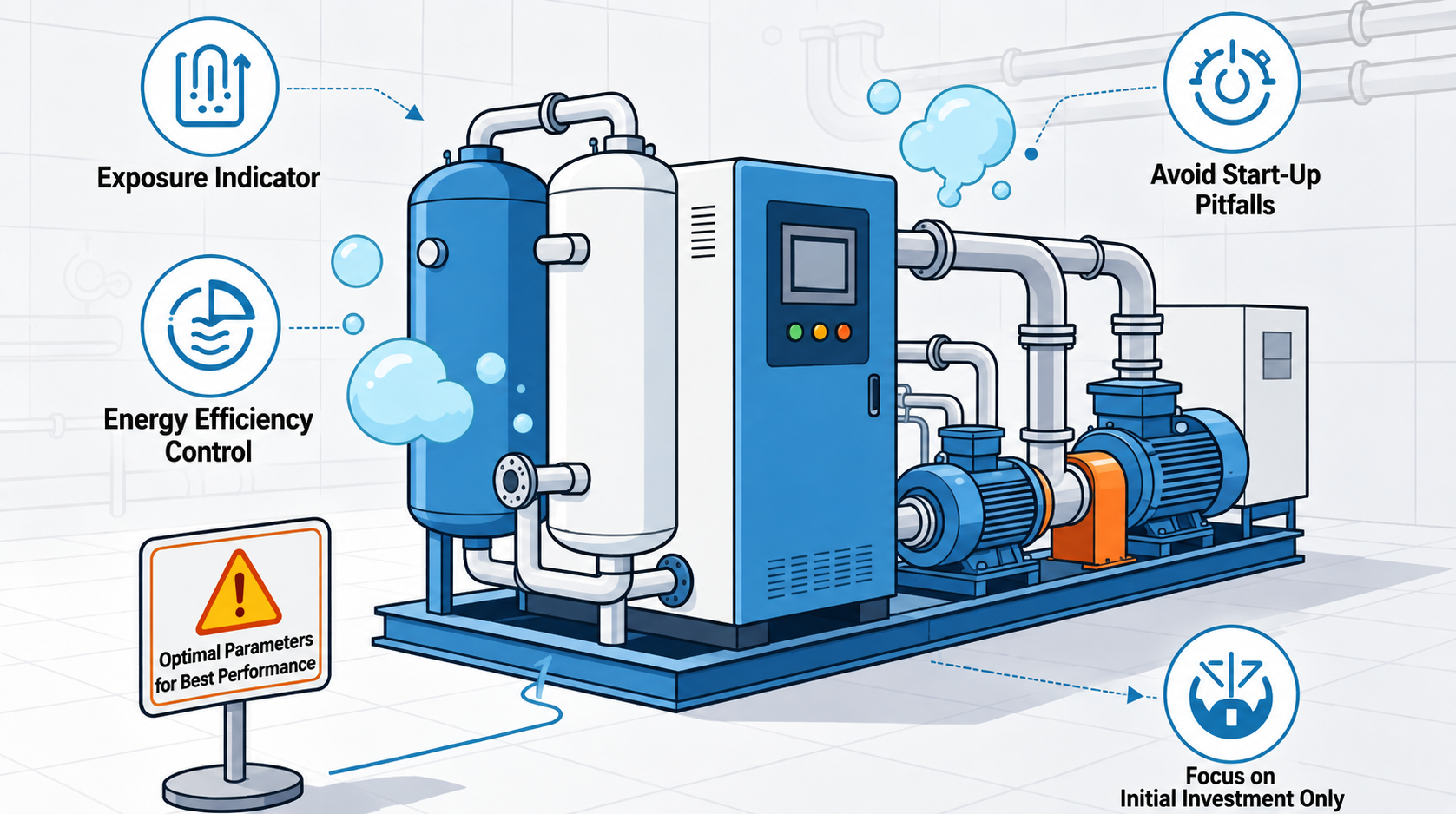
An on-board nitrogen generation system produces nitrogen from compressed air and distributes it to the required cargo or process systems.
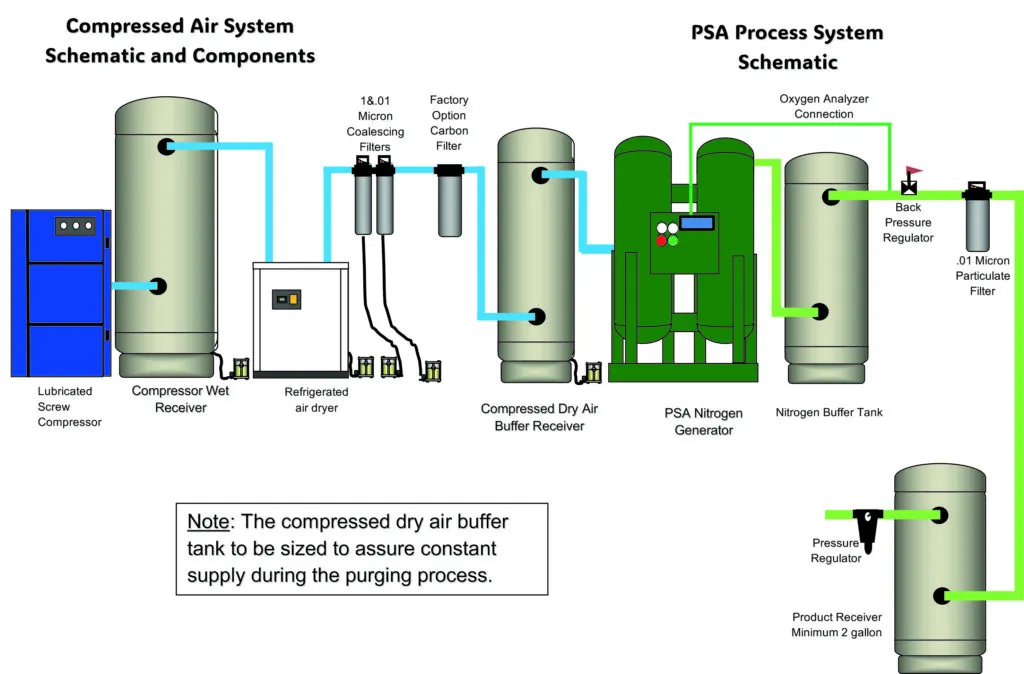
A typical installation may include:
- Air compressor or compressed-air supply
- Air receiver
- Compressed-air dryer
- Filtration system
- PSA nitrogen generator
- Nitrogen buffer tank
- Nitrogen or oxygen analyzer
- Pressure-control equipment
- Distribution piping
- Off-spec nitrogen handling
The exact system arrangement depends on vessel utilities, nitrogen demand, required pressure, available machinery space, and the operating procedure.
Rather than selecting the nitrogen generator as an isolated piece of equipment, vessel operators should define the complete system from compressed-air generation and treatment through nitrogen monitoring and point-of-use distribution.
Lingyu’s PSA nitrogen generator can be configured for different nitrogen purity and production-capacity requirements.
How PSA Nitrogen Generation Works
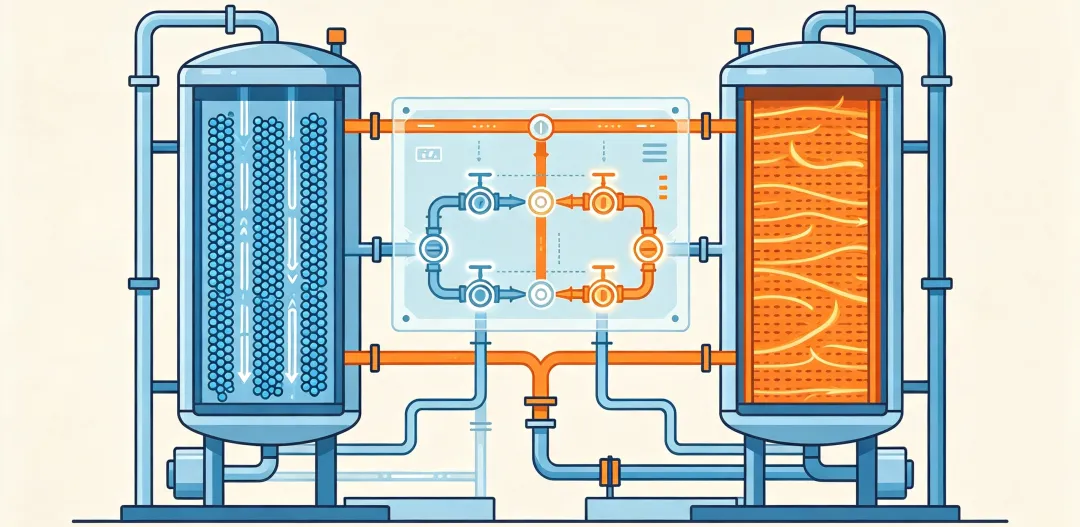
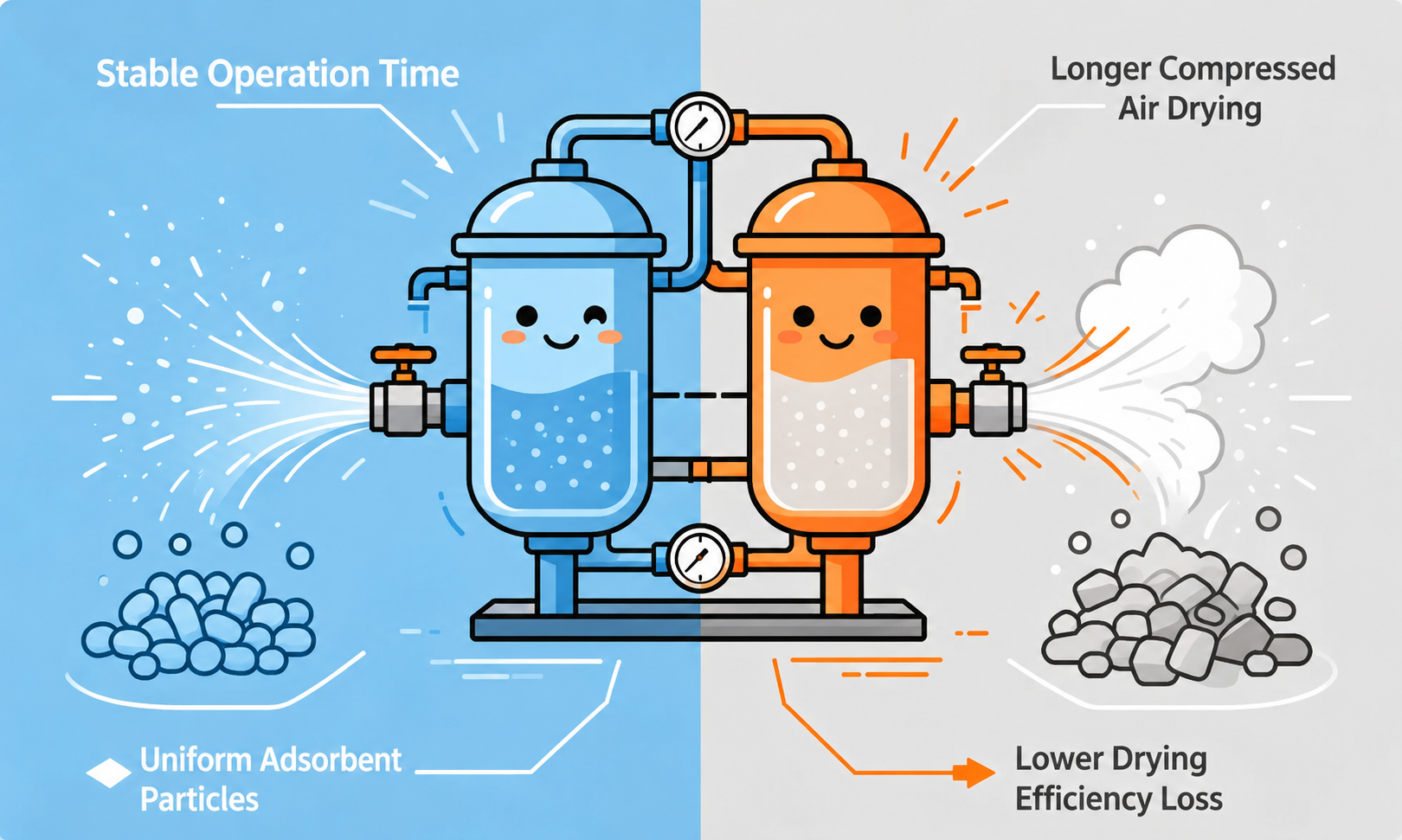
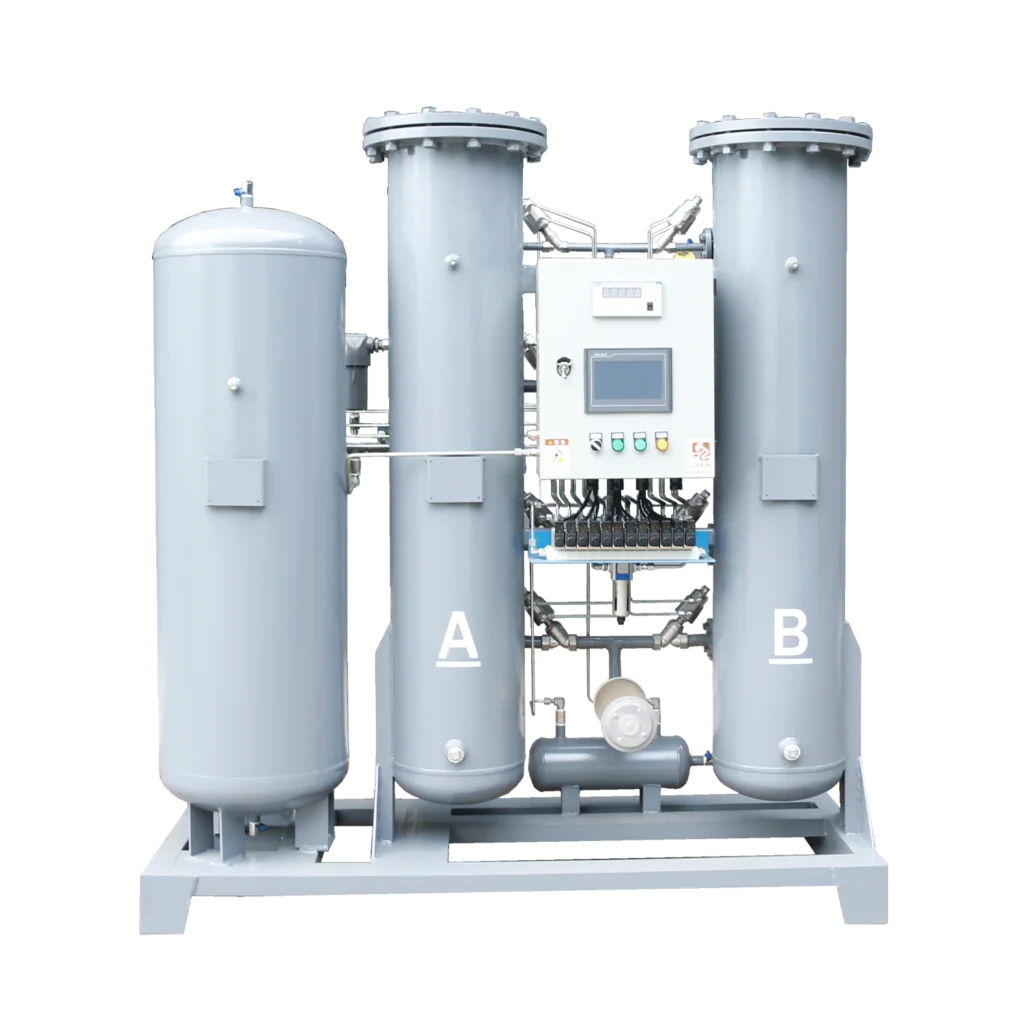
Lingyu’s PSA nitrogen generator uses two adsorption towers containing Carbon Molecular Sieve (CMS).
Conditioned compressed air enters one tower, where oxygen is preferentially adsorbed while nitrogen passes through as product gas.
At the same time, the second tower depressurizes and regenerates. The two towers alternate automatically to maintain continuous nitrogen generation.
Depending on the selected configuration, system controls may include nitrogen purity monitoring, flow monitoring, PLC-based operation, alarms, and off-spec gas handling.
For a more detailed explanation of the separation process, see how a PSA nitrogen generator works.
How Pure Should Nitrogen Be for a Chemical Tanker?
There is no single nitrogen purity that is correct for every chemical tanker or every cargo.
Lingyu’s PSA nitrogen generator range includes different purity configurations, but the appropriate purity should be determined from the actual operating requirement.
Important factors include:
- Cargo properties
- Maximum allowable oxygen concentration
- Required inerting procedure
- Tank operating conditions
- Nitrogen flow requirement
- Pressure requirement
- Cargo-handling procedure
- Vessel-specific requirements
For applications where this purity level meets the defined operating requirement, a 99.5% nitrogen generator may be one configuration to evaluate.
Higher purity should not automatically be selected.
Increasing nitrogen purity can affect nitrogen recovery, available production capacity, and compressed-air consumption. Purity should therefore be treated as an engineering parameter rather than simply maximized.
Flow Rate Is Critical for Tank Inerting
For chemical tanker applications, nitrogen flow can be just as important as purity.
A system used primarily to maintain a nitrogen blanket may require a very different capacity from a system expected to purge or inert one or more large cargo tanks within a limited time.
Important sizing information includes:
- Number of cargo tanks
- Individual tank volume
- Total volume to be inerted
- Initial oxygen concentration
- Target oxygen concentration
- Required purging time
- Simultaneous tank demand
- Loading and unloading rate
- Continuous blanketing demand
- Expected operating schedule
The nitrogen generator should therefore not be selected simply according to a nominal flow figure.
For additional guidance on evaluating purity, flow, pressure, dew point, and compressed-air requirements together, see the nitrogen generator specification guide.
Pressure and Distribution Requirements
The nitrogen generator must also work with the vessel’s downstream piping, pressure-control equipment, and cargo-tank system.
Required nitrogen pressure can vary between blanketing, purging, transfer support, and other operations.
The inlet compressed-air pressure for Lingyu PSA nitrogen generation systems is approximately 0.5–0.8 MPa under the applicable operating conditions.
This is the feed-air pressure for the generator and should not be confused with the final nitrogen pressure required at the cargo tank or point of use.
Where higher delivery pressure is required, additional storage, pressure boosting, or other downstream equipment may need to be considered.
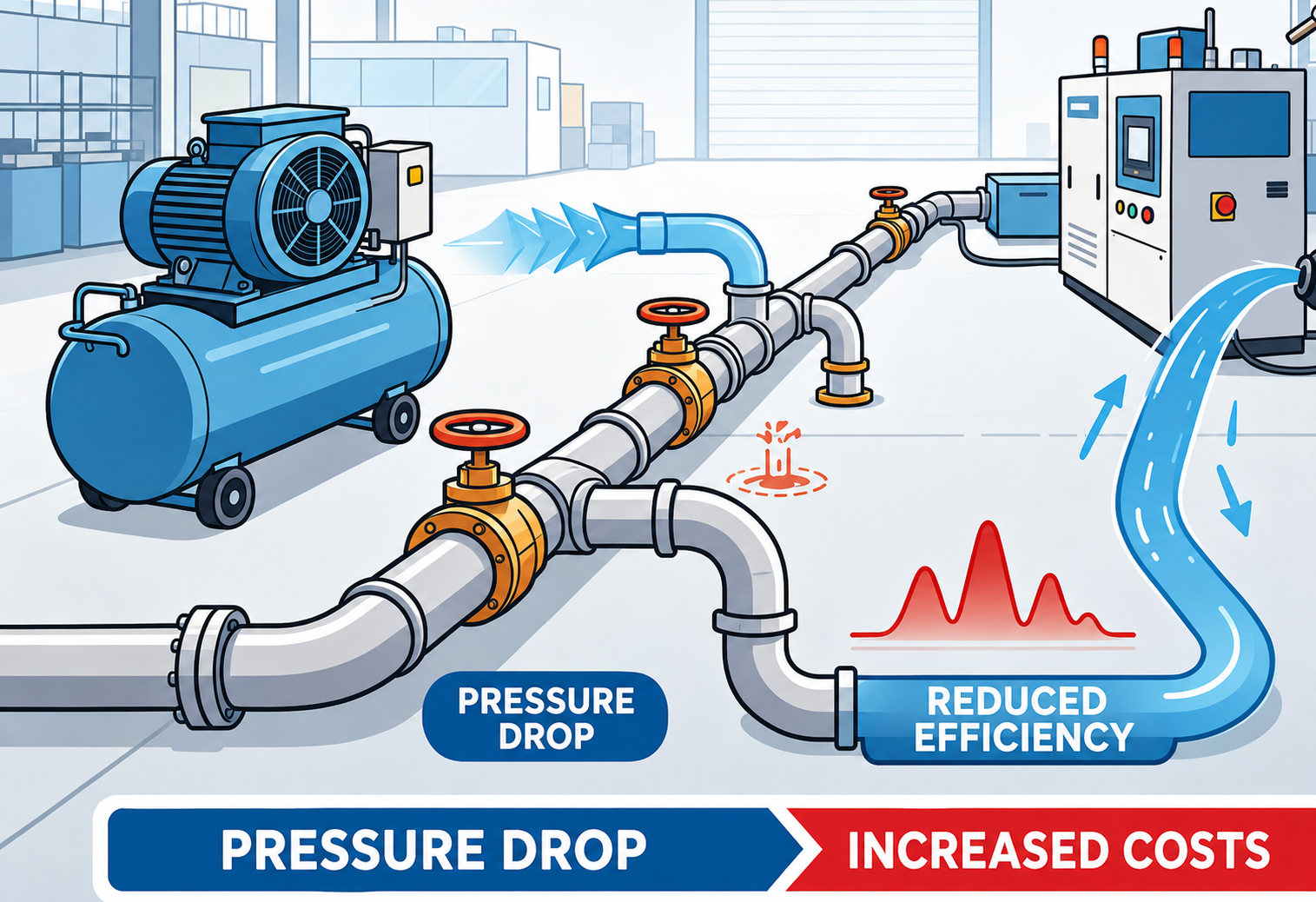
Compressed-Air Quality Matters at Sea
A PSA generator depends on clean, dry compressed air.
Moisture, oil, particles, and unsuitable inlet conditions can affect the CMS, pneumatic valves, filters, instrumentation, and overall system reliability.
A suitable pretreatment arrangement may therefore include:
- Air receiver
- Compressed-air dryer
- Pre-filtration
- Oil-removal filtration
- Fine particulate filtration
- Automatic drainage
A suitable precision compressed-air filter can form part of this upstream air-treatment system.
For Lingyu PSA nitrogen generation systems, the maximum inlet-air temperature is approximately 40°C, the inlet compressed-air pressure is approximately 0.5–0.8 MPa, and nitrogen dew-point performance can reach approximately −40°C or lower under the applicable operating conditions.
The complete system should still be configured according to the actual vessel environment, nitrogen demand, and selected equipment arrangement.
Monitoring Nitrogen Purity and Oxygen Level
For cargo inerting and blanketing, producing nitrogen is only part of the process.
Operators also need appropriate methods to confirm that the supplied gas and cargo-tank atmosphere remain within the required operating conditions.
Depending on system configuration, monitoring may include:
- Nitrogen purity
- Residual oxygen
- Nitrogen flow
- Supply pressure
- Operating status
- Alarm conditions
Off-spec nitrogen handling should also be considered so that gas outside the required specification is not continuously supplied to the downstream process.
Monitoring at the nitrogen generator does not replace tank-atmosphere monitoring or vessel operating procedures where these are required.
The complete inerting system should therefore be designed around both nitrogen production and verification of the actual process condition.
On-Board Nitrogen Generation vs. Stored Nitrogen
An on-board nitrogen generator can reduce dependence on externally supplied gas and provide nitrogen according to vessel demand.
Potential operational advantages include:
- Reduced cylinder handling
- Less dependence on port-side nitrogen supply
- Greater control over nitrogen availability
- Nitrogen production during extended voyages
- Reduced recurring gas-delivery logistics
However, on-board generation is not automatically the lowest-cost option for every vessel.
A realistic comparison should consider:
- Annual nitrogen consumption
- Required purity and pressure
- Generator capacity
- Compressor energy consumption
- Maintenance requirements
- Machinery-space availability
- Vessel operating pattern
- Port nitrogen availability
- Storage requirements
- Required redundancy
- Expected equipment life
The decision should therefore be based on lifecycle operation rather than equipment purchase price alone.
Marine Installation Considerations
A chemical tanker nitrogen generator must be evaluated within the vessel’s actual installation environment.
Important considerations include:
- Available machinery space
- Ventilation
- Ambient temperature
- Humidity
- Salt-laden or corrosive conditions
- Maintenance access
- Piping arrangement
- Drainage
- Electrical supply
- Equipment vibration
- Control-system integration
- Required redundancy
- Hazardous-area requirements where applicable
- Vessel-specific technical requirements
Shipboard conditions can differ significantly from a conventional land-based industrial installation. Equipment configuration, environmental protection, electrical arrangements, instrumentation, accessibility, and integration with vessel systems should therefore be matched to the actual installation conditions.
Marine Certification and Compliance
Marine nitrogen systems must be selected and installed according to the requirements applicable to the vessel and its operation.
Depending on the application, relevant requirements may involve:
- Vessel class
- Flag-state requirements
- Cargo requirements
- Hazardous-area classification
- Electrical standards
- Installation requirements
- Vessel-specific technical requirements
- Applicable marine regulations
The precise requirements vary by vessel and application.
Equipment certification, classification requirements, hazardous-area suitability, and other compliance requirements should therefore be defined according to the actual vessel and installation.
Related Marine Nitrogen Applications
Nitrogen generation is also used in other marine and offshore applications where controlled gas atmospheres, purging, or inerting are required.
For related vessel applications, see Lingyu’s guide to nitrogen generators for oil and gas ships.
Chemical tankers and oil and gas vessels can have different cargo-handling procedures, gas requirements, operating conditions, and installation considerations, so the nitrogen system should be configured around the specific vessel application.
Conclusion
A nitrogen generator for chemical tankers can provide an on-board nitrogen source for tank inerting, blanketing, purging, cargo protection, and other suitable operations.
However, correct system selection requires more than choosing a nitrogen purity percentage.
Target oxygen concentration, nitrogen purity, peak flow, tank volume, required purging time, delivery pressure, compressed-air quality, monitoring, installation conditions, and vessel-specific requirements should all be evaluated together.
For chemical tanker applications, the most suitable nitrogen generation system is one designed around the actual cargo-handling procedure and operating environment rather than simply the highest available purity or capacity.
Explore Lingyu’s nitrogen generator range or contact Lingyu with the vessel type, cargo-tank volumes, target oxygen concentration, required nitrogen flow, pressure, compressed-air conditions, and operating requirements for system selection.