In any compressed air system, clean air is essential for maintaining efficiency, protecting equipment, and ensuring consistent performance. One of the most important components in achieving clean, dry compressed air is the air dryer filter. However, filters do not last forever—they collect moisture, oil, dust, and contaminants over time. This makes air dryer filter replacement a crucial part of routine maintenance.
If the filter is neglected, the whole air system can suffer. In this article, we explain why replacing air dryer filters matters, how often you should do it, and what signs indicate it’s time for a change.
What Is an Air Dryer Filter?
An air dryer filter is a specialized filtration element installed within or alongside a compressed air dryer. Its purpose is to remove:
Water vapor
Liquid moisture
Oil aerosols
Dirt and solid particles
Micro-contaminants
Air dryers and filters work together to improve the quality of compressed air used in tools, machinery, and production lines.
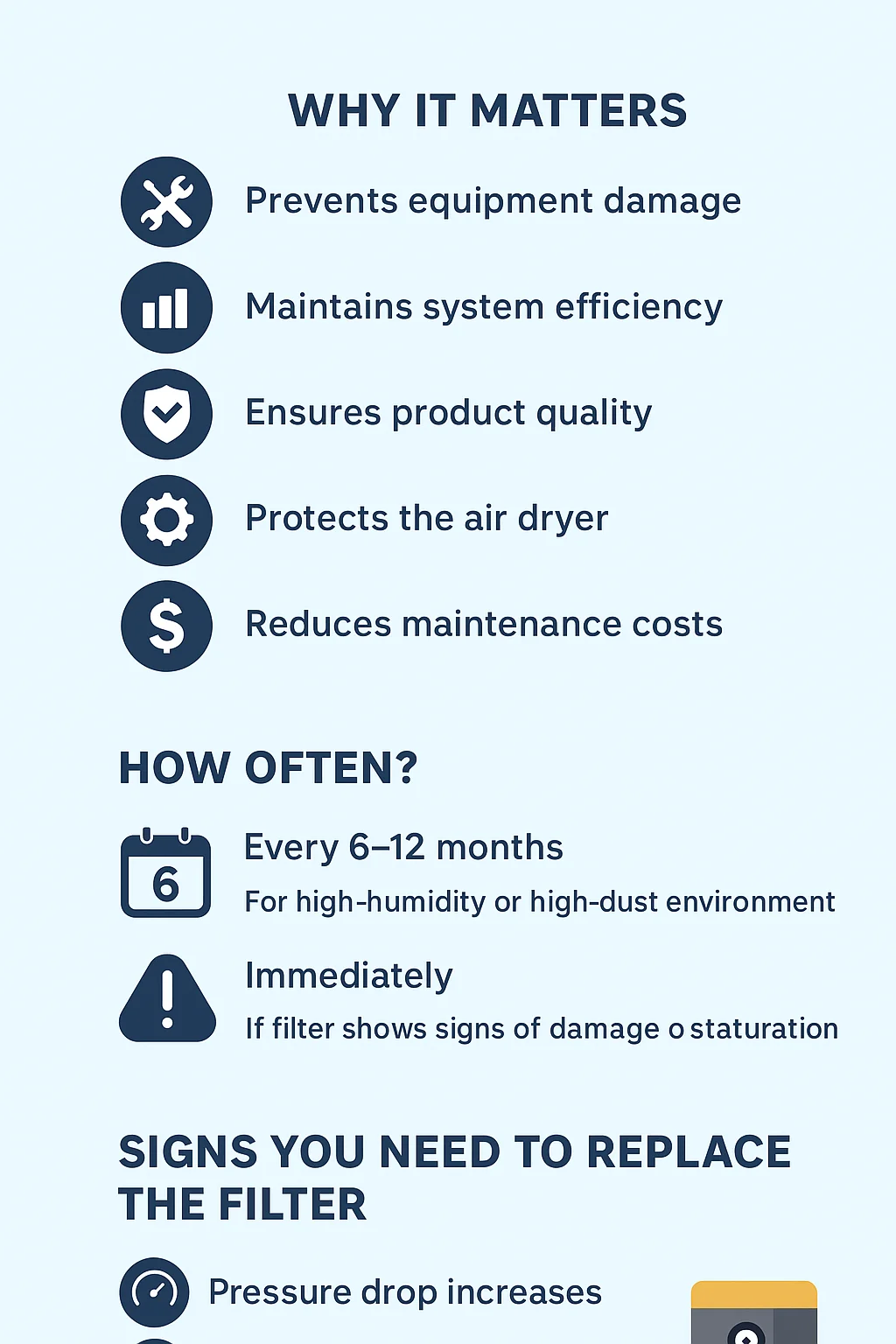
Why Air Dryer Filter Replacement Is Important
1. Prevents Equipment Damage
Moisture and contaminants can lead to corrosion, clogging, and wear in pneumatic components, causing costly breakdowns.
2. Maintains System Efficiency
Dirty filters increase pressure drop, forcing the compressor to work harder—leading to higher energy consumption.
3. Ensures Product Quality
Industries like food processing, electronics, and pharmaceuticals rely on ultra-clean air. A worn-out filter compromises product purity.
4. Protects the Air Dryer Itself
Filters serve as the first line of defense, extending the lifespan of the dryer and other downstream equipment.
5. Reduces Maintenance Costs
Regular filter replacement prevents major failures and expensive repairs.
How Often Should You Replace Air Dryer Filters?
While replacement intervals vary based on usage and environment, most manufacturers recommend:
Every 6–12 months for standard applications
Every 3–6 months for high-humidity or high-dust environments
Immediately if the filter shows signs of damage or saturation
Regular inspections are key—even the best filters degrade over time.
Signs You Need an Air Dryer Filter Replacement
Watch for these common indicators:
1. Pressure Drop Increases
A clogged filter restricts airflow, causing pressure loss at the point of use.
2. Reduced Air Quality
If moisture, oil, or dust starts appearing in the air lines, the filter is no longer performing effectively.
3. Unusual Odors
A saturated filter may emit oily or musty smells.
4. Overheating Compressors
Restricted airflow forces the compressor to work harder, leading to heat buildup.
5. Visible Dirt or Damage
If the filter element looks dark, wet, oily, or torn, replacement is overdue.
Types of Air Dryer Filters and Their Replacement Needs
1. Coalescing Filters
Remove oil aerosols and fine water droplets.
Replacement frequency: Medium (6–12 months)
2. Particulate Filters
Trap dust, rust, and solid particles.
Replacement frequency: Medium to high depending on environment
3. Activated Carbon Filters
Remove odors and vapors.
Replacement frequency: Shorter lifespan due to absorption saturation
4. High-Efficiency Filters
Used in medical, food, and precision industries.
Replacement frequency: Follow strict manufacturer guidelines
Each filter type requires specific maintenance intervals to maintain optimal performance.
How to Replace an Air Dryer Filter (General Steps)
Although exact steps vary by model, the process generally includes:
1. Depressurize the System
Turn off the compressor and release all air pressure.
2. Remove the Housing
Unscrew the filter bowl or housing carefully.
3. Replace the Filter Element
Insert a new, compatible filter element—always use quality OEM or certified replacements.
4. Inspect Seals and O-Rings
Replace worn seals to prevent air leaks.
5. Reassemble and Test
Secure the housing, pressurize the system, and check for leaks.
Choosing the Right Replacement Filter
When selecting a replacement filter, consider:
Micron rating (filtration level)
Compatibility with your dryer model
Operating pressure and temperature
Material durability
OEM vs. aftermarket quality
Using the wrong filter can reduce air quality and damage your equipment, so precision matters.
The differential pressure gauge indicates thetimeto replace thefiter elementat aglance;
The exterior is sprayed withepoxy resin powder to improve durabiityandcorroslonresistance:
The casingls marked withthe airflow direction,and thefiter tube head
Conclusion
Regular air dryer filter replacement is essential for maintaining clean, dry, and high-performing compressed air systems. Replacing filters on schedule helps you extend equipment lifespan, improve efficiency, and avoid costly downtime. Whether you operate a small workshop or a large industrial facility, investing in proper filter maintenance is one of the simplest and most effective ways to protect your compressed air system.