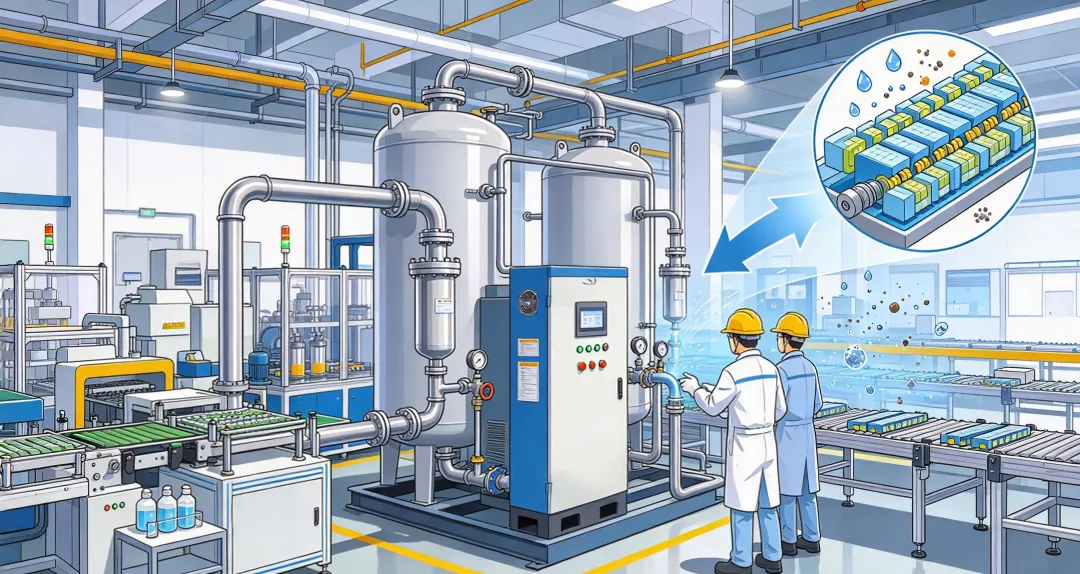
In industrial compressed air systems, achieving a low and stable pressure dew point while controlling energy consumption can be challenging. This is particularly relevant in compressor stations using centrifugal compressors and oil-free screw compressors, where high-temperature discharge air creates an opportunity to recover heat that would otherwise be wasted.
A compression heat regenerative adsorption dryer, also known as a heat-of-compression or HOC dryer, takes advantage of this thermal energy to regenerate the desiccant. When operating conditions are suitable, this approach can substantially reduce regeneration-air consumption and improve overall compressed air system efficiency.
However, HOC dryers are sometimes misunderstood. They do not automatically deliver the same pressure dew point under every operating condition, and not every HOC configuration is truly zero-purge. Their performance depends on inlet temperature, cooling conditions, load profile, dryer configuration, and control strategy. The original article correctly emphasizes the importance of matching the dryer to actual operating conditions rather than assuming that HOC technology guarantees a specific dew point.
What Is a Compression Heat Regenerative Adsorption Dryer?
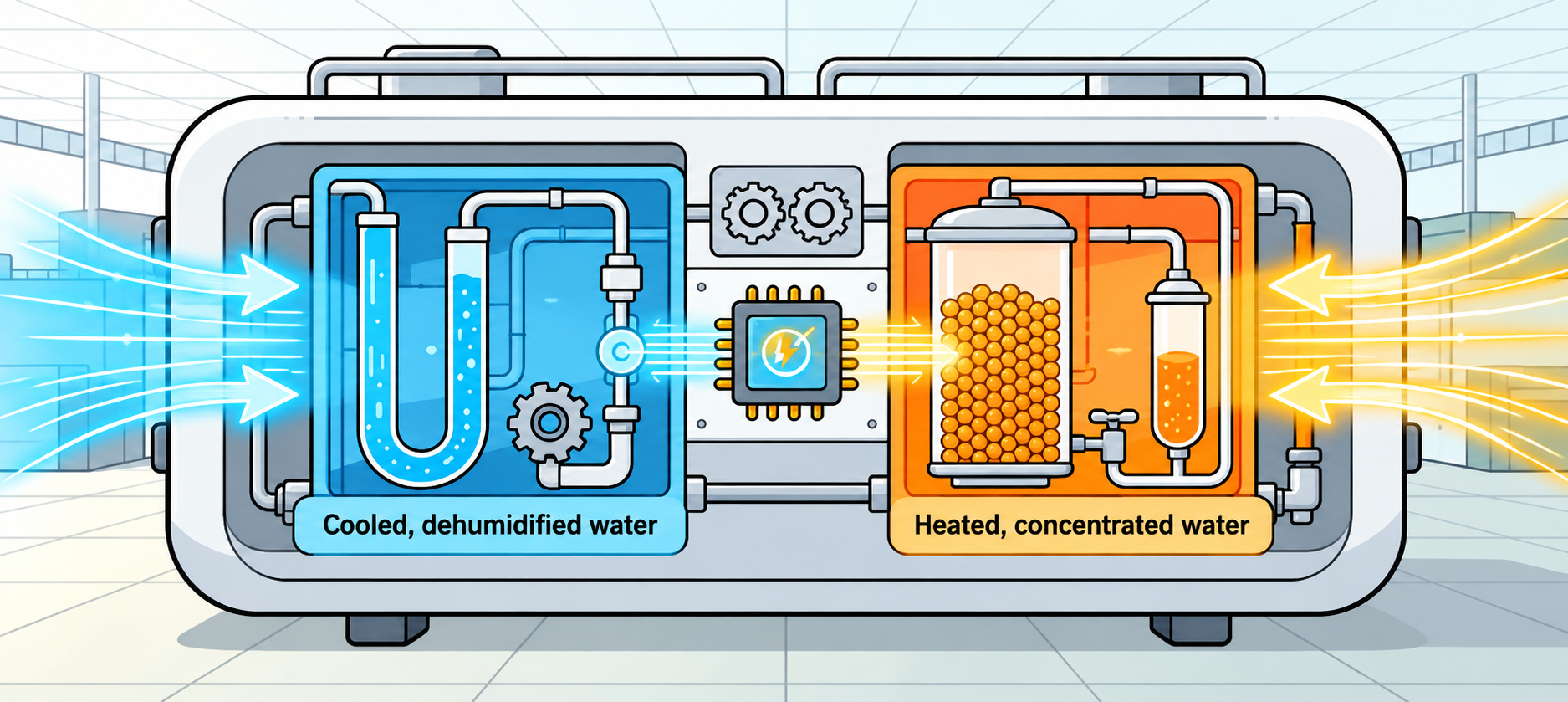
A compression heat regenerative adsorption dryer is a desiccant dryer that recovers thermal energy from high-temperature compressed air and uses that heat during desiccant regeneration.
During normal drying, moisture in the compressed air is adsorbed by the desiccant. As the adsorption bed becomes saturated, it must be regenerated before it can efficiently remove moisture again.
Instead of relying entirely on electric heating or consuming a large quantity of dry product air for regeneration, an HOC dryer uses heat that has already been generated during air compression.
This makes heat-of-compression dryers particularly attractive for compressor systems that can provide sufficiently hot and relatively stable discharge air.
Lingyu’s HOC configurations are designed for a rated inlet temperature of 120°C, with an allowable inlet-temperature range of approximately 110–180°C.
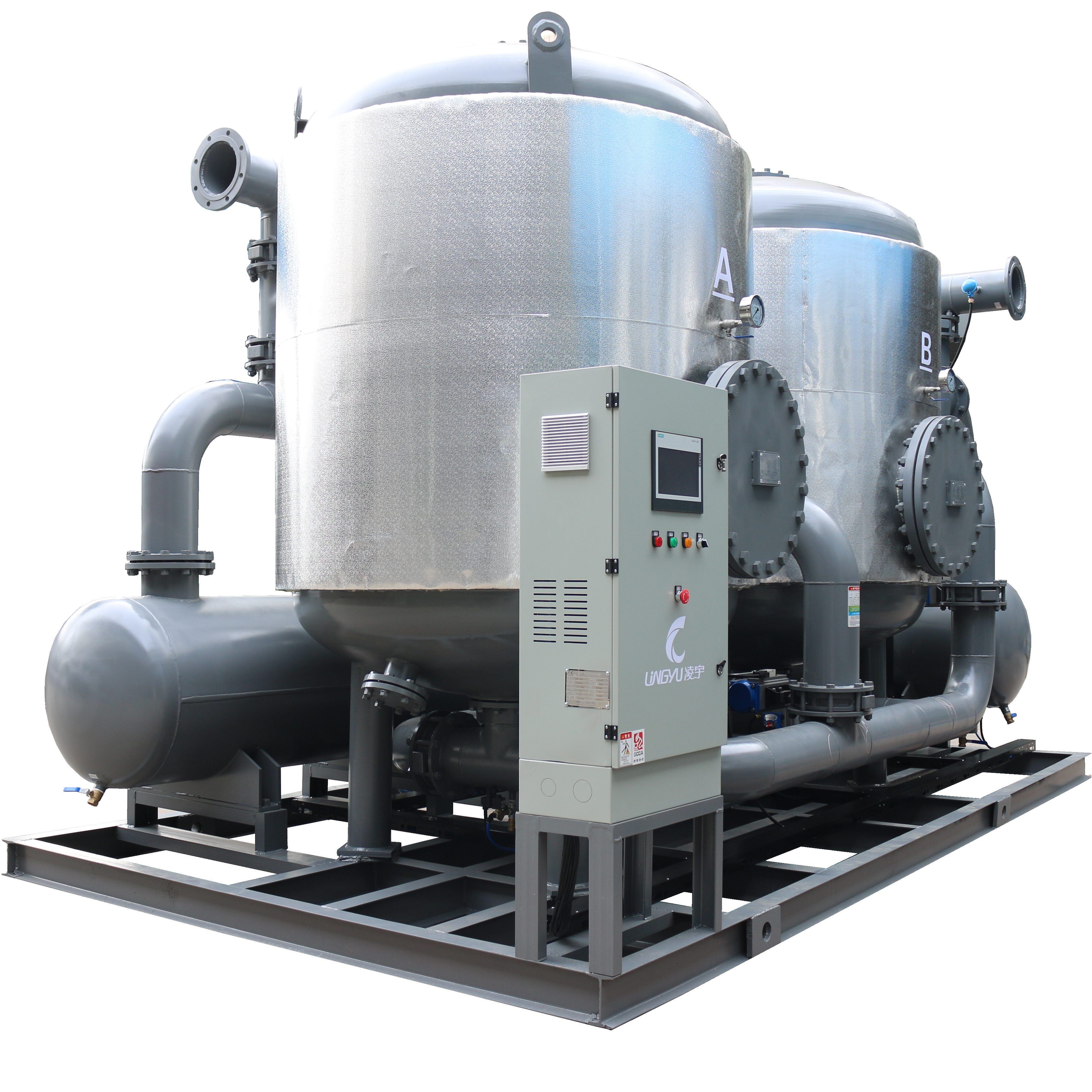
HOC-E and HOC-Z Are Not the Same
One of the most important distinctions when discussing compression heat regenerative dryers is the difference between low-purge and zero-purge configurations.
HOC-E Low-Purge Configuration
The HOC-E Series uses recovered compression heat but still allows a limited amount of regeneration-air consumption.
Under its specified operating conditions, the HOC-E configuration has:
- Rated inlet pressure: 0.7 MPa
- Operating pressure range: 0.6–1.0 MPa
- Rated inlet temperature: 120°C
- Allowable inlet temperature: 110–180°C
- Regeneration air consumption: ≤3%
- Outlet pressure dew point: −20°C / −40°C optional
- Cooling water temperature: ≤32°C
- Cooling water pressure: 0.2–0.6 MPa
Therefore, it is more accurate to describe HOC-E as a low-purge heat-of-compression dryer, not a zero-air-loss dryer.
Users evaluating this configuration can refer to the compression heated regeneration adsorption air dryer for the corresponding equipment type.
HOC-Z Zero-Purge Configuration
The HOC-Z design goes further by eliminating the use of dry product air during both regeneration and cooling.
The high-temperature compressed air directly provides heat to regenerate the desiccant. During cooling, compressed air that has passed through the cooler is used to cool the regenerated adsorption bed rather than consuming dry product air.
As a result, the system is designed for 0% regeneration air consumption under its specified conditions.
For applications where minimizing compressed-air loss is a primary objective, the HOC-Z zero gas consumption heat-of-compression dryer is the more relevant configuration.
Misconception 1: Every HOC Dryer Is a Zero-Purge Dryer
This is not correct.
“Heat-of-compression” describes the use of compressor discharge heat for regeneration. It does not automatically define how the cooling and regeneration-air circuits are configured.
A low-purge HOC dryer may still consume a small quantity of compressed air, while a zero-purge design is specifically engineered to avoid product-air consumption during regeneration.
The difference becomes significant in large compressor stations because even a small purge percentage can represent a considerable volume of compressed air over thousands of operating hours.
When comparing HOC dryers, regeneration-air consumption should therefore be checked as an actual specification rather than inferred from the product name.
Misconception 2: An HOC Dryer Always Produces a −40°C Pressure Dew Point
A heat-of-compression dryer can be configured for very low pressure dew points, but −40°C should not be treated as an automatic result under all operating conditions.
Lingyu’s HOC configurations specify −20°C / −40°C as selectable pressure-dew-point requirements, subject to the specified operating conditions.
Actual drying performance is influenced by several interacting variables.
Inlet Temperature
Recovered heat is the fundamental energy source of an HOC dryer.
If compressor discharge temperature remains within the intended operating range, sufficient thermal energy can be available for effective regeneration. If temperature falls substantially because of low compressor loading, operating changes, or upstream cooling, the available regeneration energy also decreases.
This is why HOC dryer selection should consider the compressor’s real discharge-temperature profile, not simply its nominal full-load value.
Cooling Conditions
Heating removes moisture from the desiccant, but regeneration is not complete simply because the adsorption bed has been heated.
After desorption, the desiccant must also be cooled appropriately before returning to the adsorption stage. Cooling conditions can therefore influence subsequent adsorption performance.
Lingyu’s HOC Series specifies a cooling-water temperature of ≤32°C and cooling-water pressure of 0.2–0.6 MPa under its stated operating conditions.
Airflow and Compressor Load
An industrial compressor rarely operates under perfectly constant conditions.
Air demand may change between shifts, production lines can start and stop, and compressor loading can vary significantly. These changes affect both airflow and available thermal energy.
For this reason, the HOC-Z design includes automatic flow-distribution control that adjusts according to airflow and heating temperature and is designed to accommodate approximately 30–110% load variation.
Misconception 3: Longer Adsorption Cycles Are Always Better
A long adsorption cycle is not automatically evidence of better dryer performance.
The appropriate switching cycle depends on desiccant condition, moisture load, airflow, pressure, temperature, and the regeneration process.
If the adsorption bed remains online beyond its effective moisture capacity, pressure dew point can begin to deteriorate. Conversely, switching unnecessarily early can increase valve cycling and may reduce operating efficiency.
The better approach is to control the dryer according to actual operating parameters rather than assuming that the longest possible fixed cycle is ideal.
Modern regenerative dryers can use pressure dew point, temperature, time, and other monitored data to support more appropriate cycle control.
Why Dew-Point Monitoring Matters
Pressure dew point is one of the most important performance indicators for any adsorption dryer.
Monitoring dew point allows operators to determine whether the adsorption and regeneration process is maintaining the required air quality.
Lingyu’s HOC-Z Series includes dew-point monitoring that can display either atmospheric dew point or pressure dew point, while its touchscreen control platform supports system monitoring and communication with centralized control systems.
This becomes particularly useful in plants where compressor load changes throughout the day.
A rising pressure dew point can indicate problems such as:
- Insufficient regeneration
- Inadequate cooling
- Excessive moisture loading
- Changing compressor discharge conditions
- Desiccant deterioration or contamination
- Valve malfunction
- Incorrect cycle timing
The trend over time is often more valuable than a single measurement.
Why Heat Recovery Can Reduce Operating Costs
Traditional heatless desiccant dryers use part of the dried compressed air as regeneration purge air.
That air has already been compressed, cooled, treated, and dried. Exhausting it during regeneration means the compressor must generate additional compressed air to compensate for the loss.
HOC technology takes a different approach by recovering energy already created during compression.
For large continuously operating compressor stations, this can significantly improve the economics of producing low-dew-point compressed air.
Lingyu has supplied industrial projects using zero-air-loss HOC technology at substantial capacities, including multiple 150 m³/min HOC units and customized 110 m³/min zero-air-loss HOC/blower-heated systems.
However, energy savings should always be calculated at the system level. A dryer can only recover compression heat efficiently when the upstream compressor and operating conditions provide the necessary thermal energy.
When Is an HOC Dryer a Good Choice?
Heat-of-compression drying is particularly suited to installations where high-temperature compressed air is continuously available.
Typical candidates include large central compressed-air stations using centrifugal or oil-free compressors, continuous-process manufacturing, chemical and petrochemical facilities, steel and materials production, new-energy manufacturing, and other high-demand industrial operations.
These facilities often have two characteristics that favor HOC technology: substantial compressed-air consumption and relatively continuous compressor operation.
For example, facilities in petrochemical and chemical processing can require large quantities of dependable low-dew-point compressed air for instrumentation and production systems.
The higher the annual operating hours and airflow, the greater the potential importance of avoiding purge-air losses.
When Might Another Adsorption Dryer Be More Suitable?
HOC technology is not automatically the best solution for every compressed-air system.
If compressor discharge temperature frequently falls below the required operating range, there may not be enough recoverable thermal energy to make a heat-of-compression configuration attractive.
In these situations, other regeneration technologies may provide more predictable operation.
For example, a blower zero-purge adsorption dryer uses an independent blower and heater rather than depending on compressor discharge heat. This can offer zero-purge operation while reducing dependence on high compressor outlet temperature.
A low-purge blower-heated system may also be appropriate when a small regeneration-air consumption is acceptable in exchange for greater independence from compressor discharge conditions.
The appropriate technology should therefore be selected according to actual plant conditions rather than simply choosing the regeneration method with the lowest theoretical purge rate.
HOC Dryer vs. Heatless Dryer
A heatless adsorption dryer has a comparatively simple regeneration principle. Part of the dry product air is expanded and passed through the saturated desiccant bed to carry moisture out of the dryer.
This simplicity can make heatless dryers attractive for smaller systems, intermittent operation, or installations where suitable waste heat is unavailable.
However, conventional heatless regeneration can consume a meaningful percentage of compressed air. For a large continuously operating plant, the energy required to produce that purge air can become significant.
An HOC dryer is therefore often more attractive as system airflow and operating hours increase—provided suitable high-temperature compressor discharge air is available.
Users comparing dryer technologies should evaluate the total compressed-air system rather than focusing only on purchase price. A broader compressed air dryer selection guide can help establish the required dew point and appropriate regeneration method before comparing specific models.
Important Factors When Selecting a Compression Heat Regenerative Dryer
Compressor Type
The dryer and compressor need to function as an integrated system.
HOC drying is generally most attractive when connected to compressors capable of supplying sufficiently hot compressed air during normal operation.
Inlet Temperature Profile
Do not size the system using only the maximum discharge temperature.
Evaluate minimum, normal, and maximum operating temperatures across different production conditions.
Lingyu’s HOC Series is designed around a 120°C rated inlet condition and a 110–180°C allowable range.
Pressure Dew Point Requirement
Determine whether the process actually requires −20°C, −40°C, or another pressure dew point.
Producing air significantly drier than necessary can increase system complexity without creating a useful process benefit.
Cooling-Water Conditions
Available cooling-water temperature, pressure, stability, and quality should be considered before installation.
Load Variation
Highly variable compressor loading can change both available heat and airflow. Control systems should be capable of responding appropriately.
Required Purge-Air Performance
Determine whether 0% regeneration-air consumption is essential or whether a low-purge configuration is economically sufficient.
Control and Communication
For large compressor stations, remote monitoring, alarm functions, pressure and temperature monitoring, valve feedback, and communication with a central control system can be valuable operational features.
FAQ: Compression Heat Regenerative Adsorption Dryer
Can an HOC dryer always achieve −40°C pressure dew point?
No. −40°C can be an available design target, but actual performance depends on the specified inlet temperature, pressure, cooling conditions, airflow, regeneration strategy, and equipment configuration.
Is every compression heat regenerative dryer zero-purge?
No. Lingyu’s HOC-E is a low-purge configuration with regeneration-air consumption of ≤3%, while HOC-Z is designed for zero regeneration-air consumption under specified operating conditions.
What inlet temperature does an HOC dryer require?
For Lingyu’s HOC Series, the rated inlet temperature is 120°C and the allowable inlet-temperature range is 110–180°C.
Why is high inlet temperature important?
The dryer depends on compression heat to regenerate the desiccant. If insufficient heat is available, regeneration performance and energy recovery can be affected.
Does zero purge mean zero energy consumption?
No. Zero purge means that dry compressed product air is not consumed as regeneration purge air. Pumps, controls, cooling equipment, valves, and other system components can still consume energy.
What is the main difference between HOC-E and HOC-Z?
HOC-E is a low-purge heat-of-compression configuration, while HOC-Z eliminates dry product-air consumption during both the regeneration and cooling stages.
Is HOC suitable for fluctuating compressor loads?
It can be, but the control strategy becomes especially important because available heat changes with compressor operation. The HOC-Z system is designed with automatic flow-distribution control to respond to varying airflow and heating temperature.
What should I consider if compressor discharge temperature is unstable?
The full operating profile should be evaluated before selecting the dryer. Where reliable compression heat is unavailable, blower-heated or other regenerative dryer technologies may provide a more suitable solution.
Conclusion
A compression heat regenerative adsorption dryer can be one of the most energy-efficient approaches to producing low-dew-point compressed air in large industrial compressor stations, but only when it is correctly matched to the compressor and operating conditions.
The most important point is that HOC technology does not automatically mean zero purge, and it does not guarantee −40°C pressure dew point under every condition.
HOC-E and HOC-Z serve different system requirements. HOC-E provides a low-purge approach with regeneration-air consumption of up to 3%, while HOC-Z is designed to eliminate compressed product-air loss during regeneration and cooling.
Successful application depends on inlet temperature, compressor loading, cooling-water conditions, airflow, required pressure dew point, regeneration strategy, and control performance.
When these factors are evaluated together, heat-of-compression drying can recover energy that would otherwise be wasted, reduce regeneration-air losses, and provide reliable low-dew-point compressed air for demanding industrial applications.