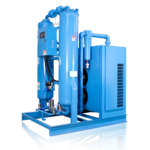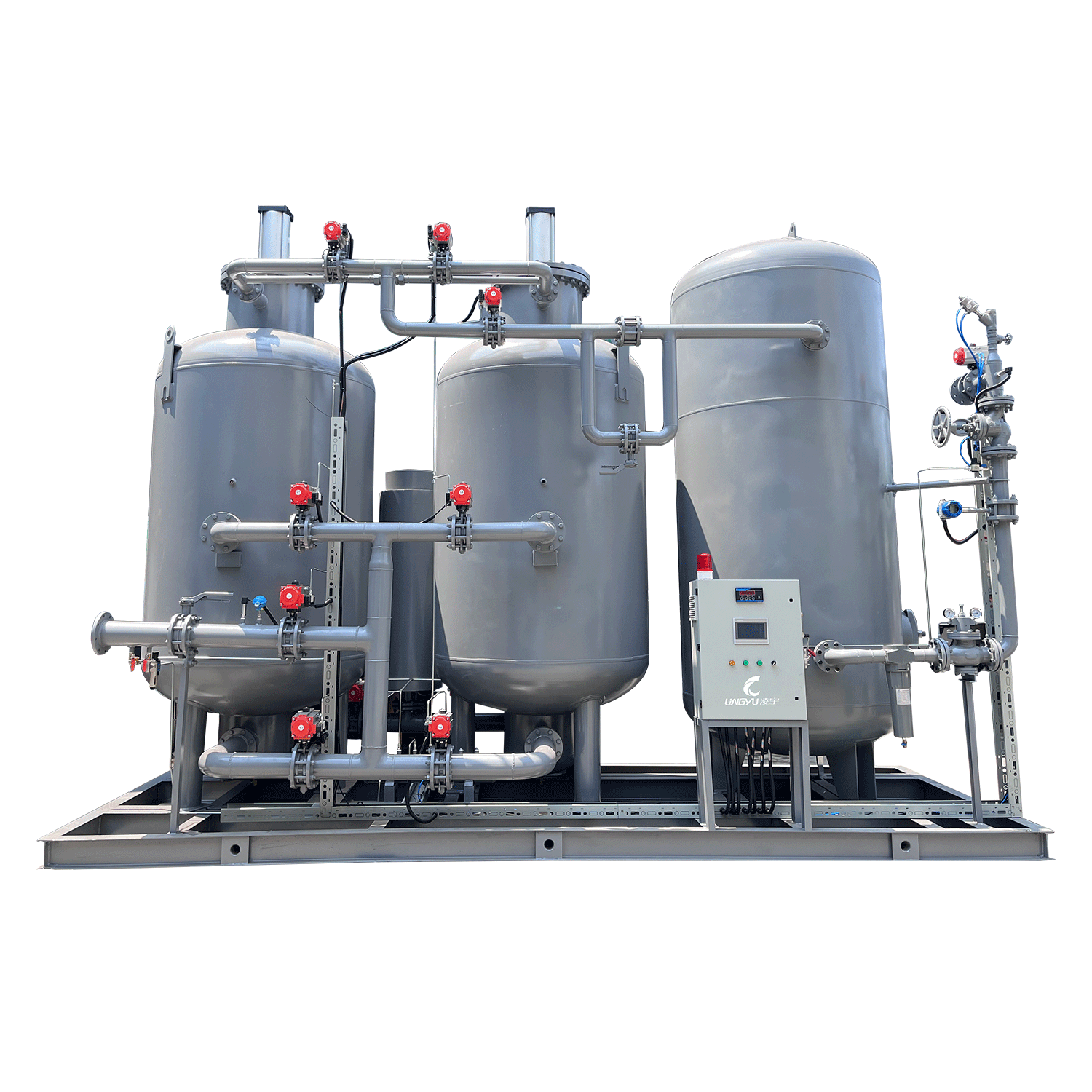
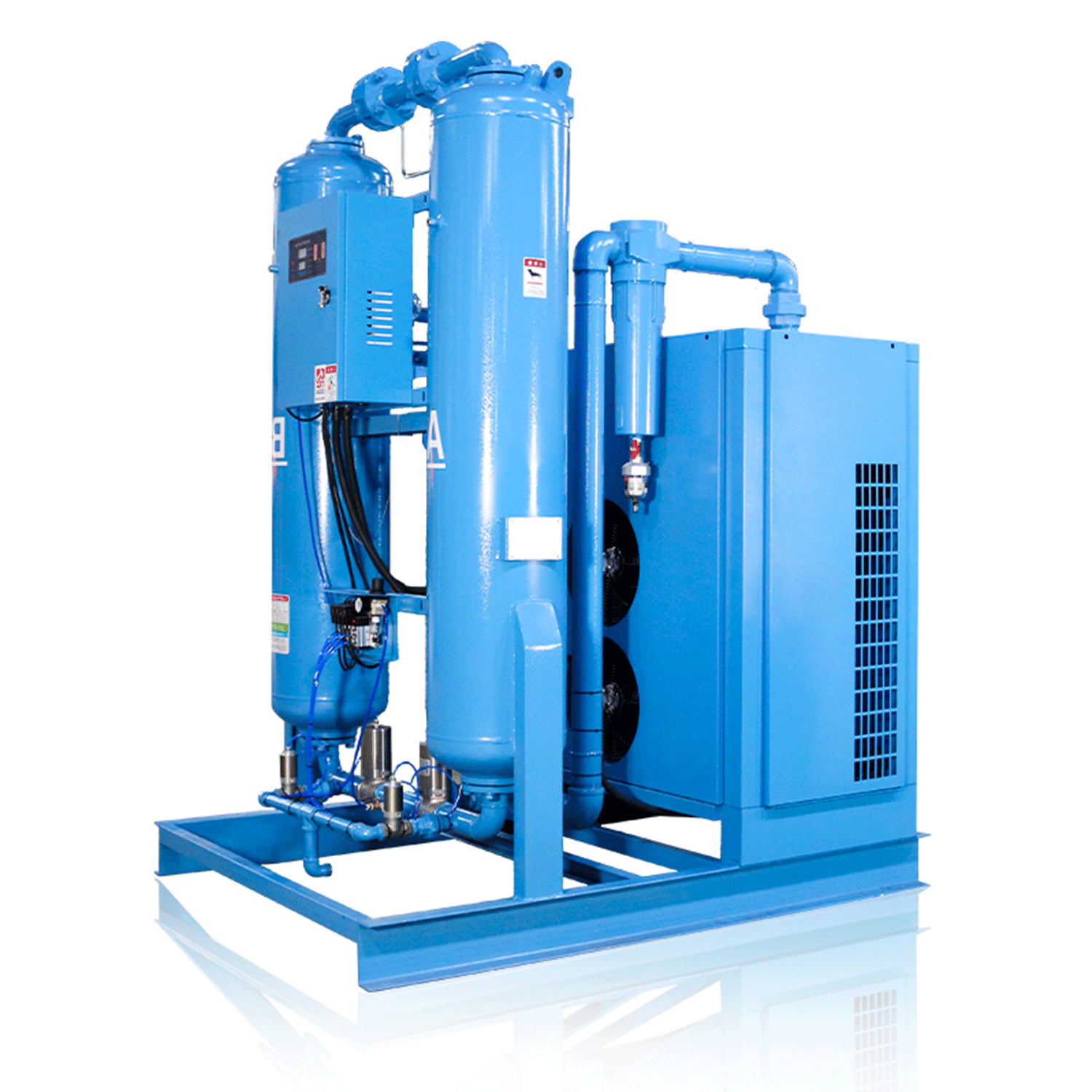
The DC Series Combined Compressed Air Dryer is designed for reliable drying of compressed air with high-performance activated alumina adsorbents. Beyond the technical data—including inlet pressure, temperature, regeneration method, and capacity—users often seek practical guidance on selection, applications, maintenance, and operational optimization.
1. How to Choose the Right DC Series Dryer
Key factors when selecting a DC Series dryer:
Airflow capacity: Match your system’s peak airflow with the dryer’s rated capacity (1.5–45 m³/min). For fluctuating loads, slightly oversize to maintain a stable outlet dew point ≤-40℃.
Inlet conditions: Ensure compatibility with air pressure (0.6–1.0 MPa standard, custom options available) and air inlet temperature (≤80℃).
Regeneration method:
No heat: Simpler, low-maintenance design; slightly higher energy consumption.
Micro-heat: More energy-efficient for continuous or high-duty operation.
Cooling type:
Air-cooled: Quick installation with no water infrastructure.
Water-cooled: Preferred for high-capacity systems or warm ambient conditions.
Special requirements: For systems above 45 m³/min or specific materials/temperature needs, Lingyu provides customized solutions.
Tip: Always select a dryer that slightly exceeds your maximum airflow demand to ensure reliable dew point performance.
2. Typical Applications Across Industries
DC Series dryers are used wherever dry, oil-free compressed air is critical:
Laboratory & Analytical Equipment: Ozone generators, laboratory analyzers, gas chromatographs, FTIR spectrometers.
Medical & Dental: Dental compressors, medical air systems, dry nitrogen generation.
Electronics & Semiconductor Manufacturing: Electronic chip testing, cleanrooms, circuit board production.
Automation & Robotics: Pneumatic automation systems, robotic machinery, air bearings.
Industrial Controls & Manufacturing: Car wash systems, bus door locking systems, air-operated pumps, dry sprinkler systems.
Specialized Industrial Processes: Waveguide drying, antenna pressurization, air turbines, graphic printing.
3. Maintenance Tips for Long-Term Reliability
To ensure efficiency and prolong dryer life:
Monitor pressure drop: A rising pressure drop indicates clogged adsorbents or filters.
Check regeneration cycles: Confirm no-heat or micro-heat cycles operate correctly; adjust timers if needed.
Inspect inlet/outlet fittings: Ensure connections are airtight and free from debris.
Maintain ambient conditions: Operate in well-ventilated, temperature-controlled environments (2–45℃).
Schedule adsorbent replacement: Particularly important in humid or contaminated air environments.
4. Energy Efficiency and Operational Optimization
Use micro-heat regeneration for high-duty or continuous operation; it reduces energy consumption.
Install pre-filters to remove oil and large particles, extending the life of the dryer adsorbent.
Integrate air receivers to stabilize airflow, reducing frequent cycling and peak power consumption.
Monitor outlet dew point regularly to maintain ≤-40℃ for critical equipment protection.
5. Why Choose Lingyu DC Series Dryers?
Lingyu offers more than high-performance compressed air dryers:
Customizable solutions for airflow, pressure, and dew point requirements.
Full air treatment and gas purification services for laboratory, medical, electronic, and industrial applications.
Global technical consultation and support to optimize your system design and operation.
Reliable after-sales service and fast delivery to ensure uninterrupted operation.
Conclusion
Selecting a DC Series Combined Compressed Air Dryer involves more than checking technical specs. Considering airflow, regeneration method, cooling type, and industrial application ensures stable, dry air, energy efficiency, and long equipment life. Lingyu’s DC Series provides versatile, reliable solutions for professional and industrial compressed air systems.