Choosing the right compressed air dryer is one of the most important decisions you can make for ensuring clean, dry, and reliable compressed air. Whether you’re running manufacturing equipment, powering pneumatic tools, or protecting precision instruments, moisture in compressed air can cause corrosion, contamination, and costly downtime.
But with multiple dryer types, specifications, and configurations available, how do you know which one is right for your system? This guide breaks down everything you need to consider when selecting a compressed air dryer.

1. Understand Why You Need an Air Dryer
When air is compressed, moisture is squeezed out and becomes concentrated. Without proper drying, this moisture can cause:
Rusting and corrosion in pipelines
Reduced lifespan of pneumatic tools
Contaminated end products
Freeze-ups in outdoor systems
Increased maintenance costs
A compressed air dryer removes this moisture to ensure stable, high-quality air suitable for your operation.
2. Identify the Required Dew Point
The dew point is the key measurement that tells you how dry your air must be. Your application determines the correct dew point:
+3°C / +38°F → Refrigerated air dryer (general industry, tools)
–20°C / –4°F → Desiccant dryer (instrumentation, electronics)
–40°C / –40°F → Standard PSA desiccant dryer (critical processes)
–70°C / –94°F → High-purity desiccant dryer (pharmaceutical, aerospace)
Choose the dew point that fits your environmental conditions and sensitivity of your equipment.
3. Choose the Dryer Type
Different dryer technologies are designed for different moisture levels and budgets.
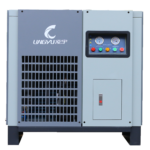
a. Refrigerated Air Dryers
Ideal for general manufacturing
Cost-effective
Dew point typically +3°C
Low maintenance
Best for: Workshops, packaging, automotive, CNC machines.
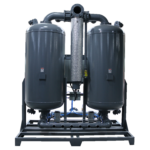
b. Adsorption Dryers
Extremely dry air
Dew point down to –70°C
Uses desiccant beads to absorb moisture
Available in heated or heatless variants
Best for: Food processing, pharmaceuticals, electronics, winter environments.
c. Membrane Air Dryers
Compact and silent
No electrical power required
Moderate dew point levels
Best for: Remote locations, point-of-use drying, instrumentation.
4. Consider Your Flow Rate and System Size
A common mistake is choosing a dryer too small for the system.
Always size your dryer based on:
Maximum CFM (or m³/min) demand
Ambient temperature
Inlet air temperature
Pressure variability
Most manufacturers recommend adding a 20–30% safety margin to your calculated airflow.
5. Check the Operating Environment
Environmental conditions affect dryer performance significantly.
Ask yourself:
Is the room hot or poorly ventilated?
Is the system in a humid climate?
Will the dryer be placed outdoors?
High inlet temperatures or humidity require a larger or more robust dryer.
6. Evaluate Energy Consumption
Energy efficiency matters—especially for dryers that run continuously.
Refrigerated dryers: look for cycling models
Desiccant dryers: choose heated options to save purge air
Smart controllers: help optimize load and reduce consumption
A more efficient dryer may cost more initially but will save money long-term.
7. Consider Filtration Requirements
Many systems need additional filtration before or after the dryer:
Pre-filters: remove oil and particulates to protect the dryer
After-filters: ensure clean, dry final air
Proper filtration increases dryer lifespan and prevents contamination.
8. Review Installation and Maintenance Needs
Good questions to ask:
Does it require drainage or special electrical connections?
Is the unit easy to service?
Are spare parts readily available?
How often is desiccant replacement required?
Choosing a dryer that fits your maintenance schedule helps avoid downtime.
Conclusion: Selecting the Right Compressed Air Dryer
Choosing a compressed air dryer is not just about picking a model—it’s about matching the dryer to your exact operating conditions, purity requirements, and long-term cost goals.
By evaluating dew point needs, dryer technology, airflow requirements, energy consumption, and filtration, you can ensure your system runs smoothly, efficiently, and reliably.
If your application demands clean, dry, high-quality compressed air, selecting the right dryer is an investment in performance and productivity.