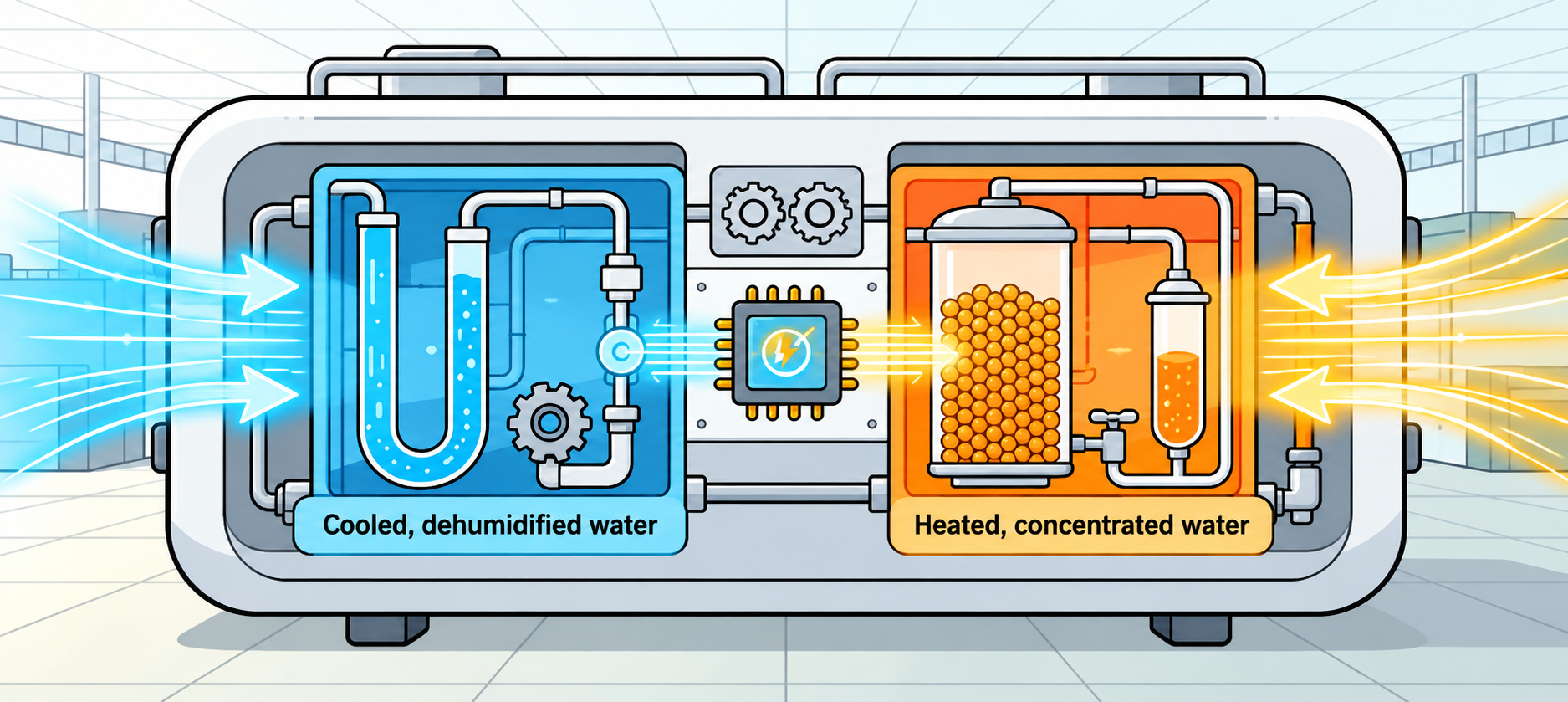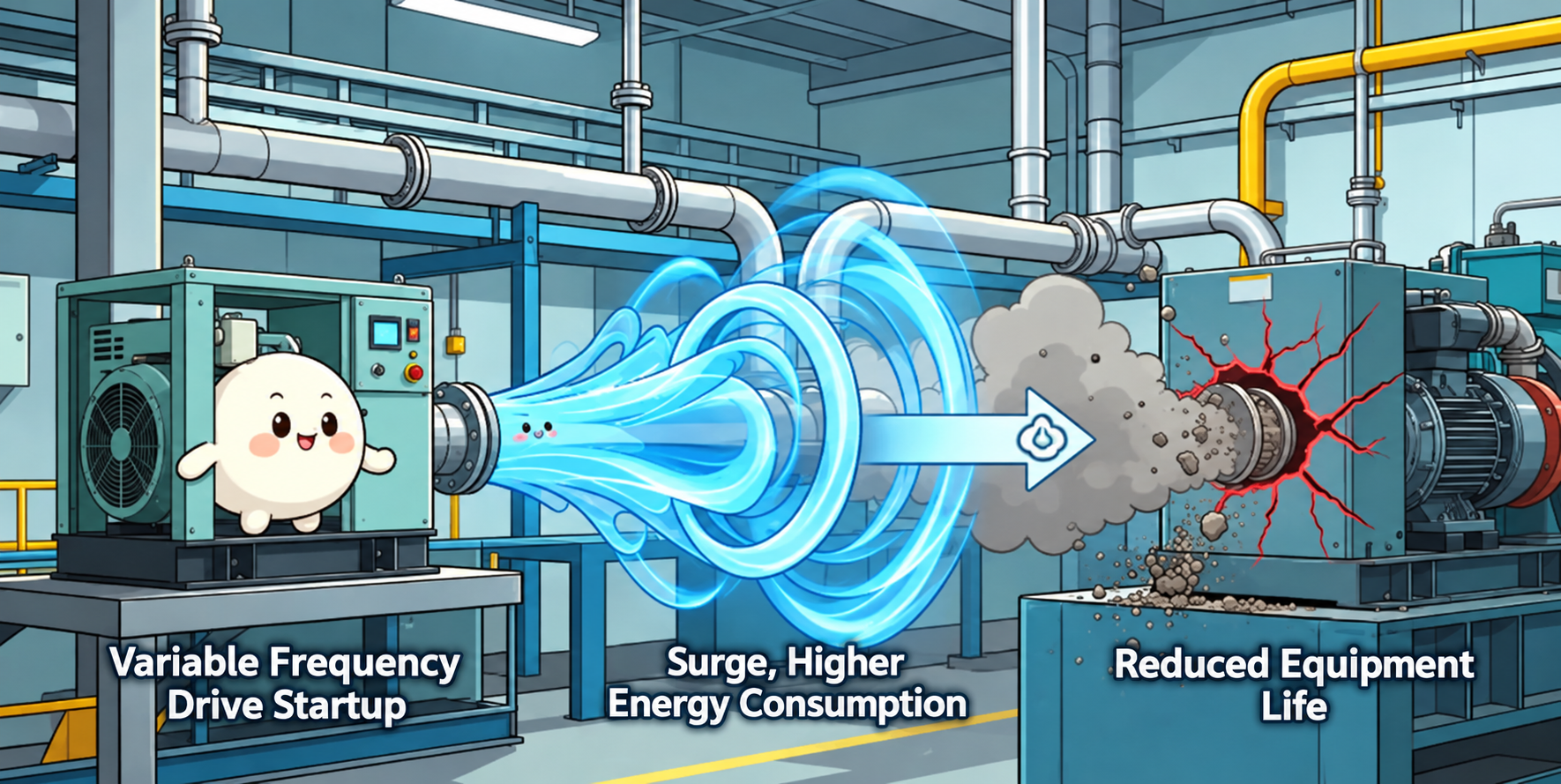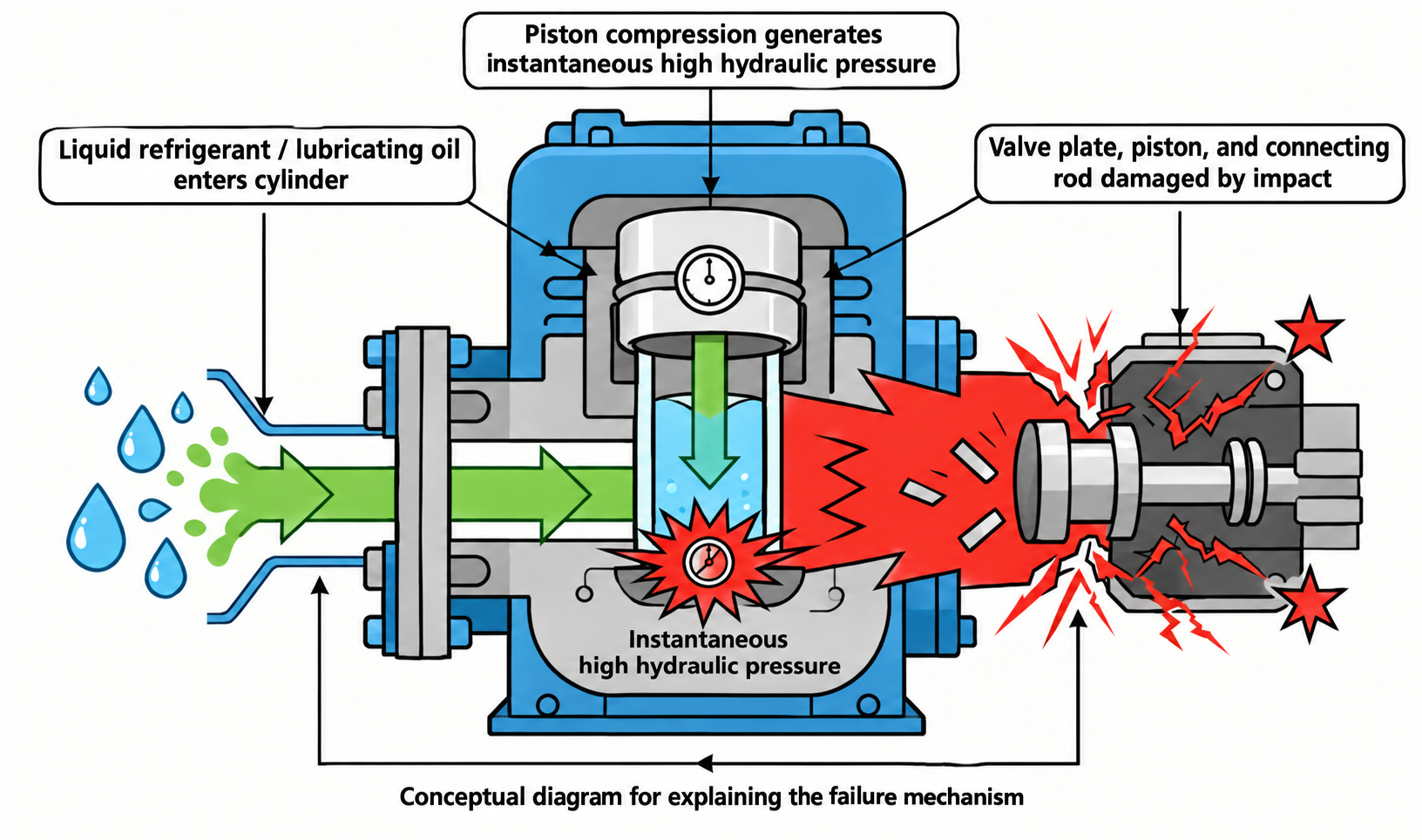
Industrial air dryer systems are essential components of compressed-air treatment, designed to remove moisture from compressed air before it reaches downstream equipment, instruments, and production processes.
Compressed air naturally contains water vapor. As compressed air cools after compression, part of this moisture can condense into liquid water. If it is not properly removed, moisture may contribute to pipeline corrosion, equipment problems, unstable production, and product-quality issues.
A properly designed air drying system helps maintain the required pressure dew point while protecting downstream equipment and supporting stable industrial operation.
Industrial compressed-air dryers are widely used across manufacturing, automotive, electronics, pharmaceutical, chemical, food and beverage, energy, and other industries.
Why Moisture Control Is Critical in Compressed Air
Moisture is one of the main contaminants that must be controlled in a compressed-air system.
When compressed air cools inside receivers, pipelines, filters, or production equipment, water vapor can condense. Depending on the application, this can affect pneumatic components, instruments, piping, and production quality.
Moisture, oil, and particulate matter are separate compressed-air contaminants and should be controlled with the appropriate combination of drying, filtration, separation, and drainage equipment.
A complete compressed-air treatment system should therefore be designed around the required air quality rather than simply installing the largest available dryer.
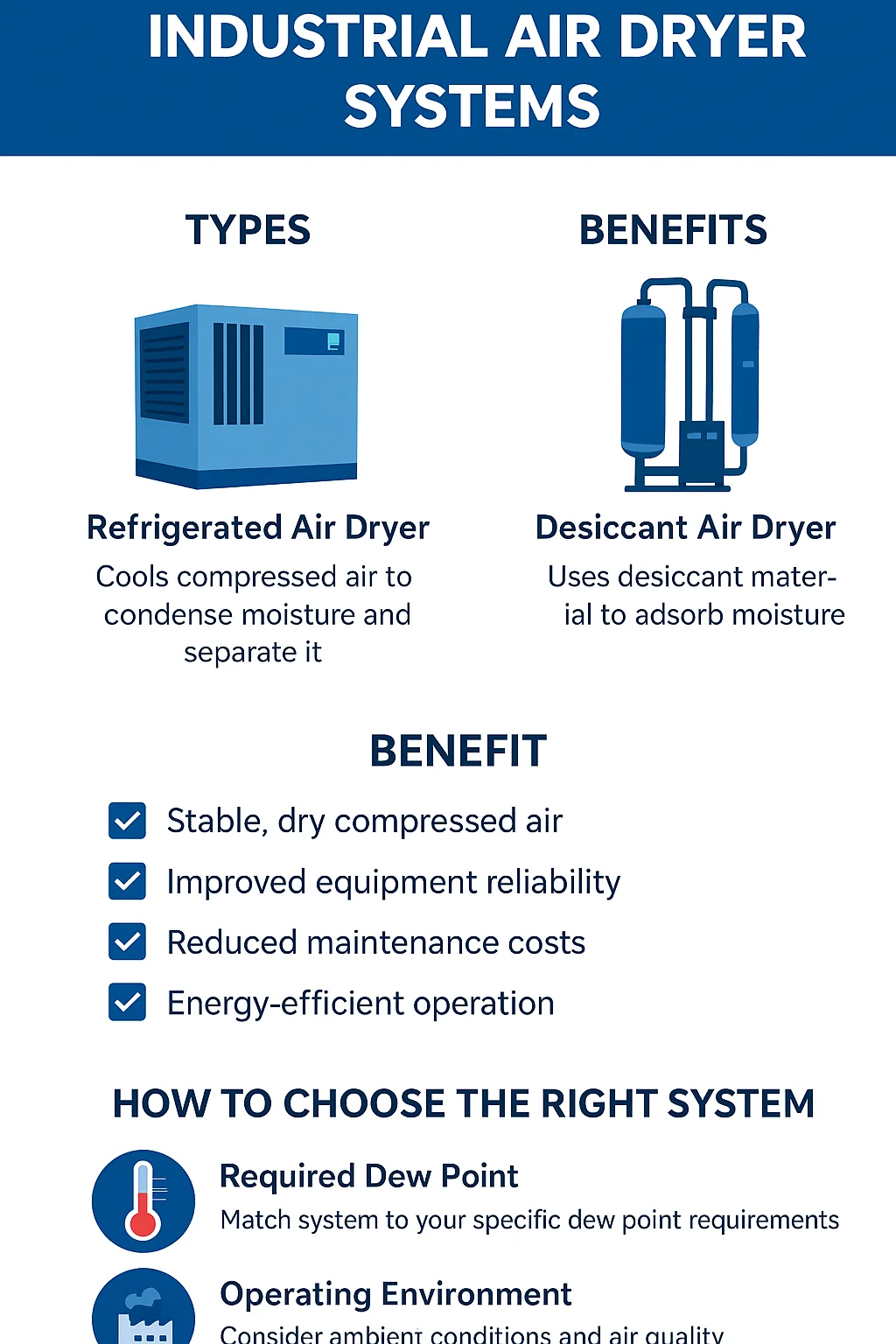
Main Types of Industrial Air Dryer Systems
The most appropriate dryer technology depends primarily on the required pressure dew point, operating conditions, airflow, and energy requirements.
Refrigerated Air Dryer Systems
A refrigerated air dryer removes moisture by cooling compressed air.
As the compressed-air temperature drops, water vapor condenses into liquid water. The condensate is separated and discharged before the dried air continues downstream.
Refrigerated drying is widely used for general industrial compressed air because it provides practical moisture control without the regeneration requirements associated with adsorption dryers.
Depending on the series and specified operating conditions, Lingyu refrigerated dryers provide pressure dew points of approximately 2–10°C.
For facilities requiring this level of moisture control, the refrigerated air dryer range provides the main product category.
Typical applications include general manufacturing, automotive assembly, pneumatic tools, packaging equipment, and other industrial processes where substantially lower pressure dew points are not required.
Desiccant Air Dryer Systems
Desiccant air dryers use adsorption materials to remove water vapor from compressed air.
Compressed air passes through a bed of desiccant, where moisture is adsorbed. The desiccant must then be regenerated so that it can continue drying the compressed air.
Different regeneration technologies can be used, including heatless regeneration, heated purge, blower-heated regeneration, zero-purge configurations, and heat-of-compression regeneration.
Depending on the selected Lingyu series, outlet pressure dew point options commonly include −20°C and −40°C.
Users requiring lower pressure dew points can review the desiccant air dryer product family.
Typical applications include electronics, instrumentation, pharmaceutical manufacturing, chemical processing, new-energy production, and other moisture-sensitive processes.
Combined Compressed Air Dryer Systems
Some industrial applications benefit from combining refrigerated and adsorption drying in one system.
In this configuration, compressed air first passes through the refrigerated drying section. A substantial portion of the moisture load is removed before the air enters the adsorption section.
The adsorption stage then removes the remaining water vapor to achieve a significantly lower pressure dew point.
This arrangement reduces the moisture load entering the adsorption stage, can lower regeneration demand, and can help extend desiccant service life.
For applications requiring an integrated low-dew-point solution, the DC Series combined compressed air dryer provides one available configuration.
The DC Series provides an outlet pressure dew point of ≤−40°C under its specified operating conditions.
Pressure Dew Point and Dryer Selection
Pressure dew point is one of the most important parameters when selecting an industrial air dryer.
It indicates the temperature at which moisture would begin to condense from compressed air at the operating pressure.
A lower required pressure dew point generally requires more intensive drying technology and can also increase equipment cost, regeneration requirements, energy consumption, and maintenance demands.
A practical selection framework is:
| Application Requirement | Typical Dryer Choice | Typical Lingyu-Supported Dew Point |
|---|---|---|
| General factory compressed air | Refrigerated dryer | Approx. 2–10°C |
| Automotive and assembly | Refrigerated dryer | Approx. 2–10°C |
| Moisture-sensitive process | Adsorption dryer | −20°C or −40°C options |
| Instrument or precision air | Adsorption dryer | Often −40°C where required |
| Low-dew-point production | Combined or adsorption dryer | Down to ≤−40°C |
| Large low-dew-point air station | Energy-saving adsorption configuration | Typically selected around the required −20°C or −40°C target |
The exact dryer should still be selected according to operating pressure, inlet temperature, airflow, ambient conditions, and required air quality.
For a more detailed evaluation process, users can refer to the compressed air dryer selection guide.
How to Choose the Right Industrial Air Dryer System
Selecting the right system should begin with the actual production requirement rather than the equipment model.
Required Pressure Dew Point
Pressure dew point should be determined first.
If the application only requires normal industrial moisture control, refrigerated drying may be sufficient. If the process requires substantially drier air, adsorption or combined drying should be considered.
Airflow Capacity
Dryer capacity must match actual compressed-air demand.
Sizing should account for peak flow and expected load fluctuations rather than average consumption alone.
Operating Pressure and Inlet Temperature
Operating pressure and inlet temperature directly affect dryer performance.
A dryer rated under one set of conditions may require capacity correction when actual operating conditions differ from its rated conditions.
Ambient Conditions
Ambient temperature is especially important for air-cooled equipment.
A dryer installed in a hot compressor room can operate under substantially different conditions from the same dryer installed in a temperature-controlled environment.
Energy Consumption
Energy use should be evaluated over the life of the system.
Dryer electricity, regeneration air, heating energy, pressure drop, and the resulting compressor energy demand can all affect lifecycle operating cost.
Control Requirements
Where a compressed-air station is integrated into an automated plant, communication interfaces, remote monitoring, alarms, and load-based control may also influence equipment selection.
Energy Efficiency in Industrial Air Dryer Systems
Energy efficiency is not determined only by the dryer’s rated electrical power.
Pressure drop can increase the discharge pressure that compressors must maintain, while adsorption regeneration can consume compressed air, electrical heating energy, or both.
For larger adsorption systems, regeneration technology therefore becomes particularly important.
Lingyu’s HRB-E low-purge blower-heated regenerative desiccant dryer is specified with 2–3% regeneration air consumption and selectable outlet pressure dew points of −20°C or −40°C.
Zero-purge configurations can reduce compressed-air regeneration losses even further.
For facilities evaluating this technology, the blower zero-purge adsorption dryer may be relevant.
In one large installation, a 10 × 65 m³/min zero-air-loss blower-heated regenerative dryer system was specified for a pressure dew point of ≤−40°C with 0% regeneration air consumption. This project-specific performance should not be generalized to every adsorption dryer or operating condition.
Pressure Drop Should Not Be Ignored
Pressure drop is another important system-selection factor.
Even if a dryer reaches the required pressure dew point, excessive restriction can reduce usable pressure at production equipment and increase compressor energy demand.
One installation used four 85 m³/min water-cooled dual-efficiency refrigerated air dryers combining low-pressure-drop and variable-frequency technologies. In that specific project, terminal pressure increased from 6.45 bar to 6.8 bar, while the reported overall energy saving was approximately 39%.
This figure is specific to that project and should not be treated as a universal energy-saving percentage. It does, however, illustrate why pressure drop and overall compressed-air system efficiency should be evaluated together.
Users can review the compressed air pressure drop guide for additional technical context.
Integrating Dryers into a Complete Compressed Air Treatment System
An industrial air dryer rarely works alone.
A complete compressed-air system may include the compressor, receiver tank, dryer, filters, condensate drainage, distribution piping, and monitoring equipment.
The exact sequence depends on the required air quality, compressor configuration, dryer technology, and site conditions.
Filtration is particularly important because drying primarily addresses moisture, while oil and particulate contamination require separate treatment.
For this reason, a precision compressed air filter can form part of the wider air-treatment system.
Lingyu’s filter range includes AO, AA, and AX filtration grades, together with other filtration configurations for different particulate and oil-removal requirements.
Combined dryers can also include intermediate filtration. Lingyu’s DH Series standard configuration includes one intermediate filter, with additional intermediate filters available where required.
Controls and Monitoring
Modern industrial dryer systems increasingly use intelligent controls to improve stability and reduce unnecessary energy consumption.
Depending on the dryer configuration, useful functions can include touchscreen interfaces, pressure and temperature monitoring, RS-485 communication, IoT connectivity, time-based operation, and dew-point-based energy-saving control.
Selected Lingyu adsorption systems support RS-485 communication, optional IoT connectivity, touchscreen monitoring, and optional dew-point-based control.
In large compressed-air stations, these functions can allow the dryer to operate more closely according to actual plant demand rather than relying entirely on fixed operating cycles.
Industrial Applications
Industrial air dryer systems serve a wide range of production environments, but the required air quality can vary significantly by application.
In automotive and general manufacturing, refrigerated drying may be sufficient for many pneumatic and assembly applications.
In electronics and precision manufacturing, lower moisture levels may be required for sensitive production equipment and processes.
For pharmaceutical and biopharmaceutical production, compressed-air quality should be selected according to the actual process and applicable quality requirements rather than assuming that one dryer configuration is suitable for every pharmaceutical application.
Other common application areas include petrochemical and chemical processing, new-energy battery manufacturing, semiconductor production, food and beverage processing, metal fabrication, and power generation.
Industrial projects in these sectors can use very different dryer technologies and capacities, so application category alone should not determine the final dryer configuration.
Refrigerated or Desiccant: Which One Should You Choose?
The simplest decision rule is not “Which dryer is better?” but rather:
How dry does the compressed air actually need to be?
A refrigerated dryer is generally the more practical choice when a pressure dew point around 2–10°C is sufficient.
An adsorption dryer becomes more appropriate when the process requires a pressure dew point such as −20°C or −40°C.
A combined dryer can be considered when the system benefits from refrigerated pre-drying followed by deeper adsorption drying.
For users comparing the first two technologies directly, the refrigerated air dryer vs. desiccant air dryer guide provides a focused comparison.
Maintenance and Long-Term Reliability
Long-term dryer performance depends on regular inspection and maintenance.
For refrigerated air dryers, maintenance can include compressors, condensers, evaporators, drains, heat exchangers, refrigeration components, and controls.
For adsorption dryers, additional attention may be required for switching valves, desiccant condition, silencers, heaters or blowers where fitted, regeneration components, and control systems.
Filters also require periodic inspection and element replacement according to pressure drop and actual operating conditions.
Long-term support should therefore include access to appropriate spare parts, technical assistance, commissioning support, troubleshooting, repair, and maintenance services.
Conclusion
Industrial air dryer systems are a fundamental part of reliable compressed-air treatment.
The right solution should be selected according to pressure dew point, airflow, operating pressure, inlet temperature, ambient conditions, pressure drop, regeneration method, energy consumption, filtration, and control requirements.
Refrigerated air dryers provide practical moisture control for many general industrial applications, with pressure dew points around 2–10°C depending on the series and operating conditions.
Desiccant dryers are better suited to lower-dew-point processes, with common Lingyu configurations offering −20°C or −40°C options.
Combined dryers integrate refrigerated and adsorption drying where deeper moisture removal is required, with DC Series configurations providing an outlet pressure dew point of ≤−40°C.
Rather than over-drying every compressed-air system, manufacturers should match dryer performance to the actual production requirement and evaluate total lifecycle efficiency.
The most appropriate industrial air dryer system is therefore not simply the unit with the lowest pressure dew point or highest nominal capacity. It is the system correctly matched to the application’s flow, pressure, temperature, required dryness, contamination-control requirements, energy objectives, and long-term operating conditions.