A large refrigerated air dryer is designed for compressed air systems that must process high air volumes continuously while maintaining reliable moisture control. In large manufacturing facilities, central compressor stations, and other high-demand applications, controlling condensed water is important for protecting pipelines, pneumatic equipment, and production processes.
Rather than simply choosing the largest available unit, an effective high-capacity drying system should be matched to actual airflow, inlet temperature, operating pressure, ambient conditions, cooling method, pressure drop, and required pressure dew point. Lingyu offers refrigerated air dryer solutions for different industrial capacities and operating requirements.
What Is a Large Refrigerated Air Dryer?
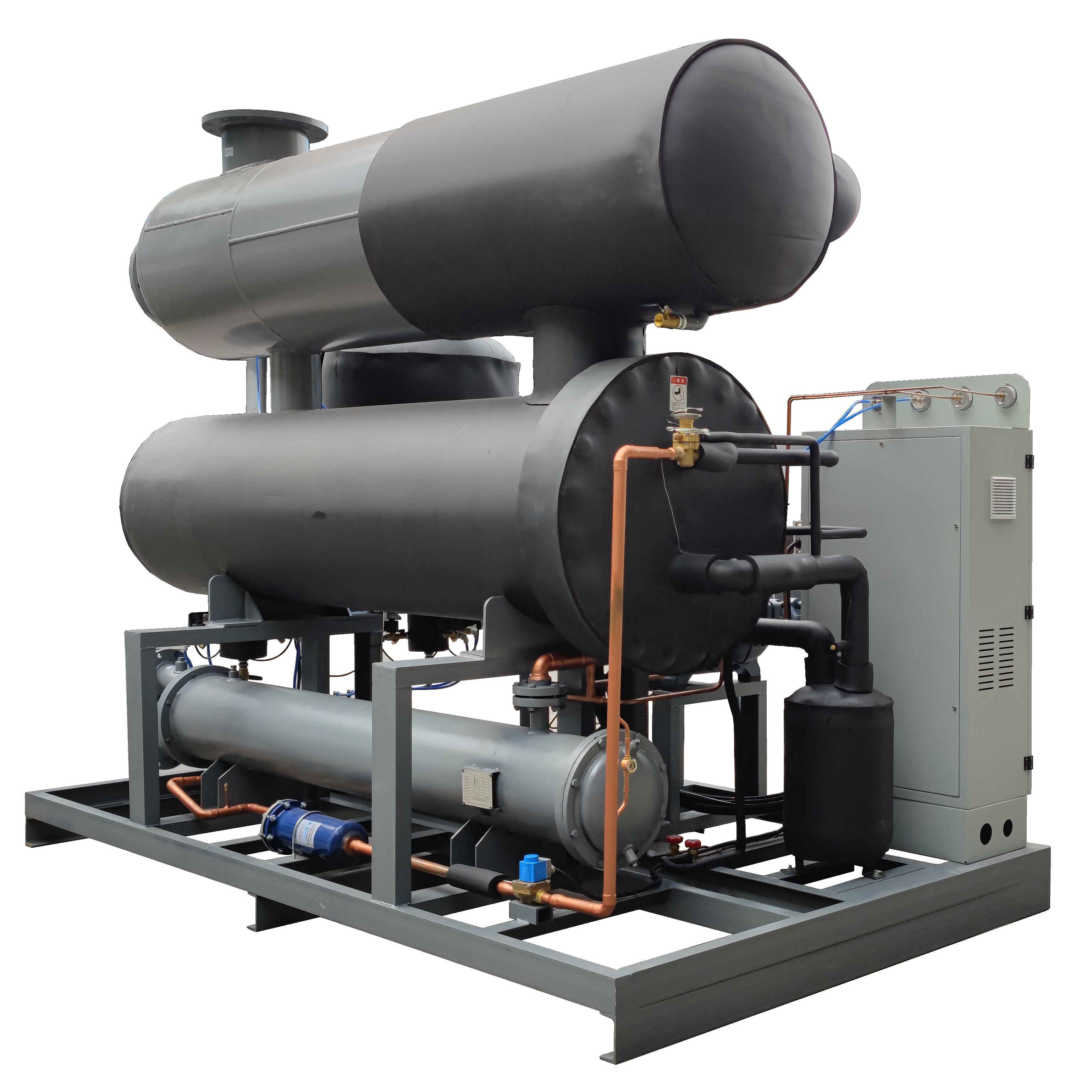
A large refrigerated air dryer is a high-capacity compressed air treatment unit that uses refrigeration to cool compressed air and remove condensed moisture.
There is no universal airflow threshold at which a refrigerated dryer becomes “large.” In practice, the term usually refers to equipment serving high-flow compressor stations or production facilities where a smaller dryer would not provide sufficient treatment capacity.
This distinction matters because dryer capacity must be evaluated under actual operating conditions. Airflow alone does not determine whether a dryer is suitable. Higher inlet temperatures, unusual pressures, demanding ambient conditions, or substantial load variation can all affect the required capacity.
Lingyu’s refrigerated dryer range includes air-cooled, water-cooled, and energy-saving configurations, providing different options for high-capacity systems.
How Does a Large Refrigerated Air Dryer Work?
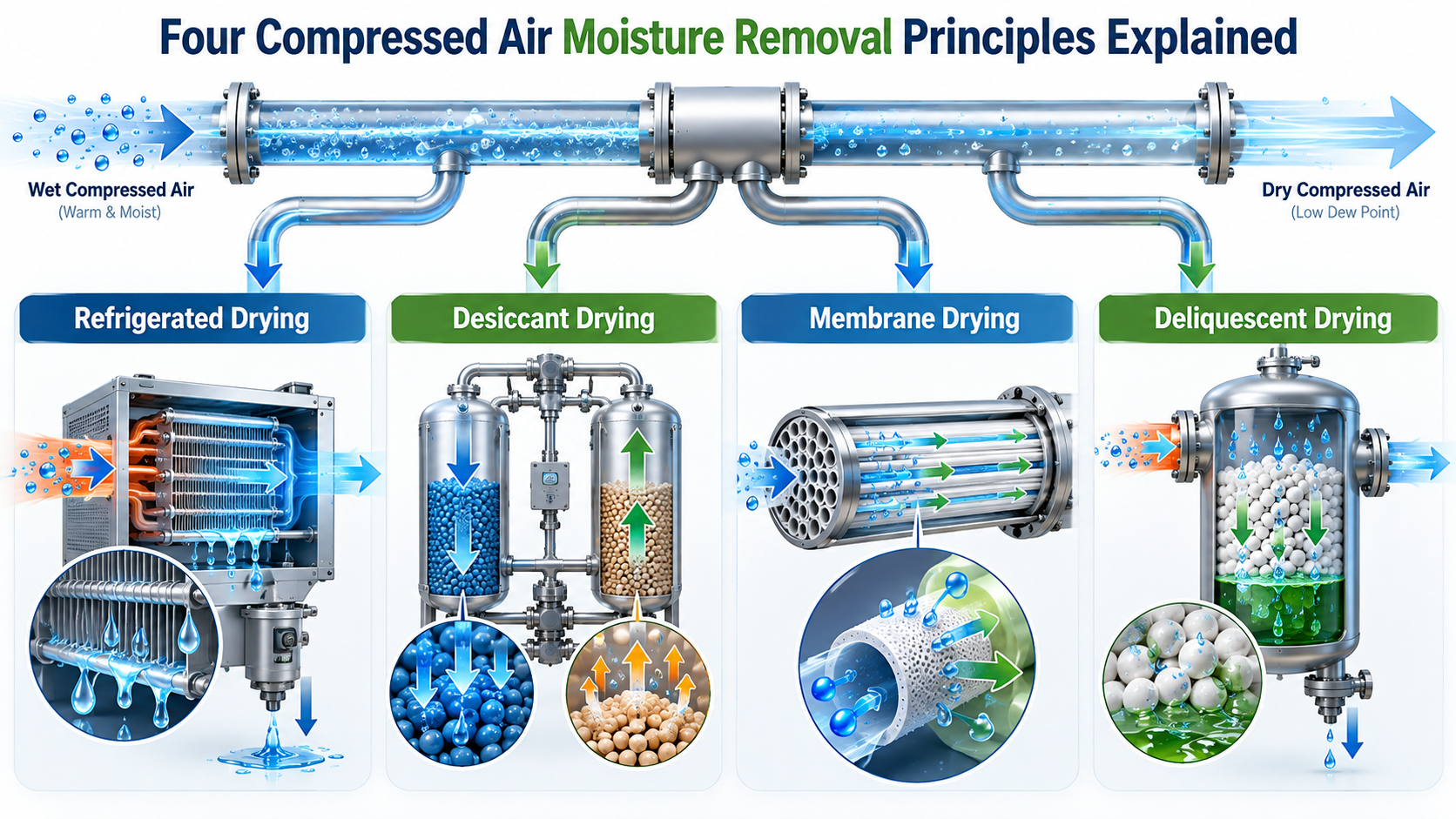
A large refrigerated air dryer follows the same basic refrigeration principle as smaller units, but its heat exchangers, refrigeration components, separation system, piping, and controls must be capable of handling substantially higher air volumes.
The typical process includes:
- Pre-cooling – Hot, moisture-laden compressed air enters the dryer and is cooled before reaching the main refrigeration stage.
- Refrigeration cooling – The air passes through the evaporator, where its temperature is lowered and water vapor condenses.
- Moisture separation – Condensed water is removed from the compressed air through an air-water separator and drainage system.
- Reheating – The treated cold air exchanges heat with incoming compressed air before leaving the dryer, reducing the risk of condensation forming in downstream piping.
For applications requiring a deeper explanation of this process, the working principle of an air-cooled refrigerated air dryer provides additional technical detail.
Why Large Compressed Air Systems Need Proper Moisture Control
Compressing ambient air increases the concentration of water vapor. As the compressed air subsequently cools, part of that moisture can condense into liquid water.
If this condensate is not adequately controlled, it can contribute to corrosion, pipeline contamination, pneumatic equipment problems, and inconsistent production conditions.
In a high-flow compressed air system, the potential moisture load can be substantial. A correctly sized dryer therefore becomes an important part of the overall air-treatment system rather than simply an accessory installed after the compressor.
Key Advantages of a Large Refrigerated Air Dryer
High Airflow Capacity
The primary advantage of a large refrigerated air dryer is its ability to treat high compressed-air volumes without sacrificing drying performance when it is correctly selected.
Large systems may serve multiple compressors, production lines, or plant areas from a centralized compressed air station. In these installations, adequate dryer capacity is essential during periods of peak demand.
Lingyu’s PB Series, for example, includes models with rated airflows up to 120 m³/min, while requirements above that capacity can be evaluated separately according to operating conditions and project specifications.
Stable Pressure Dew Point
Industrial users need predictable air quality rather than occasional moisture removal.
Refrigerated dryers lower the compressed-air temperature sufficiently for moisture to condense and be separated. For applications where a refrigerated pressure dew point is suitable, this provides an efficient approach to controlling water in a plant air system.
Where significantly lower pressure dew points are required, an adsorption or combined drying system may be more appropriate.
Reduced Risk of Downstream Moisture Problems
Removing condensate before compressed air reaches the distribution network helps protect valves, cylinders, pneumatic tools, instrumentation, and process equipment.
Drying can also help reduce the possibility of water accumulating in downstream pipelines, especially when air temperatures decrease after the compressor station.
Energy-Saving Options for Variable Demand
Large compressed air stations often experience substantial changes in airflow throughout the day. Running refrigeration equipment at full output when demand is low can increase unnecessary energy consumption.
For systems with fluctuating loads, a frequency conversion refrigerated air dryer can adjust refrigeration output according to treatment demand.
Lingyu’s PB Series uses variable-frequency compressor control to respond to changing system loads, helping maintain stable operation while reducing unnecessary refrigeration output.
Air-Cooled and Water-Cooled Configurations
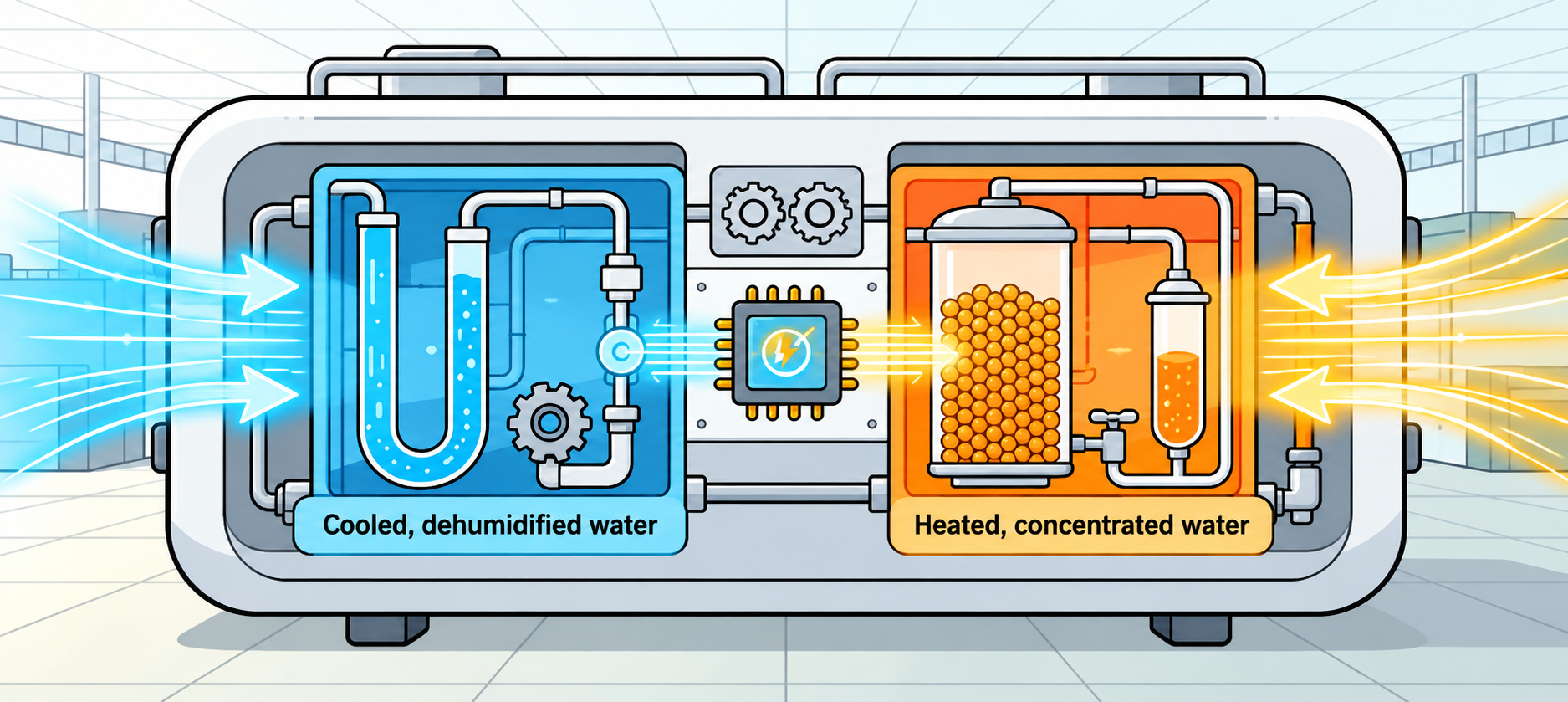
Large-capacity installations may use either air-cooled or water-cooled refrigeration depending on plant conditions.
Air-cooled dryers can simplify installation where sufficient ventilation and ambient cooling are available. Water-cooled designs can be advantageous in facilities with an established cooling-water system, particularly where equipment rooms have limited ventilation or the heat rejection load is high.
For example, Lingyu also provides high-capacity products such as the 4238 CFM water-cooled high-temperature refrigerated dryer for applications requiring a water-cooled configuration.
Large Refrigerated Air Dryer Applications
Large refrigerated dryers are commonly suited to centralized compressed air systems serving demanding industrial facilities.
Automotive and General Manufacturing
Large production plants can operate many pneumatic tools, actuators, robotic systems, and assembly machines simultaneously. Reliable drying helps maintain stable compressed air distribution throughout the plant.
More application-specific information is available for automotive and general manufacturing.
Electronics and Precision Manufacturing
Moisture in compressed air can be undesirable in production environments where pneumatic systems interact with sensitive equipment or precision processes.
Drying should therefore be combined with appropriate filtration and air-quality requirements for the specific process.
Metal Fabrication and Heavy Industry
Large fabrication plants, steel processing facilities, foundries, and other heavy industrial operations often have high and relatively continuous compressed air demand.
A high-capacity dryer can support central compressor stations while helping protect pneumatic equipment and air distribution systems.
Food and Beverage Production
Compressed air can be used for automation, packaging, conveying, and other operations within food and beverage facilities.
The required treatment level depends on whether the compressed air is used for general plant service, indirect process use, or applications with more stringent air-quality requirements. Facilities should therefore select drying and filtration equipment according to the actual point-of-use specification rather than relying on the dryer alone.
Semiconductor and New-Energy Manufacturing
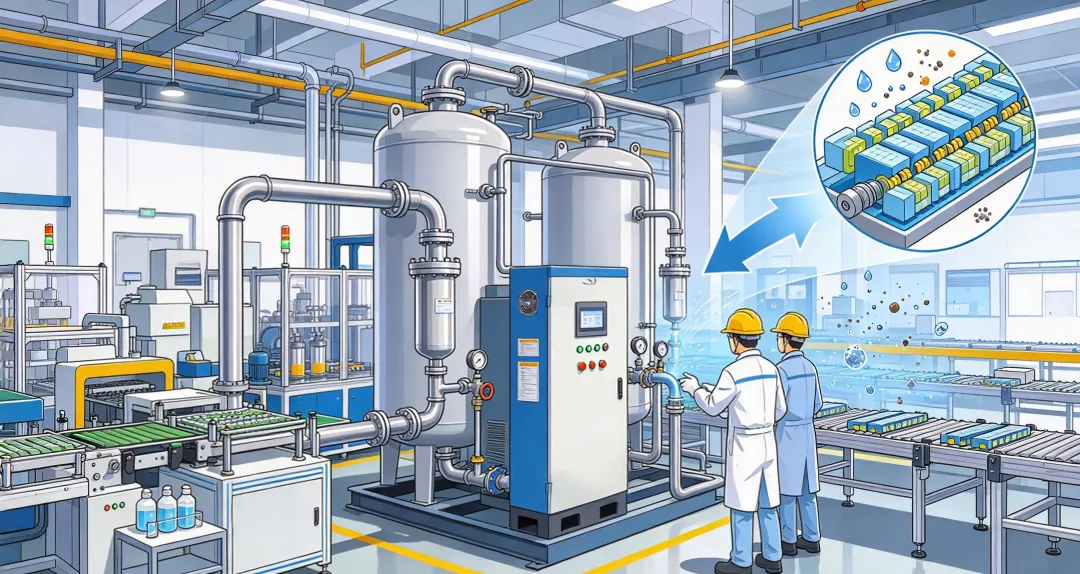
Large production facilities in semiconductor, photovoltaic, lithium battery, and related sectors may require centralized compressed air systems with high treatment capacity and careful control of pressure drop and energy consumption.
One Lingyu project example used four 85 m³/min water-cooled, variable-frequency refrigerated air dryers in a high-efficiency compressed air station, illustrating how high-capacity drying can be integrated into a larger energy-efficiency project.
How to Select a Large Refrigerated Air Dryer
Selecting a large dryer based only on nominal airflow can lead to poor system performance. Several operating parameters should be evaluated together.
Maximum airflow should reflect peak compressed-air demand rather than only the plant’s average consumption.
Inlet temperature is especially important because hotter compressed air increases the refrigeration load.
Operating pressure affects dryer capacity and must be considered when comparing rated specifications.
Ambient temperature influences air-cooled condenser performance and may require additional consideration in hot equipment rooms.
Required pressure dew point determines whether refrigerated drying is sufficient. If an application requires approximately −40°C pressure dew point, an adsorption dryer or combined system should normally be evaluated instead.
Pressure drop should also be considered because excessive resistance across the treatment system can force compressors to operate at higher discharge pressures and increase overall system energy demand.
For a broader system-selection approach, see this compressed air dryer selection guide.
Large Refrigerated Air Dryer and System Pressure Drop
Pressure drop becomes especially important as airflow increases.
Every filter, separator, dryer, valve, and section of piping introduces resistance. Even when individual losses appear small, cumulative pressure drop can affect the efficiency of a large compressor station.
This means a large refrigerated dryer should not be evaluated solely by moisture-removal capacity. Heat exchanger design, pipe sizing, filtration configuration, and system layout should also support efficient airflow.
High-capacity energy-saving systems can combine low pressure drop with load-responsive refrigeration control. Lingyu’s documented 85 m³/min refrigerated dryer project, for example, combined variable-frequency operation with low-pressure-drop design as part of the overall system solution.
The Importance of Filtration
A refrigerated dryer addresses moisture, but it does not replace the complete compressed air purification system.
Depending on compressor type and air-quality requirements, compressed air can also contain oil aerosols and solid particles. Appropriate pre-filtration and downstream filtration can therefore help protect the dryer and deliver the required air quality at the point of use.
A precision compressed air filter can form part of a complete treatment configuration when particulate or oil removal is required in addition to moisture separation.
Maintenance Considerations for Large Refrigerated Air Dryers
Because high-capacity dryers process large volumes of compressed air, maintenance should focus on preserving heat-transfer efficiency, reliable drainage, and stable refrigeration performance.
Heat exchanger and condenser surfaces should be kept clean so that heat can be rejected efficiently. Automatic drains and moisture separators should be inspected to make sure condensate is discharged properly. Operators should also monitor inlet and outlet temperatures, refrigeration-system conditions, pressure drop, and pressure dew point.
Maintenance intervals should be based on the actual model, operating hours, environment, and manufacturer recommendations rather than a fixed universal schedule.
For large machines, access for inspection and servicing should also be considered during installation. Adequate clearance around the dryer can simplify condenser cleaning, component replacement, and routine maintenance.
Installation Considerations
A large refrigerated air dryer requires more installation planning than a small point-of-use unit.
The installation should account for:
- Maximum compressed-air flow and connection size
- Available floor space and maintenance clearance
- Air-cooled ventilation or cooling-water availability
- Condensate drainage
- Electrical supply
- Bypass piping and isolation valves where required
- Upstream filtration and separation
- Downstream air-quality requirements
- Communication and monitoring requirements
Large air treatment systems should also be considered as part of the entire compressor station. Dryer sizing, receiver capacity, filters, piping, drains, and compressor control should work together rather than being designed independently.
FAQ
What is the main advantage of a large refrigerated air dryer?
Its main advantage is the ability to remove moisture from high-volume compressed air streams while providing a pressure dew point suitable for many general industrial applications.
How large can a refrigerated air dryer be?
There is no single upper capacity that applies to all manufacturers or designs. Lingyu’s PB Series includes standard models up to 120 m³/min, with larger or special requirements subject to project-specific evaluation.
Is a water-cooled dryer better for a large compressed air system?
Not necessarily. Water cooling can be advantageous where cooling water is readily available or where rejecting large amounts of heat into the equipment room is undesirable. Air cooling may be preferable where plant water is unavailable and ventilation conditions are suitable.
Can a large refrigerated air dryer handle changing airflow?
Yes, provided it is correctly sized. Where air demand varies significantly, variable-frequency refrigeration technology can provide better load matching than a conventional fixed-output system.
Does a refrigerated air dryer produce completely moisture-free air?
No. Refrigerated drying removes a substantial amount of water by cooling compressed air and separating condensate, but the treated air still contains water vapor. Processes requiring very low pressure dew points should consider adsorption drying.
Does every large dryer require a special foundation?
Installation requirements vary by model and capacity. Floor loading, connection sizes, maintenance clearance, drainage, vibration, electrical requirements, and cooling arrangements should all be confirmed before installation.
How long does a large refrigerated air dryer last?
There is no reliable universal lifespan. Service life depends on equipment design, annual operating hours, inlet conditions, ambient environment, maintenance quality, refrigeration-system condition, and how closely the dryer operates within its specified limits.
Conclusion
A large refrigerated air dryer is a key component of high-capacity compressed air treatment systems where reliable moisture removal, stable operation, and efficient airflow are required.
Successful selection depends on more than choosing a machine with a high CFM or m³/min rating. Airflow, inlet temperature, pressure, ambient conditions, pressure dew point, cooling method, pressure drop, load variation, filtration, and installation requirements should all be evaluated together.
For plants with relatively stable demand, a conventional high-capacity refrigerated dryer may provide an effective solution. For systems with significant load fluctuations, variable-frequency refrigeration can improve load matching and energy performance. Where site conditions favor water cooling, high-capacity water-cooled designs provide another practical option.
By treating the dryer as part of the complete compressed air system rather than as an isolated component, industrial facilities can achieve more reliable moisture control, protect downstream equipment, and maintain efficient compressed air production over the long term.