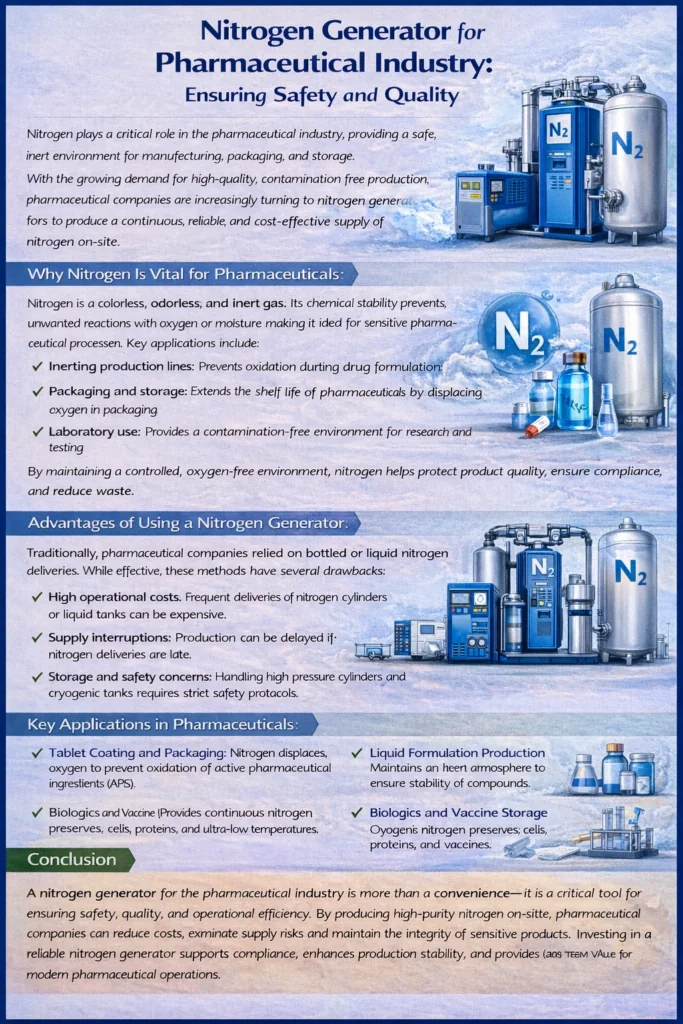
Nitrogen plays an important role in pharmaceutical and biopharmaceutical manufacturing, where controlled atmospheres may be required to reduce oxidation, protect sensitive materials, support packaging operations, and maintain stable production conditions.
Instead of relying entirely on delivered cylinders or bulk nitrogen supply, many facilities can use an on-site nitrogen generator for pharmaceutical industry applications to produce gaseous nitrogen continuously from compressed air. A properly selected system can reduce dependence on external deliveries while giving manufacturers greater control over nitrogen purity, flow rate, pressure, and supply availability.
For pharmaceutical facilities evaluating the complete utility system, Lingyu also provides dedicated pharmaceutical and biopharmaceutical solutions covering compressed-air and gas-treatment requirements.
Why Nitrogen Is Important in Pharmaceutical Manufacturing
Nitrogen is a colorless and odorless gas widely used when a low-oxygen or inert process environment is required.
By displacing oxygen from a vessel, pipeline, package, or process space, nitrogen can help reduce oxidation and unwanted reactions involving oxygen-sensitive materials.
Common pharmaceutical applications include:
- Inerting production vessels and process lines
- Blanketing storage tanks
- Protecting selected raw materials and intermediates
- Purging pipelines
- Controlling package atmospheres
- Supporting selected laboratory and analytical operations
Nitrogen can also be used as a utility gas in laboratories, depending on instrument and process requirements. Facilities with broader laboratory gas and compressed-air requirements can refer to Lingyu’s laboratory and analytical equipment applications.
The required nitrogen quality is not the same for every pharmaceutical application. Packaging, tank blanketing, analytical instruments, and sensitive chemical processes can have different requirements for purity, flow, pressure, dew point, and contaminants.
The nitrogen generation system should therefore be selected according to the actual process specification rather than simply choosing the highest available purity.
How PSA Nitrogen Generation Works
Lingyu nitrogen generation systems use Pressure Swing Adsorption, or PSA, technology.
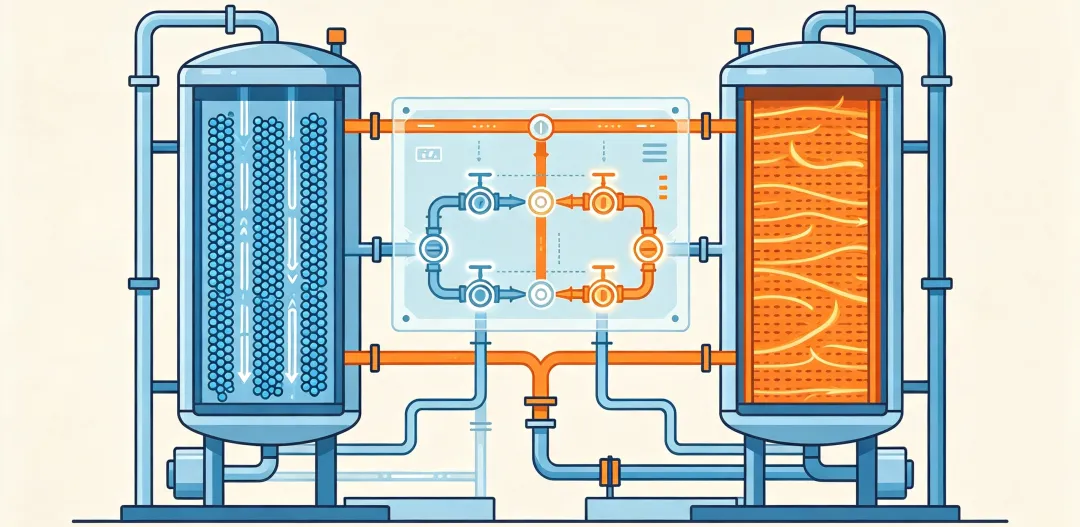
A PSA nitrogen generator operates with two adsorption towers filled with Carbon Molecular Sieve (CMS). Compressed air enters one tower, where oxygen molecules are preferentially adsorbed by the CMS while nitrogen passes through the adsorption bed and is collected as product gas.
At the same time, the second tower undergoes depressurization and regeneration. Once the active tower reaches its predetermined adsorption capacity, the towers automatically switch functions.
The two towers continuously alternate between adsorption and regeneration under PLC control, allowing the system to maintain a continuous nitrogen supply.
For a more detailed explanation, see how a PSA nitrogen generator works.
Nitrogen Purity for Pharmaceutical Applications
Nitrogen purity should always be determined by the specific pharmaceutical process.
Lingyu PSA nitrogen generators support nitrogen purity from 95% to 99.999% under the specified operating conditions. The listed inlet air pressure is 0.5–0.8 MPa, while nitrogen dew point is ≤−40°C.
Available configurations include nitrogen purity grades such as:
- 99.0%
- 99.5%
- 99.9%
- 99.99%
- 99.999%
This range allows the nitrogen system to be configured around different gas-quality requirements instead of applying one purity level to every pharmaceutical process.
For users evaluating this purity range, Lingyu also offers a 99.99% nitrogen generator configuration.
High-Purity Nitrogen and Additional Purification
Some pharmaceutical applications may require nitrogen specifications beyond the selected basic PSA configuration.
Lingyu’s carbon-based deoxygenation purification system is designed for further purification of PSA-generated nitrogen. Feed nitrogen with a purity of approximately 99.9% can be further purified to ≥99.999%.
The process uses a carbon-based catalyst to remove residual oxygen, followed by CO₂ removal, deep dehydration, and precision filtration.
The listed final gas specifications include:
- Nitrogen purity: ≥99.999%
- Oxygen content: ≤10 ppm
- CO₂ content: ≤5 ppm
- Nitrogen atmospheric dew point: ≤−60°C
- Pressure drop: ≤0.1 MPa
- Nitrogen capacity: 10–800 m³/h
- Power supply: 380 V / 50 Hz
The feed nitrogen supply is recommended at approximately 1.1 times the required product nitrogen capacity.
Additional purification can therefore be evaluated when the pharmaceutical process genuinely requires tighter nitrogen specifications.
However, gas purity alone does not establish suitability for a pharmaceutical process. Materials, filtration, piping, monitoring, documentation, maintenance, qualification, and applicable regulatory requirements must also be evaluated.
Challenges of Traditional Nitrogen Supply
Pharmaceutical manufacturers may use cylinders, liquid nitrogen storage systems, or bulk nitrogen deliveries depending on their process requirements.
These supply methods remain appropriate for many facilities, but they can introduce logistical and operational considerations.
Recurring Supply and Delivery
Nitrogen delivery costs can become significant as consumption increases, particularly in facilities with continuous or high-volume gaseous nitrogen demand.
Supply Scheduling
Dependence on external delivery requires inventory and supplier schedules to be managed carefully to maintain sufficient nitrogen availability.
Cylinder Handling
Cylinder-based systems require suitable storage areas, handling procedures, pressure-management practices, and routine replacement or refilling.
Cryogenic Infrastructure
Bulk liquid nitrogen requires cryogenic storage equipment and operating procedures suitable for extremely low-temperature liquids.
For facilities with stable or continuous gaseous nitrogen demand, on-site PSA generation can therefore be an alternative worth evaluating.
Advantages of an On-Site Nitrogen Generator
An on-site nitrogen generation system can provide several practical advantages for pharmaceutical production.
Continuous Nitrogen Supply
PSA systems operate through alternating adsorption and regeneration cycles, enabling continuous nitrogen production.
Purity Matched to the Process
Different system configurations can be selected according to actual process purity requirements instead of automatically supplying the highest available nitrogen grade to every application.
Reduced Dependence on Deliveries
Nitrogen is produced from compressed air at the facility, reducing dependence on routine cylinder replacement or external bulk nitrogen supply.
Real-Time Monitoring
Lingyu PSA systems continuously monitor nitrogen purity and flow rate.
If nitrogen purity falls below the specified value, the system can issue an alarm. If the off-spec condition continues for a preset period, the system can shut down automatically for protection.
PLC-Controlled Operation
PLC control manages automatic start and stop functions, adsorption-cycle switching, pneumatic valve sequencing, and other operating functions.
A digital touchscreen displays operating parameters including pressure, nitrogen purity, flow rate, and system status.
A broader overview of system configurations is available on Lingyu’s PSA nitrogen generator product page.
Key Applications of Nitrogen in the Pharmaceutical Industry
Pharmaceutical Packaging
Oxygen inside packaging can contribute to oxidation of oxygen-sensitive pharmaceutical products.
Nitrogen flushing can be used to displace part of the oxygen before sealing, helping establish a controlled package atmosphere.
The required residual oxygen concentration and nitrogen purity should be determined according to the product, packaging format, validated process, and applicable quality requirements.
Tank Blanketing and Process Inerting
Nitrogen can be introduced into storage vessels, mixing tanks, reactors, and transfer systems to reduce oxygen concentration in the headspace.
This can be useful when handling oxygen-sensitive compounds or when an inert process environment is required.
The nitrogen system should be sized for both steady-state consumption and temporary peak demand caused by operations such as purging, filling, vessel pressure changes, or batch processing.
API and Chemical Processing
Active pharmaceutical ingredient production can involve chemical intermediates or reactions requiring controlled gas conditions.
Nitrogen can be used for blanketing, purging, material transfer, and other process operations where exposure to atmospheric oxygen or moisture needs to be controlled.
Similar gas-management principles are used in broader petrochemical and chemical processing applications, although pharmaceutical process specifications, qualification, and validation requirements may differ.
Laboratory and Analytical Use
Some pharmaceutical laboratories use nitrogen for analytical instruments or sample-preparation processes.
Analytical applications can have considerably tighter gas-quality requirements than general plant inerting.
Parameters that may need to be specified include:
- Nitrogen purity
- Delivery pressure
- Pressure stability
- Dew point
- Hydrocarbon limits
- Particulate limits
- Other contaminants specified by the instrument manufacturer
The nitrogen generator should therefore be matched to the requirements of the actual laboratory equipment rather than selected only from a general pharmaceutical purity specification.
Storage and Material Protection
Nitrogen blanketing may also be used during storage of selected raw materials, intermediates, or finished products where limiting oxygen exposure is beneficial.
Required nitrogen flow should be calculated from factors such as vessel volume, operating pressure, leakage rate, filling and emptying behavior, and required oxygen concentration rather than relying solely on nominal generator capacity.
PSA Nitrogen Is Not the Same as Liquid Nitrogen
This distinction is particularly important in pharmaceutical and biopharmaceutical applications.
A PSA nitrogen generator produces gaseous nitrogen on-site. It is suitable for processes such as:
- Inerting
- Blanketing
- Purging
- Packaging
- Selected laboratory applications
- Other operations requiring continuous gaseous nitrogen
Liquid nitrogen is different.
Liquid nitrogen is cryogenic nitrogen maintained at extremely low temperature and may be used for applications such as cryogenic freezing or storage of certain biological materials.
An on-site PSA nitrogen generator should therefore not automatically be treated as a replacement for liquid nitrogen used in cryogenic preservation.
A pharmaceutical facility may require gaseous nitrogen generation, liquid nitrogen supply, or both, depending on the actual production and storage processes.
The Importance of Compressed-Air Quality
A PSA nitrogen generator does not operate independently of the compressed-air system.
Compressed air is the feed gas from which nitrogen and oxygen are separated. Feed-air quality and capacity therefore directly affect nitrogen-generation performance.
A complete PSA nitrogen generation system can include:
Air compressor → receiver → compressed-air treatment → filtration → PSA nitrogen generator → nitrogen buffer/storage → distribution
Moisture, oil, and particulate contamination should be controlled to protect the CMS, pneumatic valves, and other downstream components and to support stable operation.
Where a lower compressed-air pressure dew point is required, facilities can evaluate appropriate desiccant air dryer solutions.
The air dryer and nitrogen generator perform different functions, but both may form part of the complete gas-generation system.
Key Features to Consider When Selecting a Pharmaceutical Nitrogen Generator
Nitrogen generator selection should begin with the pharmaceutical process requirements rather than simply choosing the highest purity available.
Nitrogen Purity
Purity should match the validated process requirement.
Higher purity is not automatically better from a system-efficiency perspective because increasing nitrogen purity generally affects compressed-air demand and usable nitrogen production capacity.
Required Flow Rate
Generator capacity should account for:
- Normal nitrogen consumption
- Peak demand
- Simultaneous users
- Batch purging requirements
- Future expansion
Peak consumption can be substantially different from average flow, particularly where several processes purge or refill simultaneously.
Delivery Pressure
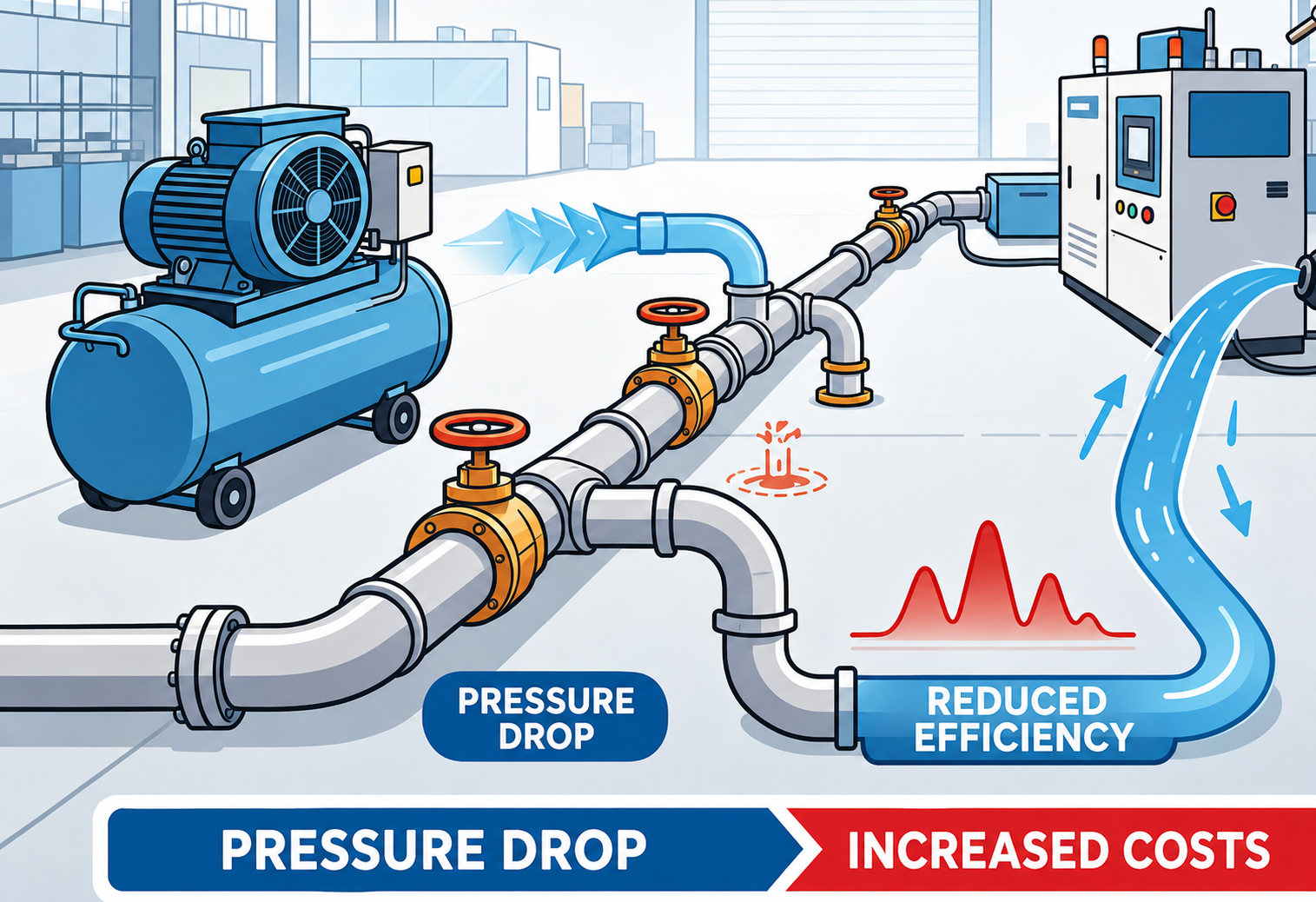
Nitrogen pressure must remain sufficient at the downstream point of use after accounting for piping, valves, treatment equipment, and other system pressure losses.
Nitrogen Dew Point
Dew point can be important in moisture-sensitive pharmaceutical processes.
Lingyu’s PSA system specifies a nitrogen dew point of ≤−40°C under its stated operating conditions.
Online Monitoring
Continuous monitoring can provide operators with real-time information about nitrogen purity and flow.
Off-spec alarms and automatic protection functions can help prevent nitrogen outside the configured purity range from being supplied unnoticed.
Automation and Communications
Automation requirements should be evaluated when the nitrogen generator needs to integrate into a plant-wide control or monitoring system.
Compressed-Air Consumption
Compressed air is the main feed source for PSA nitrogen generation and is therefore a major factor in operating cost.
Generator efficiency should be evaluated together with compressor power, feed-air treatment requirements, nitrogen purity, flow demand, and operating hours.
For more detailed sizing considerations, see the PSA nitrogen generator selection guide.
What About GMP and ISO Compliance?
Claims about pharmaceutical compliance should be evaluated carefully.
A nitrogen generator should not automatically be described as “GMP compliant” simply because it is installed in a pharmaceutical facility.
GMP applies to the manufacturing operation as a whole, including facilities, procedures, documentation, qualification, validation, personnel, maintenance, and the quality-management system.
Similarly, a manufacturer’s ISO management-system certifications should not be interpreted as proof that every individual nitrogen generator is independently certified for every pharmaceutical application.
Lingyu holds:
- ISO 9001 Quality Management System Certification
- ISO 14001 Environmental Management System Certification
- ISO 45001 Occupational Health & Safety Management System Certification
These certifications can be relevant when evaluating a supplier, but pharmaceutical users still need to define the documentation, materials, gas quality, qualification, validation, and regulatory requirements applicable to their own installation.
Additional credentials can be reviewed on Lingyu’s certificates page.
How to Choose the Right Nitrogen Generator for Pharmaceutical Production
A practical selection process starts by defining the actual process requirement.
Key inputs include:
- Application
- Required nitrogen purity
- Normal flow rate
- Peak flow rate
- Delivery pressure
- Required dew point
- Operating hours
- Simultaneous demand
- Future expansion
- Feed compressed-air conditions
- Required monitoring
- Redundancy requirements
- Documentation requirements
- Maintenance requirements
The compressed-air system should then be evaluated because its capacity and quality directly affect nitrogen generation.
The generator, air compressor, air dryer, filtration, receiver vessels, nitrogen buffer tank, monitoring instruments, piping, and point-of-use requirements should be considered as one integrated system.
For critical pharmaceutical applications, the user should also define requirements for traceability, alarms, monitoring, redundancy, maintenance, materials, documentation, qualification, and validation before finalizing the system configuration.
Conclusion
A nitrogen generator for pharmaceutical industry applications can provide a stable and controllable source of gaseous nitrogen for inerting, blanketing, packaging, purging, laboratory use, and selected production processes.
PSA technology enables nitrogen to be generated continuously from compressed air, while automatic control, online purity monitoring, flow monitoring, and off-spec protection can support stable day-to-day operation.
For pharmaceutical manufacturers, however, the right system is not simply the generator with the highest nitrogen purity.
Purity → flow → pressure → dew point → feed-air quality → peak demand → monitoring → redundancy → documentation → process requirements
should be evaluated together.
With a properly engineered compressed-air treatment and nitrogen-generation system, manufacturers can reduce dependence on delivered gaseous nitrogen, improve supply continuity, and establish a nitrogen source matched more closely to their actual pharmaceutical production requirements.