In modern metal fabrication, laser cutting is valued for its precision, speed, and ability to process complex parts with consistent quality. However, the laser source itself is only one part of the cutting process. The quality, pressure, flow, and stability of the assist gas can also have a significant impact on cutting performance and final edge quality.
For applications where oxidation needs to be minimized, nitrogen is widely used as an assist gas, particularly when cutting stainless steel, aluminum, and other materials where a clean cut edge is important.
A properly configured nitrogen generation system allows manufacturers to produce nitrogen on site from compressed air rather than depending entirely on cylinders or bulk liquid nitrogen. When correctly sized for purity, flow, pressure, and operating demand, an on-site system can provide a stable nitrogen supply while simplifying gas logistics.
Why Nitrogen Is Used in Laser Cutting
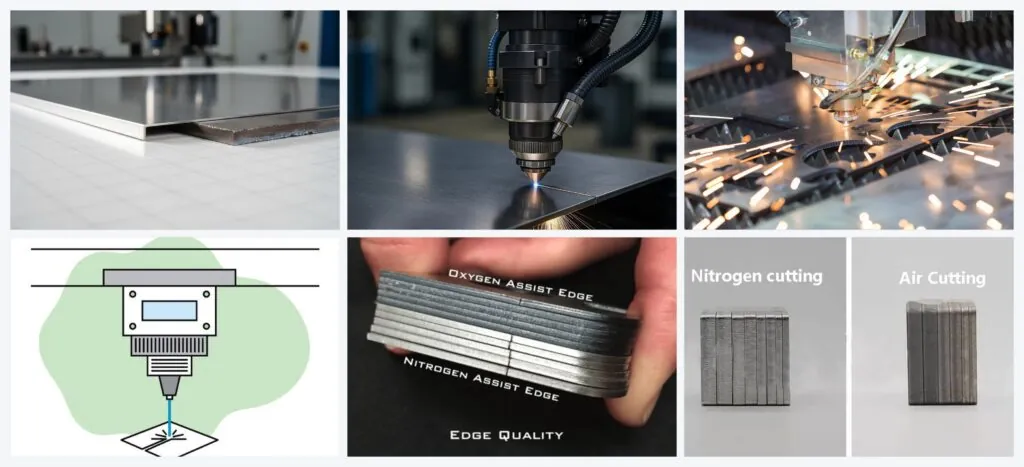
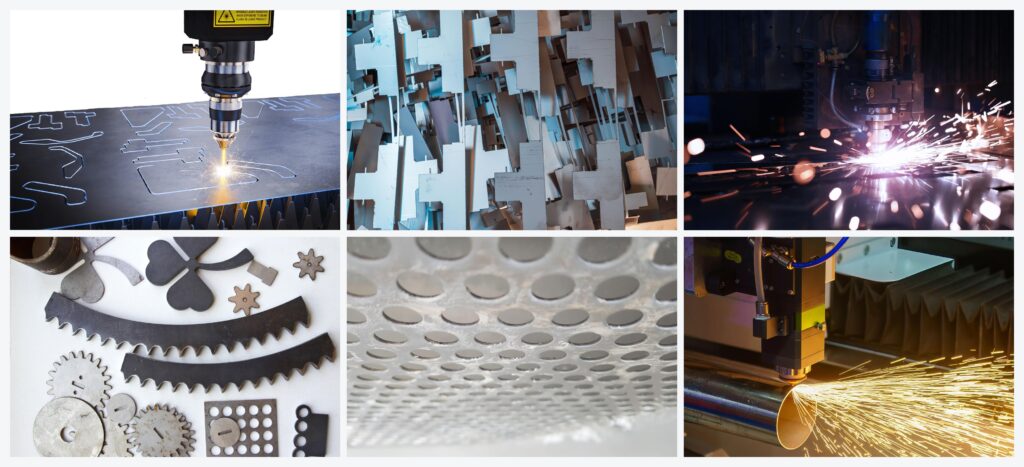
In laser cutting, assist gas performs several functions. It helps remove molten material from the kerf while also influencing oxidation, edge appearance, and downstream finishing requirements.
Unlike oxygen-assisted cutting, nitrogen is generally used when the objective is to limit oxidation of the cut surface. Potential advantages include:
- Cleaner and brighter cut edges
- Reduced oxidation and discoloration
- Less secondary grinding or polishing
- Improved surface condition before welding or coating
- More consistent results where edge appearance is important
The actual benefit depends on material type, thickness, cutting parameters, nitrogen purity, pressure, and the laser system itself.
For more information about compressed-air and gas-treatment requirements in this sector, explore Lingyu’s metal fabrication and laser cutting applications.
What Is a Nitrogen Generator for Laser Cutting?
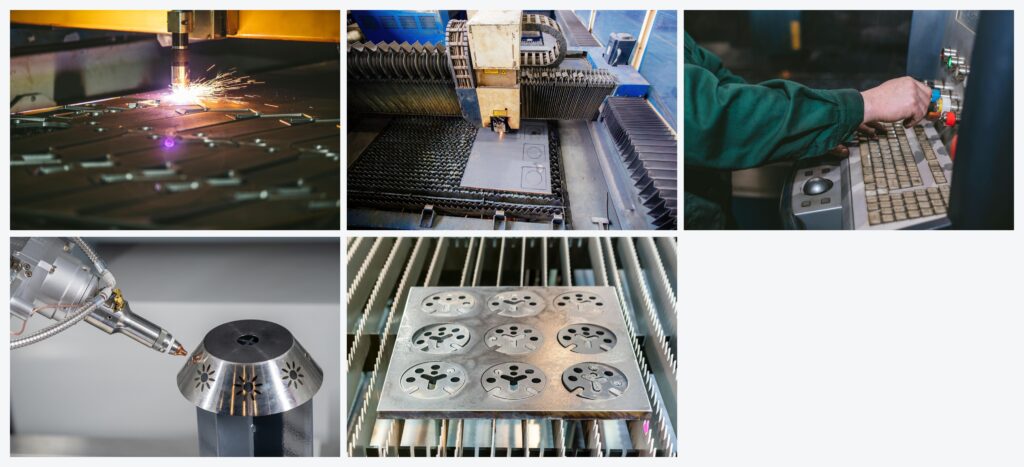
A nitrogen generator for laser cutting is an on-site gas-generation system configured to supply nitrogen for laser-cutting operations.
A typical system may include:
- Air compressor
- Air receiver
- Compressed-air dryer
- Filtration system
- PSA nitrogen generator
- Nitrogen buffer tank
- Pressure-control equipment
- Optional nitrogen booster
- Distribution piping
The compressed-air treatment stage is an important part of the overall system. Moisture, oil, and particles entering the nitrogen generation system can affect valves, filtration equipment, adsorbent condition, and long-term system performance.
A suitable precision compressed-air filter can form part of the upstream air-treatment system.
For facilities requiring dedicated compressed-air treatment around the cutting process, Lingyu also provides a laser cutting compressed-air treatment system.
How a PSA Nitrogen Generator Works
Lingyu’s industrial nitrogen generation systems use Pressure Swing Adsorption (PSA) technology.
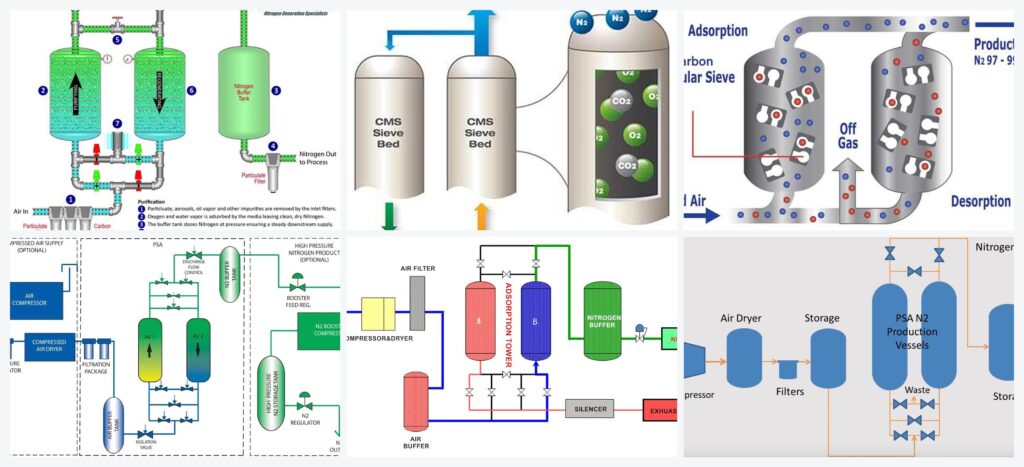
A PSA nitrogen generator contains two adsorption towers filled with Carbon Molecular Sieve (CMS). During operation, conditioned compressed air enters one tower, where oxygen is preferentially adsorbed by the CMS while nitrogen passes through as product gas.
At the same time, the second tower depressurizes and regenerates by releasing previously adsorbed gases. The two towers alternate between adsorption and regeneration to maintain continuous nitrogen production.
Depending on the system configuration, control functions can include PLC-based operation, nitrogen purity and flow monitoring, alarms, touchscreen monitoring, and off-spec gas handling.
For a more detailed explanation, see how PSA nitrogen generation works and why it uses Carbon Molecular Sieve.
How Pure Does Nitrogen Need to Be for Laser Cutting?
Nitrogen purity is one of the most important parameters when selecting a nitrogen generator for laser cutting.
There is no single purity level that is automatically correct for every laser machine, material, thickness, cutting speed, nozzle configuration, or required edge quality.
Lingyu’s PSA nitrogen generator range can be configured for different nitrogen purity requirements, including high-purity applications. However, selecting the highest available purity is not always the most economical approach.
As nitrogen purity increases, nitrogen recovery and available production capacity can change, while compressed-air demand can become more significant. Higher purity can therefore affect equipment sizing and operating cost.
For processes requiring very low residual oxygen, a 99.99% nitrogen generator may be considered.
Other laser-cutting applications may be able to operate at lower nitrogen purity depending on the required edge quality and machine requirements.
The correct purity should therefore be based on cutting requirements, actual production results, and the laser equipment manufacturer’s gas specification rather than simply selecting the highest available purity.
For a broader explanation of how purity should be evaluated together with flow, pressure, and compressed-air demand, see the nitrogen generator specification guide.
Flow Rate Is Just as Important as Purity
Purity alone does not determine whether a nitrogen generator can support a laser-cutting machine.
Laser cutting can create substantial instantaneous gas demand. The system should therefore be sized according to both average nitrogen consumption and peak flow requirements.
Important factors include:
- Laser power
- Material type
- Material thickness
- Cutting nozzle
- Assist-gas pressure
- Number of cutting machines
- Simultaneous machine operation
- Daily operating hours
- Production utilization
A system that produces the required purity but cannot maintain sufficient gas flow during high-demand cutting can experience pressure instability or interruptions.
This is why nitrogen buffer storage is often evaluated together with generator capacity. The nitrogen generator may produce gas continuously while the buffer tank helps accommodate short-duration demand peaks at the cutting machine.
Pressure Requirements for Laser Cutting
Pressure deserves particular attention in laser-cutting applications.
The PSA generator produces nitrogen from compressed air, but the pressure available directly from the generation stage should not be assumed to equal the final assist-gas pressure required by the laser-cutting machine.
The inlet compressed-air pressure for Lingyu PSA nitrogen generation systems is approximately 0.5–0.8 MPa under the applicable operating conditions.
This inlet pressure should not be confused with the final nitrogen pressure required at the cutting head.
When higher point-of-use nitrogen pressure is required, the complete system may need:
- Nitrogen buffer storage
- High-pressure storage
- Pressure-boosting equipment
- Appropriate pressure controls
- Correctly sized downstream piping
For this reason, a laser nitrogen system should not be selected according to generator flow alone.
Three critical process parameters should be evaluated together:
Nitrogen purity + nitrogen flow + point-of-use pressure
These parameters are interdependent and should be considered as part of one complete system.
The Importance of Clean, Dry Compressed Air
A PSA nitrogen generator depends on compressed air as its feed source, so upstream air quality directly affects the nitrogen-generation system.
Feed air should be appropriately controlled for:
- Moisture
- Oil contamination
- Particles
- Inlet temperature
- Pressure stability
For Lingyu PSA nitrogen generation systems, the maximum inlet-air temperature is approximately 40°C, while nitrogen dew-point performance can reach approximately −40°C or lower under the applicable operating conditions.
The complete system should still be designed according to the selected equipment configuration and downstream process requirements.
Proper pretreatment can help protect the CMS adsorption bed, pneumatic valves, analyzers, filters, and downstream equipment.
For laser-cutting facilities, the dryer and filtration system should therefore be treated as part of the nitrogen-generation design rather than as secondary accessories.
Key Factors When Selecting a Nitrogen Generator for Laser Cutting
A practical laser nitrogen system should be selected according to the actual cutting process rather than only the nominal generator capacity.
Before sizing the system, determine:
- Required nitrogen purity
- Maximum allowable residual oxygen
- Average nitrogen consumption
- Peak nitrogen consumption
- Required assist-gas pressure
- Laser power
- Number of cutting machines
- Material types
- Typical material thickness
- Existing compressor pressure and capacity
- Compressed-air quality
- Daily production hours
- Future expansion requirements
These values allow the generator, compressed-air treatment equipment, nitrogen storage, and pressure system to be evaluated as one complete package.
This is particularly important when a nitrogen generator is being added to an existing laser-cutting line. An existing compressor may not have sufficient spare capacity to support the additional compressed-air demand required by the nitrogen generator at the selected purity and flow rate.
Real-Time Purity Monitoring Matters
Laser-cutting performance can be affected by changes in nitrogen quality, so continuous gas-quality monitoring can be valuable in production environments.
Depending on the selected system configuration, monitoring may include:
- Nitrogen purity
- Nitrogen flow
- System pressure
- Operating status
- Alarm conditions
- Off-spec nitrogen handling
These functions allow operators to verify whether the gas-generation system remains within the required operating range.
Where cutting quality depends on low residual oxygen, the system response to off-spec nitrogen should be considered during equipment selection rather than relying only on a displayed nominal purity value.
Advantages of On-Site Nitrogen Generation for Laser Cutting
For facilities with regular or relatively high nitrogen consumption, on-site nitrogen generation can provide several operational advantages.
Continuous Nitrogen Availability
Nitrogen is produced directly at the facility, reducing dependence on cylinder replacement schedules or external gas deliveries.
Greater Supply Control
Production teams have greater control over nitrogen generation, storage, and consumption.
Reduced Gas Logistics
On-site generation can reduce cylinder handling, delivery coordination, and some storage requirements associated with conventional gas supply.
Application-Specific Configuration
The nitrogen generation system can be selected according to the required purity, flow, pressure, and production schedule rather than assuming one gas specification is appropriate for every cutting process.
Integration with the Cutting Line
The compressor, dryer, filters, nitrogen generator, storage, controls, and pressure equipment can be engineered around the operating requirements of the laser-cutting line.
On-Site Generation vs. Cylinder or Bulk Nitrogen
No nitrogen supply method is automatically the most economical choice for every laser-cutting facility.
Cylinder supply may remain practical for low or occasional nitrogen consumption.
Bulk liquid nitrogen may be appropriate for facilities with high consumption or specific operating requirements.
On-site PSA generation can become attractive where nitrogen demand is sufficiently regular and the required compressed-air and electrical infrastructure is available.
When comparing these alternatives, consider:
- Nitrogen consumption
- Required nitrogen purity
- Required pressure
- Electricity used for compressed-air generation
- Compressor capacity
- Maintenance
- Filter and dryer maintenance
- Nitrogen storage
- Booster requirements
- Delivery charges
- Cylinder rental
- Bulk storage charges
- Expected annual operating hours
- Production interruption risk
The meaningful comparison is the total cost of usable nitrogen delivered at the point of use rather than only the initial purchase price of the nitrogen generator.
For a broader economic evaluation, see Lingyu’s guide to nitrogen generator cost and ROI.
Where Nitrogen Generators for Laser Cutting Are Used
On-site nitrogen generation can support laser cutting across many metal-processing operations, including:
- Sheet-metal fabrication
- Stainless-steel equipment manufacturing
- Automotive components
- Electrical cabinets and enclosures
- Machinery manufacturing
- Architectural metalwork
- General precision fabrication
The suitability of a nitrogen generation system depends less on the industry name than on the facility’s actual gas consumption, required assist-gas pressure, cutting materials, operating schedule, and desired edge quality.
A factory cutting thin stainless steel on one machine may require a very different nitrogen system from a facility operating several high-power laser cutters simultaneously.
Conclusion
A nitrogen generator for laser cutting can provide an on-site nitrogen source for modern metal-fabrication operations, but successful system selection involves more than choosing a high-purity generator.
Nitrogen purity, peak flow, assist-gas pressure, compressed-air capacity, air quality, storage, pressure boosting, and control functions should all be evaluated together.
The best system is therefore not necessarily the one that produces the highest possible nitrogen purity. It is the system that consistently supplies the required nitrogen purity, flow, and pressure for the actual cutting process while maintaining acceptable operating efficiency and lifecycle cost.
Explore Lingyu’s nitrogen generator range with your laser power, material range, required nitrogen purity, flow, pressure, and compressed-air conditions to determine a suitable system configuration.