Compressed air is essential in many industrial processes, but reliable performance depends on keeping air-treatment equipment in good condition. A refrigerated compressed air dryer requires regular inspection and maintenance to maintain stable moisture removal, avoid unnecessary energy consumption, and reduce the risk of unexpected downtime.
This guide covers the most important maintenance tasks, operating checks, and common warning signs for refrigerated air dryers.
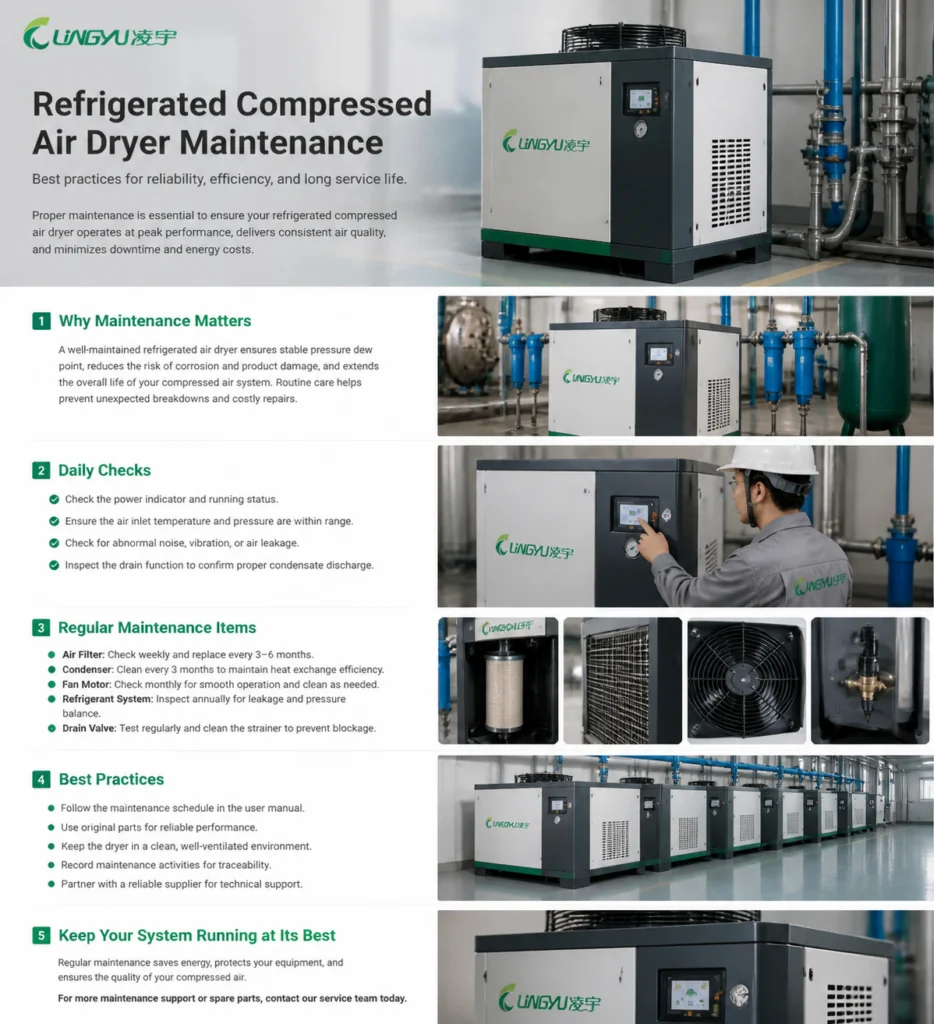
What Is a Refrigerated Compressed Air Dryer?
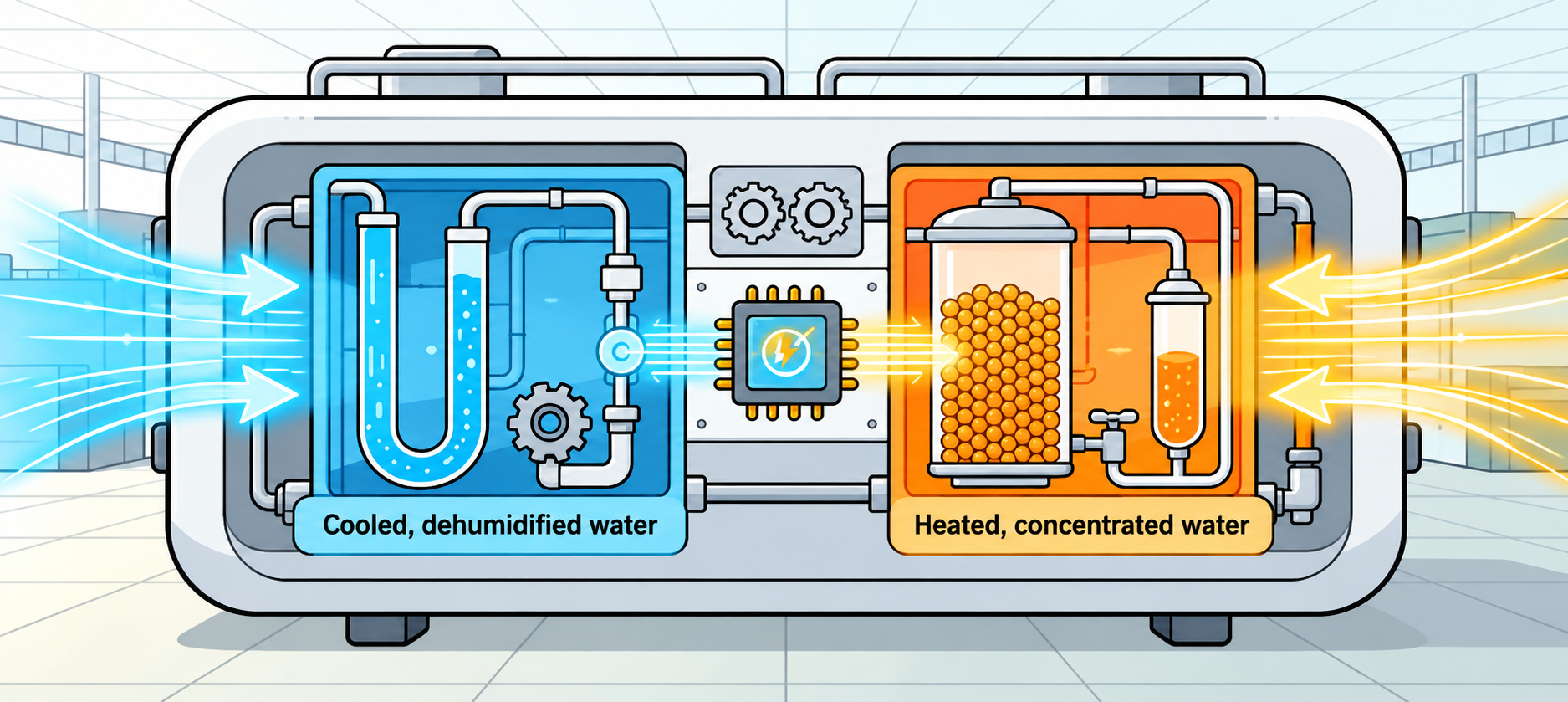
A refrigerated compressed air dryer removes moisture by cooling compressed air until water vapor condenses into liquid water.
In Lingyu refrigerated dryers, compressed air is pre-cooled and then passes through an air-to-refrigerant evaporator, where it can be cooled to achieve a pressure dew point of approximately 2–10°C. Condensed moisture is separated and discharged through an automatic drain before the dry compressed air leaves the dryer.
For a detailed explanation of this process, see how refrigerated air drying works.
Why Is Refrigerated Air Dryer Maintenance Important?
Poor maintenance can gradually reduce dryer performance and eventually affect the entire compressed-air system.
Common consequences include:
- Higher pressure dew point
- Water reaching downstream equipment
- Increased pressure drop
- Higher refrigeration load
- Compressor or fan problems
- Drain failures
- Unexpected shutdowns
Routine inspection helps identify developing problems before they cause significant deterioration in air quality or interrupt production.
Maintenance should focus not only on individual components but also on operating trends such as pressure dew point, temperatures, refrigeration behavior, drainage, and pressure drop.
Key Refrigerated Air Dryer Maintenance Tasks
1. Check and Maintain Compressed Air Filters
Upstream and downstream filters should be inspected according to operating conditions and the maintenance requirements for the installed equipment.
Clogged filter elements can restrict airflow and increase pressure drop. Ineffective upstream filtration may also allow excessive oil or particulate contamination to enter downstream treatment equipment.
During routine maintenance, check:
- Filter differential pressure
- Element condition
- Housing condition
- Drain operation
- Signs of oil or particle contamination
Filter elements should be replaced according to their actual condition and applicable maintenance requirements rather than relying on one universal interval for every compressed-air system.
For more information, see the compressed air filter replacement guide.
2. Inspect the Condenser
The condenser must reject heat effectively for the refrigeration cycle to operate correctly.
Air-Cooled Condensers
For air-cooled refrigerated dryers, check for dust, debris, or other contamination that may restrict airflow through the condenser.
Also inspect:
- Cooling fan operation
- Condenser surface condition
- Air passages
- Ventilation around the dryer
- Abnormal condensing temperatures
Restricted airflow can reduce heat rejection and increase the refrigeration system’s operating load.
Water-Cooled Condensers
For water-cooled refrigerated dryers, monitor cooling-water temperature, pressure, flow, and condenser condition.
For Lingyu’s WH Series, the specified cooling-water conditions include:
- Cooling-water pressure: 0.2–0.4 MPa
- Cooling-water temperature: ≤32°C
Insufficient cooling-water flow, excessive water temperature, or contamination inside the condenser can reduce heat-transfer performance.
3. Inspect the Heat Exchanger and Evaporator
Heat exchangers and evaporators are central to refrigerated dryer performance.
Accumulated contamination can reduce heat-transfer efficiency, while internal or external leakage can cause abnormal operation.
Inspect accessible areas and monitor operating conditions for signs such as:
- Reduced cooling performance
- Rising pressure dew point
- Abnormal temperatures
- Unexpected pressure changes
- Evidence of external leakage
- Unstable refrigeration operation
A change in dryer performance does not by itself prove that the evaporator is leaking. Other causes should also be evaluated before replacing or repairing the heat exchanger.
For suspected leakage, refer to the refrigerated dryer evaporator leak inspection guide.
4. Check the Condensate Drain
Condensate must be removed reliably after moisture is separated from the compressed air.
A blocked or failed drain can allow water to accumulate inside the dryer or move downstream with the compressed air.
Lingyu refrigerated dryers use an air-water separation and automatic drainage process to remove condensed moisture.
Check the drain for:
- Blockage
- Continuous compressed-air leakage
- Failure to discharge condensate
- Damaged valves
- Loose or damaged connections
- Abnormal discharge behavior
Drain problems should be corrected promptly because effective cooling alone cannot provide dry downstream air if separated condensate is not discharged correctly.
5. Monitor Pressure Dew Point
Pressure dew point is one of the most useful indicators of refrigerated dryer performance.
A rising pressure dew point can indicate problems associated with:
- Cooling capacity
- Excessive airflow
- High inlet temperature
- Abnormal inlet pressure
- Condenser performance
- Drainage
- Heat-exchanger performance
- Refrigeration-circuit condition
Lingyu’s AH and WH high-inlet-temperature refrigerated dryers provide a pressure dew point of approximately 2–10°C under their specified operating conditions.
Actual readings should be compared with the specification for the installed dryer and its current operating conditions rather than applying one universal pressure-dew-point target to every system.
Trend data can be particularly useful. A gradual increase in pressure dew point under similar load and ambient conditions may indicate developing performance deterioration even before the dryer reaches an alarm condition.
6. Check the Refrigeration Circuit
The refrigeration circuit includes components such as:
- Refrigeration compressor
- Condenser
- Evaporator
- Expansion valve
- Filter drier
- Pressure switches
- Bypass valve
These components work together to maintain the cooling conditions required for moisture condensation.
Possible signs of refrigeration-system problems include:
- Poor cooling
- Abnormal refrigerant pressures
- Frequent compressor cycling
- Unusual compressor noise
- Excessively high or low operating temperatures
- Rising pressure dew point
Refrigerant pressure should not be evaluated against a generic universal target because normal values depend on refrigerant type, load, ambient or cooling-water conditions, dryer design, and other operating factors.
Refrigerant charging, sealed-system repairs, and adjustments requiring refrigeration-system intervention should normally be handled by qualified service personnel.
7. Inspect Fans and Ventilation
For air-cooled dryers, restricted ventilation can increase condensing temperature and reduce cooling performance.
Make sure:
- Fans operate normally
- Fan blades are clean and undamaged
- Air passages are clear
- Ventilation openings are unobstructed
- Hot discharge air can leave the installation area
- Sufficient clearance is maintained around the dryer
For Lingyu AH Series installation, approximately 1.5 m of clearance around the unit should be maintained.
Adequate ventilation is particularly important in installations where dryer heat can accumulate around the equipment.
Recommended Refrigerated Dryer Maintenance Routine
Maintenance frequency should reflect actual operating conditions rather than relying on a single fixed schedule for every installation.
Routine Operating Checks
During normal operation, monitor:
- Pressure dew point
- Inlet and outlet conditions
- Drain operation
- Unusual noise
- Alarm status
- Cooling performance
Periodic Inspection
At appropriate maintenance intervals, inspect:
- Air filters
- Condenser cleanliness
- Cooling fans
- Heat exchangers
- Automatic drains
- Electrical connections
- Refrigeration components
- Piping and connections
- Ventilation conditions
Maintenance Records
Keep records of:
- Pressure dew point
- Refrigerant pressures where applicable
- Operating temperatures
- Filter condition
- Drain performance
- Alarm events
- Cleaning
- Component replacement
- Repair work
Trends are often more useful than a single reading. Comparing operating data under similar load and environmental conditions can help identify gradual deterioration before a major failure develops.
Scheduled Maintenance vs. Emergency Repairs
Preventive maintenance is generally more effective than waiting for dryer performance to deteriorate significantly.
A maintenance plan should consider:
- Operating hours
- Ambient conditions
- Compressed-air quality
- Dryer load
- Inlet temperature
- Cooling conditions
- Maintenance requirements for the installed model
A dryer operating continuously in a dusty or high-temperature environment may require more frequent inspection than a lightly loaded unit installed in a clean equipment room.
Maintenance intervals should therefore be adapted to actual site conditions.
Troubleshooting Common Refrigerated Air Dryer Problems
Excess Moisture Downstream
If water or excessive moisture appears downstream, check:
- Condensate drain operation
- Inlet-air temperature
- Airflow
- Condenser condition
- Cooling performance
- Heat-exchanger condition
- Refrigeration-system operation
- Actual pressure dew point
Do not assume that every downstream moisture problem is caused by insufficient refrigerant. Drainage problems, excessive load, poor heat rejection, or operating conditions outside the dryer’s design range can produce similar symptoms.
Dryer Is Not Cooling Effectively
Check:
- Condenser cooling
- Fan or cooling-water operation
- Compressor operation
- Refrigeration-system condition
- Evaporator performance
- Airflow and inlet conditions
- Ventilation
The pattern of operating temperatures, refrigerant pressures, and pressure dew point should be evaluated together rather than diagnosing the dryer from one measurement alone.
Abnormal Refrigerant Pressure
Abnormal refrigerant pressure can result from heat-transfer problems, airflow conditions, cooling conditions, refrigerant-circuit faults, or other operating issues.
Diagnosis should consider both the low and high sides of the refrigeration circuit together with temperature, load, and pressure-dew-point behavior.
For a more detailed troubleshooting process, see the guide to abnormal refrigerant low-pressure conditions.
Unusual Noise
Inspect:
- Cooling fans
- Refrigeration compressor
- Mounting points
- Piping contact or vibration
- Loose components
- Other moving parts
Changes in sound or vibration should be investigated before they develop into mechanical failures.
Water Is Not Draining
Check the air-water separator and automatic drain for blockage, valve malfunction, damaged connections, or other conditions preventing condensate discharge.
If the drain continuously releases compressed air, inspect the drain mechanism rather than allowing the air loss to continue.
When Should Refrigerated Dryer Parts Be Replaced?
Replacement should be based on actual component condition and the maintenance requirements for the installed dryer rather than a fixed universal interval.
Common refrigerated dryer spare or service components include:
- Fans
- Refrigeration compressors
- Condensers
- Evaporators
- Filter driers
- Expansion valves
- Bypass valves
- Pressure gauges
- Drain valves
A component should not automatically be replaced simply because dryer performance has changed. Diagnosis should first determine whether the problem is caused by the component itself or by operating conditions elsewhere in the system.
Unlike a regenerative desiccant dryer, a standard refrigerated dryer does not require routine desiccant replacement.
When Should You Call a Qualified Service Technician?
Professional technical support should be used when maintenance involves:
- Refrigerant charging or recovery
- Sealed refrigeration-circuit repairs
- Compressor replacement
- Internal evaporator leakage
- Electrical faults requiring specialist diagnosis
- Persistent abnormal refrigerant pressures
- Repeated protective shutdowns
- Problems that remain after normal inspection and cleaning
Avoid uncontrolled adjustments to expansion valves, bypass valves, refrigerant charge, or other refrigeration controls without diagnosing the actual cause of the problem.
Changing one setting to correct a symptom can create additional refrigeration problems if the original fault lies elsewhere.
Conclusion
Regular refrigerated compressed air dryer maintenance helps maintain stable pressure dew point, reliable condensate removal, controlled pressure drop, and efficient refrigeration operation.
The most important maintenance tasks include checking filters, condensers, evaporators, heat exchangers, automatic drains, fans, ventilation, operating temperatures, and the refrigeration circuit.
Lingyu refrigerated dryer configurations can provide a pressure dew point of approximately 2–10°C. For the WH Series, cooling-water conditions include 0.2–0.4 MPa pressure and ≤32°C temperature, while AH Series installation requires approximately 1.5 m clearance around the unit.
Pressure dew point and other operating data should be monitored as trends rather than interpreted from a single reading. If performance moves outside the expected range, the complete operating condition should be evaluated before adjustments or component replacement are made.
Where refrigeration-system repairs or specialist diagnostics are required, qualified technical support should be used.