An abnormally high refrigerant low-side pressure in a refrigerated air dryer can result from problems in the refrigeration circuit, component malfunction, excessive thermal load, inadequate condenser cooling, or incorrect system adjustment.
Because suction pressure changes with evaporating temperature, refrigeration load, refrigerant type, and operating conditions, technicians should not diagnose the problem from a pressure reading alone. Inlet air temperature, ambient temperature, condenser condition, compressor performance, refrigerant charge, and valve operation should be evaluated together.
If you are unfamiliar with the basic refrigeration process, first review the working principle of a refrigerated air dryer.
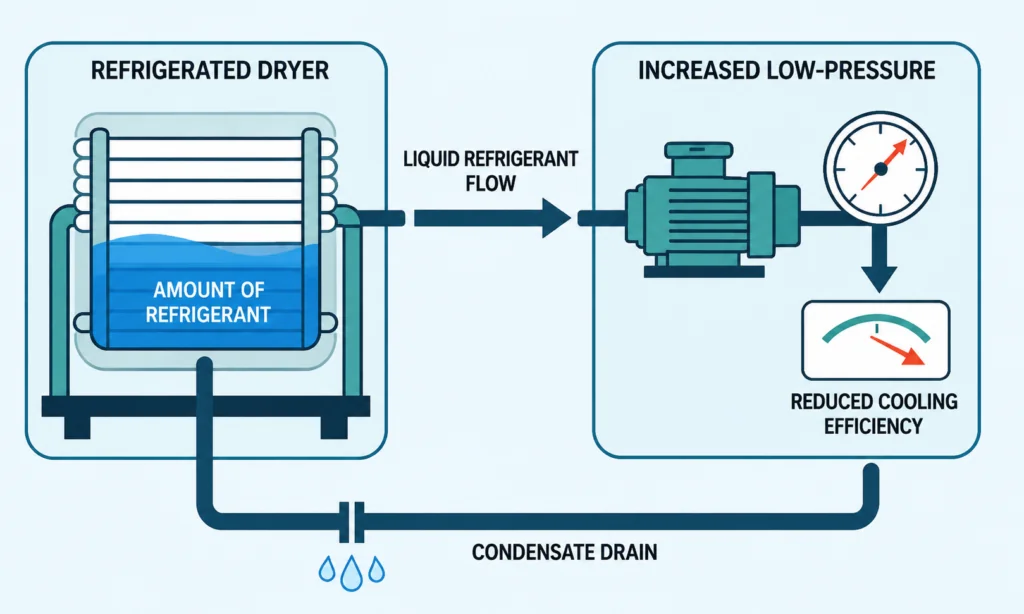
Refrigeration System-Related Causes
Incorrect or Excessive Refrigerant Charge
An incorrect refrigerant charge can disturb the balance between the evaporator and condenser.
When too much refrigerant is added, system operating conditions can shift away from the intended design point. Depending on the dryer design, load, and refrigerant, excessive charge may contribute to abnormal operating pressures, unstable refrigeration performance, reduced cooling efficiency, and poorer moisture removal.
Refrigerant quantity should therefore be checked against the specifications and service requirements of the actual dryer model rather than judged from suction pressure alone.
Air or Non-Condensable Gases in the Refrigeration Circuit
If the refrigeration system is not properly evacuated during installation or servicing, air or other non-condensable gases may remain inside the circuit.
These gases interfere with heat transfer and normal refrigerant circulation. As a result, the refrigeration system may develop abnormal pressure relationships and reduced cooling efficiency.
When contamination is suspected, the refrigeration circuit should be properly inspected rather than repeatedly adding or removing refrigerant according to gauge readings alone.
Failure of Key Refrigeration Components
Thermostatic Expansion Valve Malfunction
The thermostatic expansion valve controls the flow of refrigerant entering the evaporator.
In the AH Series refrigeration circuit, the thermostatic expansion valve operates together with the refrigerant evaporator, hot gas bypass valve, refrigeration compressor, low-pressure gauge, low-pressure switch, and other refrigeration components.
Excessive Refrigerant Feed
If the expansion valve supplies too much refrigerant because of incorrect adjustment or component malfunction, excessive refrigerant may enter the evaporator.
This can raise evaporating pressure and contribute to higher-than-normal suction pressure.
Restricted or Unstable Valve Operation
Contamination, ice formation, or mechanical problems may interfere with expansion-valve operation.
A restriction more commonly reduces refrigerant flow, while unstable or intermittent valve operation may cause pressure fluctuations. The expansion valve should therefore be evaluated together with evaporator temperature, superheat, and overall refrigeration performance rather than from suction pressure alone.
Compressor Performance Deterioration
The compressor draws low-pressure refrigerant vapor from the evaporator and compresses it into the high-pressure side of the refrigeration circuit.
When internal compressor components become worn or damaged, pumping efficiency decreases. The compressor may then be unable to maintain the required pressure difference between the suction and discharge sides.
A typical diagnostic pattern includes:
- Higher-than-expected suction pressure
- Lower-than-expected discharge pressure
- Reduced pressure differential
- Poor cooling performance
- Increasing pressure dew point
In severe cases, the high-side and low-side pressures may gradually approach each other.
High suction pressure combined with an unusually small pressure difference across the compressor is therefore more indicative of reduced compressor pumping efficiency than refrigerant charge alone.
Excessive Evaporator Load or Poor Heat Transfer
The evaporator cools the compressed air so that moisture can condense and be separated.
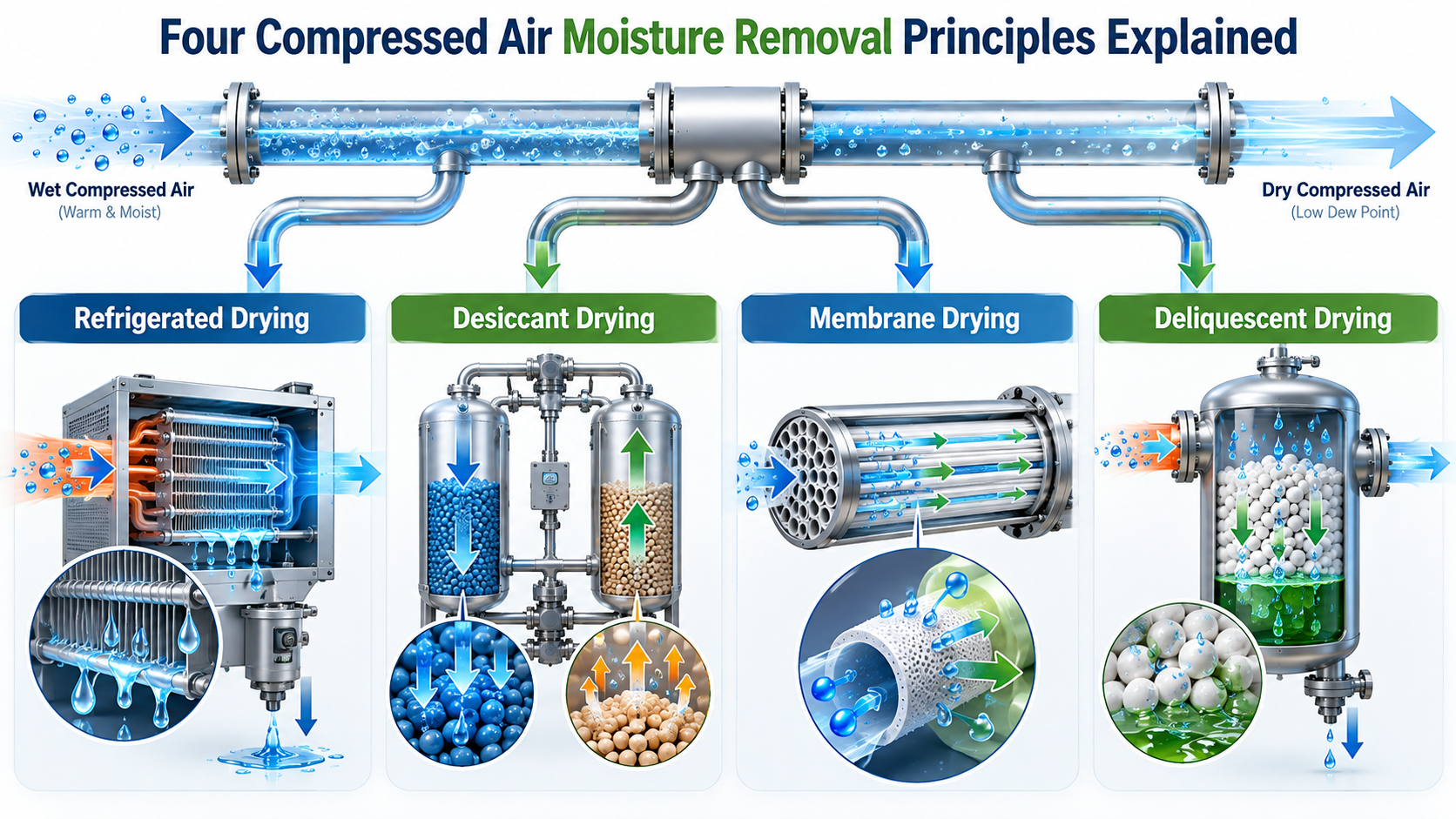
In the refrigerated dryer process, high-temperature compressed air is first pre-cooled and then enters the refrigerant evaporator, where it is cooled to a pressure dew point of approximately 2–10°C. During cooling, moisture, oil, and some impurities condense and are separated from the compressed air. The condensate is then discharged through the drainage system.
If the refrigeration load becomes excessive, evaporating pressure can increase.
Common causes include:
- Air flow exceeding the rated capacity
- Excessively high compressed-air inlet temperature
- High ambient temperature
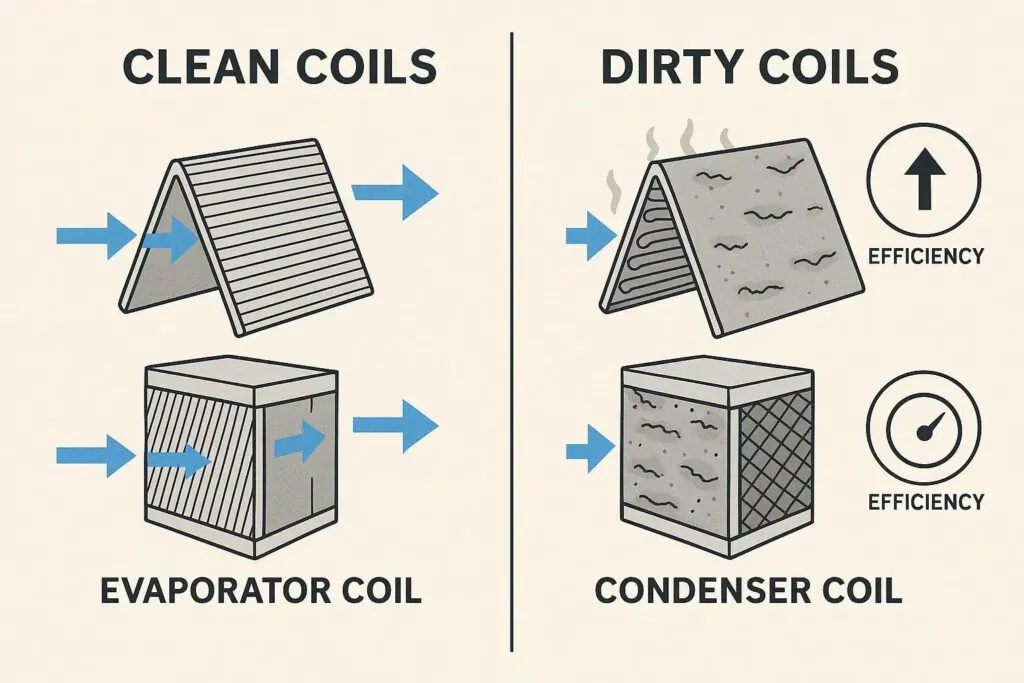
- Fouled heat-transfer surfaces
- Oil or contaminants affecting heat exchange
- Incorrect dryer sizing
For Lingyu AH Series high-inlet-temperature refrigerated air dryers, the rated inlet temperature is 50°C, and the maximum inlet temperature is ≤80°C.
Applications operating close to these temperature limits should be evaluated carefully during dryer selection. For more information, see the high-temperature refrigerated air dryer selection guide.
If heat-transfer performance appears abnormal and refrigerant leakage is suspected, follow the procedure for checking internal and external leaks in a refrigerated air dryer evaporator.
External Operating Conditions and Adjustment Factors
Insufficient Condenser Heat Dissipation
Poor condenser heat rejection can affect the entire refrigeration cycle and produce abnormal operating pressures.
Air-Cooled Systems
Common problems include:
- Dust or debris blocking condenser fins
- Poor airflow through the condenser
- Condenser fan failure
- Insufficient installation clearance
- Excessively high room temperature
For the Lingyu AH Series, indoor installation requires a minimum clearance of 1.5 m around the unit.
For a more detailed explanation of airflow, heat exchange, and the refrigeration process, see the working principle of air-cooled refrigerated air dryers.
Water-Cooled Systems
Typical causes of inadequate condenser performance in a water-cooled system include:
- Insufficient cooling-water flow
- Excessive cooling-water temperature
- Incorrect cooling-water pressure
- Scale or fouling in the condenser
- Abnormal water-flow regulating valve operation
Lingyu WH Series refrigerated air dryers operate with a cooling-water pressure of 0.2–0.4 MPa and a cooling-water temperature of ≤32°C.
Water temperature, pressure, flow, condenser cleanliness, and water-flow regulation should all be checked when troubleshooting abnormal refrigeration pressures in a water-cooled dryer.
Incorrect Hot Gas Bypass Operation
The hot gas bypass valve helps stabilize evaporating conditions, especially when the dryer operates under partial load. Both AH and WH refrigerated dryer refrigeration circuits include a hot gas bypass valve.
If excessive hot gas is introduced into the low-pressure side, evaporating pressure may remain higher than intended. This can also raise evaporator temperature and reduce the dryer’s moisture-removal capability.
The hot gas bypass valve should not be adjusted according to a universal number of turns or a generic suction-pressure target. Correct adjustment depends on:
- Dryer model
- Refrigerant type
- System load
- Ambient temperature
- Refrigeration circuit design
- Manufacturer service requirements
Adjustments should therefore be made gradually while monitoring both refrigeration pressures and pressure dew point.
High Ambient Temperature
Refrigerant operating pressures naturally change as ambient temperature changes.
For Lingyu AH Series dryers, the rated ambient temperature is 32°C, while the specified operating range is 2–45°C.
A suction-pressure reading taken during high summer temperatures should therefore not automatically be compared with a winter reading and classified as abnormal.
When diagnosing high low-side pressure, also check:
- Ambient temperature
- Compressed-air inlet temperature
- Actual air flow
- Condenser cleanliness
- Cooling airflow
- Discharge pressure
- Pressure dew point
If the dryer frequently operates near its maximum temperature or flow limits, equipment sizing should also be reviewed. The refrigerated air dryer sizing guide provides additional guidance on matching dryer capacity to actual operating conditions.

Troubleshooting Excessively High Refrigerant Low-Side Pressure
Step 1: Confirm Actual Operating Conditions
Before opening the refrigeration circuit or adjusting valves, record the main operating parameters:
- Compressed-air inlet temperature
- Inlet pressure
- Actual air flow
- Ambient temperature
- Pressure dew point
- Refrigerant suction pressure
- Refrigerant discharge pressure
Compare these measurements with the specifications for the actual dryer model.
This is particularly important because refrigerated air dryers are designed around defined inlet, ambient, pressure, flow, and dew-point conditions rather than one universal refrigeration pressure value.
For example, the Lingyu AH Series has the following operating conditions:
- Rated inlet pressure: 0.7 MPa
- Operating pressure range: 0.6–1.0 MPa
- Rated inlet temperature: 50°C
- Maximum inlet temperature: ≤80°C
- Pressure dew point: 2–10°C
- Rated ambient temperature: 32°C
- Ambient operating range: 2–45°C
- Pressure drop: ≤0.025 MPa
These parameters provide a practical baseline for determining whether the dryer is operating within its intended conditions.
Step 2: Inspect Condenser Performance
For an air-cooled dryer:
- Clean the condenser fins
- Check condenser fan operation
- Remove airflow obstructions
- Confirm adequate installation clearance
For a water-cooled dryer:
- Check cooling-water temperature
- Verify water pressure and flow
- Inspect the condenser for fouling or scaling
- Check the water-flow regulating valve
Step 3: Check Expansion and Bypass Control
Evaluate the thermostatic expansion valve and hot gas bypass system.
Avoid making large adjustments based on suction pressure alone. Instead, observe how any adjustment affects:
- Low-side pressure
- High-side pressure
- Evaporator temperature
- Compressor operation
- Pressure dew point
Step 4: Verify Refrigerant Charge and Circuit Condition
If airflow, thermal load, and condenser conditions are normal, inspect the refrigeration circuit.
Check for:
- Incorrect refrigerant charge
- Non-condensable gases
- Refrigerant contamination
- Leakage
- Previous improper servicing
Step 5: Evaluate Compressor Performance
If suction pressure remains high while discharge pressure is lower than expected, the compressor may have reduced pumping capacity.
Inspect the compressor for internal wear, valve damage, or other mechanical problems when necessary.
For broader preventive inspection and servicing procedures, see the refrigerated compressed air dryer maintenance guide.
Conclusion
Excessively high refrigerant low-side pressure in a refrigerated air dryer may be caused by excessive evaporator load, incorrect refrigerant charge, expansion-valve problems, excessive hot gas bypass, compressor wear, poor condenser cooling, or operating conditions outside the intended range.
Accurate diagnosis requires evaluating the entire refrigeration system rather than suction pressure alone. Inlet temperature, actual air flow, ambient conditions, condenser performance, suction and discharge pressures, compressor condition, valve operation, and pressure dew point should all be compared with the requirements of the actual dryer model.
For applications requiring a new unit or a different capacity range, you can review Lingyu’s industrial refrigerated air dryer range to compare suitable configurations.