In any compressed air system, moisture is the enemy. When air is compressed, water vapor becomes concentrated and can cause rust, corrosion, microbial contamination, and equipment failure. That’s why a refrigerant air dryer is one of the most widely used solutions in industrial and commercial compressed-air applications today.
Reliable, efficient, and easy to maintain, refrigerant dryers provide a stable dew point suitable for most manufacturing processes. If you’re trying to understand what they are, how they work, and whether they’re right for your facility, this guide has everything you need.
What Is a Refrigerant Air Dryer?
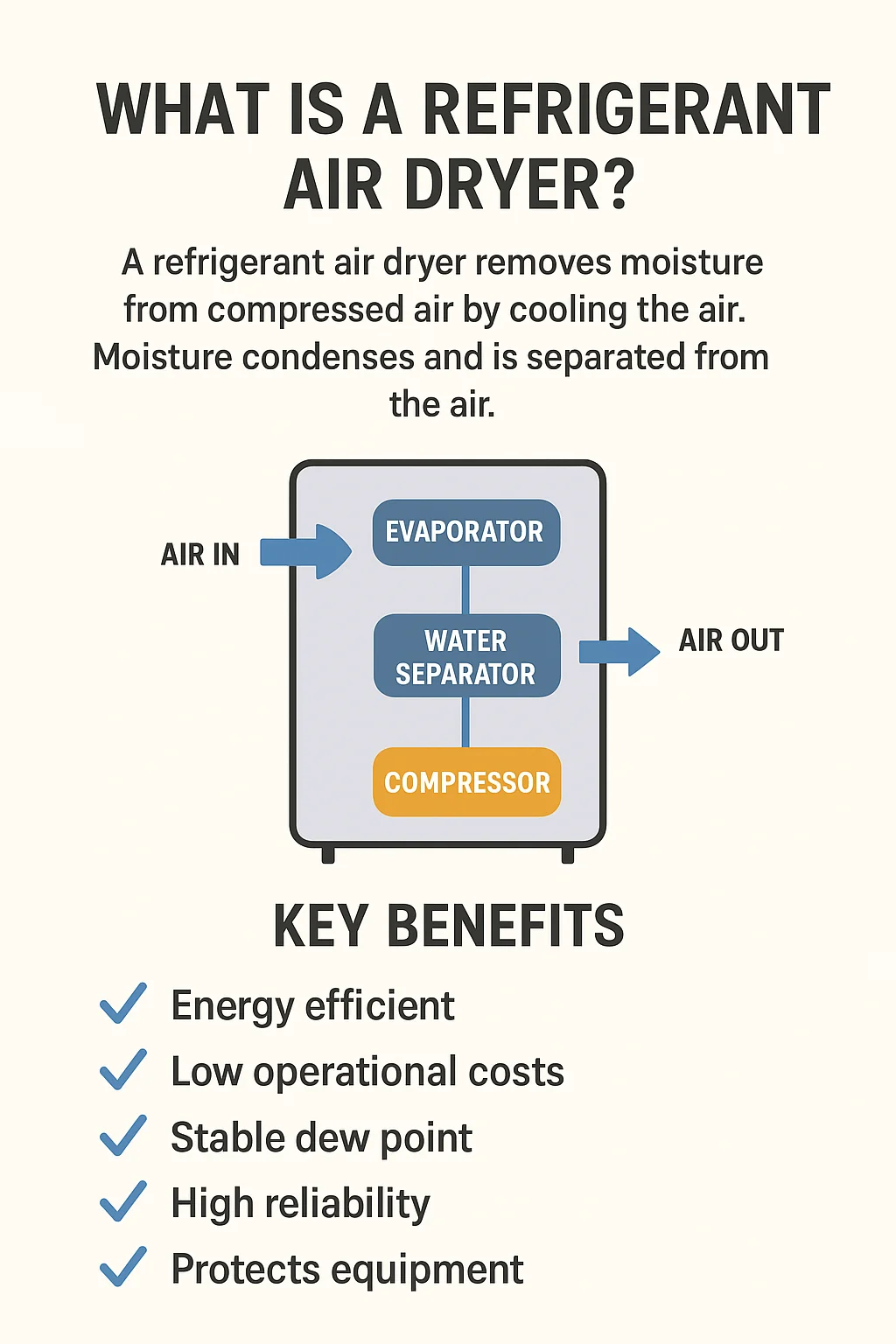
A refrigerant air dryer (or refrigerated air dryer) is a device that removes moisture from compressed air by cooling it. When the air is chilled, water vapor condenses into liquid droplets, which can then be separated and drained from the system.
These dryers typically achieve a dew point of around +3°C to +10°C (37°F–50°F), making them ideal for general-purpose applications where ultra-dry air isn’t required.
How a Refrigerant Air Dryer Works
Refrigerant dryers operate using the same basic principles as household refrigerators or air conditioners. Here’s a simplified breakdown of the process:
1. Warm, Moist Compressed Air Enters the Dryer
The incoming air contains high humidity and heat from compression.
2. The Air Is Cooled by a Refrigeration System
A refrigerant circulates through an evaporator coil, cooling the compressed air.
3. Moisture Condenses Into Water
As the air temperature drops, water vapor turns into liquid droplets.
4. A Separator Removes Liquid Water
The condensed moisture is collected and drained automatically.
5. Dry, Cool Air Is Reheated
The outgoing air passes through a heat exchanger to prevent pipe sweating and improve energy efficiency.
This simple yet efficient process makes refrigerant dryers extremely reliable for day-to-day operations.
Types of Refrigerant Air Dryers
There are two primary types:
1. Non-Cycling Refrigerant Dryers
Run continuously
Maintain stable dew point
Simple and cost-effective
Best for: steady production environments with constant airflow demand.
2. Cycling Refrigerant Dryers
Adjust cooling power based on load
Reduce energy consumption
Maintain performance during variable demand
Best for: facilities focused on energy savings and fluctuating air use.
Key Benefits of Using a Refrigerant Air Dryer
✔ Energy Efficient
Refrigerant dryers consume less power compared to desiccant dryers.
✔ Low Operational Costs
Minimal maintenance and no need for desiccant replacement.
✔ Stable Dew Point
Ideal for general industrial air applications.
✔ High Reliability
Simple design, fewer moving parts, and robust performance.
✔ Protects Equipment
Prevents corrosion, tool degradation, product spoilage, and unexpected downtime.
Where Are Refrigerant Air Dryers Used?
These dryers are widely used in industries such as:
Automotive workshops
Food and beverage production
Packaging and printing
CNC machining
Electronics manufacturing
General factory compressed-air systems
Pneumatic tools and robots
If your application requires clean, dry air but not ultra-low dew point levels, a refrigerant air dryer is an excellent choice.
How to Choose the Right Refrigerant Air Dryer
When selecting a dryer, consider:
Airflow capacity (CFM / m³/min)
Operating pressure and temperature
Required dew point
Energy efficiency (cycling vs non-cycling)
Drain system design
Ambient conditions
Future expansion needs
Always size your dryer slightly above your compressor’s maximum output to avoid overload.
Conclusion
A refrigerant air dryer is one of the most effective and economical ways to remove moisture from compressed air. With a reliable cooling-based drying process and low cost of ownership, it remains the most popular choice for general industrial applications.
Whether you’re upgrading your current system or designing a new one, selecting the right refrigerant air dryer will improve performance, extend equipment life, and reduce maintenance costs.