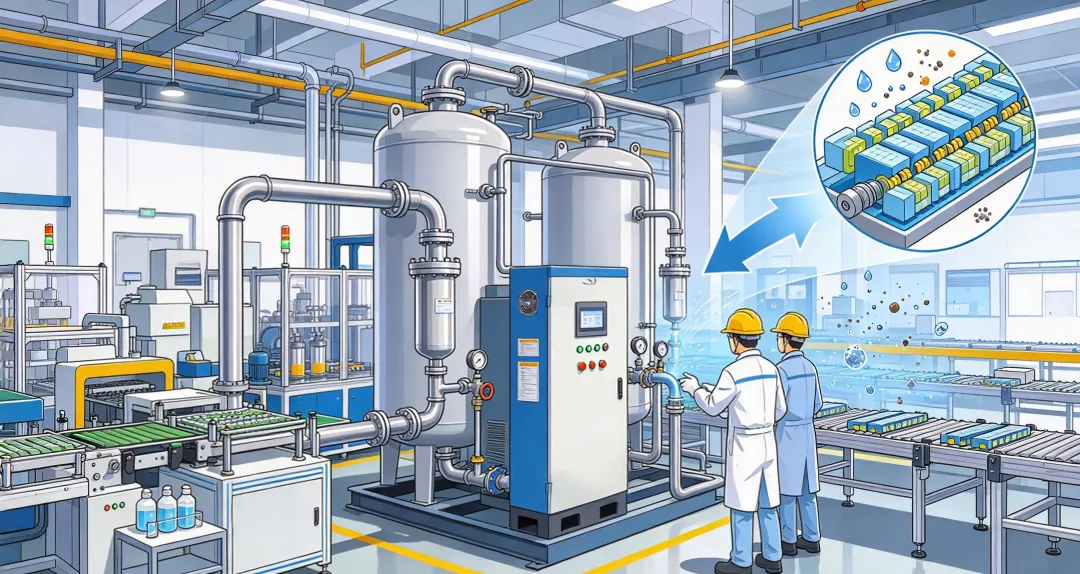
Compressed air is widely used throughout modern industry, but untreated compressed air naturally carries moisture and may also contain oil and solid contaminants. If these contaminants are not properly removed, they can contribute to pipeline corrosion, pneumatic equipment problems, product contamination, and unplanned maintenance.
A nano compressed air dryer is commonly searched for by industrial users looking for compact, efficient, and reliable compressed air moisture-removal solutions. In practical industrial air treatment, the appropriate drying technology may be refrigerated, desiccant adsorption, or a combination of both, depending on the required pressure dew point and operating conditions.
Understanding the differences between compressed air dryer technologies is therefore more important than selecting equipment based on terminology alone.
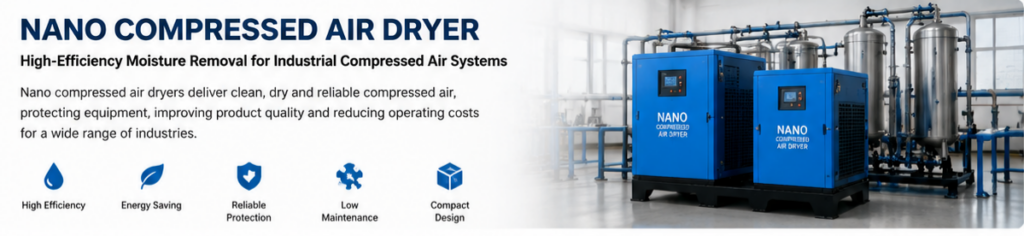
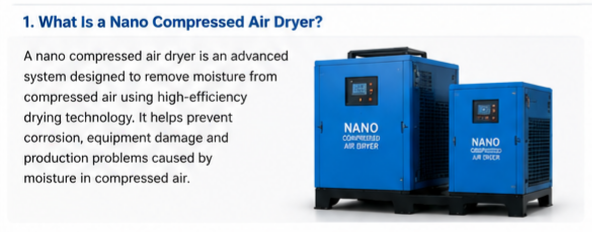
What Is a Nano Compressed Air Dryer?
The term nano compressed air dryer is generally used to describe a compressed air drying solution intended to provide reliable moisture control in a compact and efficient system.
However, the actual drying principle should be identified before selecting equipment.
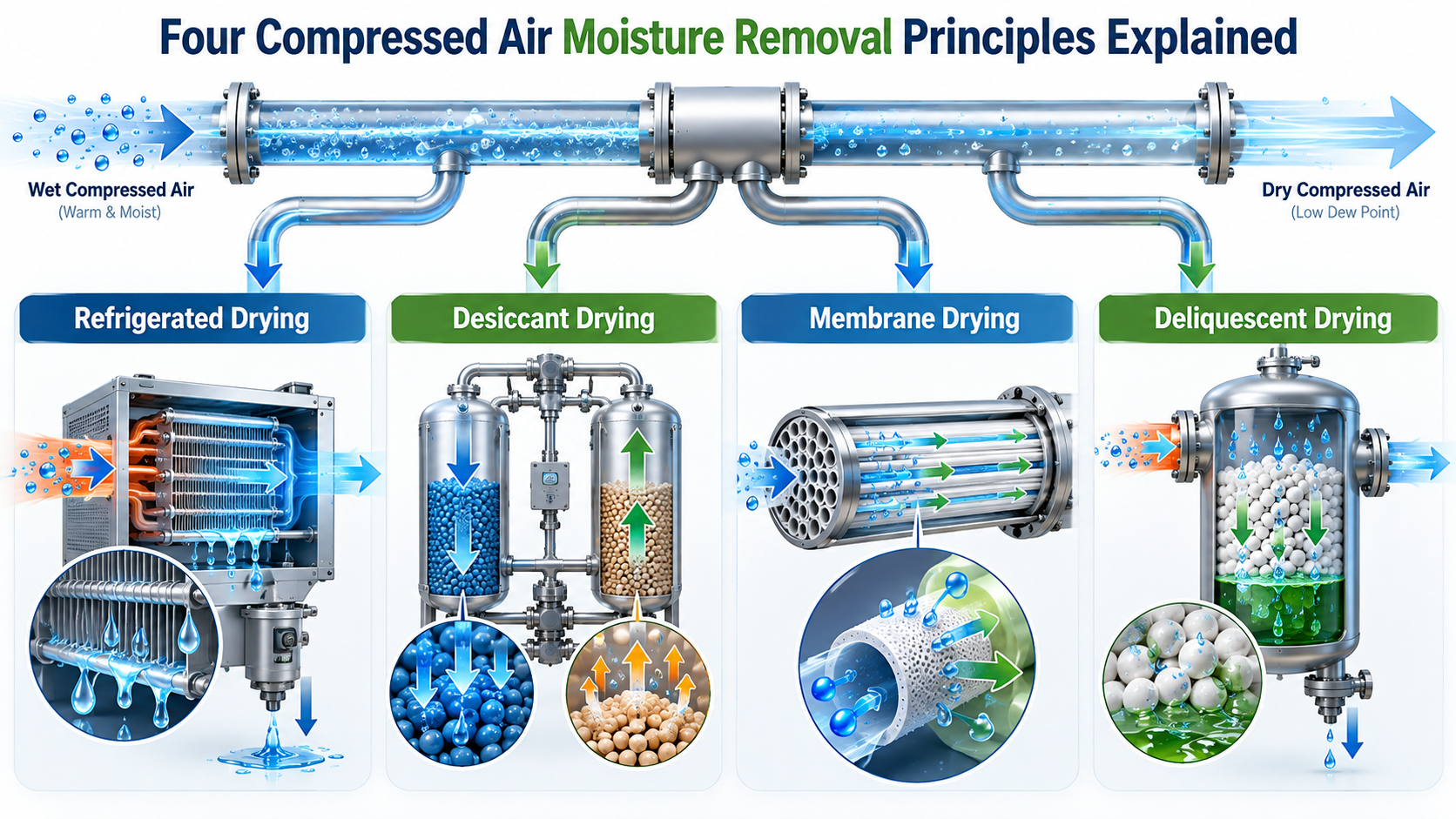
Depending on the required air quality and operating conditions, an industrial drying system may use:
- Refrigerated drying
- Desiccant adsorption
- Heatless regeneration
- Heated regeneration
- Blower-assisted regeneration
- Heat-of-compression regeneration
- Refrigerated and adsorption drying in combination
These technologies are designed for different pressure dew points, energy requirements, inlet conditions, and industrial applications.
For applications where moderate pressure dew points are sufficient, industrial refrigerated drying systems are commonly used. Where much lower dew points are necessary, adsorption technology may be more appropriate.
Why Moisture Removal Is Important in Compressed Air Systems
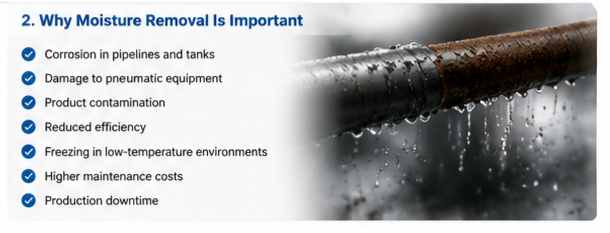
Ambient air contains water vapor. When air is compressed and subsequently cools to its saturation point, excess moisture condenses into liquid water.
If moisture is not removed effectively, common consequences may include:
- Corrosion inside compressed-air piping and receivers
- Damage to pneumatic equipment
- Water contamination at the point of use
- Reduced production reliability
- Freezing in low-temperature environments
- Higher maintenance requirements
- Production interruptions
A correctly selected dryer reduces these risks by controlling the pressure dew point before compressed air reaches downstream equipment.
How a Nano Compressed Air Dryer Works
The operating principle depends primarily on whether refrigerated, adsorption, or combined drying technology is used.
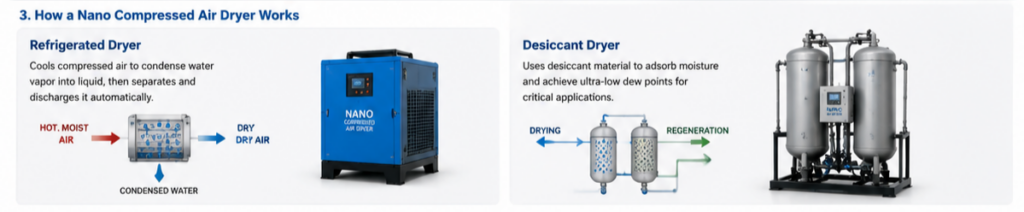
Refrigerated Drying
A refrigerated dryer reduces compressed-air temperature so that water vapor condenses into liquid water.
In the refrigerated drying process, hot compressed air is first pre-cooled and then enters the refrigerant evaporator. The air is cooled to a pressure dew point of approximately 2–10°C, after which condensed moisture is separated and automatically discharged.
This approach is commonly suitable for general manufacturing applications where extremely low pressure dew points are not required.
Typical advantages include:
- Stable moisture removal
- Relatively simple operation
- Lower energy requirements than many deep-drying processes
- Straightforward maintenance
- Suitability for a wide range of industrial compressed-air systems
Users who need a more detailed explanation can review how a refrigerant air dryer works.
Desiccant Adsorption Drying
Adsorption dryers use a desiccant material to capture water vapor from compressed air.
This method can achieve much lower pressure dew points than standard refrigerated drying, making it appropriate for processes where very dry compressed air is essential.
Depending on operating requirements, regeneration may be performed using heatless, heated, blower-assisted, or heat-of-compression methods.
For a more detailed explanation of the moisture-removal mechanism, see how desiccant air drying works.
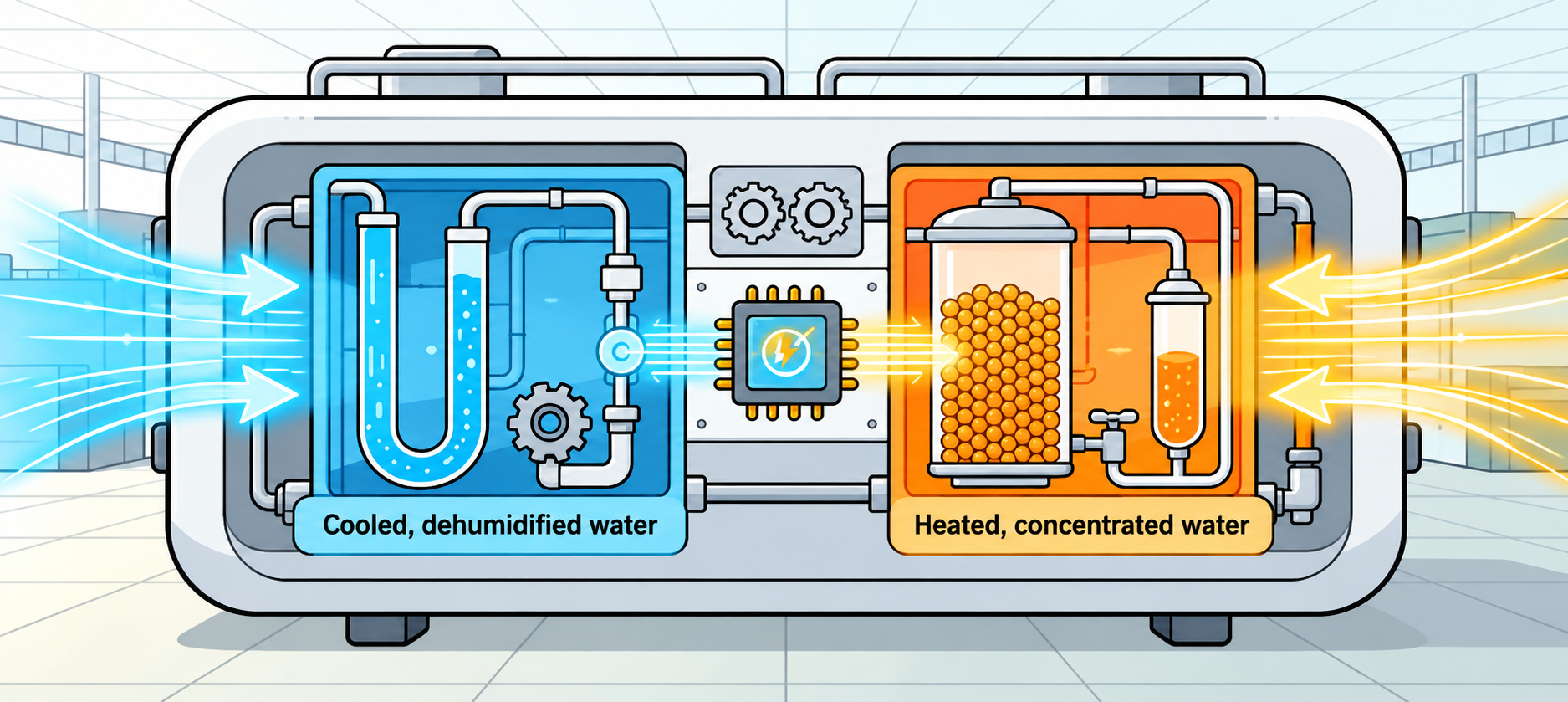
Combined Refrigerated and Adsorption Drying
For applications requiring very low dew points while also considering operating efficiency, refrigerated and adsorption drying can be integrated into one system.
In a combined drying system, compressed air is first cooled in the refrigerated section to remove most of its moisture. The partially dried air then enters an adsorption bed, where the desiccant removes the remaining moisture.
This configuration reduces the moisture load on the adsorption section, which can reduce regeneration requirements and improve overall operating economy.
This also illustrates why dryer technology should be selected according to the actual air-quality requirement rather than treating every “nano air dryer” as the same type of equipment.
Key Features to Consider
Efficient Moisture Removal
The primary requirement is consistent moisture removal under the specified inlet temperature, flow, pressure, and ambient conditions.
A dryer should maintain its specified pressure dew point without being continuously overloaded.
Energy-Efficient Operation
Energy-saving performance may come from optimized heat exchangers, capacity control, improved regeneration methods, variable-frequency control, or intelligent operating cycles.
For example, combined drying uses the refrigerated section to reduce the moisture load before adsorption, thereby reducing regeneration demand.
Compact System Design
Integrated dryer configurations can reduce installation footprint and simplify system arrangement.
Combined refrigerated and adsorption systems can integrate multiple treatment stages into a coordinated configuration, helping simplify installations where both preliminary moisture removal and deep drying are required.
Stable Pressure Dew Point
Dew point stability is more important than simply choosing a dryer with a high nominal capacity.
The required pressure dew point should be established according to the process, environmental conditions, and downstream equipment.
Intelligent Monitoring and Control
Depending on the dryer series, industrial systems may include touchscreen controllers, PLC functionality, communication interfaces, alarms, or dew-point-based control.
These functions make operating conditions easier to monitor and may help optimize energy use under changing loads.
Serviceability
Filters, drains, valves, heat exchangers, and other service components should be accessible for inspection and maintenance.
Depending on the dryer type, serviceable components may include compressors, condensers, evaporators, filter driers, expansion valves, bypass valves, pressure gauges, drain valves, desiccant beds, regeneration valves, and control components.

Applications of Nano Compressed Air Dryers
Compressed-air drying is required across many industries, but different applications may need very different levels of dryness.
Food and Beverage Processing
Compressed air may be used in packaging, conveying, production equipment, and other pneumatic processes.
Because air quality can affect both equipment reliability and production requirements, food-processing facilities should determine the appropriate dryer and filtration configuration according to their actual process.
For a dedicated discussion of this application, see the food-industry air dryer selection guide.
Pharmaceutical and Biopharmaceutical Production
Moisture control can be particularly important in manufacturing processes involving sensitive materials, pneumatic instruments, packaging systems, or controlled production environments.
Applications requiring very low pressure dew points may favor adsorption drying rather than standard refrigerated drying.
Electronics and Precision Manufacturing
Clean, dry compressed air can help protect sensitive pneumatic systems, production equipment, and precision manufacturing processes.
Dryer and filtration configurations should be selected according to the required air quality and the sensitivity of downstream equipment and processes.
Laser Cutting
Compressed air or generated nitrogen may be used in laser-cutting installations depending on the cutting process.
Where compressed air is used, moisture and oil control can help maintain stable air quality and protect downstream components.
Automotive Manufacturing
Compressed air is widely used for assembly, painting, pneumatic tools, automation, and other manufacturing operations.
Reliable moisture control can help protect pneumatic equipment and support stable compressed-air quality throughout production.
Chemical and General Industrial Processing
Dry compressed air can help protect pneumatic valves, instruments, pipelines, and process equipment from moisture-related corrosion and malfunction.
The required dryer type should be selected according to both air-quality needs and plant operating conditions.
Benefits of Proper Compressed Air Drying
A properly selected and maintained dryer can improve the overall reliability of a compressed-air system.
Improved Equipment Protection
Reducing moisture helps protect pipelines, pneumatic components, instruments, and downstream equipment from corrosion and water-related damage.
More Consistent Product Quality
Processes that come into direct or indirect contact with compressed air can benefit from more stable air quality.
Lower Moisture-Related Maintenance
Preventing condensate accumulation can reduce corrosion, drain problems, equipment failures, and associated maintenance work.
Improved System Efficiency
Correct dryer sizing and drying technology can help achieve the required air quality without unnecessary energy consumption.
This is particularly important because very low pressure dew points generally require more sophisticated drying and regeneration methods than standard refrigerated drying.
Longer Downstream Equipment Life
Reducing water, oil, and particulate contamination can help extend the service life of valves, cylinders, tools, instrumentation, and other pneumatic equipment.

How to Choose the Right Nano Compressed Air Dryer
Selecting the correct dryer should begin with the operating requirement rather than the product name.
Required Pressure Dew Point
Pressure dew point is one of the most important selection parameters.
Standard industrial applications may be adequately served by refrigerated drying. For example, Lingyu AH Series refrigerated dryers provide a pressure dew point of 2–10°C.
Processes requiring significantly drier air may require adsorption or combined drying.
A useful starting point is a refrigerated vs. desiccant air dryer comparison.
Air Flow Capacity
The dryer must be sized for the actual compressed-air flow, including expected peak demand.
Undersizing can cause higher pressure dew points and unstable drying performance.
Inlet Pressure
Dryer capacity and performance depend partly on operating pressure, so selection should be based on the actual system pressure rather than compressor nameplate capacity alone.
Inlet Temperature
Higher inlet temperatures increase the moisture and cooling load placed on the dryer.
For example, Lingyu AH Series refrigerated dryers have a rated inlet temperature of 50°C and a maximum inlet temperature of ≤80°C.
Ambient and Cooling Conditions
Air-cooled dryers require adequate ventilation, while water-cooled systems depend on suitable cooling-water conditions.
These installation factors can significantly affect real-world dryer capacity and reliability.
Energy Consumption
Initial purchase price should not be the only consideration.
Compare compressor power, regeneration air consumption, heater or blower energy, pressure drop, control strategy, and actual operating load.
Maintenance Requirements
Consider accessibility to:
- Filters
- Automatic drains
- Valves
- Heat exchangers
- Desiccant
- Refrigeration components
- Control systems
For a broader evaluation process, refer to the compressed air dryer selection guide.
Nano Compressed Air Dryer vs. Conventional Dryer Systems
Rather than treating “nano” and “traditional” dryers as two technical categories, it is more useful to compare actual dryer technologies.
| Factor | Refrigerated Dryer | Desiccant / Adsorption Dryer |
|---|---|---|
| Typical drying level | Moderate | Very low pressure dew point possible |
| Operating principle | Cooling and condensation | Moisture adsorption |
| Energy requirement | Generally lower | Depends strongly on regeneration method |
| System complexity | Relatively simple | Higher |
| Maintenance | Refrigeration components, drains, and heat exchangers | Valves, desiccant, and regeneration components |
| Typical applications | General industrial use | Moisture-sensitive processes |
This comparison is technically clearer than claiming that every nano compressed air dryer automatically has higher efficiency, a smaller footprint, lower maintenance requirements, or better reliability than every conventional dryer. Actual performance depends on equipment design and operating conditions.

Importance of Complete Compressed Air Treatment
A dryer is only one part of an effective compressed-air purification system.
A typical installation can include:
- Air compressor
- Air receiver
- Pre-filtration
- Compressed-air dryer
- Oil-removal filtration
- Particulate filtration
- Automatic condensate drainage
- Point-of-use treatment where required
The exact configuration should be selected according to the required compressed-air quality and actual operating conditions.
For more detail on system architecture, see the five core components of a compressed air purification system.
Proper integration is important because the performance of a high-quality dryer can still be compromised by incorrect filtration, drainage, piping, installation, or operating conditions.
Future Trends in Compressed Air Drying Technology
Industrial air treatment is increasingly moving toward systems that adjust more closely to actual operating demand.
Important development directions include intelligent monitoring, communication interfaces, dew-point-based control, variable-frequency operation, more efficient regeneration methods, lower pressure losses, and refrigerants with improved environmental characteristics.
The goal is not simply to create a “smarter” dryer, but to maintain the required air quality with lower total operating cost across changing production loads.
Conclusion
A nano compressed air dryer should ultimately be selected according to the required air quality, pressure dew point, flow capacity, inlet temperature, operating pressure, installation environment, and energy requirements.
For general industrial moisture removal, refrigerated drying may provide an efficient solution. For applications requiring much lower pressure dew points, adsorption drying may be necessary. Where both energy efficiency and deep drying are important, combined refrigerated and adsorption technologies can also be considered.
Rather than focusing only on terminology such as “nano,” industrial users should evaluate the actual drying technology and operating specifications behind the system.
A correctly selected compressed-air treatment solution can reduce moisture-related problems, protect downstream equipment, support stable production, and provide reliable air quality over the long term.