In industrial compressed air systems, moisture can affect equipment reliability, pneumatic controls, product quality, and process stability. Refrigerated dryers are suitable for many general industrial applications, but processes requiring a substantially lower pressure dew point may need adsorption or desiccant drying technology.
A blower heated adsorption air dryer removes moisture by adsorption while using heated ambient air from a blower to regenerate the desiccant. Compared with conventional heatless regeneration, this approach can significantly reduce the amount of compressed product air consumed during regeneration.
Lingyu’s adsorption dryer range includes both HRB-E Low-Purge Blower-Heated Dryers and HRB-Z Zero-Purge Blower-Heated Dryers.
For buyers exploring this product family, see the blower zero-purge adsorption dryer range.
What Is a Blower Heated Adsorption Air Dryer?
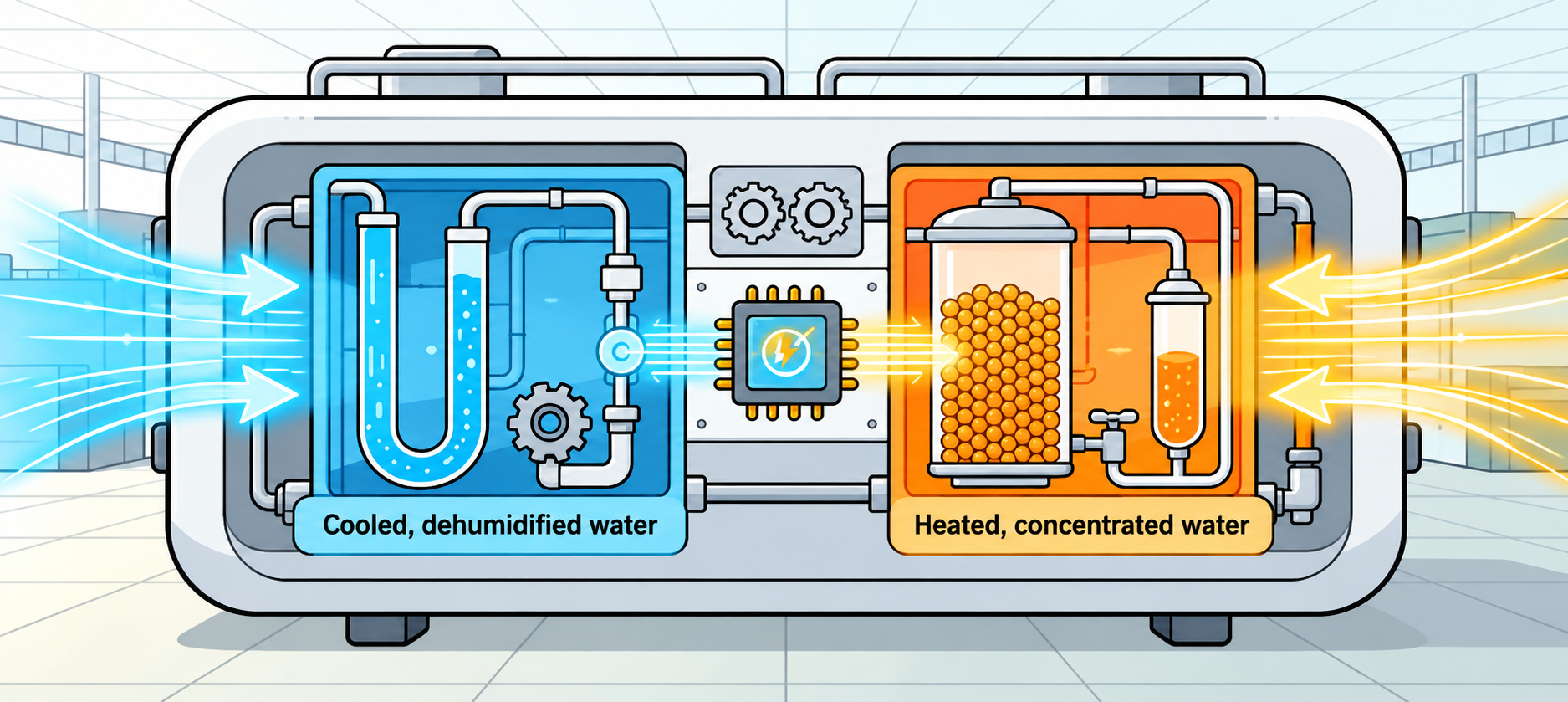
A blower heated adsorption air dryer is a regenerative desiccant dryer that uses adsorption to remove water vapor from compressed air.
During normal drying, compressed air passes through a desiccant-filled adsorption vessel. The desiccant captures water vapor while dry compressed air exits toward the downstream system.
At the same time, the second adsorption vessel is regenerated.
The key difference from a conventional heatless dryer is the regeneration-air source.
Instead of using a large quantity of already dried compressed air, a blower-heated system draws in ambient air using an independent blower. This air is heated and passed through the saturated desiccant bed to release the adsorbed moisture.
Reducing the amount of compressed air consumed for regeneration can be particularly valuable in larger compressed-air installations.
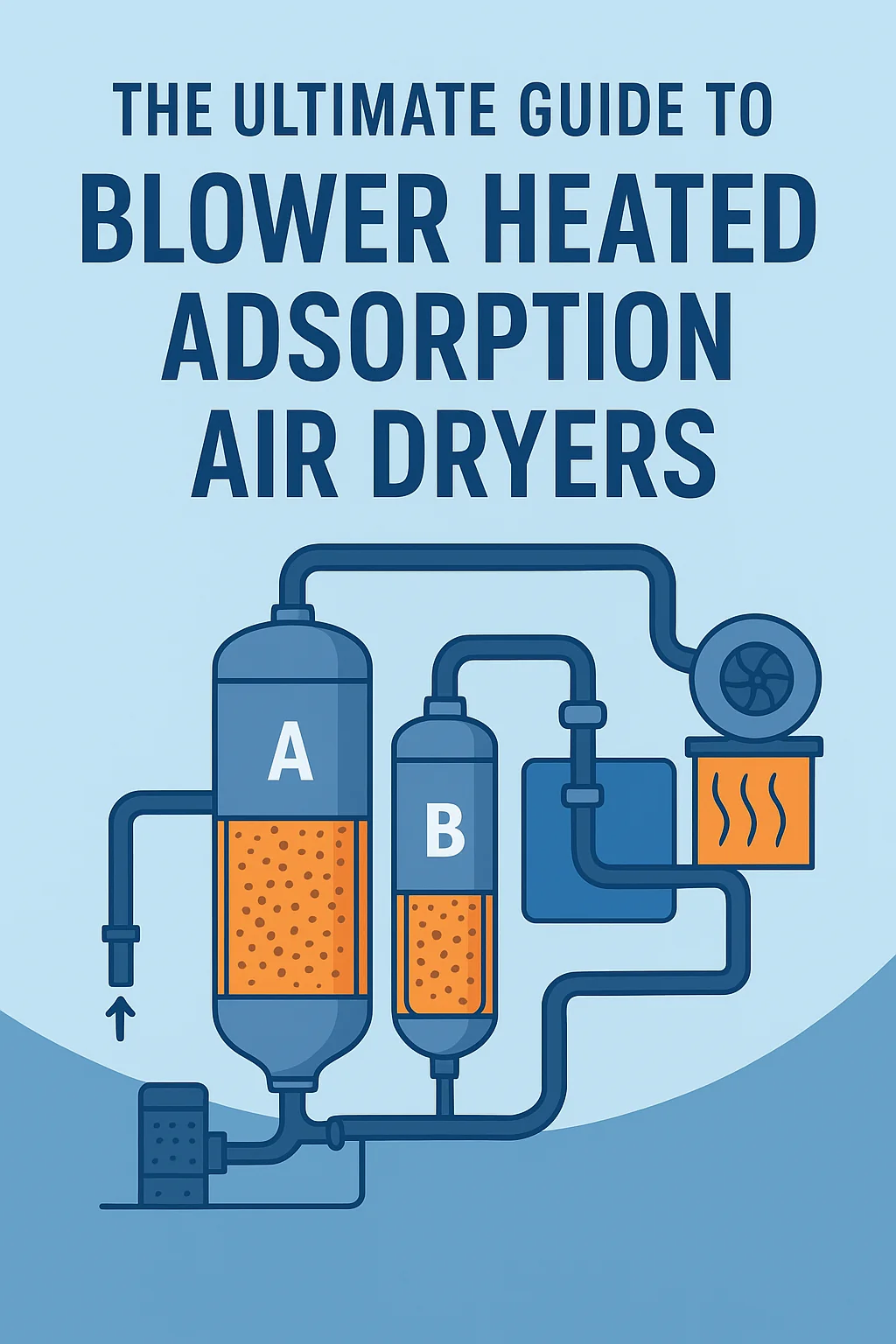
How Does a Blower Heated Adsorption Air Dryer Work?
A typical blower-heated system operates with two adsorption vessels that alternate between drying and regeneration.
1. Adsorption
Wet compressed air enters the active tower and passes through the desiccant bed.
Water vapor is adsorbed by the desiccant, while the dried air continues toward the plant distribution system.
As the desiccant gradually becomes loaded with moisture, the other tower undergoes regeneration.
2. Heating and Desorption
During regeneration, the blower draws ambient air into the regeneration circuit.
For Lingyu’s HRB-E Series, this ambient air is heated by a heater and then directed through the regeneration tower. The heated airflow raises the temperature of the desiccant and drives off the accumulated moisture.
This allows most of the regeneration process to occur without consuming dry product air.
3. Cooling
After the desiccant has been heated and regenerated, it must be cooled before returning to adsorption service.
Cooling is critical because a hot adsorption bed has a reduced ability to capture water vapor effectively.
This stage is also where the difference between Lingyu’s HRB-E and HRB-Z configurations becomes important.
4. Tower Switching
When regeneration and cooling are complete, the regenerated vessel returns to adsorption service.
The previously active drying vessel then enters regeneration.
This alternating cycle allows the system to supply dry compressed air continuously.
HRB-E Low-Purge Blower-Heated Dryer
Lingyu’s HRB-E Series is a low-purge blower-heated regenerative desiccant dryer.
During regeneration, ambient air is supplied by the blower and heated before passing through the desiccant. During the cooling stage, approximately 2% of the system airflow in dry product air is used to cool the regenerated bed.
Total regeneration-air consumption is specified at 2–3%.
The main operating specifications include:
- Rated inlet pressure: 0.7 MPa
- Operating pressure range: 0.6–1.0 MPa
- Rated inlet temperature: 10–30°C
- Maximum inlet temperature: ≤40°C
- Outlet pressure dew point: −20°C / −40°C optional
These values provide the appropriate reference parameters for Lingyu’s HRB-E low-purge configuration.
HRB-Z Zero-Purge Blower-Heated Dryer
The HRB-Z Series is designed to eliminate compressed product-air consumption during regeneration.
It builds on the blower-heated principle but adds an intercooler and a different cooling arrangement.
During heating, ambient air is drawn through the blower, heated, and passed through the regeneration tower. During cooling, air circulates continuously through the intercooler and regeneration vessel in a closed loop.
Because no dry product air is consumed during either regeneration or cooling, the specified regeneration-air consumption is approximately 0%.
Buyers evaluating this configuration can see the blower zero-purge adsorption dryer product page.
HRB-E vs. HRB-Z: What Is the Difference?
The main difference is not the basic adsorption mechanism. It is the way the regenerated desiccant is cooled.
| Parameter | HRB-E Low-Purge | HRB-Z Zero-Purge |
|---|---|---|
| Main regeneration air | Ambient blower air | Ambient blower air |
| Heating | Heater | Heater |
| Cooling | Small quantity of dry product air | Closed-loop cooled air |
| Regeneration-air consumption | 2–3% | ≈0% |
| Outlet pressure dew point | −20°C / −40°C optional | −20°C / −40°C optional |
| Inlet pressure range | 0.6–1.0 MPa | 0.6–1.0 MPa |
| Maximum listed standard capacity | 260 m³/min | 260 m³/min |
Blower-heated regeneration therefore does not automatically mean zero purge.
HRB-E minimizes compressed-air consumption, while HRB-Z is designed to eliminate dry product-air loss from the regeneration cycle.
What Dew Point Can a Blower Heated Dryer Achieve?
For both Lingyu HRB-E and HRB-Z, the specified outlet pressure dew point is:
- −20°C
- −40°C optional
These are the appropriate product specifications for these two blower-heated dryer lines.
The correct dew point should always be selected according to the actual process requirement.
Selecting a lower dew point than the application requires can increase system requirements without necessarily providing an additional production benefit.
Why Blower-Heated Dryers Reduce Compressed-Air Loss
A conventional heatless dryer regenerates the desiccant using part of its own dry compressed-air output.
That air has already been compressed, treated, and dried, so consuming it for regeneration represents an operating cost.
Lingyu’s HH heatless regenerative dryer, for example, specifies average purge-air consumption of 8–14%.
By comparison, HRB-E is rated at 2–3%, while HRB-Z is approximately 0%.
Facilities comparing the technologies can also review the heatless desiccant dryer guide.
The economic importance of reducing purge losses generally becomes greater as system airflow and annual operating hours increase.
Zero Purge Does Not Mean Zero Energy
A zero-purge dryer may eliminate compressed-air consumption for regeneration, but the dryer still requires energy.
Blower-heated systems use components such as the blower, heater, controls, and cooling equipment. The HRB-Z product range, for example, has installed electrical power requirements that increase with dryer capacity.
A meaningful energy comparison should therefore consider the complete system:
Blower power + heater power + cooling energy + compressed-air loss + pressure drop
Purge percentage alone does not determine total operating efficiency.
Intelligent Control and Energy Savings
Regeneration does not necessarily need to occur at exactly the same interval under every load condition.
Lingyu’s blower-heated dryers use the EBZ200-2 control platform. Its energy-saving control system can reduce overall energy consumption by more than 10% compared with conventional fixed-cycle operation.
An optional dew-point-based control mode can extend the adsorption cycle according to actual operating demand and can reduce overall energy consumption by more than 30% under applicable fluctuating-load conditions.
This can be particularly valuable in plants where compressed-air demand varies significantly throughout the day.
Blower Heated vs. Heated-Purge Dryer
A conventional heated-purge adsorption dryer uses external heating but still uses dry compressed product air as part of the regeneration process.
Lingyu’s heated-purge configuration, for example, specifies average purge consumption of 4–8%.
A blower-heated dryer reduces that dependence further by supplying regeneration airflow from the surrounding atmosphere through a blower.
For a more detailed comparison, see the heated regeneration adsorption air dryer guide.
Why the Cooling Method Matters
Blower-heated dryers do not all use the same cooling method.
HRB-E uses a small quantity of dry compressed product air during cooling.
HRB-Z uses a closed-loop intercooler arrangement instead.
The HRB-Z range also includes different cooling configurations: HRB-ZW uses water cooling, while HRB-ZA uses air cooling.
Cooling configuration should therefore be considered alongside regeneration-air consumption when selecting a dryer.
Pressure Drop Also Affects Energy Cost
Purge-air consumption is only one part of dryer efficiency.
Pressure loss across the dryer can also increase compressor energy consumption. If the air-treatment system creates excessive resistance, the compressor may need to operate at a higher discharge pressure to maintain the required downstream pressure.
Lingyu’s blower-heated design uses an optimized flow distributor intended to improve desiccant utilization while minimizing compressed-air pressure drop.
For more detail on this system effect, see compressed air pressure drop and energy efficiency.
What About Desiccant Life?
Desiccant service life does not have one fixed value that applies to every blower-heated dryer installation.
Lingyu uses customized high-performance desiccant and additional filling allowance to support reliable adsorption performance and long-term operating stability.
Actual desiccant life depends on factors such as inlet contamination, oil exposure, regeneration temperature, airflow distribution, cycling frequency, operating conditions, and maintenance quality.
Desiccant condition should therefore be evaluated through system performance and maintenance requirements rather than assuming a universal replacement interval.
How to Select a Blower Heated Adsorption Air Dryer
Selection should begin with the actual operating requirement rather than simply choosing the lowest purge rate.
Important factors include:
- Required pressure dew point
- Maximum airflow
- Inlet pressure
- Inlet temperature
- Ambient conditions
- Inlet-air quality
- Regeneration-air consumption
- Available electrical power
- Cooling method
- Pressure drop
- Operating hours
- Load variation
The standard HRB-E and HRB-Z ranges extend to approximately 260 m³/min, with larger or special configurations available through customized engineering.
A zero-purge dryer may provide the greatest compressed-air savings, but the additional cooling equipment and system complexity should still be evaluated against total lifecycle cost.
Where Are Blower Heated Adsorption Air Dryers Used?
Blower-heated adsorption dryers are particularly relevant where the process requires low-dew-point compressed air and the plant consumes enough compressed air for purge losses to become economically significant.
Pharmaceutical and Biopharmaceutical
In pharmaceutical and biopharmaceutical facilities, compressed-air quality requirements may be particularly important for production and utility systems.
See Lingyu’s pharmaceutical and biopharmaceutical application for industry-specific compressed-air treatment information.
Electronics and Precision Manufacturing
Electronics and precision manufacturing can require tightly controlled compressed-air conditions, making stable moisture control important for appropriate processes.
See the electronics and precision manufacturing application.
Petrochemical and Chemical Processing
Large chemical and process facilities are another relevant operating environment, particularly where instrument and process air must remain dry.
See the petrochemical and chemical processing application.
In every case, the dryer should be selected according to the actual air-quality, flow, pressure, and dew-point requirements of the process rather than assuming that every application needs the same configuration.
Proven Large-Flow Performance
Lingyu has supplied blower-heated dryers for large compressed-air systems.
One project used eight customized 220 m³/min low-purge blower-heated regenerative adsorption dryers. The specified performance included ≤−40°C pressure dew point and ≤3% regeneration-air consumption, while the project result reported approximately 8% energy savings compared with conventional heated-purge dryers.
Another project used ten 65 m³/min zero-air-loss blower-heated regenerative adsorption dryers, with ≤−40°C dew point and 0% regeneration-air consumption.
These figures are project-specific results and should not be treated as a universal energy-saving or payback guarantee for every installation.
Maintenance Considerations
A blower-heated dryer contains more regeneration components than a basic heatless system.
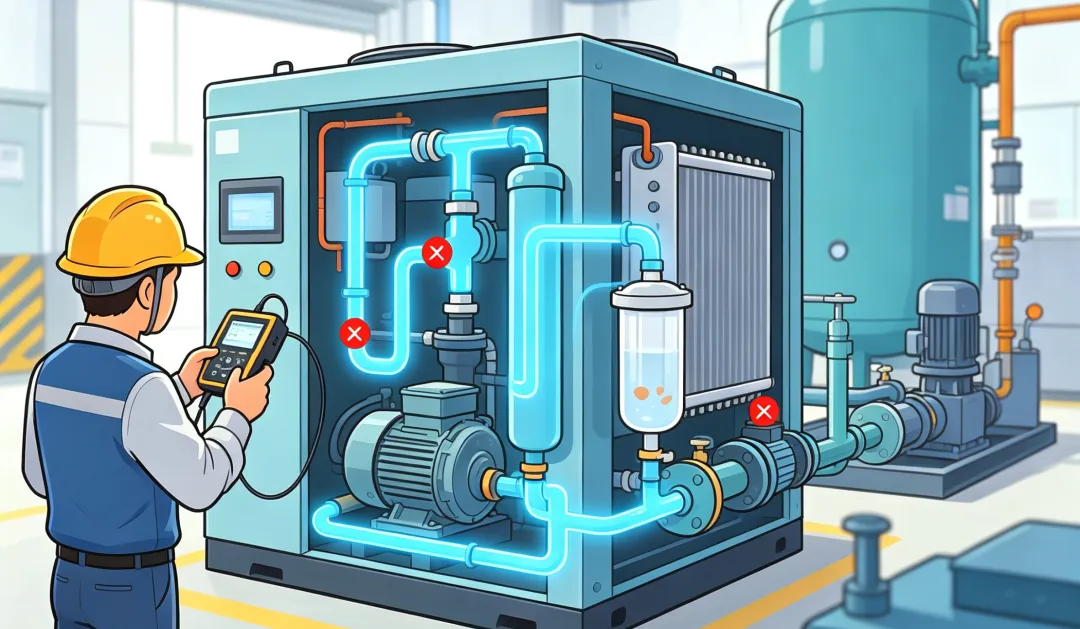
Maintenance should therefore cover not only the desiccant but also the blower, heater, cooler or intercooler, switching valves, filtration, drains, temperature sensors, pressure monitoring, and dew-point instrumentation.
Lingyu’s system can monitor parameters including outlet temperature, heating temperature, regeneration exhaust temperature, Tower A/B pressure, blower pressure, and optional pressure dew point.
Reliable operation depends on maintaining both the adsorption system and the regeneration system.
Conclusion
A blower heated adsorption air dryer uses heated ambient air supplied by a blower to regenerate the desiccant, greatly reducing the amount of compressed product air required for regeneration.
For Lingyu’s current range, two configurations are especially important.
HRB-E Low-Purge uses blower-heated ambient air for regeneration and a small amount of dry product air during cooling, with regeneration-air consumption of 2–3%.
HRB-Z Zero-Purge uses a closed-loop intercooler cooling circuit and specifies approximately 0% regeneration-air consumption.
Both are specified for −20°C / −40°C outlet pressure dew point, with standard capacities extending to approximately 260 m³/min.
The right choice should be based on required dew point, airflow, purge-air cost, electrical consumption, cooling method, pressure drop, operating hours, load profile, and maintenance requirements.
For high-flow industrial compressed-air systems, blower-heated regeneration can provide an effective balance between low dew point and reduced compressed-air loss, but total lifecycle efficiency should always be evaluated at the system level.