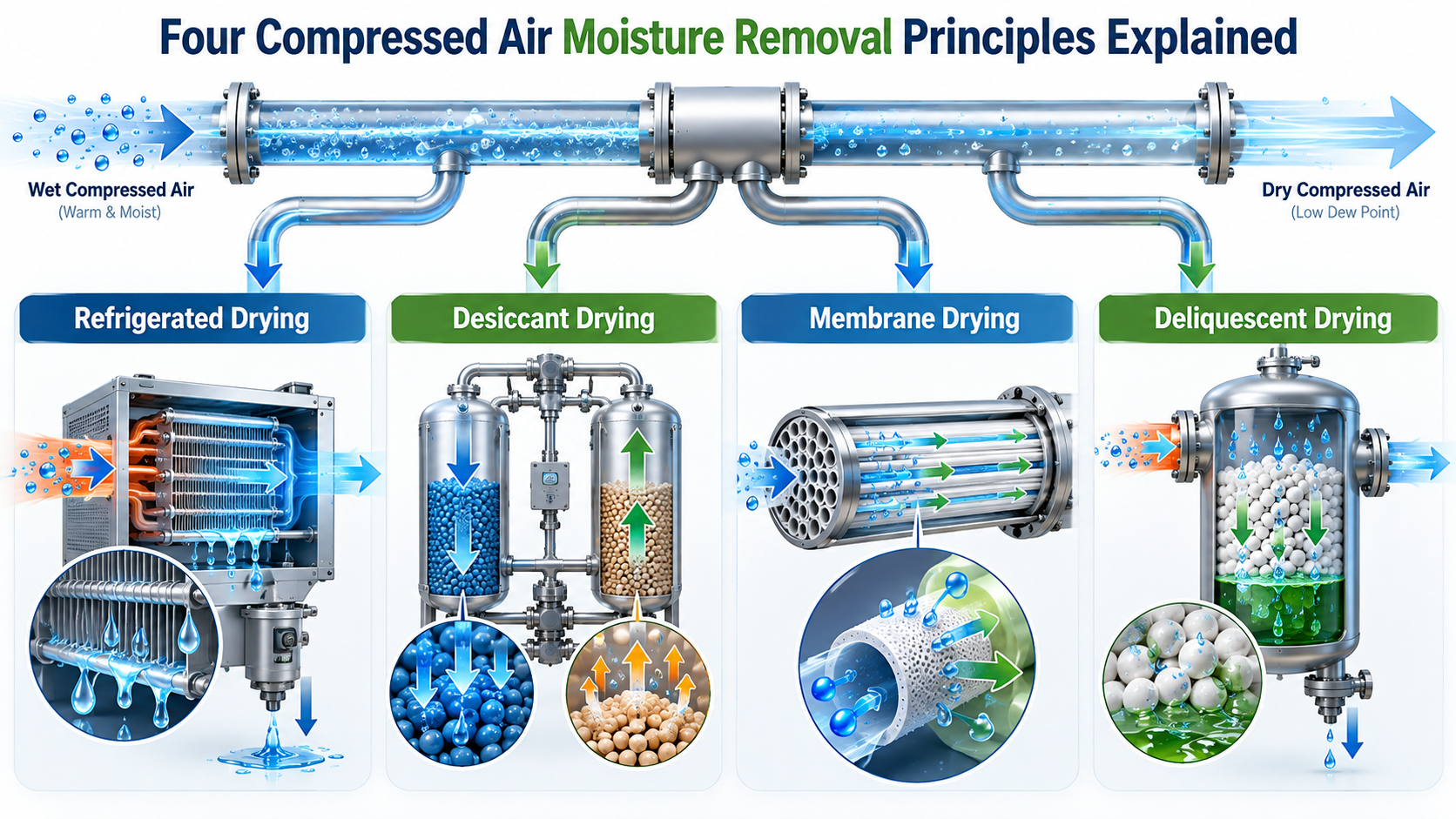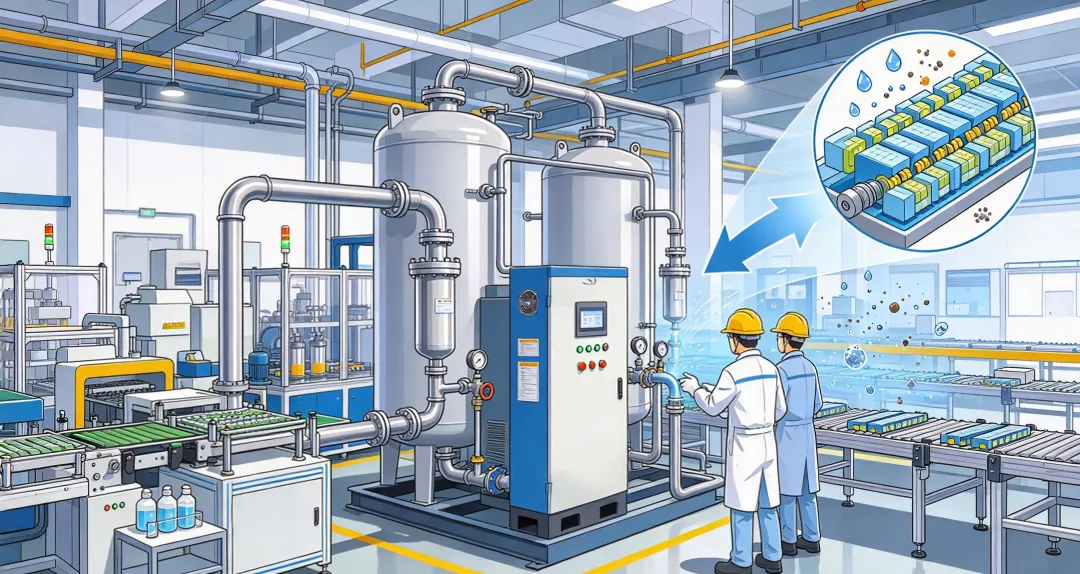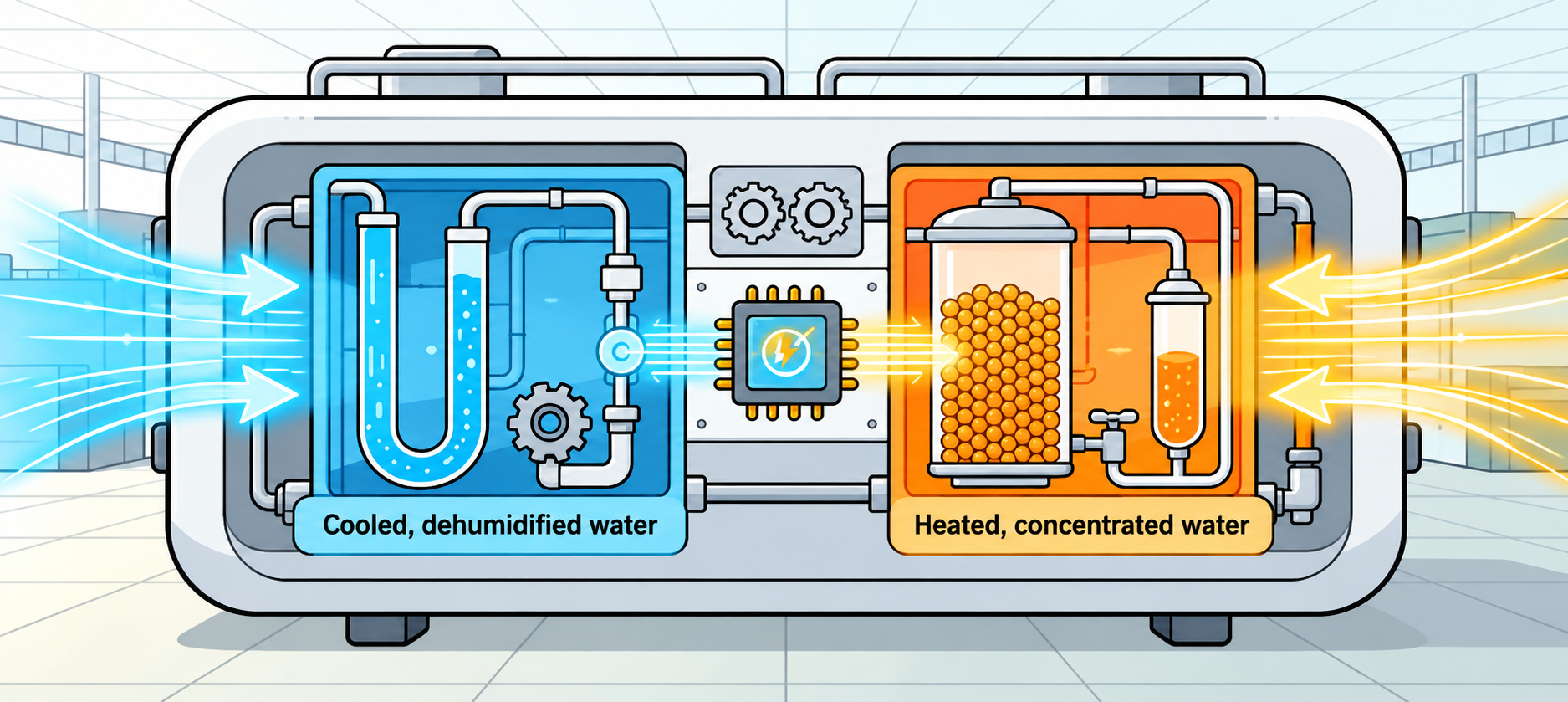
A zero air loss heat-of-compression dryer is designed to produce low-dew-point compressed air while minimizing the compressed-air losses associated with conventional purge regeneration. Instead of relying primarily on dry product air to regenerate the desiccant, the system makes use of the thermal energy already available in hot compressor discharge air.
That energy-saving principle is one of the main reasons heat-of-compression dryers are attractive for large, continuously operating compressed air systems.
However, heat recovery does not mean that every operating condition automatically provides the ideal amount of regeneration heat. Compressor load, discharge temperature, ambient conditions, and system design can all affect the heat available to the dryer. For configurations equipped with auxiliary electric heating, the heater provides additional thermal capacity when recovered compression heat alone is insufficient.
How a Zero Air Loss Heat-of-Compression Dryer Works
A heat-of-compression regenerative dryer uses hot compressed air from the compressor as a thermal source during desiccant regeneration.
During operation, moisture is adsorbed by the desiccant in the drying tower. The saturated desiccant must then be regenerated so that its adsorption capacity can be restored for the next drying cycle.
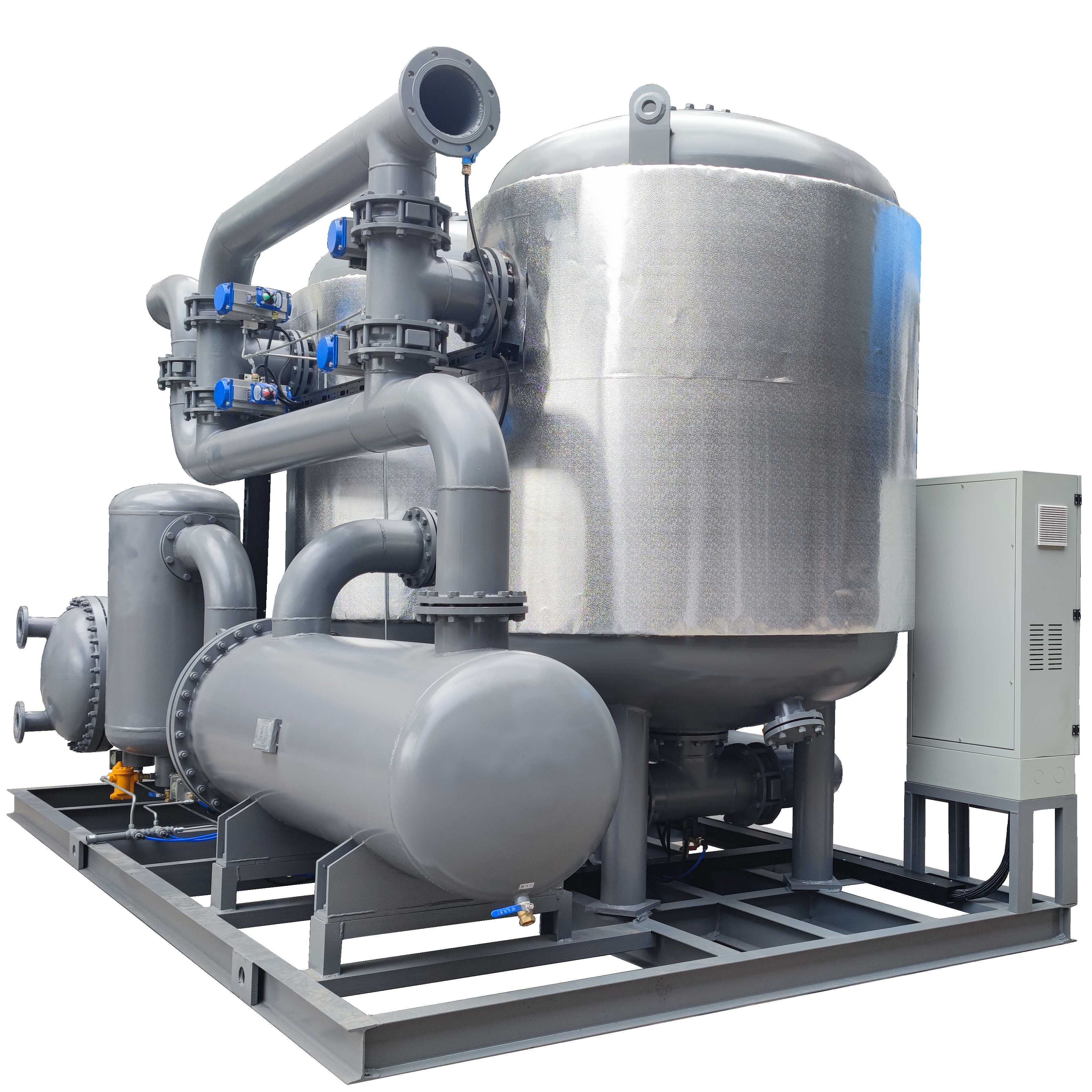
Instead of using a significant quantity of dried compressed air as purge gas, a zero-purge system is engineered to regenerate and cool the desiccant without consuming product air for regeneration. Lingyu’s HOC-Z configuration, for example, specifies 0% regeneration air consumption, with an optional outlet pressure dew point of −20°C or −40°C under its specified operating conditions.
For users evaluating this type of system, the HOC-Z zero gas consumption heat-of-compression dryer provides a direct reference for the equipment configuration.
Why Available Compression Heat Matters
Heat-of-compression drying depends on a useful relationship between the compressor and the dryer.
The compressor generates heat as air is compressed. In a suitable system, that thermal energy can be recovered and used during regeneration rather than being rejected entirely as waste heat.
This can reduce dependence on purge air and external heating compared with other regenerative drying methods. But the available thermal energy is not necessarily constant.
For example, regeneration conditions may change when:
- Compressor loading decreases
- Discharge temperature falls
- Ambient conditions change
- Production demand fluctuates
- The dryer starts before stable thermal conditions have been established
This is why auxiliary heating can be valuable in certain heat-of-compression dryer designs.
Why an Electric Heater May Be Used
Supplemental Heat When Compression Heat Is Insufficient
Effective desiccant regeneration requires enough thermal energy to release the moisture retained by the adsorbent.
When compressor discharge heat is adequate, the dryer can make maximum use of that recovered energy. When it falls below the level required by the regeneration sequence, an electric heater can provide supplemental heat.
This helps the dryer avoid relying on ideal compressor conditions at all times.
More Stable Regeneration Temperature
Regeneration performance depends not only on having heat available, but also on controlling the regeneration process.
A heater integrated with the dryer control system can provide additional thermal input when required, helping maintain appropriate regeneration conditions even when compressor discharge temperature varies.
The goal is not simply to make the dryer hotter. The objective is to provide sufficient and controlled heat so the desiccant can be properly regenerated while avoiding unnecessary energy consumption.
Support During Startup and Changing Loads
At startup, the compressor and drying system may not immediately reach stable operating conditions.
Similarly, a compressor operating at reduced load may deliver different discharge temperatures than it does at full load. Auxiliary electric heating can provide additional flexibility during these periods rather than forcing the dryer to depend exclusively on variable waste-heat availability.
Maintaining Reliable Dew-Point Performance
Incomplete desiccant regeneration reduces the amount of moisture the adsorption bed can remove during its next drying cycle.
Over repeated cycles, insufficient regeneration can contribute to deterioration in pressure dew-point performance. Proper thermal management therefore supports more consistent drying performance.
For applications where very dry compressed air is required, users should consider both the required pressure dew point and the regeneration method when choosing a desiccant air dryer.
Does Zero Air Loss Mean Zero Energy Consumption?
No. “Zero air loss” or “zero purge” refers to regeneration without consuming compressed product air as purge air. It does not mean that the dryer operates without energy input.
A heat-of-compression dryer can obtain much of its regeneration energy from compressor discharge heat, but other system components may still require electricity. Depending on the dryer design, these can include the controller, valves, cooling equipment, instrumentation, and auxiliary heating.
This distinction is important when comparing dryer technologies. Energy performance should be assessed using the complete drying cycle rather than purge-air consumption alone.
The broader differences between heat-of-compression and other regenerative systems are also important when selecting an industrial compressed air dryer.
Electric Heater vs. Purge-Air Regeneration
An electric heater and purge air perform different functions.
In conventional regenerative dryers, part of the dry compressed-air output may be expanded and passed through the regeneration tower to remove moisture from the desiccant. That purge air is then exhausted instead of being delivered to production.
In a heat-of-compression arrangement, the objective is to recover thermal energy already produced by the compressor and minimize or eliminate this compressed-air consumption.
Auxiliary electric heating, where used, supplements thermal energy rather than deliberately consuming valuable compressed product air.
For high-capacity compressor stations, avoiding continuous purge losses can be particularly significant because producing compressed air itself requires substantial energy.
The Importance of the Cooling Stage
Heating the desiccant is only part of regeneration.
After moisture has been desorbed, the desiccant must be returned to a suitable temperature before the next adsorption cycle. If the adsorption bed remains too hot, its ability to capture water vapor can be reduced.
A well-designed zero-purge system therefore has to manage both heating and cooling as part of the complete regeneration sequence.
This is one reason heat-of-compression dryer selection should focus on the complete system design rather than simply asking whether the unit has a heater.
HOC-Z Operating Conditions
Lingyu’s HOC-Z Series is designed as a zero-purge heat-of-compression regenerative desiccant dryer. Under its stated operating conditions, the system is rated for:
- Rated inlet pressure of 0.7 MPa
- Operating pressure range of 0.6–1.0 MPa
- Rated inlet temperature of 120°C
- Allowable inlet temperature range of 110–180°C
- 0% regeneration air consumption
- Optional outlet pressure dew point of −20°C or −40°C
- Cooling water temperature of ≤32°C
- Cooling water pressure of 0.2–0.6 MPa
These conditions demonstrate an important selection principle: a heat-of-compression dryer should be matched closely to the compressor and plant operating conditions rather than selected only by airflow capacity.
Facilities comparing HOC configurations can also review the compression heated regeneration adsorption air dryer as an alternative configuration.
When Is a Zero-Purge HOC Dryer Most Suitable?
Heat-of-compression drying is particularly attractive where hot compressor discharge air is available consistently and where minimizing regeneration air consumption has significant economic value.
Typical candidates include large manufacturing plants, process industries, and centralized compressor stations operating for long periods at relatively stable load.
For example, Lingyu has supplied six 150 m³/min zero-air-loss HOC regenerative dryers for a large industrial compressed-air project, demonstrating how this technology can be applied at substantial system capacities.
Industries with demanding compressed-air quality requirements can include pharmaceuticals, electronics, new-energy manufacturing, and other continuous production environments. In pharmaceutical applications, for example, compressed air treatment must be selected according to the air-quality requirements of the actual process; more industry-specific information is available for pharmaceutical and biopharmaceutical applications.
What Should Be Considered Before Selecting an HOC Dryer?
A zero-purge heat-of-compression dryer should be evaluated as part of the compressor station rather than as a standalone machine.
Important factors include compressor type, discharge temperature, airflow, pressure, operating load profile, required pressure dew point, cooling-water availability, filtration requirements, and the amount of usable heat available throughout the operating cycle.
The relationship between the compressor and dryer is especially important. If discharge temperature frequently falls outside the dryer design range, regeneration performance and overall efficiency may be affected.
Users should also distinguish between zero-purge HOC dryers and other zero-purge technologies. A blower zero-purge adsorption dryer, for example, achieves zero regeneration-air consumption through a different regeneration and cooling arrangement and may suit different site conditions.
FAQ
What does “zero air loss” mean in a heat-of-compression dryer?
It means the regeneration process is designed without consuming compressed product air as purge air. Lingyu’s HOC-Z Series specifies 0% regeneration air consumption under its stated operating conditions.
Does every zero-purge heat-of-compression dryer need an electric heater?
Not necessarily. The heating configuration depends on the dryer design and the thermal conditions available from the compressor. Some systems can rely primarily on recovered compression heat, while others use auxiliary heating to provide additional thermal capacity or operating flexibility.
Why might recovered compressor heat be insufficient?
Available heat can vary with compressor load, discharge temperature, operating conditions, and system configuration. If thermal energy falls below what the regeneration process requires, supplemental heating may be needed.
Does the electric heater run continuously?
Not necessarily. In a properly controlled system, auxiliary heating should operate according to the equipment’s regeneration strategy and actual thermal requirement rather than simply running continuously.
Does an electric heater eliminate the energy-saving benefit of an HOC dryer?
No. The important comparison is total system energy consumption. Recovering compression heat and eliminating purge-air losses can still provide substantial efficiency advantages even if auxiliary electrical energy is required under some operating conditions.
Is zero-purge HOC drying suitable for a −40°C pressure dew point?
It can be. Lingyu’s HOC-Z Series lists −20°C and −40°C pressure dew points as optional configurations under its specified operating conditions.
What is the difference between HOC-E and HOC-Z?
The major distinction is regeneration-air consumption. Lingyu’s HOC-E low-purge configuration specifies regeneration air consumption of up to 3%, while the HOC-Z zero-purge configuration specifies 0%. The appropriate choice depends on plant conditions, energy objectives, and system design.
Conclusion
A zero air loss heat-of-compression dryer is designed to recover the thermal energy of hot compressor discharge air while eliminating compressed-air consumption during regeneration. This makes it particularly attractive for large, continuously operating compressed air systems where both low pressure dew point and energy efficiency are important.
An electric heater, where included in the system design, should be understood as an auxiliary thermal source rather than the fundamental reason the dryer works. Its role is to supplement available compression heat when operating conditions do not provide enough thermal energy for reliable regeneration.
The most important consideration is therefore not simply whether an HOC dryer has an electric heater. It is whether the complete system—compressor discharge conditions, regeneration strategy, cooling stage, desiccant, controls, pressure dew point, and plant load profile—works together efficiently and reliably.