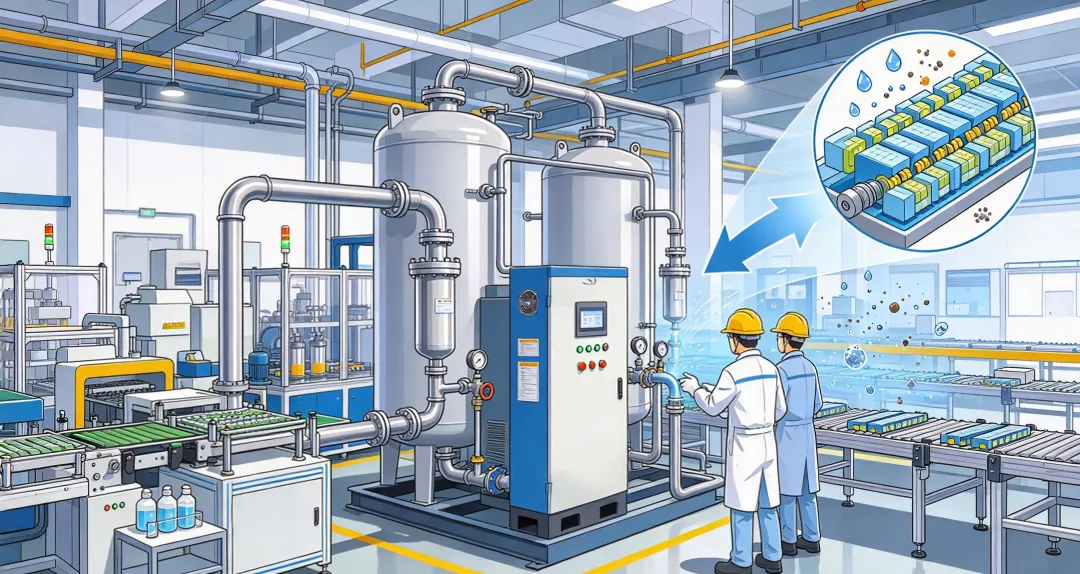
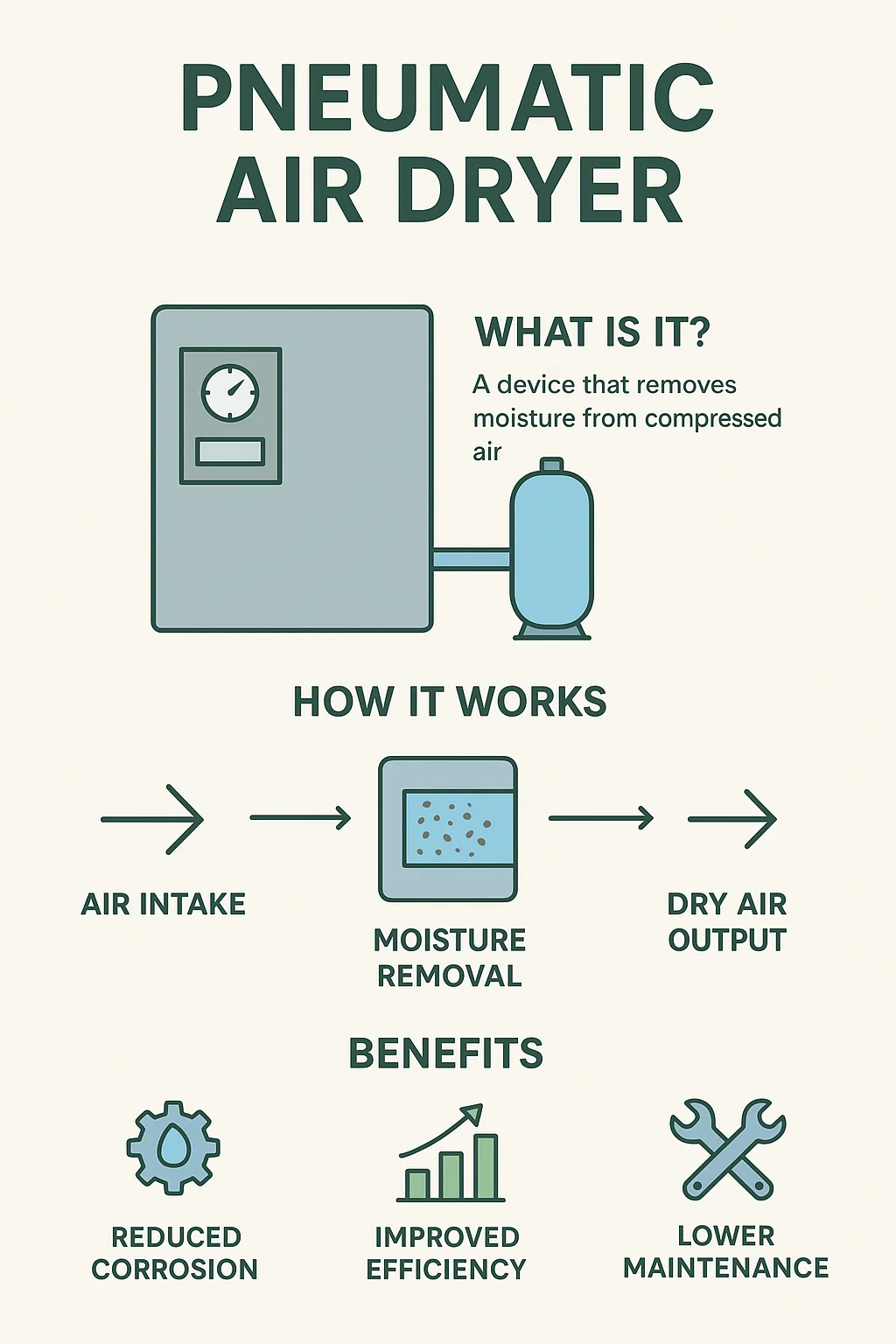
A pneumatic air dryer generally refers to compressed air drying equipment used to supply dry air to pneumatic machinery, automation equipment, valves, actuators, tools, and other air-powered systems.
It is not normally a separate drying technology.
Instead, the term describes the application of a compressed air dryer within a pneumatic system.
Compressed air naturally carries moisture. When water vapor condenses inside the air distribution system, it can contribute to pipeline corrosion, freezing, control-system problems, and reduced production reliability.
For this reason, pneumatic air dryer selection should begin with the conditions experienced by the downstream equipment.
Depending on the required pressure dew point and operating environment, the solution may involve a refrigerated air dryer for general industrial pneumatics or a desiccant air dryer for lower-dew-point applications.
What Does “Pneumatic Air Dryer” Mean?
A pneumatic air dryer is best understood as a compressed air dryer installed to support a pneumatic system.
Typical downstream equipment can include pneumatic valves, cylinders, actuators, air-operated tools, automation equipment, control systems, and process instrumentation.
The dryer’s main role is to lower the moisture content of the compressed air so that water is less likely to condense downstream.
Drying is only one part of compressed air treatment.
Filters may also be required to control oil and solid particles, while separators and drains remove condensed liquid water. Moisture, oil, and solid particles are separate contamination problems and may require different treatment stages.
A typical industrial treatment arrangement may therefore include the compressor, receiver, filtration, dryer, condensate removal, distribution piping, and local air-preparation equipment.
The exact configuration should be determined by the required air quality and operating conditions rather than by one fixed piping layout.
Why Moisture Matters in Pneumatic Systems
Compressed air can contain both water vapor and liquid condensate.
As compressed air cools while moving through receivers, dryers, distribution piping, or pneumatic equipment, moisture can condense if the air temperature falls below its pressure dew point.
That moisture can contribute to corrosion and other reliability problems.
In cold environments, condensate can also freeze and interfere with the compressed air system.
This makes pressure dew point especially important when pneumatic piping or equipment operates at low temperatures.
The goal is not necessarily to produce the driest air possible. It is to produce air dry enough for the actual pneumatic application.
Central Drying for Pneumatic Systems
In many factories, one central dryer treats compressed air before it enters the plant distribution network.
This approach can be appropriate when a large number of machines operate with similar compressed air quality requirements.
Applications may include manufacturing lines, assembly equipment, packaging machinery, CNC production, automotive manufacturing, and general industrial automation.
A central refrigerated dryer is often the first technology to evaluate where the plant remains above freezing and a moderate pressure dew point is sufficient.
Lingyu refrigerated systems can provide pressure dew points of approximately 2–10°C, depending on the series and specified operating conditions.
For facilities with changing compressed air demand, a frequency conversion refrigerated air dryer can adjust refrigeration operation according to actual treatment load.
Variable-frequency refrigerated dryers can automatically regulate compressor operation according to changing air-treatment demand.
Localized Drying for Critical Pneumatic Equipment
Not every pneumatic application necessarily requires the same dew point.
A plant may use general-purpose dry air for most equipment while one production line, outdoor installation, or moisture-sensitive machine needs a substantially lower pressure dew point.
In such situations, localized adsorption drying can be considered instead of automatically drying the complete plant air supply to the lowest required dew point.
Lingyu’s modular adsorption air dryer is one compact adsorption configuration. It provides an outlet pressure dew point of ≤−20°C, with −40°C available as an option.
This provides a practical system-design option where only part of the compressed air demand requires a lower dew point.
Pneumatic Cylinders, Valves, and Automation Equipment
Pneumatic cylinders and valves are widely used for positioning, clamping, material handling, assembly, packaging, and automated production.
The primary compressed-air concern is maintaining air quality and sufficient operating pressure throughout the system.
Excess moisture can contribute to corrosion and control-system reliability problems, while excessive pressure drop can reduce the pressure available to downstream pneumatic equipment.
For large automated facilities, compressed air treatment should therefore consider both dew point and pressure loss.
Refrigerated and adsorption drying systems are used across semiconductor, electrical appliance, energy-storage, photovoltaic, foundry, aluminum, and other industrial production environments.
For broader application context, users can review automotive and general manufacturing.
Pneumatic Tools
Pneumatic tools generally do not require the lowest dew points available from adsorption drying.
For indoor tools operating in a controlled factory environment, a refrigerated dryer may often provide an appropriate starting point for system design.
The important consideration is whether the dryer can maintain the required pressure dew point under actual flow, pressure, inlet-temperature, and ambient conditions.
A refrigerated dryer should not simply be selected because the application is called “pneumatic tools.”
If the piping is exposed to temperatures below the dryer’s pressure dew point, condensation can still occur downstream.
Pneumatic Systems in Cold Environments
Outdoor and low-temperature operation changes the dryer-selection requirement.
Suppose compressed air is dried to a positive pressure dew point but downstream piping is later exposed to sub-zero temperatures.
The air may cool below its dew point, allowing moisture to condense and potentially freeze.
In this situation, adsorption drying may be more appropriate.
Lingyu adsorption technologies include several configurations capable of −20°C or −40°C pressure dew points, depending on model and operating conditions. For example, the HRB-E low-purge blower-heated system provides −20°C / −40°C options.
The required pressure dew point should be chosen according to the actual minimum temperature and process requirements rather than by automatically specifying −40°C for every outdoor installation.
Instrument and Process-Control Air
Process-control applications can place greater emphasis on compressed air reliability because the air may supply control valves, actuators, or instrumentation.
Applications in chemical, petrochemical, power, or other process facilities may therefore require lower dew points than general factory pneumatics.
Lingyu offers adsorption technologies capable of approximately −20°C and −40°C pressure dew points, including heatless, heated-purge, blower-heated, heat-of-compression, and combined dryer configurations.
For process-industry context, the petrochemical and chemical processing application page provides additional information.
Not every instrument-air system universally requires a −40°C pressure dew point. The correct requirement depends on the plant specification, applicable standards, operating environment, and process conditions.
What Dew Point Does a Pneumatic System Need?
There is no universal pressure dew point for every pneumatic system.
A practical way to think about selection is:
| Pneumatic Application | Dryer Technology to Evaluate | Lingyu-Supported PDP Context |
|---|---|---|
| General indoor factory pneumatics | Refrigerated dryer | Approximately 2–10°C |
| Moisture-sensitive equipment | Adsorption dryer | Around −20°C or −40°C |
| Cold/outdoor pneumatic systems | Adsorption dryer | Select according to minimum temperature |
| Critical low-dew-point applications | Regenerative/combined dryer | Commonly ≤−40°C depending on series |
These are selection references, not universal industry limits.
The correct pressure dew point should be appropriate for the lowest temperature and moisture sensitivity of the actual system.
Refrigerated Dryer for Pneumatic Systems
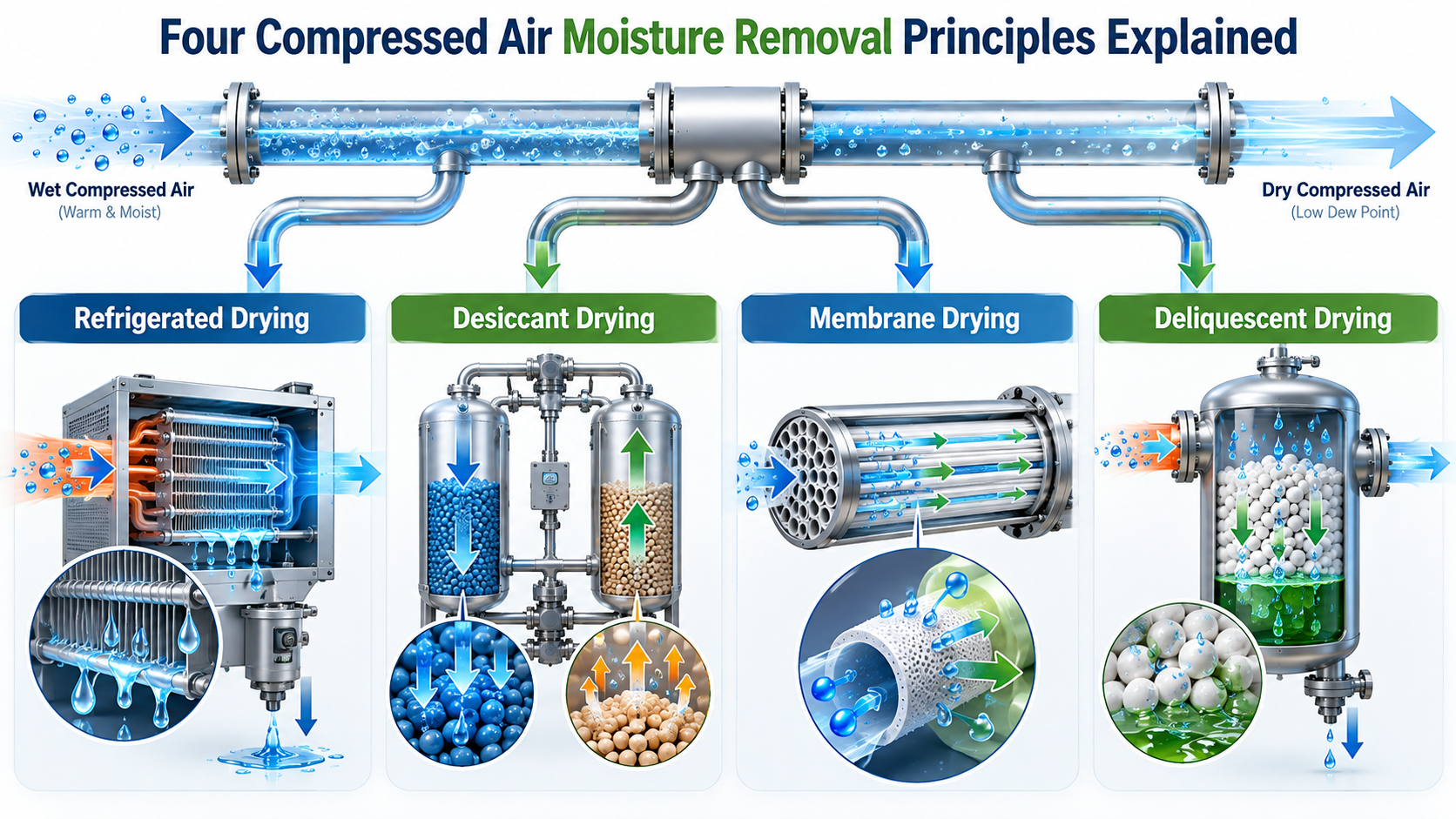
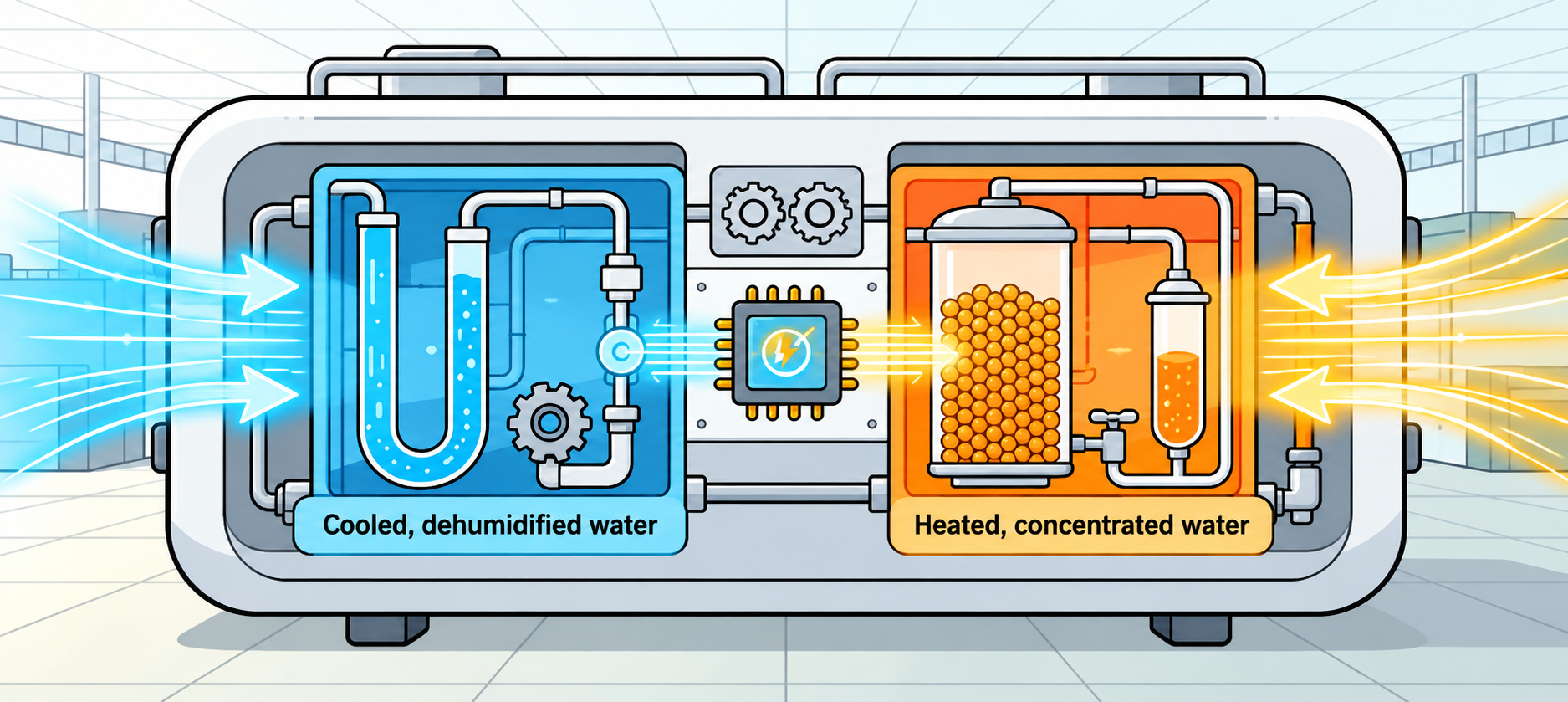
A refrigerated dryer removes moisture by cooling compressed air.
As the air cools, water vapor condenses. The liquid is then separated and drained before the dry compressed air continues downstream.
This technology is appropriate for many general industrial pneumatic systems where low-temperature exposure is not expected.
Lingyu refrigerated dryers commonly provide pressure dew points of approximately 2–10°C under their specified operating conditions.
The benefits include relatively straightforward operation and suitability for a broad range of general industrial compressed air loads.
Where demand changes significantly throughout the production cycle, load-responsive refrigeration control can also help improve operating efficiency.
Desiccant Dryer for Pneumatic Systems
A desiccant dryer removes water vapor through adsorption.
It is selected when a pneumatic system requires a significantly lower dew point than refrigerated drying can provide.
Depending on regeneration design, Lingyu’s adsorption range includes heatless, heated-purge, blower-heated, zero-purge blower-heated, modular, and heat-of-compression technologies.
For example, a heatless regeneration adsorption air dryer can provide low-dew-point compressed air where a simple regenerative configuration is suitable.
More energy-focused large systems may use other regeneration methods.
Lingyu’s zero-purge blower-heated system, for example, provides approximately 0% regeneration air consumption and optional −20°C / −40°C pressure dew points under its specified operating conditions.
Filter vs. Dryer in a Pneumatic System
A filter and dryer perform different treatment functions.
The dryer primarily controls water vapor and pressure dew point.
Compressed air filters are used to control oil aerosols and solid particulate contamination.
Lingyu’s filtration range includes AO, AA, AX, and ACS filter grades with different particle and residual-oil specifications.
A precision compressed air filter can therefore be used as part of the overall treatment system when oil and particle control are required.
Filtration should not be presented as a replacement for drying, and the dryer should not be presented as eliminating every compressed-air contaminant.
Central Dryer vs. Localized Dryer
The central-versus-localized decision should be based on how much compressed air needs the lower dew point.
If most of the factory operates at the same air-quality requirement, central drying may simplify treatment and maintenance.
If only a limited airflow requires a significantly lower dew point, localized adsorption drying can sometimes avoid treating the entire plant to that same low dew point.
This is a system-engineering decision rather than a universal cost rule.
The correct configuration depends on airflow distribution, piping, pressure drop, operating hours, and how many downstream users require the lower dew point.
Pressure Drop Matters in Pneumatic Systems
Pneumatic equipment depends not only on air quality but also on available pressure.
A dryer, filter, valve, regulator, and piping network can each contribute to system pressure loss.
If total pressure drop becomes excessive, downstream pneumatic equipment may not receive its intended operating pressure.
Dryer selection should therefore consider pressure drop together with flow capacity and dew point.
For more detail, the compressed air pressure drop guide explains the wider system impact.
In one 85 m³/min refrigerated dryer installation combining low-pressure-drop and variable-frequency technologies, terminal pressure increased from 6.45 bar to 6.8 bar, with approximately 39% overall energy savings under the specific project conditions.
This project result should not be interpreted as a universal pressure or energy improvement for every pneumatic system.
How to Choose a Pneumatic Air Dryer
A pneumatic dryer should be selected according to the actual downstream application rather than its name alone.
The main parameters to evaluate are:
- Required pressure dew point: Determine the moisture level the equipment actually needs.
- Minimum downstream temperature: Ensure air will not cool into a range where unwanted condensation can occur.
- Maximum airflow: Include realistic simultaneous and peak pneumatic demand.
- Operating pressure: Dryer capacity and pressure loss depend on actual operating conditions.
- Inlet temperature: Higher inlet temperatures generally increase the moisture load entering the dryer.
- Ambient conditions: These are especially important for air-cooled refrigeration and blower-based equipment.
- Pressure drop: Confirm that adequate pressure remains available at valves, cylinders, actuators, and tools.
- Central vs. localized treatment: Determine how much of the plant actually needs the target dew point.
- Filtration: Specify oil and particulate control separately from moisture removal.
- Maintenance and controls: Consider drains, filters, heat exchangers, desiccant, valves, heaters, blowers, and monitoring according to dryer type.
For a broader equipment-selection methodology, the compressed air dryer selection guide is a relevant next step.
Common Selection Mistakes
One common mistake is choosing the dryer only from the compressor’s nominal airflow. Actual pressure, inlet temperature, ambient conditions, and dew-point requirement also affect selection.
Another is assuming that a positive refrigerated-dryer dew point is sufficient for every outdoor system. The relevant comparison is between pressure dew point and the temperatures that the downstream pneumatic piping and equipment may actually experience.
The opposite mistake is specifying −40°C air for an entire factory even when only a limited application needs it. Lower dew points normally require additional drying energy or regeneration resources.
Finally, dryer pressure drop should not be ignored. A dryer that meets its dew-point target but causes excessive system restriction can still negatively affect pneumatic operation.
FAQ About Pneumatic Air Dryers
What is a pneumatic air dryer?
It is generally a compressed air dryer used to supply dry air to pneumatic equipment. The term describes the application rather than a separate drying technology.
What dryer is suitable for general pneumatic equipment?
A refrigerated dryer is usually the first technology to evaluate where moderate dew points are sufficient and the downstream system remains above the relevant condensation temperature.
When should a desiccant dryer be considered?
Adsorption drying becomes relevant where the pneumatic application requires approximately −20°C or −40°C pressure dew point, or where cold operating conditions make a positive refrigerated-dryer dew point unsuitable.
Does a filter replace a pneumatic air dryer?
No. A filter primarily controls oil and particles, while the dryer lowers water-vapor content and pressure dew point.
Does every pneumatic system require −40°C air?
No. The required dew point depends on the process, minimum operating temperature, and moisture sensitivity of the downstream equipment.
Should the entire plant be dried to the lowest required dew point?
Not necessarily. If only a limited portion of the airflow requires low-dew-point air, centralized general-purpose drying combined with localized adsorption drying may be worth evaluating.
Conclusion
A pneumatic air dryer should be understood primarily as a compressed air dryer selected to support pneumatic equipment and automation systems.
For many indoor industrial pneumatic applications, refrigerated drying with a pressure dew point around 2–10°C can provide appropriate moisture control.
For colder environments or more moisture-sensitive systems, adsorption drying at approximately −20°C or −40°C may be more suitable.
The correct dryer should be selected according to required pressure dew point, minimum system temperature, airflow, operating pressure, inlet temperature, pressure drop, installation layout, filtration requirements, and lifecycle operating conditions.
The objective is not to produce the lowest possible dew point. It is to provide air that is dry enough for reliable pneumatic operation without adding unnecessary energy consumption or system complexity.
For application-specific selection, users can contact Lingyu with the actual airflow, pressure, inlet temperature, ambient conditions, required pressure dew point, and downstream pneumatic application.